
Staffordshire Bull Terrier Training Guide: A Realistic 8-Week Plan
A week-by-week Staffordshire Bull Terrier training plan built around their real temperament — high energy, people-mad, and surprisingly quick to learn.

Written by Bradley Brown
Founder & editor · Reviewed 2026-07-15
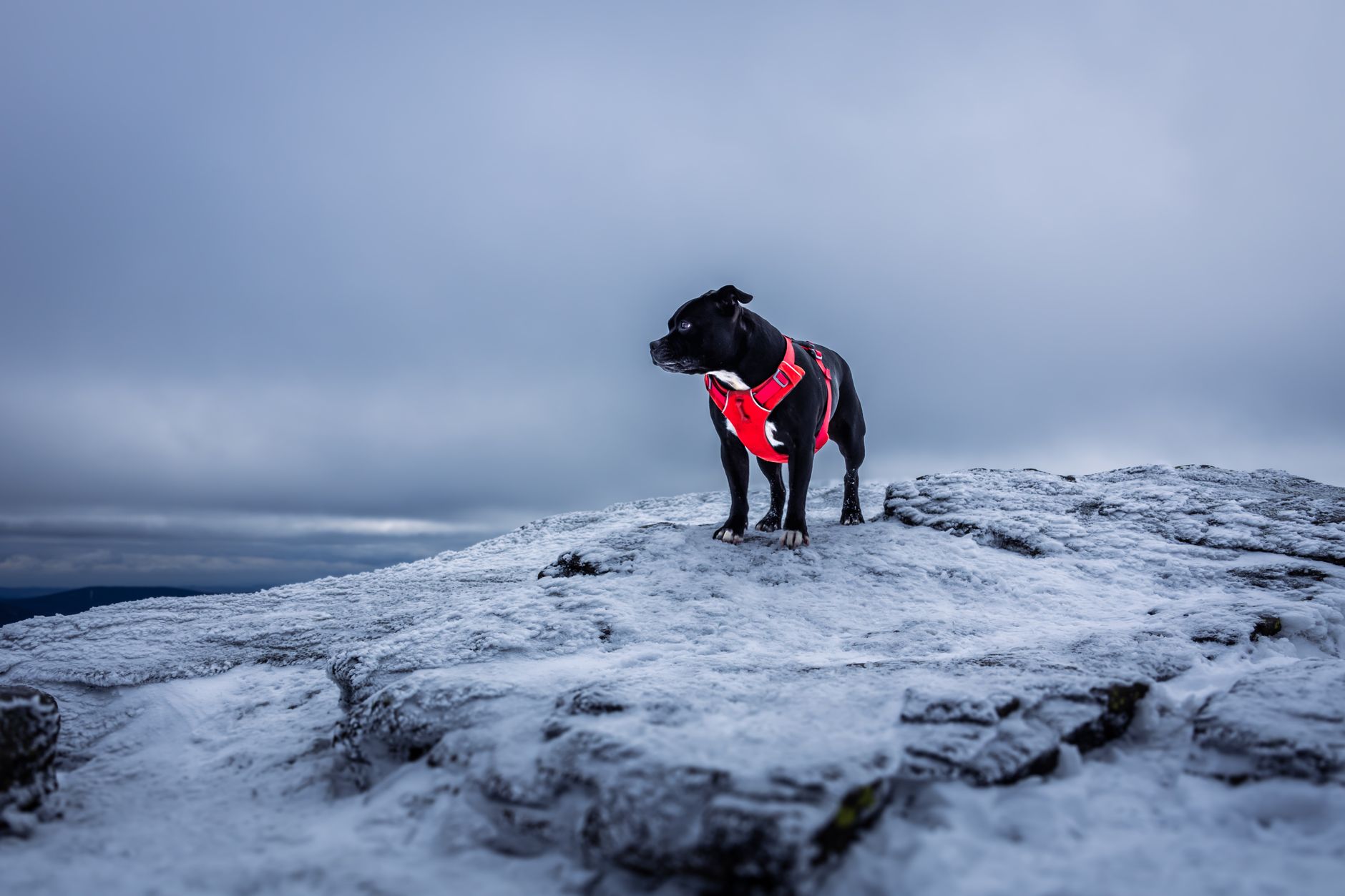
Priya adopted Buster, a two-year-old brindle Staffy, six months ago. He's affectionate to the point of embarrassing — he body-slams guests at the front door, screams when Priya leaves the room, and has pulled her off her feet twice on the lead. She's watched YouTube videos, bought a training book, and tried telling him "no" firmly. Nothing has stuck. She's starting to wonder if she's the problem.
She's not. And neither are you if Buster sounds familiar.
What's Actually Going On With a Staffy
Staffordshire Bull Terriers were bred to be bold, physically resilient, and intensely bonded to people. That human-focus is exactly what makes them so trainable — and exactly what makes them a handful when nobody has given them a job to do. An unstimulated Staffy doesn't sit quietly and wait for instructions. They invent their own entertainment, which usually involves your couch cushions, your ankles, or your guests' crotches.
The door-slamming and lead-pulling Priya is dealing with aren't stubbornness or dominance — they're a high-drive dog that has learned these behaviours work. Jumping up gets a reaction (even yelling is interaction). Pulling gets forward momentum. The fix isn't force; it's making the correct behaviour more rewarding than the incorrect one. Staffies respond brilliantly to reward-based training because they are genuinely desperate to engage with you. That's the lever you use.
A realistic session for a busy owner is five to ten minutes, once or twice a day. Short, frequent training beats a weekly forty-five-minute marathon every time. Staffies bore quickly of repetition and switch off — keep it snappy, keep it fun, end on a win.
Weeks 1–2: Foundation and Impulse Control
Before anything else, Buster needs to learn that calm behaviour pays. Start with the single most useful exercise for any Staffy: sit and wait for attention. Every time he has all four paws on the floor, he gets your full, enthusiastic acknowledgement. The moment he jumps, you turn your back, fold your arms, and go silent. No eye contact, no pushing him down, no "off" — silence is the message. Everyone in the house must do this consistently, or it won't work.
Alongside this, begin marker training. Pick a word — "yes" — and pair it with a small, high-value treat (cheese, cooked chicken, commercial Staffy-appropriate treat) every single time. Within a day or two, "yes" becomes a precise signal that tells the dog exactly which moment earned the reward. This speeds up all future training considerably.
Weeks 1–2 daily five-minute plan:
- 2 minutes: greeting practice (sit for attention, ignore jumping)
- 2 minutes: name recognition — say name, mark and reward the instant they look at you
- 1 minute: hand targeting — present your flat palm, mark and reward when their nose touches it
Weeks 3–4: Sit, Drop, and Loose-Lead Foundations
Staffies pick up sit and drop fast because they're food-motivated and physically comfortable getting low. Lure sit with a treat moved back over the nose, mark the moment the bottom hits the ground, reward. Drop follows naturally — from sit, move the treat slowly to the ground between their front paws. Don't push. Just guide and reward the moment elbows touch down.
Loose-lead walking starts in the back garden or hallway — not the street. The method: the moment the lead goes tight, stop completely. Wait. The second Buster backs up or glances at Priya, she marks, rewards, and moves forward again. It feels glacially slow at first. By the end of week four, most dogs are making the connection. Staffies can be strong on the lead, so a front-attach harness (widely available in Australia from pet suppliers for roughly $30–$60 AUD) reduces the physical strain while training catches up.
Weeks 5–6: Recall and Impulse Control Under Distraction
A reliable recall is the most safety-critical skill any dog can have, and Staffies — despite their reputation — can develop an excellent one because of that deep people-bond. Use a dedicated recall word ("come" or a whistle) that is never used in frustration, never followed by anything unpleasant (bathing, nail trims, car trips they hate), and always — always — celebrated extravagantly when it works.
Start in the backyard, then a quiet park at off-peak times. Call once, crouch down, open arms. When Buster arrives, throw a party. Use your best treats. This is not the moment to be stingy. Practice ten short recalls per session, and end each one with release back to sniffing or play, so recall doesn't always mean fun stops.
Introduce "leave it" this week too — essential for a breed that will attempt to eat, chase, or greet anything. Hold a treat in a closed fist. When Buster stops nosing at it and backs off, mark and reward with a different treat from your other hand. Gradually move to treats on the ground.
Weeks 7–8: Real-World Proofing
This is where Priya takes Buster to the busy park, to the café footpath, to the front gate when the neighbours walk past. Everything learned in the backyard now gets tested with distractions, and you should expect some regression — that's normal, not failure. Drop the difficulty briefly (more distance from the distraction, better treats, shorter sessions) and build back up.
Add a "place" behaviour: a mat or bed where Buster goes and stays when guests arrive. It gives him a job at the front door instead of a jumping opportunity. Teach it like drop, gradually adding duration by marking calm stays at three seconds, then five, then ten. By week eight, you can ask for "place" when the doorbell rings, give him a stuffed Kong to occupy him there, and actually greet your guests upright.
Priya isn't the problem. Buster is a classic Staffy — full-on, loving, athletic, and completely redeemable with the right approach. Eight weeks of consistent five-to-ten-minute sessions won't produce a perfectly polished show dog, but they will produce a dog who can sit at the door, walk without dislocating your shoulder, and come back when called. That's the dog most owners actually want to live with.
When to Bring in a Professional
If at any point during Staffordshire Bull Terrier training you're dealing with resource guarding, aggression toward other dogs, or reactivity that's escalating rather than improving, get a qualified trainer involved early — look for someone with a Certificate IV in Companion Animal Services or a membership with the Pet Professional Guild Australia. Force-free methods are both more effective and safer with this breed. A single one-hour consultation (typically $100–$200 AUD) can recalibrate your whole approach and save weeks of frustration.
As an Amazon Associate we earn from qualifying purchases.
Frequently asked questions
Are Staffordshire Bull Terriers easy to train?
Staffies are highly trainable because they are people-focused and food-motivated — two things that make reward-based training very effective. The challenge is their energy and impulsiveness, which means sessions need to be short, consistent, and engaging. Most owners see real progress within two to three weeks of daily five-to-ten-minute sessions.
How do I stop my Staffy from pulling on the lead?
The most reliable method is the stop-and-wait technique: the instant the lead goes tight, stop walking and wait until your dog releases the tension, then reward and move forward. Pair this with a front-attach harness to reduce the physical strain while the training takes effect. Consistent practice in low-distraction environments first, then gradually move to busier areas.
At what age should I start training a Staffordshire Bull Terrier?
As early as possible — puppies as young as seven to eight weeks can begin learning basic cues like sit, name recognition, and gentle handling. Early socialisation between eight and sixteen weeks is especially important for Staffies, as this window shapes how they respond to other dogs, people, and new environments for life. That said, adult Staffies are equally capable of learning new behaviours.
Why does my Staffy ignore me when we're outside?
Outdoors is full of competing stimuli — smells, movement, other animals — that are more rewarding in the moment than whatever you're offering. The fix is to train recall and attention in low-distraction environments first, then gradually add distractions as the behaviour becomes reliable. Using higher-value treats outdoors (cooked chicken, cheese) also helps tip the balance back in your favour.
Is it okay to use a check chain or prong collar on a Staffy?
Mainstream veterinary and animal behaviour guidance strongly recommends against aversive tools like check chains and prong collars for any breed. For Staffies specifically, whose pain tolerance is high, these tools are unlikely to work as intended and can increase anxiety and reactivity. A well-fitted front-attach harness combined with reward-based training is a far safer and more effective combination.
How much exercise does a Staffy need alongside training?
Adult Staffies generally need around an hour of exercise per day, split across two walks or a combination of walks and active backyard play. Adequate physical exercise makes training sessions significantly more productive because you're working with a dog that has already burned off surplus energy. Mental stimulation — puzzle feeders, sniff games, training — counts too and can take the edge off on days when a full walk isn't possible.
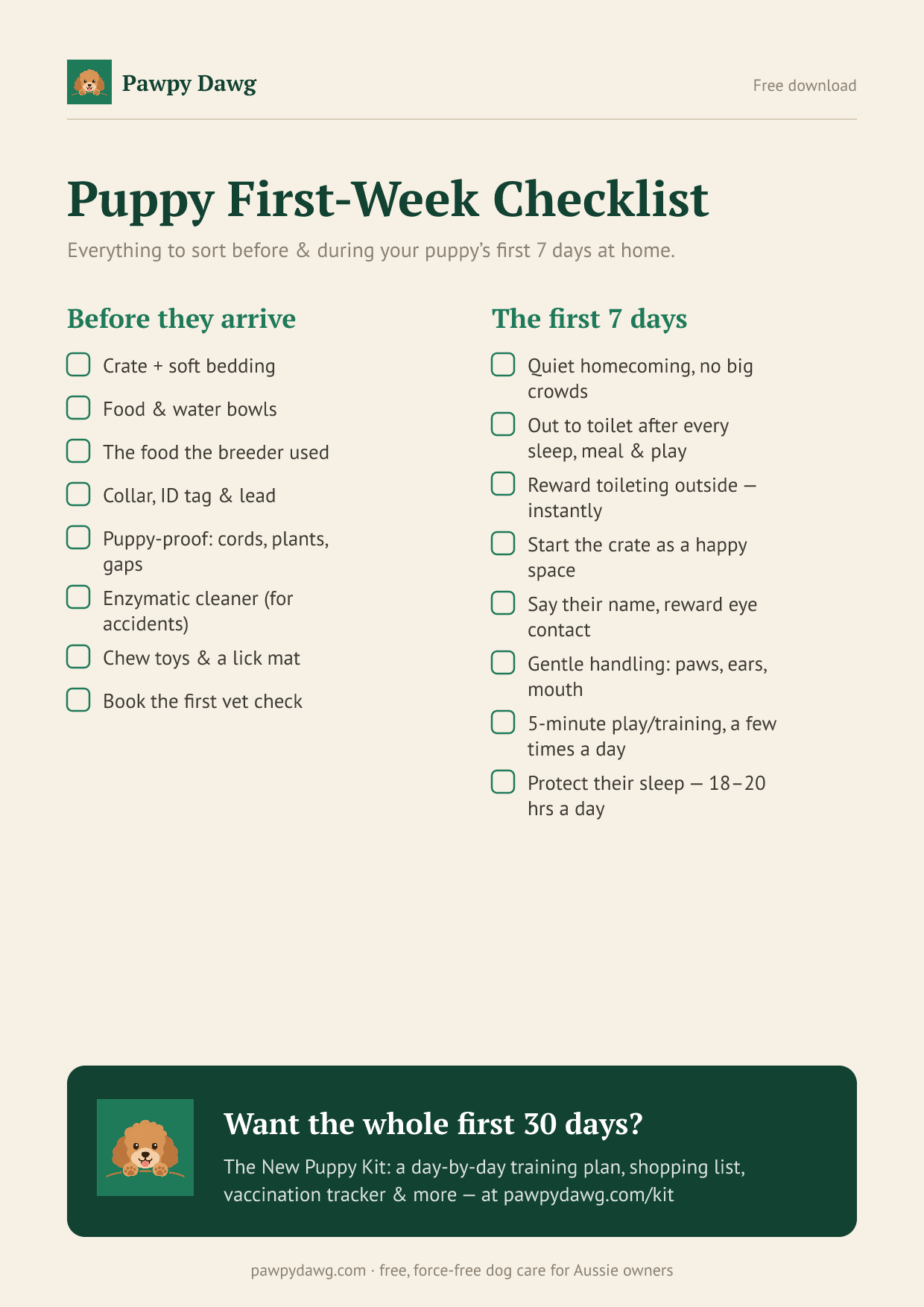
Free printable
Free: the Puppy First-Week Checklist
Everything to sort before and during your puppy's first 7 days home — a printable one-pager. Plus the occasional genuinely useful dog tip. No spam, unsubscribe anytime.
Related guides
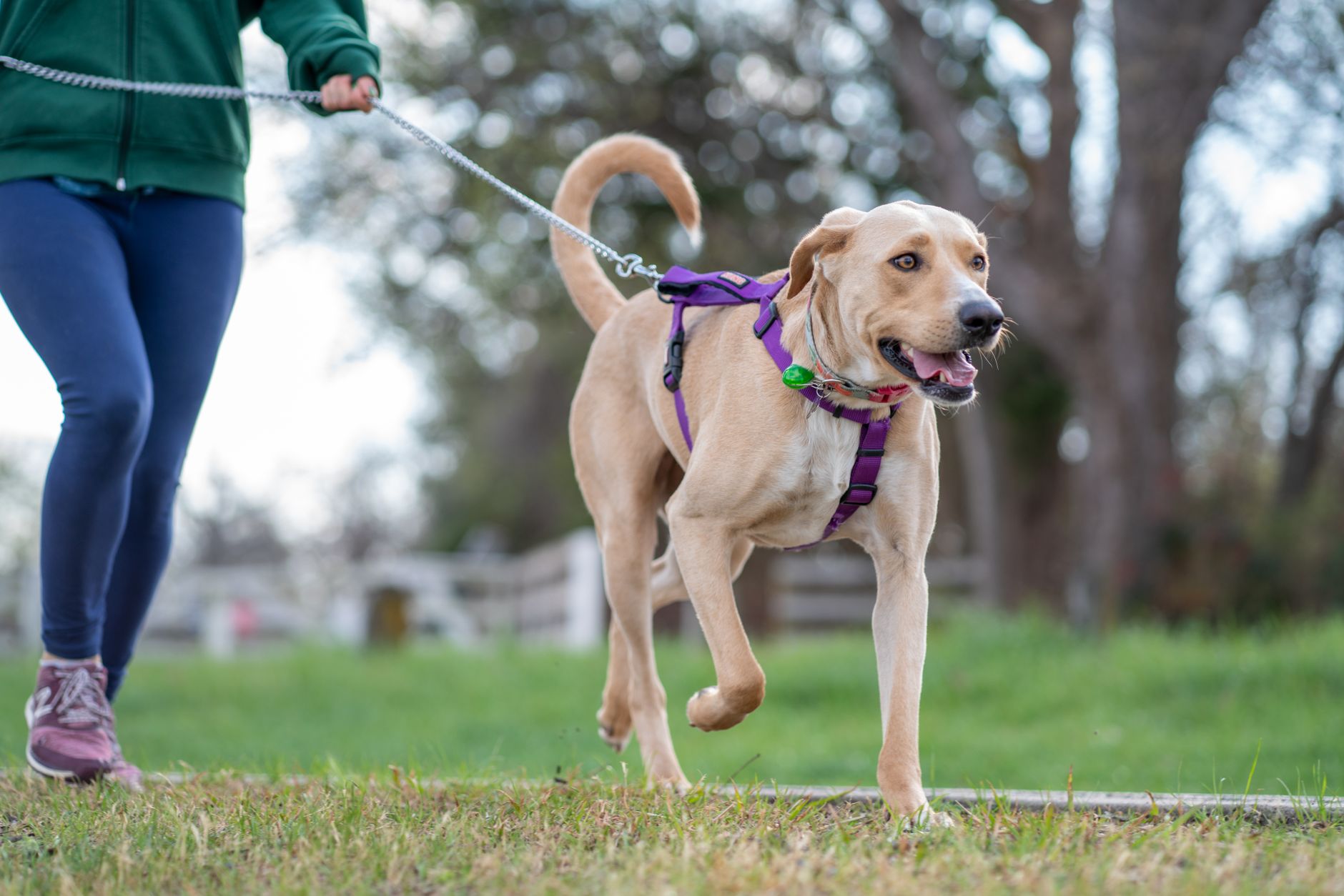
How to Stop a Staffordshire Bull Terrier Pulling on the Lead (Step-by-Step)
Tired of your Staffy dragging you down the street? Here's a practical, step-by-step positive-reinforcement plan to stop a Staffordshire Bull Terrier pulling on the lead.
Read the guide →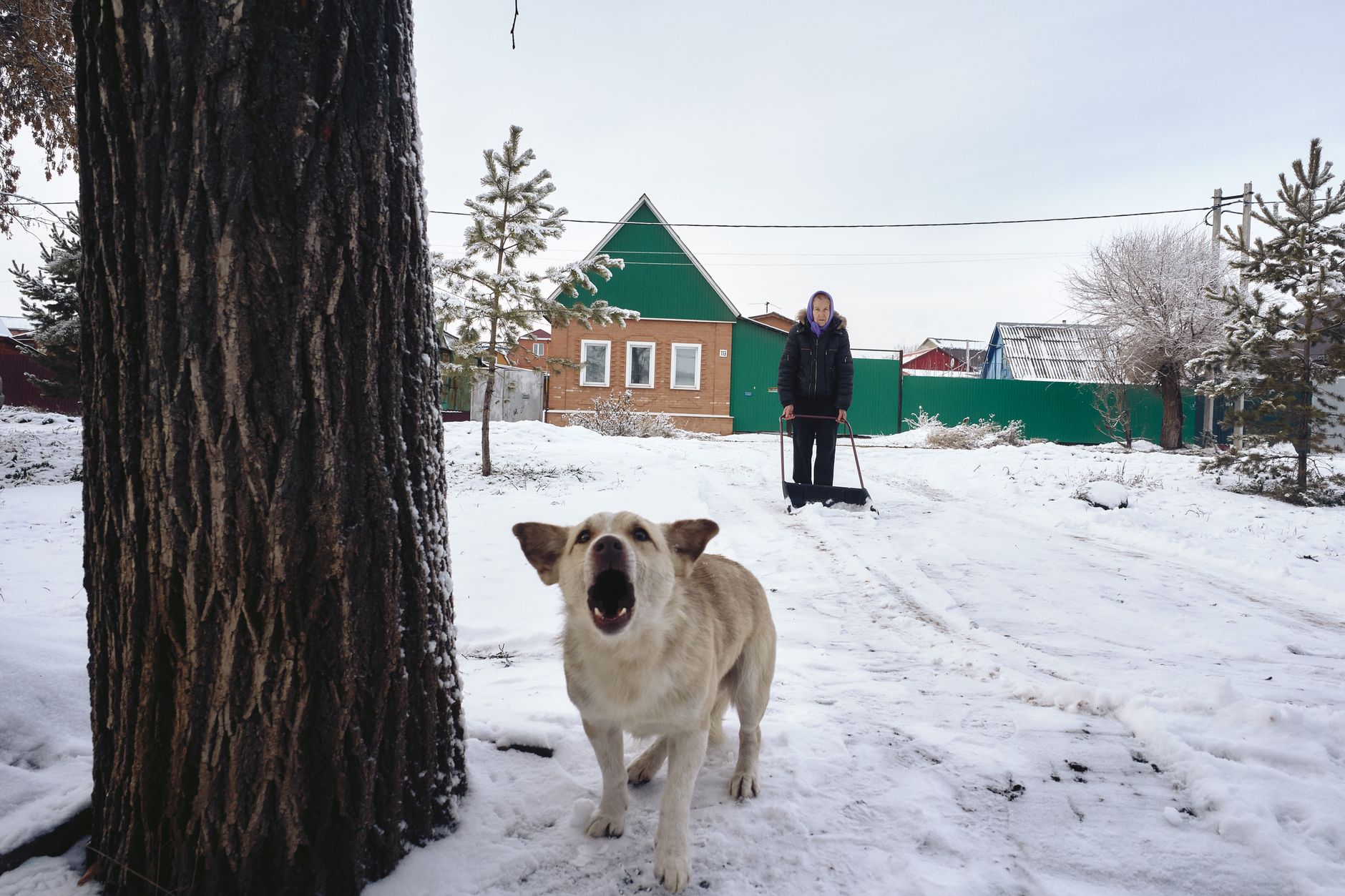
How to Stop a Staffordshire Bull Terrier Barking at Strangers (Step-by-Step)
Staffordshire Bull Terrier barking at strangers? A practical, positive-reinforcement plan with daily 5-min sessions, realistic timelines & when to get pro help.
Read the guide →
Staffordshire Bull Terrier Separation Anxiety: A Step-by-Step Fix
Staffordshire Bull Terrier separation anxiety is common and fixable. Get a realistic, step-by-step positive-reinforcement plan you can start today — no 60-min sessions needed.
Read the guide →