
Is Puppy School Worth It? An Australian Trainer's Honest Take
Is puppy school worth it in Australia? An honest trainer's take on costs, socialisation windows, red flags, and free DIY alternatives to help you decide fast.

Written by Bradley Brown
Founder & editor · Reviewed 2026-07-03
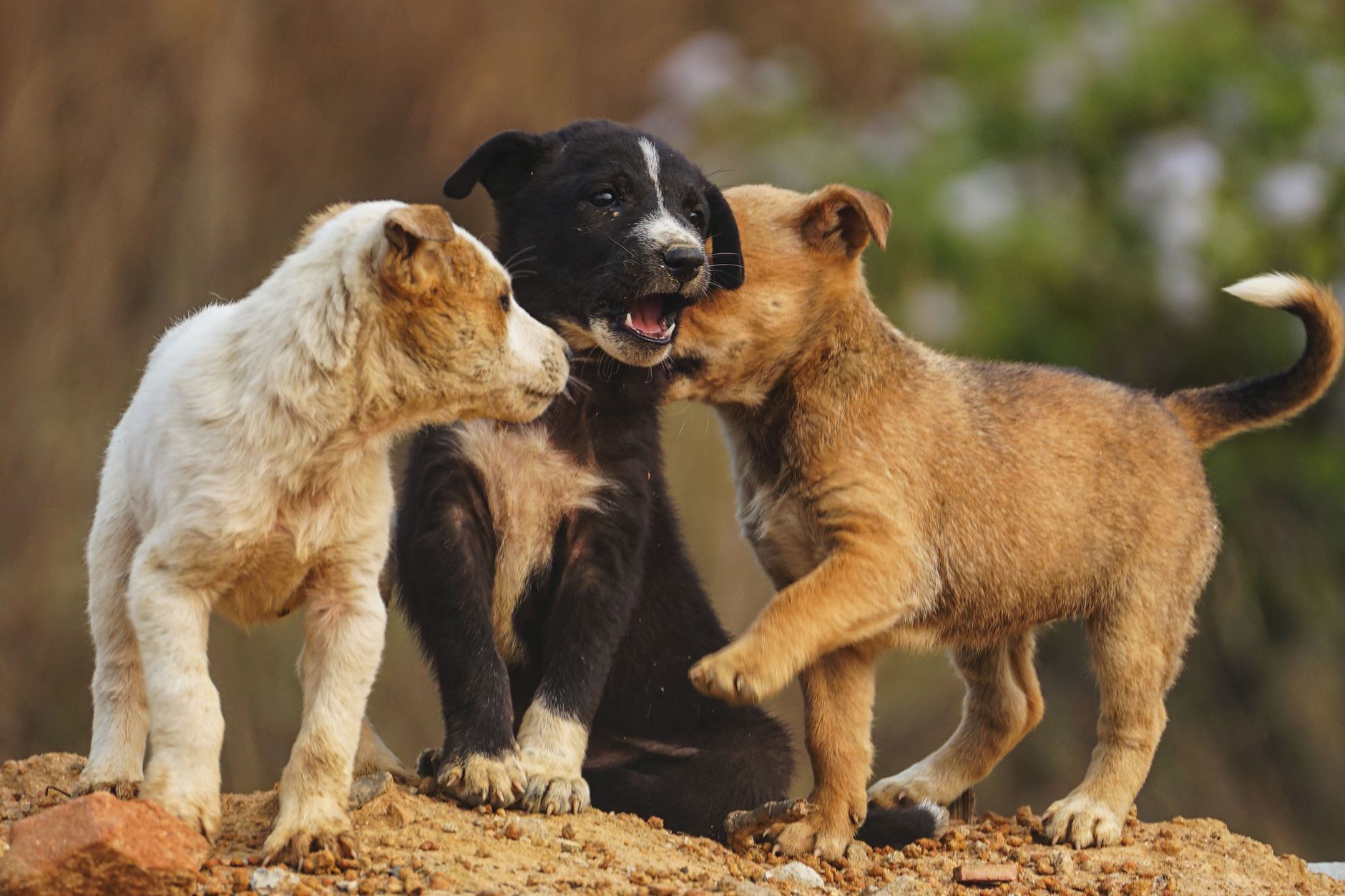
You signed up for a dog, not a full-time job — and yet here you are at 10 pm Googling why your puppy just ate the corner of your couch. If you're wondering whether puppy school will actually fix any of this, you're asking exactly the right question.
Here's the short answer: a good puppy school is one of the highest-return investments you can make in the first six months. A bad one wastes your money and can make things worse. This guide helps you tell the difference — and gives you something useful to do right now, even if classes don't start for three weeks.
Your Quick Win for Tonight
Before anything else, try this five-minute exercise:
- Grab 10 small, soft treats (chicken, cheese, whatever your pup goes mad for).
- Every time your puppy makes eye contact with you without being asked, say "yes!" in a bright voice and give a treat.
- Do this for five minutes, then stop.
That's it. You've just started teaching the single most important skill in dog training: your puppy checking in with you rather than ignoring you. It works because you're using the socialisation window (more on that below) to build a reflex, not just a trick.
What the Socialisation Window Actually Is (and Why It Closes)
Puppies go through a critical socialisation period roughly between 3 and 14–16 weeks of age. During this window, the brain is primed to form neutral or positive associations with new experiences — people, surfaces, sounds, other animals, traffic, children. After this window closes, novel things are far more likely to trigger fear or suspicion.
This is not a training philosophy. It's developmental biology, well documented in veterinary behavioural science. The practical upshot: exposure before 16 weeks shapes your dog's entire emotional baseline for life. Waiting until your pup is "fully vaccinated and ready" at 16–18 weeks means you've already missed most of the window.
Most reputable Australian vets and the Australian Veterinary Association now support starting socialisation classes after the first vaccination, around 7–8 weeks, with appropriate hygiene protocols in place. The risk of a behaviour problem from under-socialisation is far greater than the infection risk in a well-run class.
What Good Puppy School Actually Teaches
A quality class isn't really about "sit" and "drop." Those are bonuses. What you're actually paying for:
- Controlled, positive exposure to unfamiliar dogs and people in a safe setting
- Handling exercises — teaching your pup to accept being touched at the vet, groomer, and by strangers
- Bite inhibition reinforcement — helping puppies learn to soften their mouths before the behaviour cements
- Owner education — understanding dog body language, calming signals, and what not to do (equally valuable)
- Problem-solving on the spot — a good trainer watches your specific dog and gives you tailored feedback, not generic YouTube advice
The one-on-one coaching component is genuinely irreplaceable. You can watch a thousand videos; nothing substitutes someone watching your pup and saying "there — that's the moment to reward."
Typical Australian Prices in 2024–2025
Costs vary significantly by city and provider:
| Format | Typical Cost (AUD) | Session Length | Notes |
|---|---|---|---|
| Vet clinic puppy school | $180–$280 for 4–6 weeks | 45–60 min/week | Often includes vet health check; good hygiene protocols |
| Private dog-training school | $150–$350 for 4–6 weeks | 45–60 min/week | Quality varies widely; check credentials |
| Council/RSPCA classes | $80–$150 for 4–6 weeks | 45 min/week | More affordable; still check trainer qualifications |
| Private one-on-one trainer | $100–$200 per session | 45–60 min | Best for specific problems; expensive for basics |
Most families in metro areas will pay $200–$280 for a full course. That's roughly the cost of one destroyed couch cushion, for context.
Red Flags: How to Spot a Trainer to Avoid
The dog-training industry in Australia is completely unregulated. Anyone can call themselves a trainer or behaviourist. Watch out for these warning signs:
- Uses choke chains, prong collars, or e-collars on puppies — there is no evidence-based justification for aversive tools in puppy classes, and strong evidence they increase fear and aggression
- Talks about "dominance" or "being the alpha" — dominance theory has been thoroughly debunked by modern ethology; trainers who still use it are working from 1970s wolf research that was later retracted by its own author
- Can't explain why they do something — a good trainer can articulate the learning science behind every technique
- Dismisses your questions or speaks over your head — your understanding matters; a good trainer teaches the owner, not just the dog
- No credentials or association membership — look for trainers accredited by the Delta Society Australia, the Pet Professional Guild Australia (PPGA), or the Australian Institute of Applied Canine Sciences (AIACS)
How to Choose a Good Class: Quick Checklist
Before you book, ask these questions:
- ✅ Do you use reward-based methods only?
- ✅ Are classes capped at 6–8 puppy-owner pairs maximum?
- ✅ Can I visit or observe a class before enrolling?
- ✅ What happens if my puppy is overwhelmed or frightened?
- ✅ Do you have a formal qualification or professional membership?
If you get vague answers or resistance, keep looking.
DIY Alternatives When Puppy School Isn't an Option
Can't find a class in time? Budget constraints? Rural location? You can still use the socialisation window effectively:
Week 1–2 at home:
- Invite three different types of people over (men with beards, children, elderly people, people in hats or high-vis vests) — keep visits short and treat-heavy
- Expose your pup to household sounds: vacuum, blender, TV at volume, dropped pots — pair each with treats
In public (post-first-vax, carried or on clean surfaces):
- Shopping centre car parks — people, trolleys, automatic doors
- Café footpaths — coffee smells, chairs scraping, strangers walking past
- Train stations or bus stops — just sit nearby and treat calmly
Online resources worth your time:
- Puppy Culture (paid, thorough, evidence-based)
- Dr Ian Dunbar's free guides at SIRIUS Puppy Training
- Your local council's animal management pages often list subsidised classes
Five-minute daily sessions beat one-hour weekly sessions. Behaviour science is clear on this: short, frequent, positive repetitions build stronger neural pathways than long, infrequent ones. Two five-minute training sessions a day is a realistic goal for a busy household — and it's genuinely enough.
The Honest Bottom Line
Puppy school is worth it if the trainer uses modern, reward-based methods and you enrol during the socialisation window. If you find a good class, go. If you can't, a structured DIY socialisation plan using short daily sessions will serve your pup well.
Your dog isn't ruined. You haven't missed your chance. The fact that you're researching this at all puts you ahead of the majority of owners who never think about it until there's a serious problem. Start the check-in game tonight, get a good class booked this week, and you're already doing the right thing.
Frequently asked questions
At what age should I start puppy school in Australia?
Most reputable trainers and vets recommend starting as soon as one week after your puppy's first vaccination, typically around 7–9 weeks of age. The critical socialisation window closes around 14–16 weeks, so waiting until your pup is fully vaccinated at 16–18 weeks means missing much of it. The Australian Veterinary Association supports early, post-first-vaccination classes with appropriate hygiene measures in place.
How much does puppy school cost in Australia?
A standard 4–6 week puppy school course in Australia typically costs between $150 and $350 AUD, depending on the provider and city. Vet clinic programmes often sit in the $180–$280 range and may include a health check. Council and RSPCA classes are usually more affordable at $80–$150. Private one-on-one sessions cost more — around $100–$200 per hour — but can be worth it for specific behavioural issues.
Is puppy school necessary, or can I train my dog at home?
Puppy school offers something home training genuinely can't replicate: controlled socialisation with unfamiliar dogs and people during the critical developmental window. You can absolutely teach basic commands at home, but the confidence your puppy builds from positive early exposure to the outside world is difficult to replicate in your backyard. A hybrid approach — attending class and doing short daily sessions at home — gives the best results.
What should I look for in a good puppy trainer in Australia?
Look for trainers who use reward-based methods exclusively and hold credentials from recognised bodies such as the Delta Society Australia, the Pet Professional Guild Australia, or the Australian Institute of Applied Canine Sciences. Avoid anyone who uses choke chains, prong collars, or dominance-based language. Class sizes should be small — ideally no more than 6–8 pairs — so your pup gets adequate individual attention.
My puppy is already 5 months old — have I missed the socialisation window?
The prime window has passed, but dogs continue learning throughout their lives and many behavioural issues are still very addressable at 5 months. Consistent, positive training now will still produce significant improvements. An adolescent or adult obedience class, or a few sessions with a qualified reward-based trainer, is a worthwhile next step rather than giving up on formal training.
Are online puppy training programmes worth it?
Online programmes like Puppy Culture or Dr Ian Dunbar's resources provide solid, evidence-based guidance and are genuinely useful — particularly for owners in rural areas or those who can't find a quality local class. Their main limitation is that they can't watch your specific dog and give tailored feedback in real time. They're best used to supplement, rather than replace, in-person socialisation experiences.
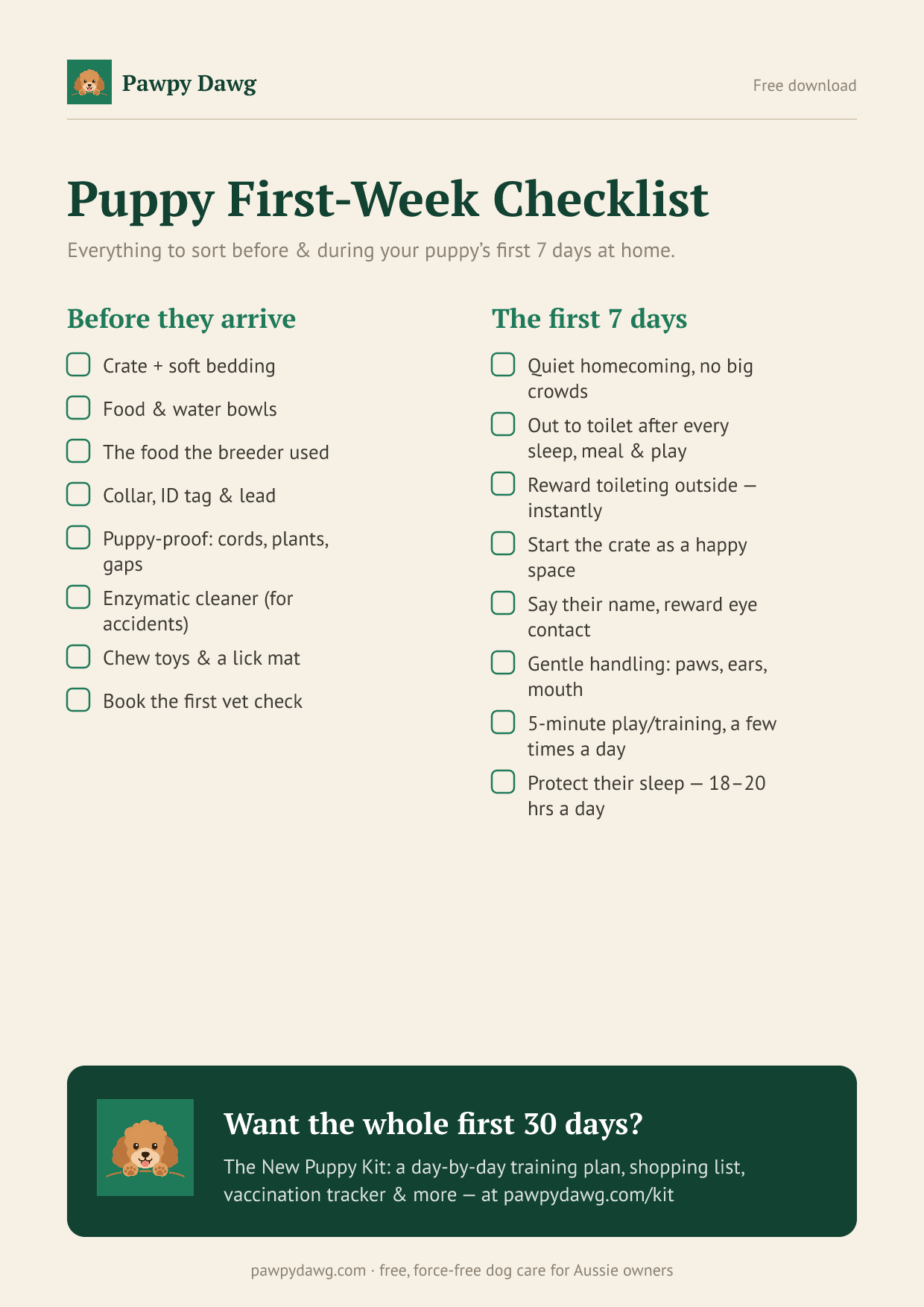
Free printable
Free: the Puppy First-Week Checklist
Everything to sort before and during your puppy's first 7 days home — a printable one-pager. Plus the occasional genuinely useful dog tip. No spam, unsubscribe anytime.
Related guides
Is Pet Insurance Worth It in Australia? The Honest Maths
Is pet insurance worth it in Australia? We crunch real premiums vs real vet bills — cruciate surgery, snake bite & more — so you can decide with confidence.
Read the guide →
How Much a Dog Really Costs Per Year in Australia (2026 Breakdown)
How much does a dog cost per year in Australia? 2026 line-item breakdown covering food, vet, insurance, grooming & the costs first-timers always miss.
Read the guide →
Dog Vaccination Schedule in Australia: What, When and What It Costs
Confused by C3, C5 and kennel cough? Here's your complete dog vaccination schedule Australia cost guide — puppy timelines, adult boosters & typical AUD prices.
Read the guide →