
How Much a Dog Really Costs Per Year in Australia (2026 Breakdown)
How much does a dog cost per year in Australia? 2026 line-item breakdown covering food, vet, insurance, grooming & the costs first-timers always miss.

Written by Bradley Brown
Founder & editor · Reviewed 2026-07-03
A quick note: this guide is general information, not veterinary advice. For anything urgent or specific to your dog, your vet is always the right call.
You did the research, you fell in love with a breed, and somewhere between the puppy photos and the adoption fee you thought, "I can make this work." Then reality arrived — and it had four legs, a chewing habit, and a vet bill you didn't budget for. You're not alone, and you haven't made a mistake. Dogs are genuinely expensive, and the pet industry rarely makes the full number easy to find.
This is that number. Every line item, three tiers (budget / typical / premium), and the costs that blindside first-time owners every single time.
The Quick Reality Check
Before the full breakdown, here's a rough annual range to anchor you:
| Tier | Approx. Annual Cost (AUD) |
|---|---|
| Budget (small dog, DIY grooming, no insurance) | $2,000 – $3,500 |
| Typical (medium dog, standard vet care, basic insurance) | $4,000 – $6,500 |
| Premium (large/high-maintenance breed, full insurance, professional grooming) | $7,000 – $12,000+ |
These figures cover an ongoing year — not the first year, which adds $1,500–$3,000 in setup costs on top.
Line-by-Line Annual Cost Breakdown
1. Food
Food is your biggest recurring cost and the one most people underestimate at the pet-store shelf.
- Budget (supermarket dry food, small–medium dog): $400–$700/yr
- Typical (quality dry or mixed wet/dry, medium dog): $800–$1,500/yr
- Premium (raw, freeze-dried, or prescription diet): $1,800–$3,500+/yr
Larger dogs don't just eat more — they eat proportionally more. A Labrador can cost twice as much to feed as a Cavalier. If you're switching foods, do it gradually over 7–10 days to avoid digestive upset.
2. Veterinary Care (Routine)
Even a perfectly healthy dog needs annual wellness visits.
- Annual health check + vaccinations: $150–$280
- Heartworm, flea & tick prevention (monthly or annual treatments): $180–$400/yr
- Dental scale and clean (recommended every 1–3 years): $300–$800 per procedure
Budget owners often skip the dental — and pay far more later when periodontal disease leads to extractions. Building a small "vet fund" of $20–$30/week is one of the most practical habits you can start today.
3. Emergency & Unexpected Vet Costs
This is the number that breaks budgets. A single after-hours emergency visit — a swallowed sock, a snake bite, a cruciate ligament tear — can run $2,000–$8,000+.
- Without insurance, you're paying out of pocket. Many owners turn to payment plans (VetPay, Humm) or credit.
- With insurance, you're paying premiums but capping your exposure.
The RSPCA recommends having a minimum $2,000–$3,000 emergency fund if you choose not to insure.
4. Pet Insurance
Pet insurance in Australia varies enormously. Accident-only policies are cheapest; comprehensive covers illness, hereditary conditions, and sometimes dental.
| Cover Type | Annual Premium (AUD) |
|---|---|
| Accident only | $250–$500 |
| Accident + illness (mid-tier) | $500–$1,200 |
| Comprehensive | $1,200–$2,500+ |
What affects your premium: breed (Bulldogs and French Bulldogs attract surcharges), age (premiums rise steeply after age 7–8), and location. Always read the Product Disclosure Statement — waiting periods, sub-limits on cruciate injuries, and annual benefit caps catch people off guard.
Quick win you can do today: Get quotes from at least three providers (PetSure-backed brands, Bow Wow Meow, Knose, or RSPCA Pet Insurance) using the same excess amount so you're comparing apples with apples.
5. Council Registration
Every state and territory requires dogs to be registered with the local council. Fees vary by council and whether your dog is desexed.
- Desexed dog: $30–$80/yr in most areas
- Entire (not desexed): $100–$300+/yr
- Microchipping (once-off, required by law in all states): $30–$80
Failing to register attracts on-the-spot fines in most states. Check your specific council's website — some offer concessions for pensioners or multiple-dog households.
6. Grooming
Grooming costs depend almost entirely on breed coat type.
- Short-coated dogs (Beagles, Boxers): occasional bath at home, nail trims ~$20–$30 at a groomer or vet — annual cost: $100–$250
- Medium-coated dogs (Border Collies, Labradors): brush weekly, professional groom 2–4x/yr at $60–$100/session — annual cost: $200–$450
- High-maintenance coats (Poodles, Maltese, Doodles): professional groom every 6–8 weeks at $80–$150/session — annual cost: $650–$1,300+
If you have a Doodle and weren't told this upfront, you weren't told the full story.
7. Training
Training is an investment, not a luxury — an untrained dog costs you in destroyed property, vet visits from anxiety-related behaviour, and quality of life.
- Group puppy classes (4–6 weeks): $150–$300
- Group obedience classes: $150–$350
- Private trainer (per session): $80–$200
- Board-and-train programs: $1,500–$4,000+
For most owners, one puppy class plus consistent 5–10 minute daily practice covers 80% of what you need. You do not need to spend thousands unless you're dealing with serious aggression or anxiety.
8. Gear, Supplies & Accessories
First-year setup costs (one-off or infrequent):
- Crate, bed, bowls, collar, lead, ID tag, baby gates: $300–$800
- Desexing (if not done by breeder/shelter): $250–$600
Ongoing annual supplies:
- Treats, toys, replacement chews: $200–$600/yr
- Poo bags, shampoo, grooming tools: $50–$150/yr
- Replacement gear (leads, beds, harnesses): $100–$300/yr
9. Boarding, Pet-Sitting & Dog Walking
If you travel or work long hours, this can become your second-biggest cost.
- Kennels/boarding: $35–$80/night
- In-home pet sitter: $50–$120/night
- Dog walker (30-min daily walk): $20–$35/session → $5,000–$9,000/yr if daily
One week of boarding per year adds $250–$560 to your budget. Regular dog walkers can genuinely rival a mortgage repayment — factor this in honestly before you commit to a breed with high exercise needs.
The Costs First-Time Owners Always Forget
- Pet bond or rental surcharge: Many Australian landlords charge an additional bond for pets, or some properties simply exclude them — factor in potential moving costs if your situation changes.
- After-hours vet consultations: Standard consults cost $80–$180; after-hours emergency clinics often charge a $150–$300 consult fee before any treatment.
- Dental disease treatment: Ignored by many budgets, it's one of the most common and expensive health issues in dogs over three years old.
- Behavioural support: Separation anxiety, reactivity, and fear responses are common and may require a veterinary behaviourist ($250–$450/consultation) or long-term trainer support.
- End-of-life costs: Palliative care and euthanasia cost $150–$600+. It's uncomfortable to plan for, but worth knowing.
Putting It All Together
Here's a realistic annual budget for a typical medium-sized dog in Australia with standard care:
| Category | Annual Cost (AUD) |
|---|---|
| Food | $1,000 |
| Routine vet + preventatives | $500 |
| Pet insurance | $800 |
| Council registration | $60 |
| Grooming | $300 |
| Training | $200 |
| Supplies & toys | $400 |
| Boarding (1 week) | $400 |
| Total | ~$3,660 |
Add a buffer of $500–$1,000 for the unexpected, and you're looking at $4,000–$5,000 per year as a realistic baseline. That's not a reason not to get a dog. It's a reason to go in with your eyes open — so you never have to make a decision about your dog's health based purely on what's in your bank account that week.
As an Amazon Associate we earn from qualifying purchases.
Frequently asked questions
How much does a dog cost per year in Australia on average?
For a medium-sized dog with standard care — routine vet visits, basic insurance, quality food, and occasional boarding — most Australian owners spend $4,000–$6,500 per year. Small dogs with budget care can come in around $2,000–$3,500, while large or high-maintenance breeds with comprehensive insurance can exceed $10,000 annually.
Is pet insurance worth it in Australia?
For most owners, yes — particularly in the first few years and again after age seven when health issues become more likely. A single emergency surgery can cost $3,000–$8,000, and comprehensive insurance typically caps your out-of-pocket exposure to your chosen excess. Compare at least three providers and check the PDS carefully for sub-limits and waiting periods before signing up.
What is the most expensive part of owning a dog?
Ongoing food costs are the largest recurring expense for most owners, but unexpected veterinary bills are the biggest financial shock. Emergency consultations, surgeries, and treatments for conditions like cruciate ligament ruptures or cancer can run into thousands of dollars with little warning, which is why an emergency fund or insurance policy is strongly recommended.
How much does it cost to register a dog in Australia?
Council registration fees vary by state and local government area, but desexed dogs typically cost $30–$80 per year to register. Entire (undesexed) dogs attract significantly higher fees — often $100–$300 or more per year — as an incentive to desex. Microchipping is a one-off legal requirement in all Australian states and costs $30–$80.
How can I reduce the cost of owning a dog without compromising their care?
Focus savings on areas that don't affect health: learn basic grooming at home, buy gear second-hand, and compare pet insurance annually rather than auto-renewing. Don't cut corners on food quality, preventative parasite treatment, or annual vet checks — these reduce expensive problems down the track. Pet insurance, a monthly savings habit, or a dedicated emergency fund are the most effective financial buffers.
How much more does a dog cost in the first year compared to ongoing years?
The first year typically adds $1,500–$3,000 on top of ongoing annual costs due to one-off expenses like desexing ($250–$600), puppy vaccinations ($200–$350 for the full course), microchipping, a crate, bedding, leads, bowls, and puppy training classes. Factoring this in upfront helps avoid financial stress in those early months.
Free printable
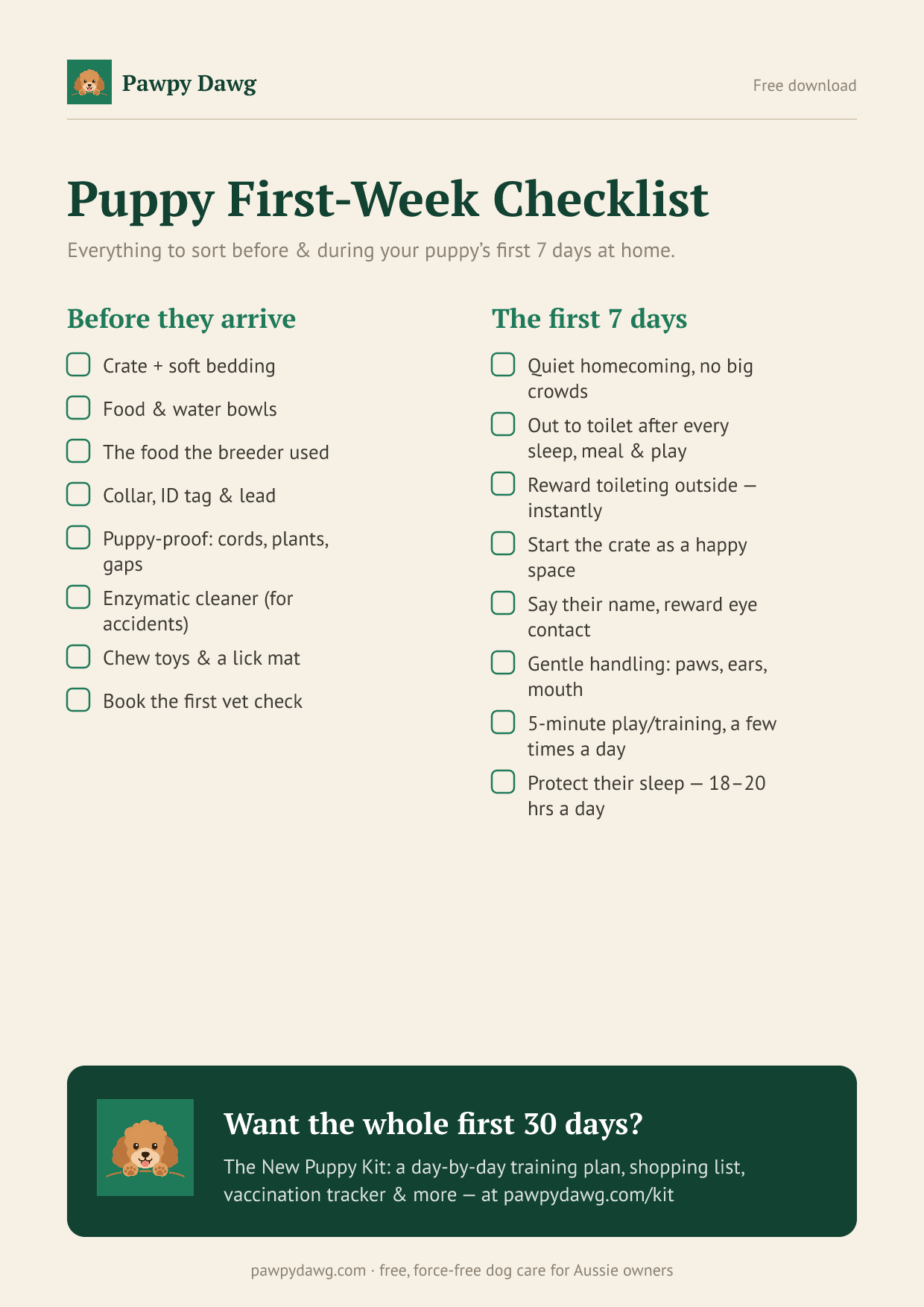
Free: the Puppy First-Week Checklist
Everything to sort before and during your puppy's first 7 days home — a printable one-pager. Plus the occasional genuinely useful dog tip. No spam, unsubscribe anytime.
Related guides
Is Pet Insurance Worth It in Australia? The Honest Maths
Is pet insurance worth it in Australia? We crunch real premiums vs real vet bills — cruciate surgery, snake bite & more — so you can decide with confidence.
Read the guide →
Dog Vaccination Schedule in Australia: What, When and What It Costs
Confused by C3, C5 and kennel cough? Here's your complete dog vaccination schedule Australia cost guide — puppy timelines, adult boosters & typical AUD prices.
Read the guide →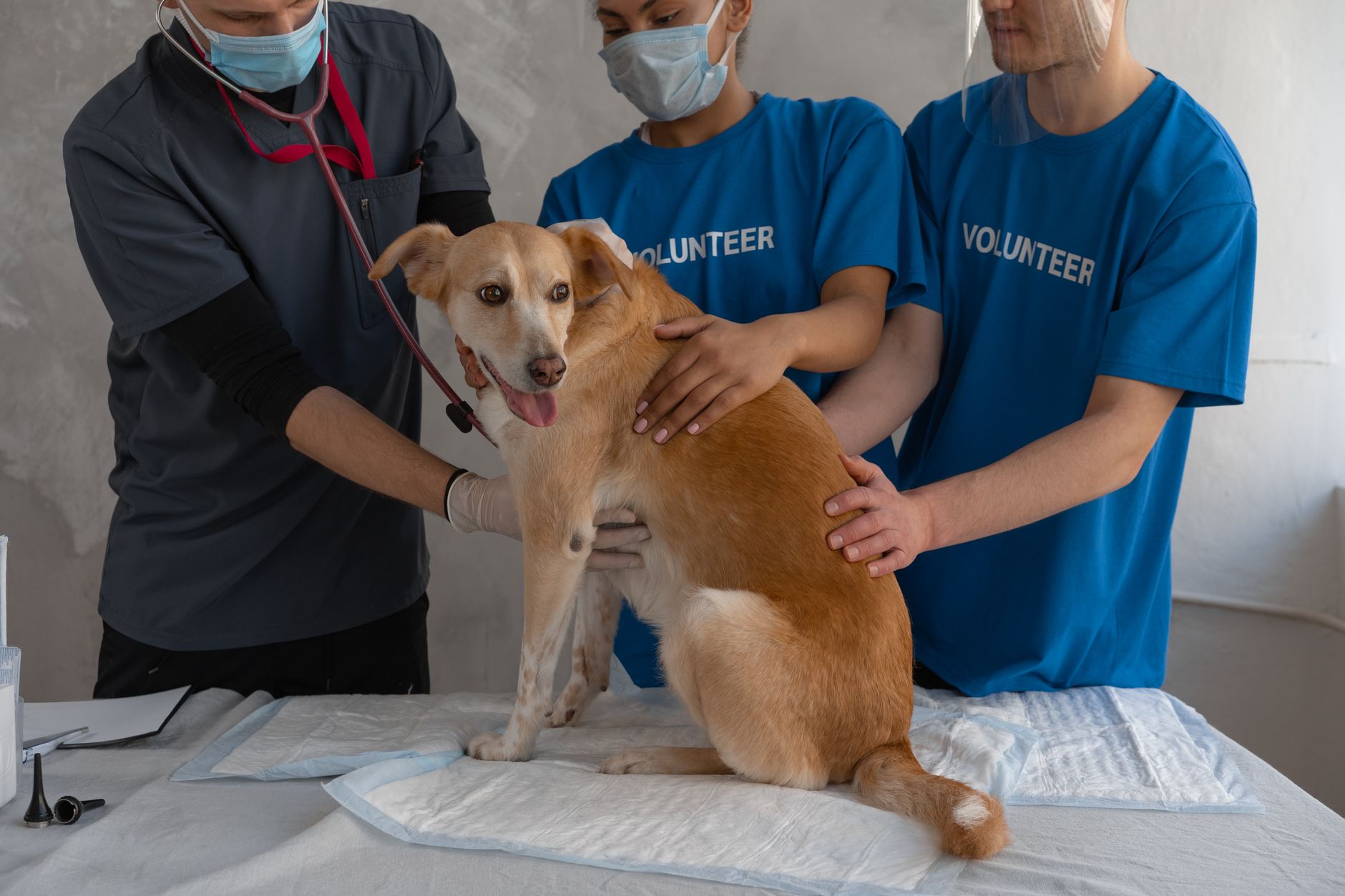
Dog Desexing Costs in Australia: Prices, Timing and Recovery
Dog desexing cost Australia: price ranges by size & state, best timing, low-cost clinic options, and recovery tips every owner needs to know.
Read the guide →