
Snake Bites and Dogs in Australia: Prevention, Signs, Costs
Snake bite dog Australia: spot the signs fast, know the first-aid do's and don'ts, and understand antivenom costs of $2,000–$8,000+ before it happens.

Written by Bradley Brown
Founder & editor · Reviewed 2026-07-04
A quick note: this guide is general information, not veterinary advice. For anything urgent or specific to your dog, your vet is always the right call.
If your dog just had a close encounter with a snake — or you're trying to prepare before it happens — you're in the right place. Australia is home to some of the most venomous snakes on the planet, and dogs are bitten far more often than most owners realise, simply because they're curious, low to the ground, and faster than their owners' warnings.
Here's what you actually need to know, without the panic and without the waffle.
The One Thing to Do Right Now (If You Suspect a Bite)
Get in the car and drive to an emergency vet. Don't wait for symptoms to worsen.
Snake venom in Australian species can cause rapid paralysis, uncontrollable bleeding, and organ failure — sometimes within 30–60 minutes. The single biggest factor in survival is speed of treatment. Phone the clinic while someone else drives, so they can prepare antivenom before you arrive.
If you're rural and far from a vet, call the clinic anyway — they can advise you on how to keep your dog calm and stable during transport.
When Is Snake Season, and Where Is the Risk Highest?
Australian snake activity peaks when ground temperatures rise above about 20°C. As a general guide:
| Region | Peak Risk Period |
|---|---|
| QLD, NT, northern WA | Year-round, peaking Sept–April |
| NSW, ACT, VIC | September–April |
| SA | October–March |
| TAS | November–March |
| WA (south) | September–March |
The species most responsible for dog fatalities include the Eastern Brown Snake, Tiger Snake, Taipan, Red-bellied Black Snake, and Death Adder. Eastern Browns alone cause the majority of snake-bite deaths in Australia — including in suburban backyards, parks, and farmland.
Risk is higher:
- Around long grass, leaf litter, timber piles, and rocky outcrops
- Near water sources, especially in summer
- At dawn and dusk when snakes are most active
- On warm days following a cold snap (snakes bask to warm up)
Signs of Snake Bite in Dogs
The bite wound itself is often invisible — two small puncture marks hidden in fur. Symptoms are your real warning system.
Early signs (may appear within minutes to 2 hours):
- Sudden yelping or flinching, then apparent "recovery"
- Shaking or trembling
- Dilated pupils
- Vomiting
- Weakness in the hindquarters or a wobbly, drunken gait
- Drooling or excessive salivation
Progressing signs — treat as an emergency immediately:
- Collapse, then seeming to "get better" (this false recovery is dangerous — venom is still working)
- Loss of bladder or bowel control
- Muscle paralysis, including difficulty breathing
- Pale or white gums
- Bleeding from the nose, mouth, or bite site that won't stop
The "collapse then recovery" pattern is a known feature of Brown Snake envenomation and often causes owners to delay treatment. Do not be reassured by apparent improvement — get to a vet.
First Aid: What to Do (and What Not to Do)
DO:
- Keep your dog as still and calm as possible. Movement circulates venom faster.
- Carry your dog to the car rather than letting them walk.
- Note the time the suspected bite or symptom onset occurred.
- Try to note the snake's appearance (colour, pattern, size) if you can do so safely — it helps the vet select antivenom faster. Do not attempt to catch or kill it.
- Call the vet ahead so they're ready on arrival.
DON'T:
- Don't apply a tourniquet. Australian snake venoms are not effectively restricted by tourniquets and cutting off circulation causes tissue damage.
- Don't cut the wound or try to suck out venom. This is an outdated and harmful practice.
- Don't wash the bite site before reaching the vet — some clinics can use a venom detection kit on skin swabs.
- Don't give human pain relief (paracetamol is toxic to dogs; ibuprofen is dangerous too).
- Don't wait at home to "see how they go."
Pressure immobilisation bandaging (used in human snakebite first aid) is not currently recommended for dogs by Australian veterinary guidelines — it can cause pain and restrict breathing in animals.
Treatment and Costs: What to Expect at the Vet
Treatment typically involves:
- Venom detection test — a urine or wound-swab kit that identifies the snake group
- Antivenom administration — the primary treatment; may require more than one vial
- IV fluids and supportive care
- Hospitalisation — often 24–48 hours minimum for monitoring
How Much Does Snake Bite Treatment Cost in Australia?
This is where many owners get a shock they weren't prepared for.
| Cost Component | Approximate Range (AUD) |
|---|---|
| Emergency consult + assessment | $200–$500 |
| Single vial of antivenom | $800–$1,500+ |
| Multiple vials (severe cases) | $2,000–$5,000+ |
| IV fluids, hospitalisation, monitoring | $500–$2,000 |
| Total treatment (typical range) | $2,000–$8,000+ |
Costs vary significantly by location (metropolitan emergency clinics tend to charge more), severity, and species involved. Brown Snake antivenom and Polyvalent antivenom (used when the species is unknown) are among the most expensive.
Pet Insurance and Snake Bites
Most comprehensive pet insurance policies in Australia do cover snake bite treatment as an emergency/illness event — but the details matter.
What to check in your policy:
- Annual benefit limit — a $5,000 limit may not cover a severe envenomation
- Sub-limits on emergency care — some policies cap emergency consultations separately
- Waiting periods — most policies have a 30-day waiting period before illness claims are valid; don't wait until snake season has started
- Excess (co-payment) — know your out-of-pocket amount upfront
- Benefit percentage — 80% reimbursement on an $8,000 bill still leaves you $1,600 out of pocket
Insurers like PetSure (which underwrites RSPCA, Woolworths, and others), Bow Wow Meow, and Knose are commonly used in Australia. Always read the Product Disclosure Statement before assuming snake bites are included.
If you're uninsured, ask the vet clinic about payment plans — many use services like VetPay or humm (formerly Certegy) for large unexpected bills.
Prevention: Reducing the Risk at Home and on Walks
You won't eliminate risk entirely, but you can reduce it meaningfully:
- Keep grass mowed short in your backyard and remove debris piles, corrugated iron, and timber stacks where snakes shelter
- Walk on cleared paths — avoid long grass, especially at dawn and dusk in warm months
- Keep dogs on-lead near bushland, creek lines, and rocky areas during peak season
- Train a reliable "leave it" or recall — a dog that comes back when called has a meaningful survival advantage
- Supervise dogs outdoors in high-risk areas rather than leaving them to free-roam
- Check the yard before letting dogs out in the morning during warm months, especially after rain
Snake-aversion training (using professional trainers with safely managed snakes) is available in some states and can be effective, particularly for working dogs or dogs in high-risk rural areas. Ask a qualified trainer about availability in your region.
A Quick Reference Checklist
Print this or screenshot it now:
- Nearest 24-hour emergency vet address saved in your phone
- Pet insurance policy reviewed and up to date before snake season
- Vet's number in your contacts
- Dogs walked on-lead in bushy or grassy areas during warm months
- Yard cleared of snake-friendly shelter (timber, debris, leaf piles)
- Symptoms known: wobbly gait, collapse, pale gums, dilated pupils = emergency
A snake bite is one of those emergencies where preparation genuinely saves lives. Knowing what to do — and what not to do — before it happens means you act faster and smarter when every minute counts.
Frequently asked questions
How quickly can a snake bite kill a dog in Australia?
It depends on the species, the amount of venom injected, and the dog's size. Eastern Brown Snake envenomation can cause collapse within 30–60 minutes and be fatal within hours without treatment. Smaller dogs are at greater risk due to their lower body weight relative to the venom dose. Never wait for symptoms to progress — go straight to a vet.
Can a dog survive a snake bite without treatment?
Some dogs survive minor envenomations without treatment, particularly from species like the Red-bellied Black Snake which delivers less potent venom. However, you cannot know which species was involved or how much venom was injected, so this is an enormous gamble. Untreated Brown Snake or Tiger Snake bites are frequently fatal. Always seek veterinary care immediately.
How much does snake bite treatment cost for a dog in Australia?
Total treatment typically ranges from $2,000 to $8,000 AUD or more, depending on the species involved, the number of antivenom vials required, and hospitalisation time. Antivenom alone can cost $800–$1,500 per vial, and severe cases may need multiple vials. Emergency clinic fees and overnight monitoring add significantly to the total.
Does pet insurance cover snake bites in Australia?
Most comprehensive pet insurance policies in Australia cover snake bite treatment as an illness or emergency event. Check your policy's annual limit, any sub-limits on emergency care, the benefit percentage, and whether a waiting period applies. It's important to have cover in place before snake season starts, as most policies have a 30-day waiting period for illness claims.
What does a snake bite look like on a dog?
The bite wound itself is often impossible to find — two small puncture marks hidden beneath the fur. Owners usually first notice behavioural or neurological symptoms: sudden yelping, trembling, weakness in the back legs, dilated pupils, vomiting, or collapse. A dog that collapses and then appears to recover should still be treated as an emergency, as this 'false recovery' is a known feature of Brown Snake envenomation.
Which snakes are most dangerous to dogs in Australia?
The Eastern Brown Snake is responsible for the majority of snakebite deaths in Australia and is found across much of the eastern states including suburban areas. Tiger Snakes, Taipans, Death Adders, and Red-bellied Black Snakes also pose serious risks. The Eastern Brown and Tiger Snake are considered the highest risk to dogs due to their prevalence and highly toxic venom.
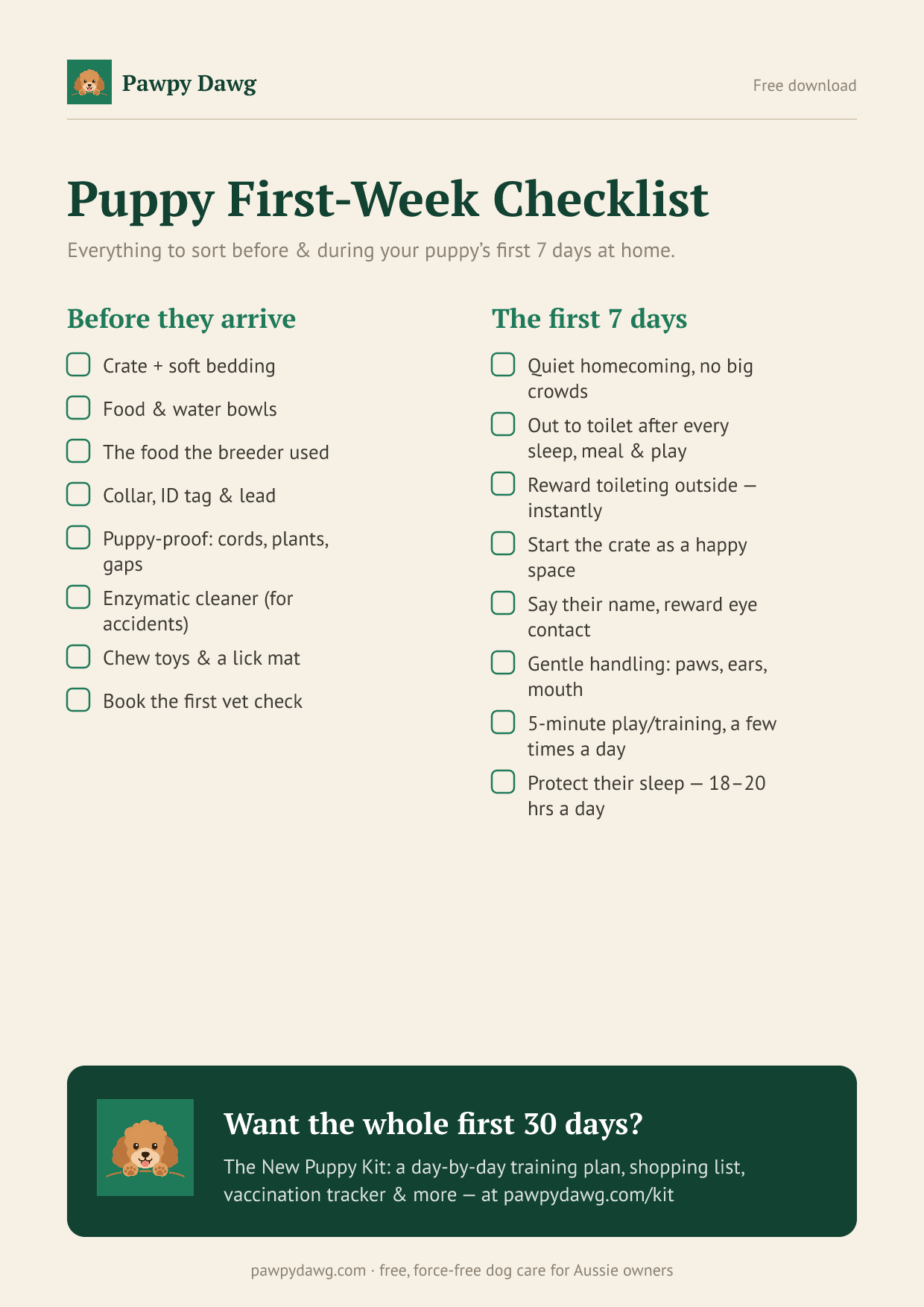
Free printable
Free: the Puppy First-Week Checklist
Everything to sort before and during your puppy's first 7 days home — a printable one-pager. Plus the occasional genuinely useful dog tip. No spam, unsubscribe anytime.
Related guides

Is Pet Insurance Worth It in Australia? The Honest Maths
Is pet insurance worth it in Australia? We crunch real premiums vs real vet bills — cruciate surgery, snake bite & more — so you can decide with confidence.
Read the guide →
How Much a Dog Really Costs Per Year in Australia (2026 Breakdown)
How much does a dog cost per year in Australia? 2026 line-item breakdown covering food, vet, insurance, grooming & the costs first-timers always miss.
Read the guide →
Dog Vaccination Schedule in Australia: What, When and What It Costs
Confused by C3, C5 and kennel cough? Here's your complete dog vaccination schedule Australia cost guide — puppy timelines, adult boosters & typical AUD prices.
Read the guide →