
Dog Desexing Costs in Australia: Prices, Timing and Recovery
Dog desexing cost Australia: price ranges by size & state, best timing, low-cost clinic options, and recovery tips every owner needs to know.

Written by Bradley Brown
Founder & editor · Reviewed 2026-07-03
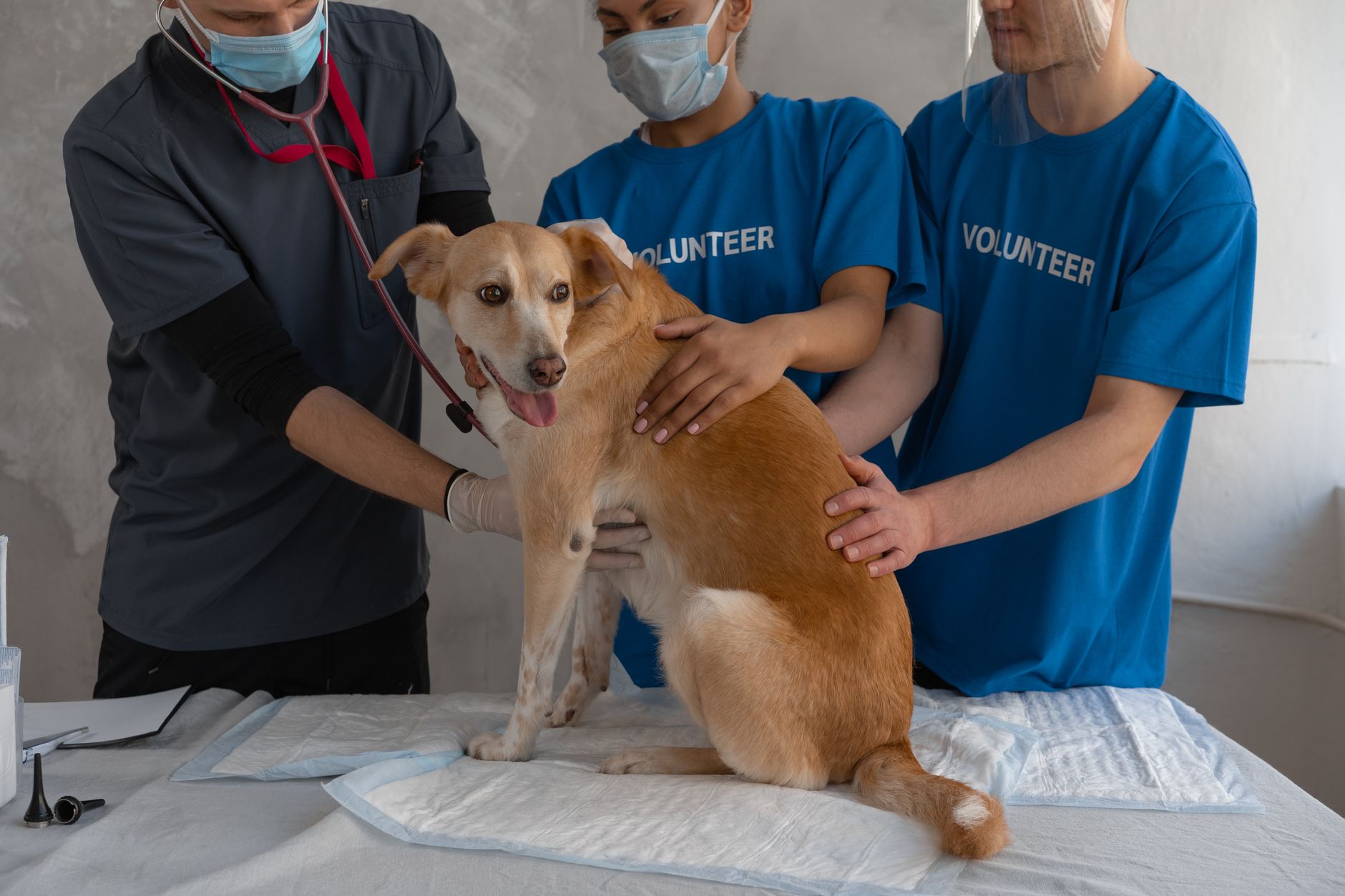
A quick note: this guide is general information, not veterinary advice. For anything urgent or specific to your dog, your vet is always the right call.
You've been putting it off — the cost, the recovery, the worry about getting the timing right. Meanwhile the vet keeps mentioning it, your dog just had another phantom pregnancy, or your male has started marking everything in the house. You're not a bad owner. Desexing decisions are genuinely confusing, and the price variation across Australia doesn't help. Here's everything you actually need to know.
What Does Dog Desexing Cost in Australia?
Prices vary significantly based on your dog's size, sex, state, and whether you use a private vet or a subsidised clinic. Females cost more than males because the surgery is more complex (it's an internal procedure, not just a scrotal incision).
Typical Price Ranges by Dog Size
| Dog Size | Male (Castration) | Female (Spay) |
|---|---|---|
| Small (under 10 kg) | $250 – $450 | $350 – $550 |
| Medium (10–25 kg) | $300 – $550 | $450 – $700 |
| Large (25–45 kg) | $400 – $650 | $550 – $900 |
| Giant (45 kg+) | $500 – $800 | $700 – $1,200+ |
Note: These are indicative ranges based on typical Australian private veterinary pricing. Your clinic's quote will vary — always ask for an itemised estimate upfront.
Why Prices Differ by State
- Metro vs regional: City clinics generally charge more due to higher overheads. A desex in regional Queensland or South Australia can run $100–$200 cheaper than inner-Sydney or Melbourne.
- Council registration discounts: Most Australian councils charge a lower annual registration fee for desexed dogs — often $40–$100 less per year. Over a dog's lifetime, that saving more than offsets the surgery cost.
- Pre-surgical bloodwork: Some vets recommend (or require) pre-anaesthetic bloods for older dogs or certain breeds, adding $80–$150 to the bill. Ask if it's mandatory or optional for a healthy young dog.
Low-Cost Desexing Options in Australia
If the standard quote is out of reach right now, there are legitimate, quality options:
- RSPCA desexing programs: The RSPCA in several states offers subsidised desexing, particularly for low-income households or rescue dogs. Check your state RSPCA website for current availability.
- Animal Welfare League (AWL): Operates low-cost vet clinics in NSW, QLD, and SA. Prices can be 30–50% below private vet rates.
- PetBarn Vet Clinics: Often priced competitively; worth calling for a quote.
- Desex Your Pet (formerly DPVS): A national low-cost desexing network. Search desexpet.com.au for participating clinics near you.
- Council-run events: Some councils partner with vets for subsidised desexing days, particularly in outer suburbs and regional areas. Contact your local council directly.
Quick win you can do today: Ring two or three clinics in your area and ask for an itemised quote for a desex. You'll often find a $150–$300 price difference for identical procedures. Takes ten minutes and saves you real money.
When Should You Desex? The Timing Debate Explained
This is where it genuinely gets complicated, and the advice has shifted in recent years.
Traditional Timing (the old standard)
- Females: Before first heat, around 5–6 months
- Males: Around 6 months
This timing reduces mammary tumour risk in females (desexing before first heat gives roughly 99% protection) and prevents unwanted litters.
Early-Age Desexing (8–16 weeks)
Many shelters and rescue groups desex puppies as young as 8 weeks before rehoming. Research supports this as safe — anaesthetic risk is low in healthy puppies, and recovery is faster. Some studies suggest similar long-term outcomes to traditional timing for most breeds.
Delayed Desexing for Large Breeds
More recent research — particularly for large and giant breeds — suggests waiting until 12–18 months (or even 24 months for giants like Great Danes) may reduce the risk of certain orthopaedic conditions (like hip dysplasia) and some hormone-sensitive cancers. This is because sex hormones play a role in musculoskeletal development.
The practical takeaway:
- Small to medium breed? The 5–6 month window is well-supported and keeps mammary tumour risk low in females.
- Large or giant breed? Talk to your vet specifically about timing. A tailored conversation is worth more than a general rule.
- Rescue dog that's already been desexed early? Don't stress — the evidence of harm in small/medium breeds is limited.
Recovery: What to Actually Expect
Most dogs bounce back faster than their owners expect — but the 10–14 day period after surgery is when complications most often occur, almost always because the dog was too active too soon.
Day-by-Day Recovery Guide
Day 1–2 (Home from surgery):
- Dog will be groggy from anaesthetic. Keep them quiet and warm.
- Offer water; don't push food if they're not interested — nausea is normal.
- Check the incision site once in the morning and once in the evening. Look for: excessive swelling, redness spreading outward, discharge, or the wound opening.
Day 3–7:
- Short, lead-only toilet walks (5 minutes maximum). No running, jumping, or rough play.
- The Elizabethan collar (cone) is non-negotiable if your dog is licking the wound — licking introduces bacteria and is the number one cause of post-op infections.
- Many dogs act completely normal by day 3 and push to play. Don't be fooled. Internal healing takes longer than surface healing.
Day 7–14:
- If using non-dissolvable sutures, your vet will schedule a stitch removal.
- Gradually increase walk length from day 10 if the wound looks clean and closed.
- No swimming, dog parks, or off-lead running until the vet gives the all-clear.
Signs You Need to Call the Vet
- Wound is open, or edges pulling apart
- Swelling that's growing, not shrinking
- Discharge that is yellow, green, or smells bad
- Dog is lethargic, off food, or vomiting more than 24 hours post-surgery
- Pale gums, laboured breathing, or extreme distress (these are emergencies — call immediately)
Hidden Costs Worth Budgeting For
| Item | Approximate Cost (AUD) |
|---|---|
| Pre-anaesthetic bloodwork | $80 – $150 |
| E-collar (cone) if not included | $15 – $40 |
| Post-op pain relief (take-home) | $20 – $60 |
| Follow-up consultation | $0 – $80 (varies by clinic) |
| Soft recovery suit (alternative to cone) | $25 – $60 |
Some clinics bundle these into the desex quote; others itemise them separately. When you call for a quote, ask: "Does that price include anaesthetic, pain relief to take home, and the post-op check?"
Is Pet Insurance Worth It for This?
Most pet insurance policies in Australia exclude desexing as it's an elective procedure. However, if your dog develops a pyometra (uterine infection — a reason some dogs need emergency spays), that may be covered under illness policies. If you're getting a puppy, it's worth reading the fine print of any policy before you sign up.
The Bottom Line on Cost
For most Australian dog owners, desexing a small-to-medium dog will cost between $350 and $650 all-in. It's a one-time expense with lifelong benefits — prevention of uterine infections, mammary tumours, testicular cancer, and many roaming/aggression behaviours. If the upfront cost is a barrier, low-cost clinic networks exist specifically to help. You're not stuck with the first quote you get.
Frequently asked questions
How much does it cost to desex a dog in Australia?
Costs typically range from $250–$450 for a small male up to $1,200+ for a large female at a private vet. Size, sex, state, and clinic type all affect the price. Low-cost options through the RSPCA, Animal Welfare League, or networks like Desex Your Pet can reduce costs by 30–50%.
At what age should I desex my dog in Australia?
For small to medium breeds, 5–6 months is the traditional recommendation and remains well-supported. For large and giant breeds, many vets now recommend waiting until 12–18 months to allow musculoskeletal development. Talk to your vet about the right timing for your specific dog's breed and size.
How long does it take for a dog to recover from desexing?
Most dogs are visibly back to normal within 3–5 days, but full internal healing takes 10–14 days. During this time, restrict activity to short lead walks, use an e-collar if your dog is licking the wound, and check the incision site daily for signs of infection.
Are there low-cost desexing options available in Australia?
Yes. The RSPCA, Animal Welfare League, PetBarn Vet Clinics, and the Desex Your Pet network all offer reduced-cost procedures. Some councils also run subsidised desexing days. Calling two or three clinics for itemised quotes is one of the simplest ways to find a better price.
Does pet insurance cover desexing costs in Australia?
In almost all cases, no — desexing is considered an elective procedure and is excluded from standard pet insurance policies in Australia. It's worth checking policy fine print, as some complications arising from an undesexed dog (like pyometra) may be covered under illness benefits.
Is early-age desexing (before 12 weeks) safe for puppies?
Yes, research supports early-age desexing from around 8 weeks as safe for healthy puppies — it's routine practice in Australian shelters and rescues. Recovery is typically quick. For large and giant breeds, the more relevant consideration is whether to delay beyond 6 months to support healthy bone development.
Free printable
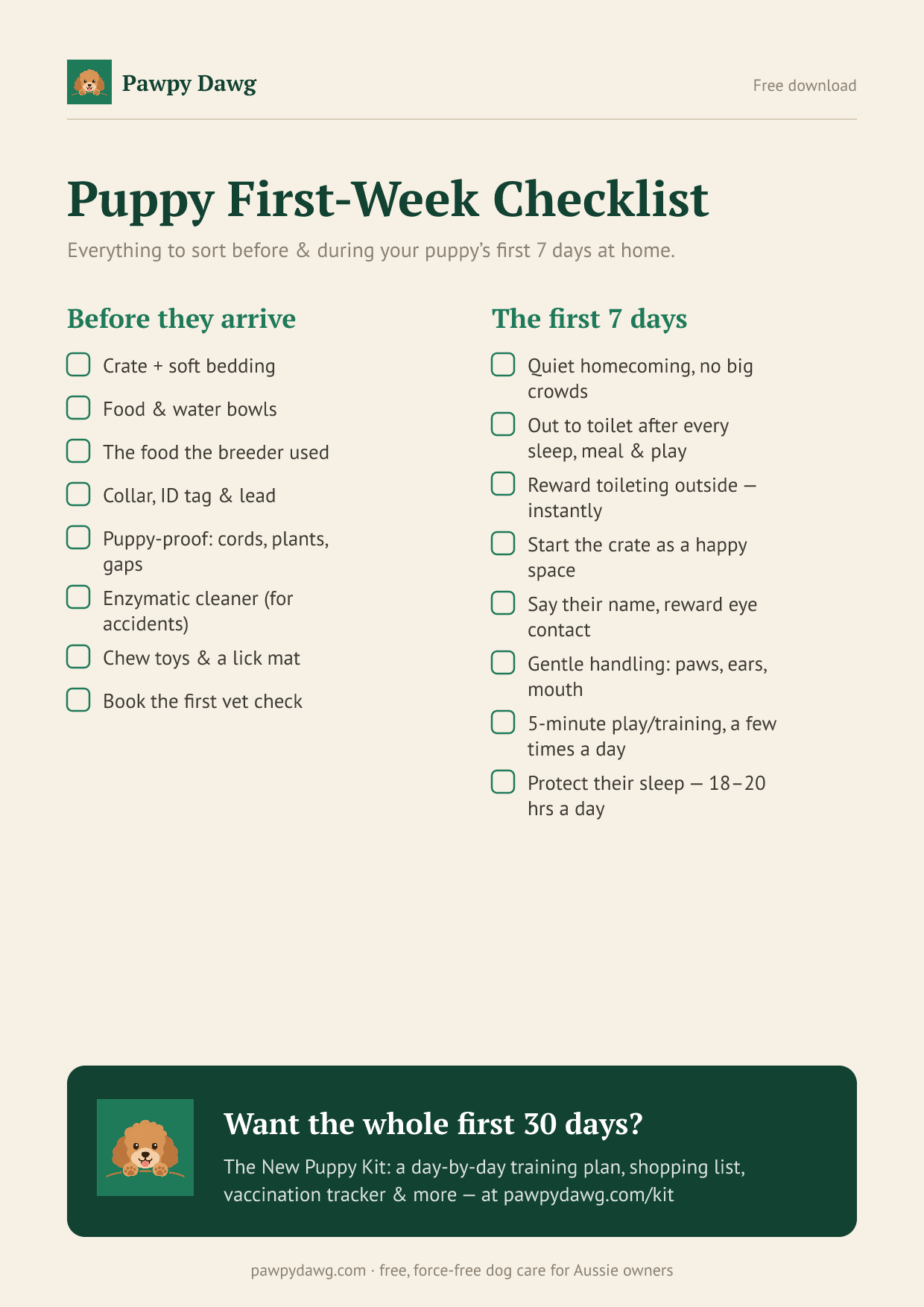
Free: the Puppy First-Week Checklist
Everything to sort before and during your puppy's first 7 days home — a printable one-pager. Plus the occasional genuinely useful dog tip. No spam, unsubscribe anytime.
Related guides
Is Pet Insurance Worth It in Australia? The Honest Maths
Is pet insurance worth it in Australia? We crunch real premiums vs real vet bills — cruciate surgery, snake bite & more — so you can decide with confidence.
Read the guide →
How Much a Dog Really Costs Per Year in Australia (2026 Breakdown)
How much does a dog cost per year in Australia? 2026 line-item breakdown covering food, vet, insurance, grooming & the costs first-timers always miss.
Read the guide →
Dog Vaccination Schedule in Australia: What, When and What It Costs
Confused by C3, C5 and kennel cough? Here's your complete dog vaccination schedule Australia cost guide — puppy timelines, adult boosters & typical AUD prices.
Read the guide →