
Crate Training a Puppy: Surviving the First Night (and Week)
Dreading crate training your puppy's first night? Get an honest hour-by-hour plan, the crying question answered, and a 7-day progression that actually works.

Written by Bradley Brown
Founder & editor · Reviewed 2026-07-03
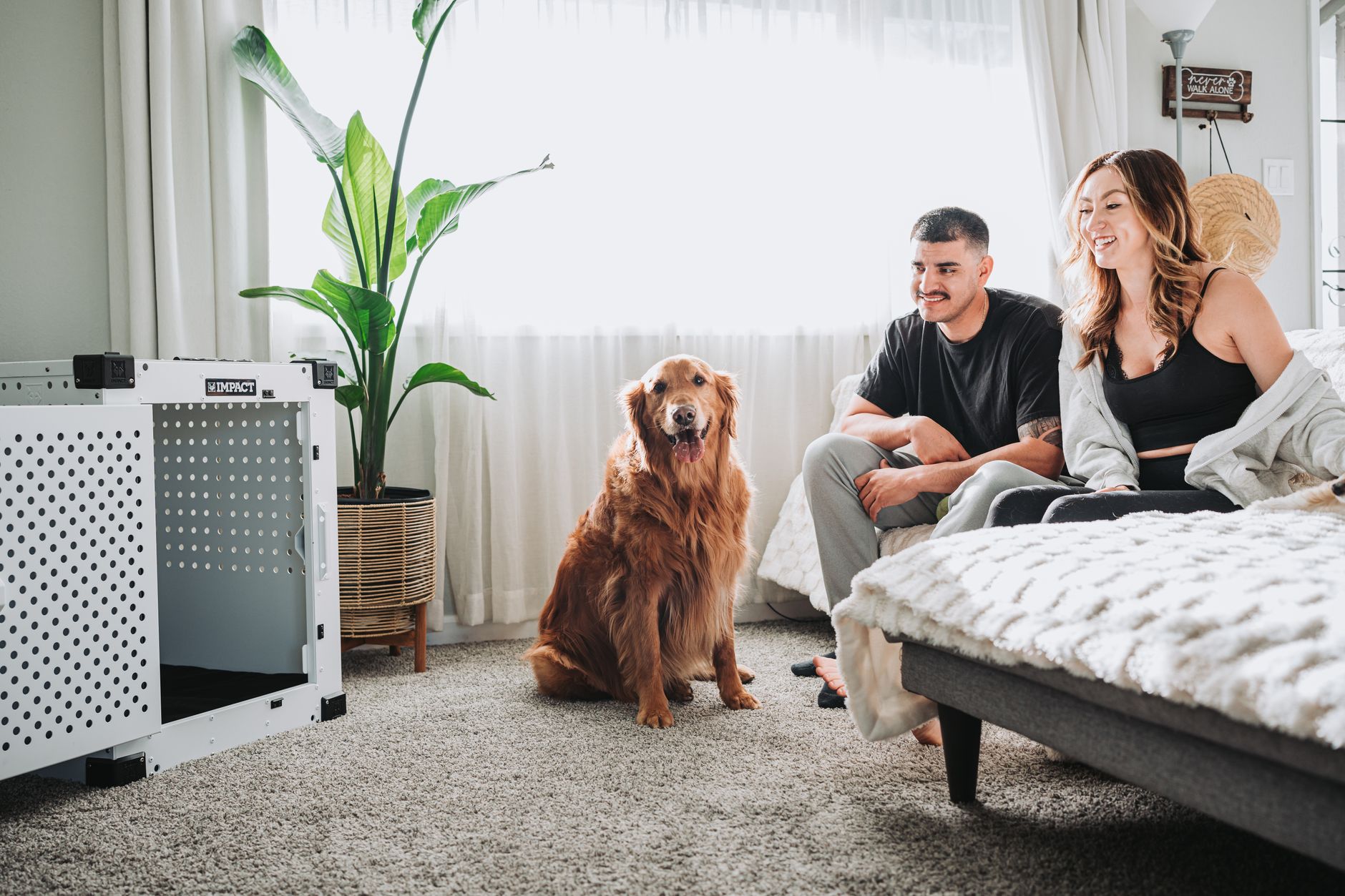
If tonight is the night you've put the puppy in the crate and walked away — only to stand in the hallway listening to tiny, heartbreaking howls — you're not alone, and you haven't ruined anything. This is one of the hardest moments in early puppy ownership, and it feels awful precisely because you care. The good news: crate training is a learnable skill, the crying almost always peaks on night one, and most puppies settle into a routine within a week.
Here's exactly what to do.
Before Bed: Set Yourself Up for Success
The one thing you can do today: Make the crate smell familiar. Toss in an unwashed t-shirt or a small piece of bedding that smells like you. This alone can reduce the intensity of first-night crying — it's not magic, but it works because puppies are guided by scent far more than sight.
A few other quick prep steps worth doing now:
- Location matters. For the first week, put the crate in your bedroom or just outside the door. Puppies cry louder and longer when they feel isolated. Proximity to you is not spoiling — it's good husbandry.
- Cover three sides. Drape a blanket over the top and sides (leaving the door end open for airflow). This reduces visual stimulation and mimics a den.
- Right-size the crate. Your puppy should be able to stand, turn around, and lie down — nothing more. A crate that's too large lets them toilet at one end and sleep at the other, which slows house training considerably.
- Final toilet break. Take your puppy outside to their toilet spot within 15 minutes of crate time. Wait for them to go — don't rush it.
The First Night: Hour by Hour
This isn't a rigid script, but it gives you a framework so you're not making decisions on the fly at 2 am.
| Time | What to do |
|---|---|
| 9:00 pm | Wind-down period. Lower lights, reduce play. Let the puppy sniff and explore the crate freely with the door open. Drop a few small treats inside. |
| 9:30 pm | Toilet break outside. Stay calm and boring — this isn't playtime. |
| 9:45 pm | Place puppy in the crate with a safe chew (a filled Kong frozen the night before is ideal). Close the door quietly. Sit nearby but don't fuss. |
| 10:00 pm | Lights out. You go to bed. The puppy may whine. |
| Night check | Most 8–12 week old puppies need a toilet break every 3–4 hours. Set an alarm rather than waiting for crying — you want to get there before they've already toileted in the crate. |
| Toilet break | No talking, no eye contact, no play. Carry them outside, wait for them to go, carry them back, back in the crate. This is a transaction, not a party. |
The Crying Question — Answered Honestly
This is where most advice either goes too soft ("just ignore it") or too hard ("never respond"). The reality is more nuanced.
Puppies cry in the crate for a few different reasons:
- Loneliness or anxiety (normal and expected)
- Needing to toilet (legitimate need — always check first)
- Learned response — they've discovered that crying brings you back (this develops quickly if the response is inconsistent)
A practical rule: If your puppy has toileted recently and is physically comfortable, a short burst of whining can be waited out. If the crying escalates, is high-pitched and frantic, or has gone on for more than 10–15 minutes without any pause, go to them — not to let them out, but to calmly check on them, reassure briefly, and leave again. Leaving a puppy to cry indefinitely until they "give up" is not a method supported by modern veterinary behavioural guidance, and it can undermine trust.
What you're aiming for is graduated settling: you're present enough that the puppy doesn't panic, but consistent enough that they learn the crate is safe.
Night one is almost always the worst. Many owners report that night two and three are already noticeably better. If crying is still intense after five or six nights with no improvement, consider whether the crate setup needs adjusting or whether a vet check for discomfort is warranted.
The 7-Day Progression
Keep sessions short. You're not training for hours — you're building a small, daily habit.
Days 1–2: Crate = Good Things
- 3–4 times during the day, drop treats into the crate while the door stays open
- Feed one meal inside the crate (door open)
- Total active training time: 5 minutes
Days 3–4: Door Closes Briefly
- Feed meals with the door closed; open it again as soon as they finish
- Practice short departures: close the door, walk across the room, return in 30 seconds
- Build up to 5 minutes closed during the day while you're in the room
- Total active training time: 5–8 minutes
Days 5–6: Short Absences
- Puppy should now do 15–20 minutes in the crate while you're home
- Start a "crate cue" — a consistent word like "crate" or "bed" said calmly before they go in, every time
- Continue overnight routine from night one
- Total active training time: 8–10 minutes
Day 7: Check-in
Ask yourself:
- Does the puppy enter the crate without significant resistance?
- Can they settle for 20+ minutes during the day?
- Are overnight wake-ups reducing in frequency?
- Is daytime crying decreasing?
If you're ticking most of these boxes, you're on track. If not, simply stay at the current stage another two or three days. There's no deadline.
Common Mistakes Worth Knowing About
Letting them out when they cry. This teaches the puppy that crying is the exit button. If you need to get them out (e.g., they need to toilet), wait for even a five-second pause in the crying before opening the door. You're reinforcing quiet, not the noise.
Too much too soon. Eight hours in a crate from day one is unreasonable for a young puppy — physically and emotionally. Work up to longer periods gradually.
The crate as punishment. Never send a puppy to the crate after a scolding. The crate needs to remain a neutral-to-positive space. If they've had an accident or chewed something, deal with it matter-of-factly and move on.
Skipping the middle-of-the-night toilet trip. Young puppies simply don't have the bladder capacity to go eight hours. Expecting them to is setting everyone up for a wet crate and a setback in house training.
A Note on Timing and Age
Puppies under 12 weeks have very limited bladder control — expect toilet trips every 2–3 hours overnight. By 16 weeks, many can manage 4–5 hours. Most puppies can reliably sleep through the night (6–7 hours) by around 4–5 months, though there's genuine individual variation. If your puppy is older and hasn't been crate trained before, the same steps apply — just expect a slightly longer adjustment period in some cases.
The first night is the hardest night. You're already doing the right thing by knowing what to expect.
As an Amazon Associate we earn from qualifying purchases.
Frequently asked questions
How long will my puppy cry in the crate on the first night?
Most puppies cry intermittently for anywhere from 20 minutes to a couple of hours on night one, with the intensity usually peaking early and tapering off. Night two and three are typically better. If crying remains intense and constant after five or more nights, check the crate setup, rule out physical discomfort, and consider speaking with your vet.
Should I ignore my puppy crying in the crate at night?
Not entirely. Modern veterinary behavioural guidance recommends a graduated approach: if your puppy has recently toileted and is comfortable, a short burst of whining can be waited out. But if crying escalates or goes on for more than 10–15 minutes without a pause, briefly check on them without making a fuss, then leave again. Always check whether they need a toilet trip first.
Where should I put the crate on the first night?
In or very close to your bedroom for the first week at least. Puppies who can hear and smell you nearby settle more quickly and cry less intensely than those left in a separate room. You can gradually move the crate to its permanent location once your puppy is comfortable and settled.
How often does a puppy need a toilet break overnight?
At 8–12 weeks, every 2–3 hours is realistic. By 12–16 weeks, many puppies can manage 3–4 hours. Set an alarm and take them out proactively rather than waiting for them to cry — this helps prevent accidents in the crate and keeps house training on track.
Is it cruel to crate train a puppy?
When done correctly, crate training is not cruel — it gives puppies a safe, predictable space and supports house training. The key is that crate time is built up gradually, the crate is never used as punishment, and young puppies aren't left crated for longer than their age and bladder capacity allow. Most puppies learn to seek out their crate voluntarily once they associate it with rest and safety.
How much does crate training equipment cost in Australia?
A decent wire or plastic crate suitable for a puppy typically costs between $40 and $150 AUD depending on size and brand, with collapsible wire crates at the more affordable end. A good-quality frozen Kong stuffed with puppy-safe food (peanut butter, kibble, banana) costs very little to prepare at home and is one of the most effective crate training tools available.
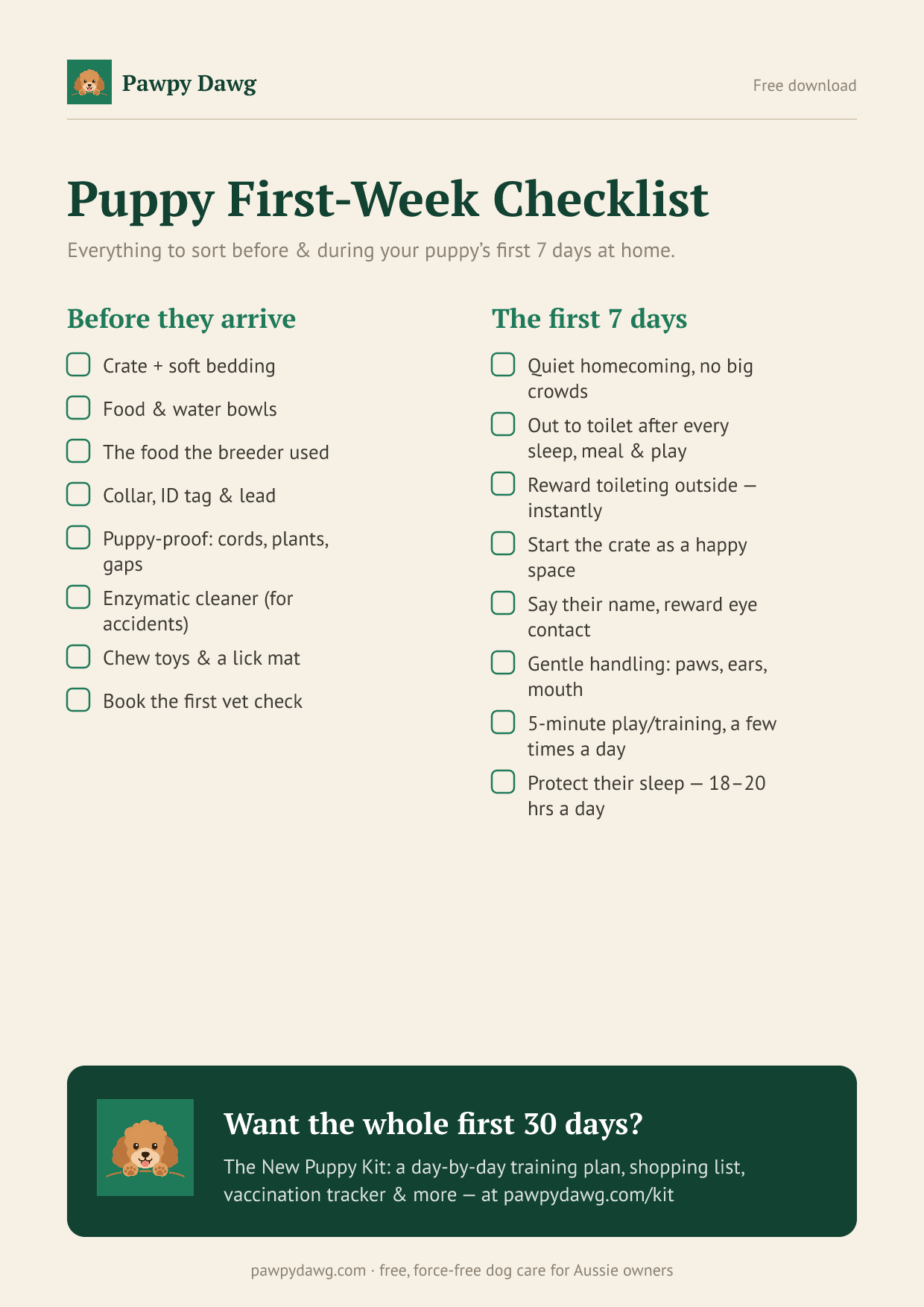
Free printable
Free: the Puppy First-Week Checklist
Everything to sort before and during your puppy's first 7 days home — a printable one-pager. Plus the occasional genuinely useful dog tip. No spam, unsubscribe anytime.
Related guides
Is Pet Insurance Worth It in Australia? The Honest Maths
Is pet insurance worth it in Australia? We crunch real premiums vs real vet bills — cruciate surgery, snake bite & more — so you can decide with confidence.
Read the guide →
How Much a Dog Really Costs Per Year in Australia (2026 Breakdown)
How much does a dog cost per year in Australia? 2026 line-item breakdown covering food, vet, insurance, grooming & the costs first-timers always miss.
Read the guide →
Dog Vaccination Schedule in Australia: What, When and What It Costs
Confused by C3, C5 and kennel cough? Here's your complete dog vaccination schedule Australia cost guide — puppy timelines, adult boosters & typical AUD prices.
Read the guide →