
Labrador Retriever Training Guide: A Realistic 8-Week Plan
A realistic 8-week labrador retriever training plan built around their temperament, energy, and love of food — no punishments, no guilt, just results.

Written by Bradley Brown
Founder & editor · Reviewed 2026-07-15
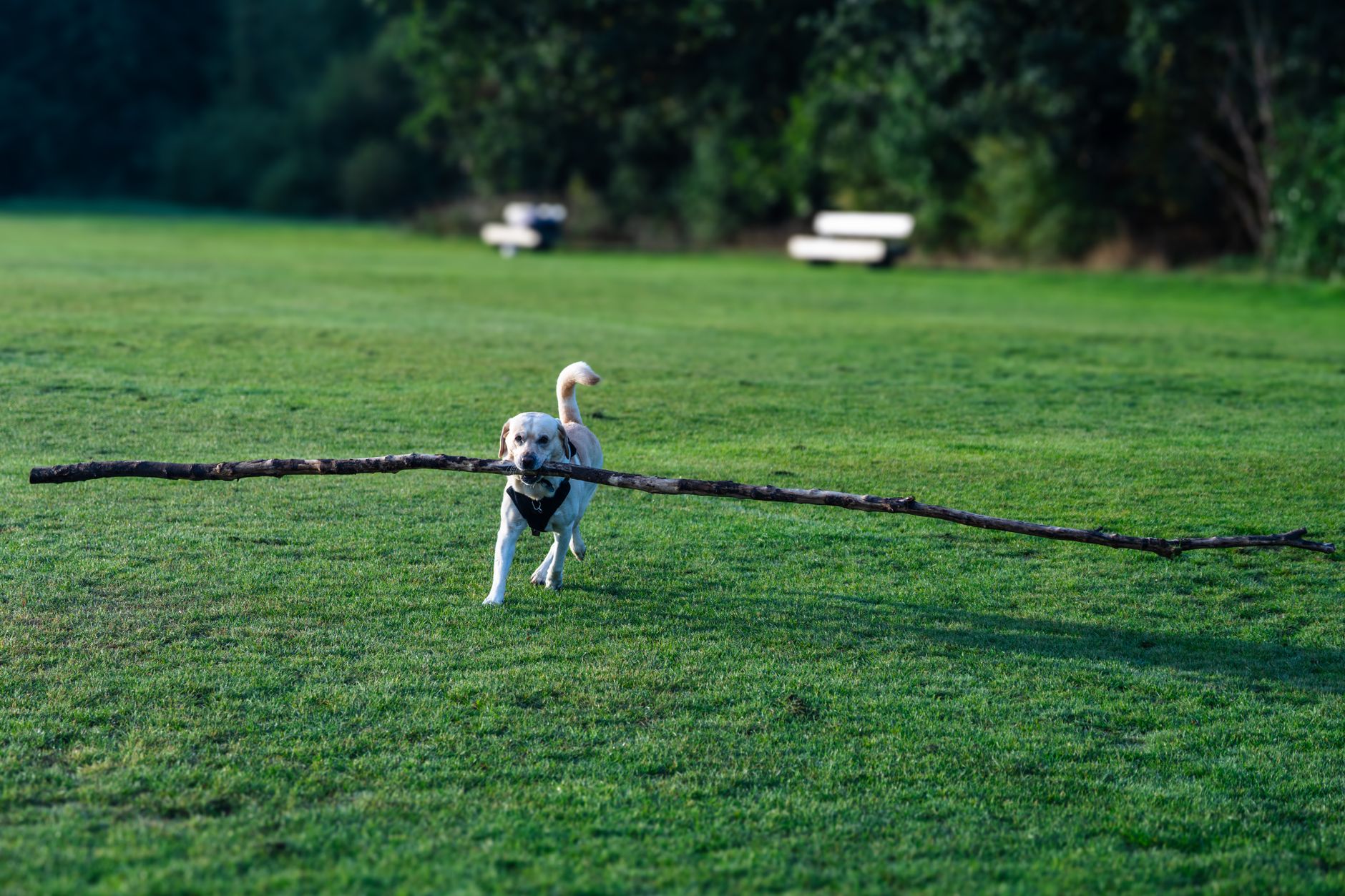
The single worst piece of advice still floating around Labrador owner forums is this: wait until your dog is six months old before you start training, so they're "ready." It sounds reasonable — puppies are chaotic, attention spans are short, why bother? — but it backfires spectacularly. Every week you wait, your Lab is learning something. Jumping on visitors, mouthing arms, bolting out doors. By six months, those habits have thousands of repetitions behind them. You're not starting from zero; you're starting from a deficit.
Labradors are one of the most trainable breeds on the planet. They're food-motivated, socially wired, and genuinely enjoy working with people. That same wiring also means they're enthusiastic about everything, including bad habits. The earlier you give them a job, the easier your life becomes.
Here's a realistic, week-by-week plan that fits inside 5–10 minutes a day — because that's what actually works with a Lab, and that's what busy owners can sustain.
"Labs are too hyper to train until they calm down"
Labs don't calm down on their own. They calm down because they've learned how. The energy you see in a young Lab isn't a training obstacle — it's fuel. A tired brain settles a busy body far more effectively than a long walk does.
Weeks 1–2: Foundation behaviours
Start with four skills: sit, drop, name recognition, and loose-lead walking (just a few steps at a time). Use your dog's regular meals as training treats — no need to buy anything special. Ten 1-minute sessions across the day beats one exhausting 10-minute marathon.
By the end of week two, most Labs will sit and drop reliably in a low-distraction room. That's not nothing — that's the bedrock everything else builds on.
"You have to show them who's boss or they'll walk all over you"
The dominance theory — the idea that Labs misbehave because they're trying to take over the household — was largely debunked by animal behaviourists decades ago and is rejected by the RSPCA and mainstream veterinary organisations. Applying it in practice means a lot of leash corrections, raised voices, and alpha rolls. With a sensitive, people-pleasing breed like a Lab, this creates anxiety and more problem behaviours, not fewer.
What Labs actually respond to is clear communication and a reliable reward.
Weeks 3–4: Building reliability and manners
Now that sit and drop are solid indoors, start adding:
- Stay — begin with just 3 seconds, reward, release. Build duration before distance.
- Come (recall) — the most important skill your dog will ever learn. Practice in the backyard with a long lead. Never call your dog to you for something unpleasant (bath, nail trim, end of play). Go to them instead.
- Door manners — ask for a sit before any door opens. Labs are notorious door-bolters, and this one habit prevents a lot of near-misses on roads.
Keep using food rewards. A small piece of chicken or the dog's kibble works fine. Labs don't need expensive training treats; they need consistent rewards.
"He knows 'sit' — he's just being stubborn when he ignores me outside"
This one causes enormous frustration because it feels personal. Your Lab isn't staging a protest. What's actually happening is that "sit" indoors and "sit" at the park are, to your dog, two completely different requests learned in two completely different contexts. Dogs don't generalise well without practice — this is called stimulus generalisation, and it's well-documented in animal learning science.
Weeks 5–6: Proofing in the real world
Take every skill you've taught and practise it somewhere new each session:
- Front yard (more distractions than the lounge room)
- Footpath on your street
- Quiet end of a local park
- Outside a café while waiting for your takeaway coffee
Expect a temporary drop in performance — that's normal and means the learning is actually consolidating. Shorten your duration and distance expectations when the environment gets harder. A 10-second stay in the backyard might drop to 3 seconds at the park. Start easy, reward generously, and build back up. Within two weeks, your Lab will start connecting the behaviour to the cue regardless of where you are.
"Pulling on the lead just means the dog needs more exercise"
More exercise often means a fitter dog who can pull harder for longer. Loose-lead walking isn't about energy levels — it's a skill that has to be taught, and Labs need direct practice at it because their forward drive is strong.
Weeks 7–8: Consolidation and the next layer
By now your Lab should have solid foundations across all four core behaviours in multiple locations. These final two weeks are about:
- Loose-lead walking in busier environments — markets, school pick-up zones, areas with other dogs
- Introducing impulse control — "leave it" is the standout skill here. Place a treat on the floor, cover it with your hand, and reward your dog for looking away from it. This underpins everything from ignoring food scraps on footpaths to not chasing the cat.
- Duration on drop-stay — aim for 30–60 seconds in a moderate-distraction environment. This is the calm behaviour you'll use at cafés, barbecues, and vet waiting rooms for the rest of your dog's life.
What you're actually building in 8 weeks
Not a perfectly obedient dog — a dog who understands how to learn from you, and a relationship where communication goes both ways. Most Labradors who go through consistent basic training in the first few months are dramatically easier to live with by the time they're one year old.
If you've adopted an older Lab and you're starting from scratch, the same plan applies — just know that weeks 1–4 might take a little longer as you work through ingrained patterns. Older dogs are absolutely trainable; the science and the experience of rescue organisations backs this up.
Keep sessions short. Keep your expectations realistic week to week. The 5 minutes you put in tonight will compound into a dog who makes your life genuinely better.
As an Amazon Associate we earn from qualifying purchases.
Frequently asked questions
How long does it take to train a Labrador Retriever?
Basic manners — sit, drop, recall, loose-lead walking — can be reliably established in 6–8 weeks with consistent daily practice of around 5–10 minutes. That said, training is ongoing; you're building a communication habit with your dog, not completing a course.
What age should I start training my Labrador puppy?
As soon as you bring them home, typically 8 weeks old. Puppies this age are already learning from their environment, so early structured sessions set good habits before bad ones take hold. Keep sessions very short — 1 to 2 minutes at a time for young pups.
Are Labradors easy to train compared to other breeds?
Yes — Labradors consistently rank among the most trainable breeds. They're highly food-motivated, eager to please, and socially engaged, which makes reward-based training very effective. The main challenge is their enthusiasm and energy, which needs to be channelled rather than suppressed.
Why does my Labrador listen inside but ignore me at the park?
Dogs don't automatically transfer a behaviour learned in one environment to a different one — this is a normal part of how animals learn, not stubbornness. The fix is to practise every skill in progressively more distracting environments, starting easy and building up gradually.
How do I stop my Labrador from pulling on the lead?
Stop moving the moment the lead goes tight, wait for your dog to release the tension, then reward and walk on. It's slow at first, but Labs pick it up quickly once they understand that pulling gets them nowhere. Practise in low-distraction areas before expecting it to work around other dogs or smells.
How much does professional dog training cost in Australia?
Group puppy classes typically run between $150 and $300 AUD for a 4–6 week course, depending on location. Private in-home trainers generally charge $100–$200 AUD per session. Look for trainers who use reward-based methods and are members of the Pet Professional Guild Australia or the Delta Society.
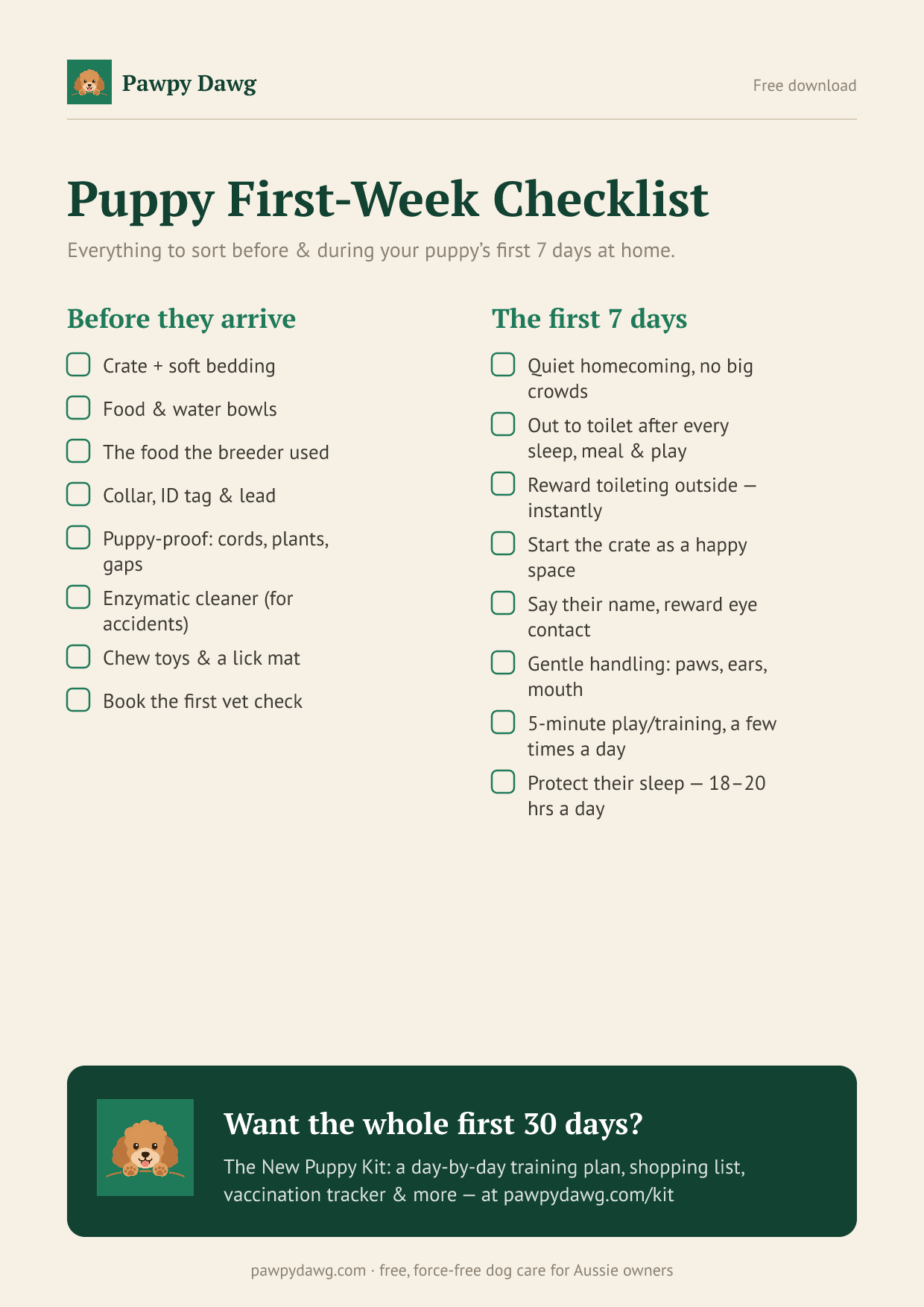
Free printable
Free: the Puppy First-Week Checklist
Everything to sort before and during your puppy's first 7 days home — a printable one-pager. Plus the occasional genuinely useful dog tip. No spam, unsubscribe anytime.
Related guides
How to Stop a Labrador Retriever Pulling on the Lead (Step-by-Step)
Tired of being dragged around the block? Here's a step-by-step positive-reinforcement plan to stop your Labrador Retriever pulling on the lead — with real timelines.
Read the guide →
How to Stop a Labrador Retriever Barking at Strangers (Step-by-Step)
Stop your Labrador Retriever barking at strangers with this step-by-step positive-reinforcement plan. Realistic timelines, common mistakes & when to call a pro.
Read the guide →
Labrador Retriever Separation Anxiety: A Step-by-Step Fix
Labrador Retriever separation anxiety is fixable. Follow this positive-reinforcement step-by-step plan, avoid common mistakes, and know when to call a pro.
Read the guide →