
How to Stop a Labrador Retriever Pulling on the Lead (Step-by-Step)
Tired of being dragged around the block? Here's a step-by-step positive-reinforcement plan to stop your Labrador Retriever pulling on the lead — with real timelines.

Written by Bradley Brown
Founder & editor · Reviewed 2026-06-30
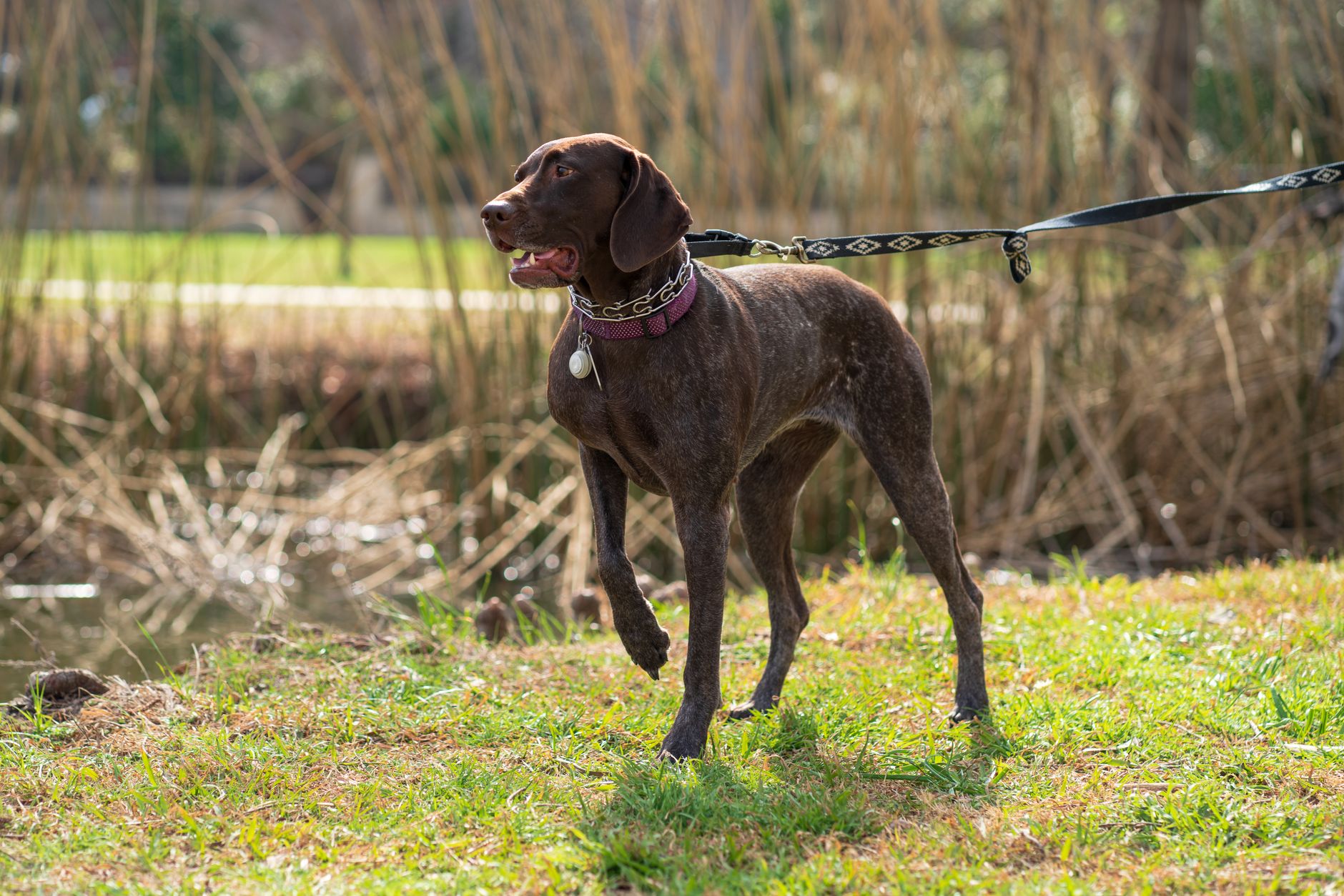
Labradors are enthusiastic, powerful dogs bred to cover ground — so pulling on the lead isn't a character flaw, it's almost a design feature. The good news is that with consistent positive reinforcement, most Labs can learn to walk politely within a few weeks. The key word is consistent. One loose-lead walk followed by three pulling sessions undoes your progress fast.
Here's a practical, step-by-step plan that actually works.
Why Labradors Pull So Hard
Before you can fix it, it helps to understand it. Pulling is self-reinforcing: the dog pulls, moves forward, gets to sniff the interesting thing — and learns that pulling works. Every walk where forward movement is allowed while the lead is tight makes the habit stronger. Age, size, and how long the habit has been practised all affect how quickly you'll see results.
Realistic timelines:
- Puppy under 16 weeks: 1–3 weeks of consistent work
- Adolescent Lab (6–18 months): 4–8 weeks minimum
- Adult with an established pulling habit: 8–16 weeks, sometimes longer
What You'll Need Before You Start
| Item | Notes |
|---|---|
| Front-clip harness or head halter | Reduces pulling force and redirects attention; avoid retractable leads entirely |
| Standard 1.8 m flat lead | No extendable leads — they teach dogs to pull |
| High-value treats | Small, soft, smelly (cheese, chicken, Fritz) — not dry biscuits |
| Treat pouch | Keeps rewards instantly accessible |
| Patience and a consistent routine | Non-negotiable |
A front-clip harness (such as the Ruffwear Front Range or EzyDog Convert) clips at the chest and naturally steers the dog back toward you when they forge ahead. It won't train the behaviour away on its own, but it makes training sessions safer and far less exhausting while you do the work.
Step-by-Step Training Plan
Step 1: Establish a "Let's Go" Cue Indoors
Start in your lounge room or backyard — somewhere boring with minimal distractions.
- Clip the lead on and stand still.
- Hold a treat at your hip on the side you want your dog to walk.
- Say "let's go" in a cheerful tone and take one step forward.
- If the lead stays loose, mark with "yes!" and treat immediately.
- Gradually build to 5, then 10, then 20 steps before rewarding.
Keep sessions to 5 minutes maximum. Labs are smart but easily bored and overstimulated.
Step 2: Introduce the "Stop-and-Wait" Rule
This is the core mechanic of loose-lead walking:
- The moment the lead goes tight, stop completely. Plant your feet. Don't yank, don't say anything — just become a tree.
- Wait for your dog to release the tension — even slightly. The instant there's slack, say "yes!" and move forward again.
- If your dog doesn't release tension within 10–15 seconds, turn and walk in the opposite direction (no scolding, just redirect).
Repetition is everything here. Expect to stop 20–30 times on your first outdoor session. That's normal. It's also why you should allow extra time for walks during training — a 15-minute walk may take 40 minutes.
Step 3: Reward Position, Not Just Absence of Pulling
Many owners only reward when the dog isn't pulling. Go further: actively reward your Lab for being in the right spot — lead loose, body beside your leg, attention occasionally checking in with you.
- Every 5–10 steps of polite walking? Treat and praise.
- Dog glances up at you? Jackpot — multiple treats and big enthusiasm.
- Gradually increase the number of steps between rewards as the behaviour becomes reliable.
This "check-in" behaviour — where your dog voluntarily looks at you on a walk — is gold. Once it appears spontaneously, your loose-lead walking will accelerate rapidly.
Step 4: Proof It in the Real World
Once your Lab walks reliably in your backyard or quiet street, it's time to increase difficulty — gradually.
Progression order (easiest to hardest):
- Quiet suburban street, early morning
- Local park on a weekday
- Busy footpath near shops
- Dog-heavy environments (markets, pet stores)
Don't skip steps. A Lab that walks perfectly at 7 am on your street may completely fall apart outside Bunnings on a Saturday. That's not failure — it's a sign you need more practice at that difficulty level before progressing.
Step 5: Manage Every Walk, Not Just Training Walks
This is where most people lose ground. If your Lab pulls relentlessly on weekends because the kids are walking them without following the rules, the training won't stick. Everyone in the household needs to follow the same protocol.
Household consistency checklist:
- All family members use the stop-and-wait method
- No one allows pulling "just this once"
- Front-clip harness is used on every walk during the training period
- High-value treats are always on hand
- No retractable or long-line leads on public footpaths during training
Common Mistakes to Avoid
Jerking or yanking the lead. This creates anxiety and damages trust — neither of which helps a high-energy Labrador walk calmly.
Rewarding too infrequently. Early in training, treats should flow generously. Owners often taper off rewards too soon, before the behaviour is truly solid.
Continuing to walk while the lead is tight. Every step taken under tension is a step backwards in training. Stop. Every time.
Using a back-clip harness. These actually make pulling easier by distributing force across the chest. Switch to a front-clip or, for strong adults, consider a head halter like the Halti or Gentle Leader.
Expecting overnight results with an adult dog. Adult Labs with years of pulling behind them need time. Two weeks of effort after two years of reinforced pulling isn't enough — stay the course.
When to Get Professional Help
Most Labs will respond well to the above plan with consistent effort. Consider calling in a professional if:
- Your dog lunges so forcefully it's a safety risk (especially around traffic or children)
- The pulling is accompanied by reactivity — barking, lunging at other dogs or people
- You've been consistent for 12+ weeks with minimal improvement
- The dog is causing injury to family members
Look for a trainer who uses force-free, positive reinforcement methods — ideally one accredited through the Pet Professional Guild Australia or the Delta Society. Expect to pay $80–$180 AUD per group session or $150–$300 AUD for a private in-home lesson, depending on your location.
A good trainer won't just work with your dog — they'll coach you, which is where the real value lies.
The Bottom Line
Stopping a Labrador from pulling on the lead isn't complicated, but it does demand consistency across every single walk. Stop when the lead tightens, reward loose-lead position generously, and progress difficulty slowly. Most Labs — even determined adult pullers — make real progress within 6–8 weeks of genuine consistency. The walks on the other side of that effort are genuinely enjoyable for both of you.
As an Amazon Associate we earn from qualifying purchases.
Frequently asked questions
How long does it take to stop a Labrador from pulling on the lead?
For a young puppy, consistent training can show results in 1–3 weeks. Adolescent Labs typically take 4–8 weeks, while adult dogs with an established pulling habit can take 8–16 weeks or more. The single biggest factor is consistency — every walk needs to follow the same rules, every time.
What is the best harness for a Labrador that pulls?
A front-clip harness is the most practical tool for a pulling Lab. Popular options in Australia include the Ruffwear Front Range and EzyDog Convert. For very strong or reactive dogs, a head halter such as the Halti or Gentle Leader gives more control. Avoid back-clip harnesses, which make pulling easier, and never use retractable leads during training.
Should I use treats to train my Labrador to walk on a loose lead?
Yes — high-value treats are one of the most effective tools for loose-lead training, especially with food-motivated breeds like Labradors. Use small, soft, smelly rewards like cheese, cooked chicken, or Fritz rather than dry kibble. Reward generously early in training, then gradually reduce frequency as the behaviour becomes reliable.
Is it too late to train an adult Labrador to stop pulling?
No. Adult dogs absolutely can learn to walk politely on a lead — it just takes longer than training a puppy because you're overwriting a well-practised habit. Expect the process to take several months of consistent work. If progress stalls after 12 or more weeks of genuine effort, a professional positive-reinforcement trainer can help identify what's going wrong.
Why does my Labrador only pull sometimes — like at the park but not at home?
Pulling is highly context-dependent. High-distraction environments — other dogs, new smells, people — make it much harder for your Lab to focus. This is normal and means you need to practise at gradually increasing difficulty levels rather than jumping straight to busy environments. Consistent training in quieter settings first builds the foundation for success in more exciting places.
Can I use a choke chain or prong collar to stop my Lab pulling?
These tools are not recommended by veterinary or force-free training organisations, including the RSPCA Australia. They work through pain or discomfort, which can cause anxiety, fear-based reactivity, and physical injury to the neck and trachea. Front-clip harnesses and positive reinforcement achieve the same goal safely and build a better relationship with your dog in the process.
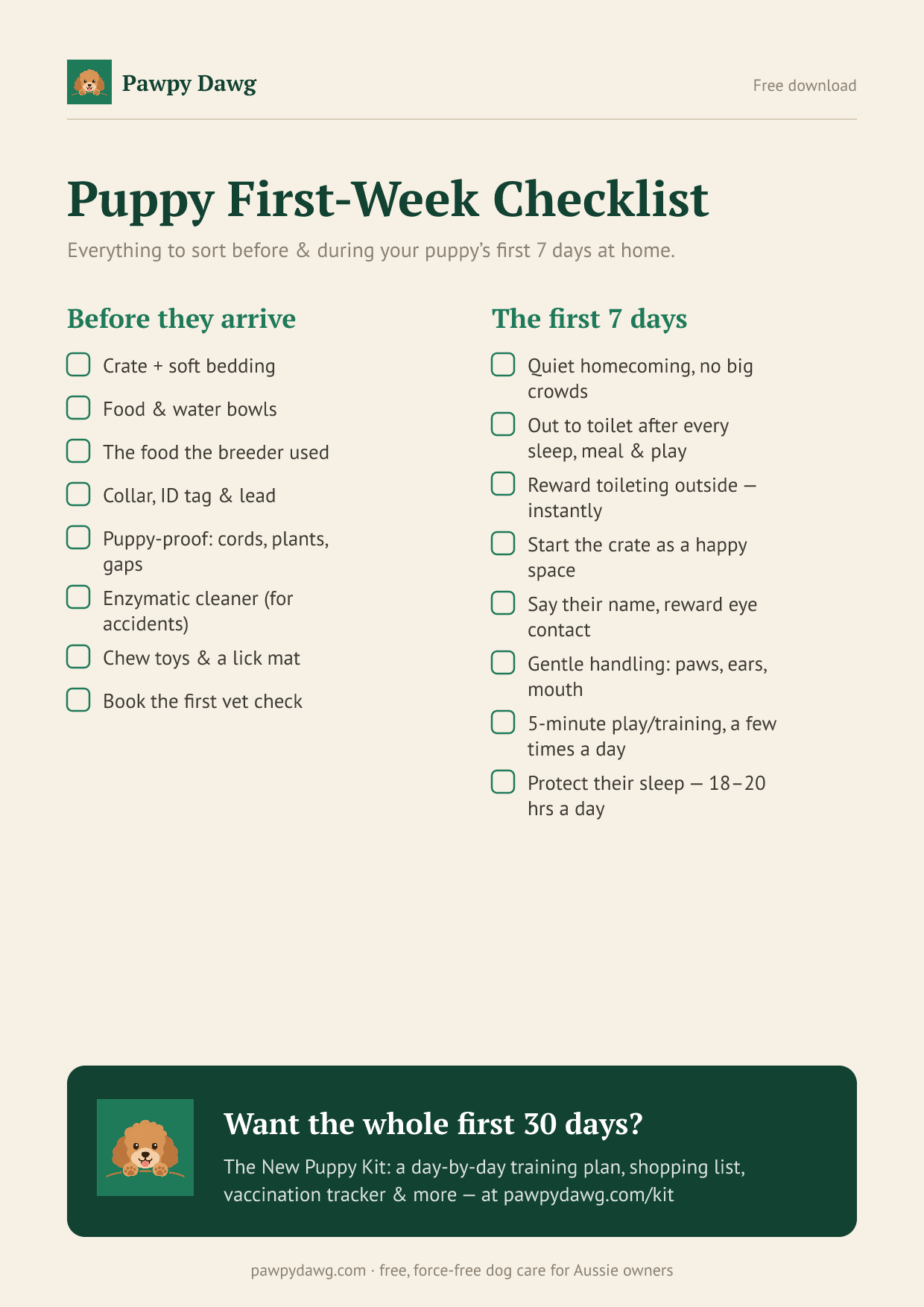
Free printable
Free: the Puppy First-Week Checklist
Everything to sort before and during your puppy's first 7 days home — a printable one-pager. Plus the occasional genuinely useful dog tip. No spam, unsubscribe anytime.
Related guides
How to Stop a Labrador Retriever Barking at Strangers (Step-by-Step)
Stop your Labrador Retriever barking at strangers with this step-by-step positive-reinforcement plan. Realistic timelines, common mistakes & when to call a pro.
Read the guide →
Labrador Retriever Separation Anxiety: A Step-by-Step Fix
Labrador Retriever separation anxiety is fixable. Follow this positive-reinforcement step-by-step plan, avoid common mistakes, and know when to call a pro.
Read the guide →
How to Stop a Labrador Retriever Jumping Up on People (Step-by-Step)
Stop your Labrador Retriever jumping up on people with this step-by-step positive-reinforcement plan. Realistic timelines, common mistakes & when to get pro help.
Read the guide →