
How to Stop a Labrador Retriever Jumping Up on People (Step-by-Step)
Stop your Labrador Retriever jumping up on people with this step-by-step positive-reinforcement plan. Realistic timelines, common mistakes & when to get pro help.

Written by Bradley Brown
Founder & editor · Reviewed 2026-06-30
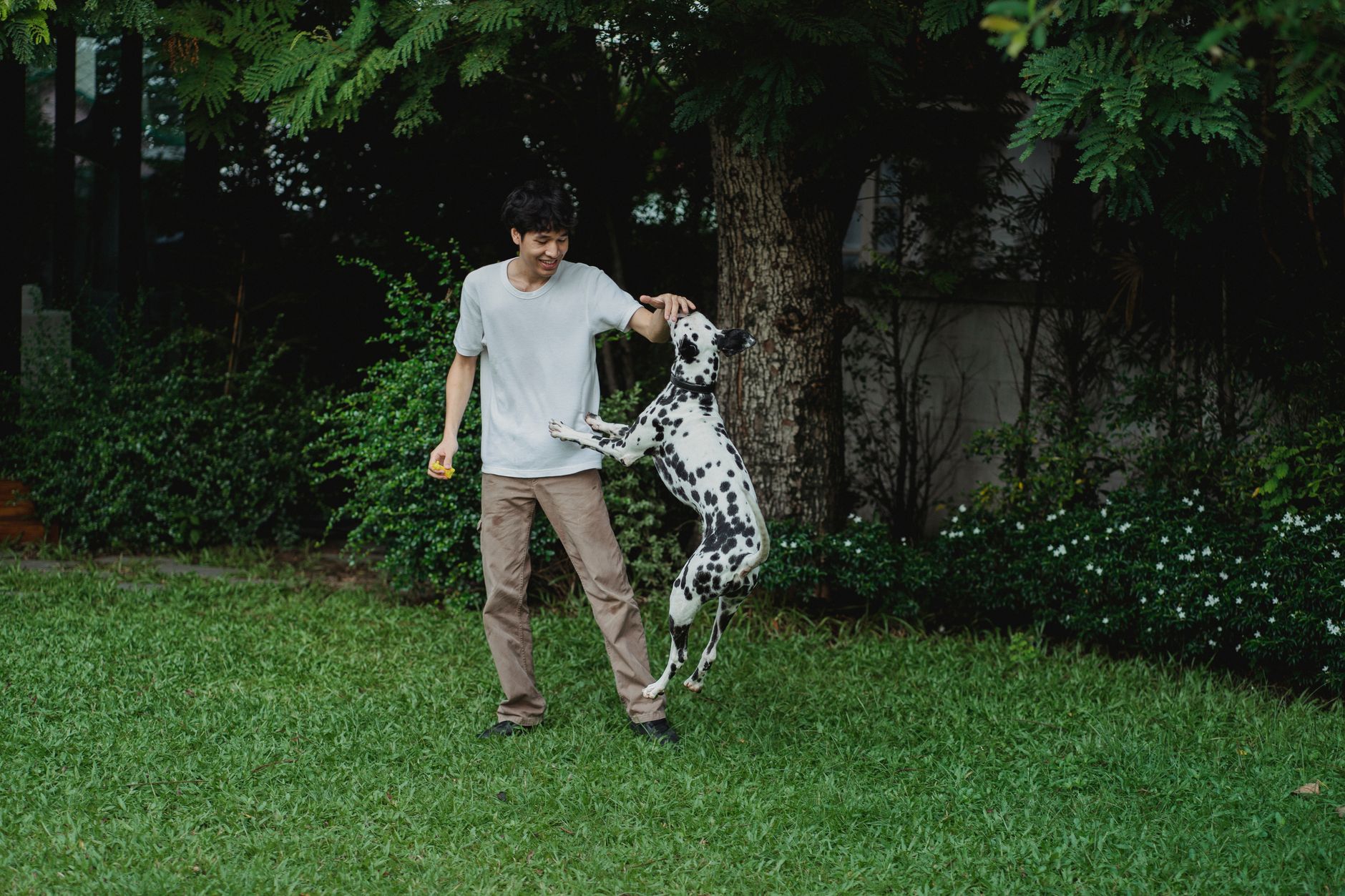
Labradors jump up because it works. As puppies, it got them eye contact, cuddles, and squeals of delight. Now they're 30-plus kilograms of enthusiasm, and that same behaviour is knocking over kids and leaving muddy paw prints on every visitor's good shirt. The good news: jumping up is one of the more straightforward behaviours to change — if you're consistent and you understand why the dog is doing it.
Why Labradors Jump Up (and Why "No" Rarely Works)
Jumping up is an attention-seeking behaviour reinforced by social contact. Every time your Lab gets any response — a shove, a knee, a verbal correction, eye contact — the behaviour is partially rewarded. Labs are also bred for enthusiasm and human connection, which means they're highly motivated to greet people face-to-face.
Telling a Lab "no" while making eye contact and touching them is, from the dog's perspective, a pretty fun interaction. You need to make jumping completely unrewarding and four paws on the ground extremely rewarding. That's the whole plan.
Step-by-Step: The Four-on-the-Floor Method
This is the gold-standard positive-reinforcement approach recommended by trainers and backed by organisations like the RSPCA Australia.
Step 1 – Set the Foundation at Home (Days 1–7)
Before tackling strangers, fix the behaviour with people your dog already knows.
- Brief every household member. The plan fails if one person lets the dog jump "just this once." Hold a two-minute family meeting.
- Decide on your cue. "Off" is clearer than "down" (which many dogs learn as lie down).
- Prepare your rewards. Small, high-value treats (a pea-sized piece of cooked chicken or cheese) kept in a treat pouch on your belt make timing easy.
Step 2 – Remove All Reward for Jumping
The instant your Lab starts to jump:
- Turn your back completely and cross your arms.
- Say nothing. No "no," no "off," no name.
- Wait. Most dogs will try jumping again — keep turning. The moment all four paws hit the ground, immediately turn back, crouch down, and reward with a treat and calm praise.
Timing matters enormously. Reward within one to two seconds of four paws landing, or you're reinforcing whatever happened next.
Step 3 – Add a Cue and a Sit
Once your Lab is reliably keeping four paws down to earn your attention (usually three to five days of consistent practice), layer in a positive behaviour:
- As your dog approaches, say "sit" in a calm, clear voice.
- The moment the sit happens, reward immediately.
- If the dog jumps instead of sitting, turn away (Step 2).
You're replacing the jumping with an incompatible behaviour — a dog can't sit and jump at the same time.
Step 4 – Practise with Controlled "Strangers" (Week 2–3)
Recruit a friend or neighbour and run set-up greetings:
- Brief your helper. They must follow the same rules: turn away for jumping, reward for four paws or a sit.
- Use a lead. A standard flat collar and 1.8 m lead gives you control without punishment. If the dog is about to jump, a gentle body block or stepping on the lead (so it self-interrupts) is fine.
- Keep sessions short. Three to five repetitions per session, two to three sessions per day. Labs learn faster with frequent, brief practice than long, exhausting drills.
Step 5 – Real-World Proofing (Weeks 3–6)
This is where most owners stall. Your Lab may be perfect at home but an absolute gremlin at the dog park gate. Generalising the behaviour takes deliberate practice in different environments.
- Vary locations: front door, back gate, footpath, pet-friendly café.
- Vary the people: adults, children, people in hats or hi-vis, people moving quickly.
- Start at a distance. If your dog is over-threshold (too excited to think), move further away and reward calm behaviour before moving closer.
Common Mistakes That Slow Progress
| Mistake | Why It Backfires | Fix |
|---|---|---|
| Kneeing the dog in the chest | Can cause injury; still gives attention | Turn away silently instead |
| Saying "off" repeatedly | Teaches the dog that multiple "offs" are needed | One cue, then turn away |
| Rewarding too late | Dog thinks the treat is for something else | Treat within 1–2 seconds of four paws landing |
| Inconsistency between family members | Dog learns jumping works on some people | Everyone must follow the same protocol |
| Punishing in frustration | Damages trust; doesn't teach the dog what to do | Redirect to "sit," reward that |
| Giving up after a bad day | Normal regression, not failure | Log your sessions; look for weekly trends, not daily ones |
Realistic Timelines
Most Labs show noticeable improvement within two to three weeks of consistent, whole-family practice. Full reliability in all environments — including very exciting situations like returning home after a trip away — can take six to twelve weeks.
Labs that have been jumping for years (and have years of reinforcement history) will take longer than puppies. That's normal. The behaviour didn't build overnight, and it won't disappear overnight either.
Management Tools to Use While You're Training
Training takes time. In the meantime, management prevents the behaviour from being practised and reinforced:
- Baby gate or exercise pen to contain your Lab before guests have settled.
- Front-clip harness (like the Halti or PetSafe Easy Walk, available at most Australian pet stores for $30–$60 AUD) for better control on lead greetings.
- Mat or place training — teaching your Lab to go to a designated spot when the doorbell rings is an excellent long-term strategy.
When to Get Professional Help
Consider working with a qualified trainer if:
- Your Lab is knocking over children or elderly people and poses a genuine safety risk.
- The jumping is accompanied by mouthing, nipping, or frantic arousal that doesn't settle quickly.
- You've been consistent for six-plus weeks with no measurable improvement.
- You're feeling frustrated or losing confidence — a fresh set of eyes from a professional can reset both you and your dog.
Look for a trainer who uses force-free or positive-reinforcement methods and holds a qualification from a recognised body such as the Delta Society Australia or the Pet Professional Guild Australia. A good trainer will want to see how you interact with your dog, not just work with the dog alone.
A typical private session in Australia runs $80–$150 AUD per hour; group classes are generally $150–$300 AUD for a six-week course and are excellent for proofing around other dogs and people.
Quick-Reference Checklist
Use this before every training session:
- Treat pouch loaded with high-value rewards
- Every household member briefed and on board
- Lead attached for controlled greetings
- Phone/distractions put away — you need to watch your dog's body language
- Session planned for under five minutes
- Session outcome logged (number of jumps vs. four-on-floor sits)
Consistency, not intensity, is what changes behaviour. Five minutes of focused practice beats a 30-minute frustrated drilling session every time.
As an Amazon Associate we earn from qualifying purchases.
Frequently asked questions
How long does it take to stop a Labrador from jumping up?
Most owners see noticeable improvement within two to three weeks of consistent, whole-family training. Full reliability in all environments — including high-excitement situations — typically takes six to twelve weeks. Dogs with a long history of jumping will take longer than puppies, which is completely normal.
Should I knee my Labrador in the chest to stop jumping?
No. Kneeing a dog can cause physical injury and still provides the attention the dog is seeking, which partially rewards the behaviour. The most effective approach is to turn your back silently the moment your Lab starts to jump, then reward the instant all four paws return to the ground.
My Lab only jumps on some people. Why?
Your Lab has learned that jumping works on certain people — usually those who give eye contact, push the dog away, or greet enthusiastically. Dogs are very good at reading which individuals respond to jumping. Brief everyone your Lab interacts with to follow the same turn-away protocol, as inconsistency is the most common reason jumping persists.
Is it too late to train an older Labrador to stop jumping?
It is never too late. Older Labs with a long reinforcement history will take more repetitions to change the habit, but they are absolutely capable of learning. The same four-on-the-floor method applies; you simply need to budget for a longer training timeline and be especially consistent.
Can I use a squirt bottle or loud noise to stop my Lab jumping?
Aversive tools like squirt bottles or noise interrupters are not recommended. They can increase anxiety and damage your dog's trust without teaching the dog what to do instead. Positive-reinforcement methods — removing attention for jumping and rewarding four paws on the ground — are more effective long-term and have no risk of side effects.
My Labrador sits politely at home but jumps on everyone at the park. What am I doing wrong?
Nothing is wrong — this is a normal part of generalisation. A behaviour learned in one environment doesn't automatically transfer to exciting new contexts. You need to practise controlled greetings in progressively more distracting locations, starting at a distance where your dog can still think and respond, then gradually moving closer as reliability builds.
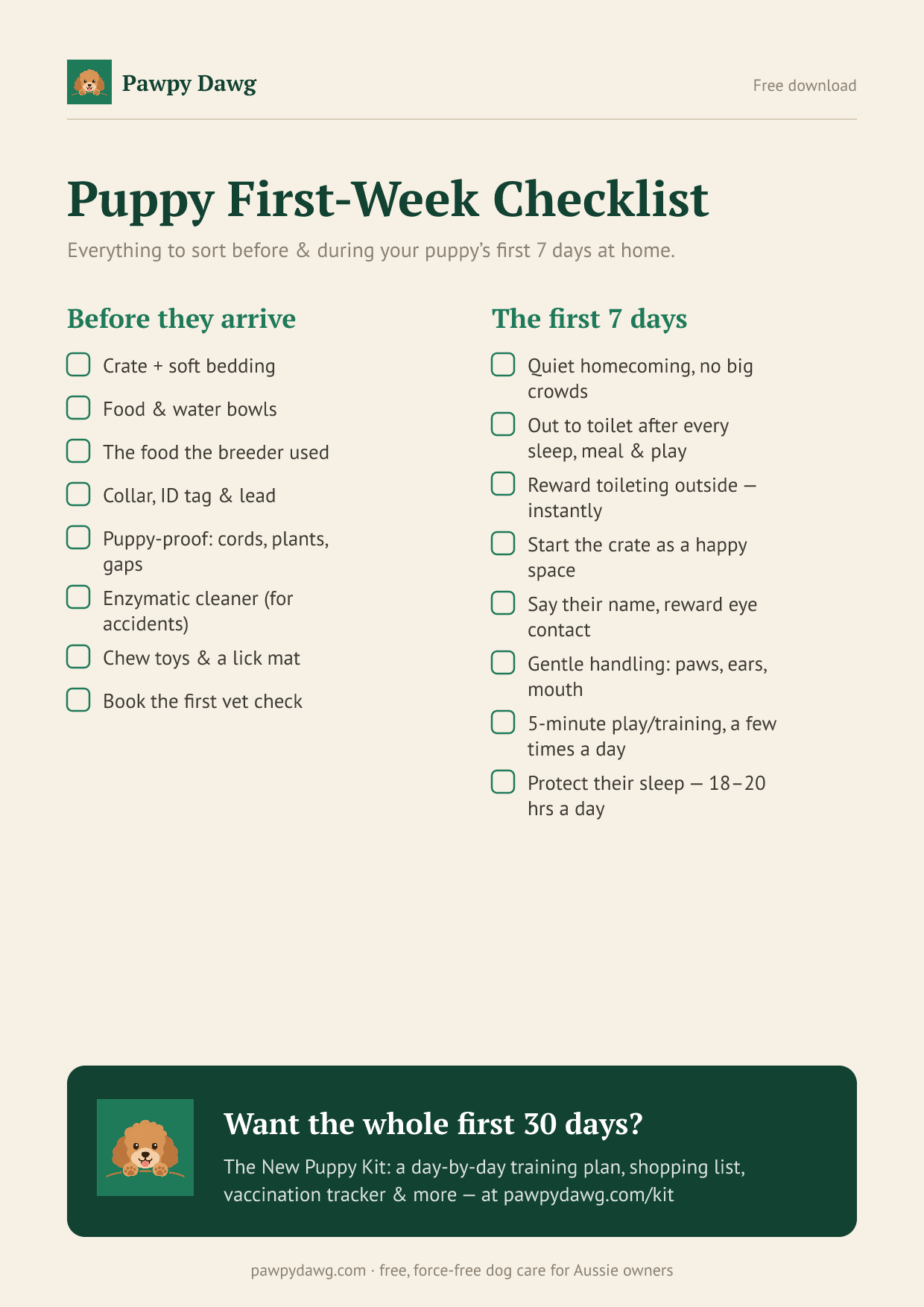
Free printable
Free: the Puppy First-Week Checklist
Everything to sort before and during your puppy's first 7 days home — a printable one-pager. Plus the occasional genuinely useful dog tip. No spam, unsubscribe anytime.
Related guides
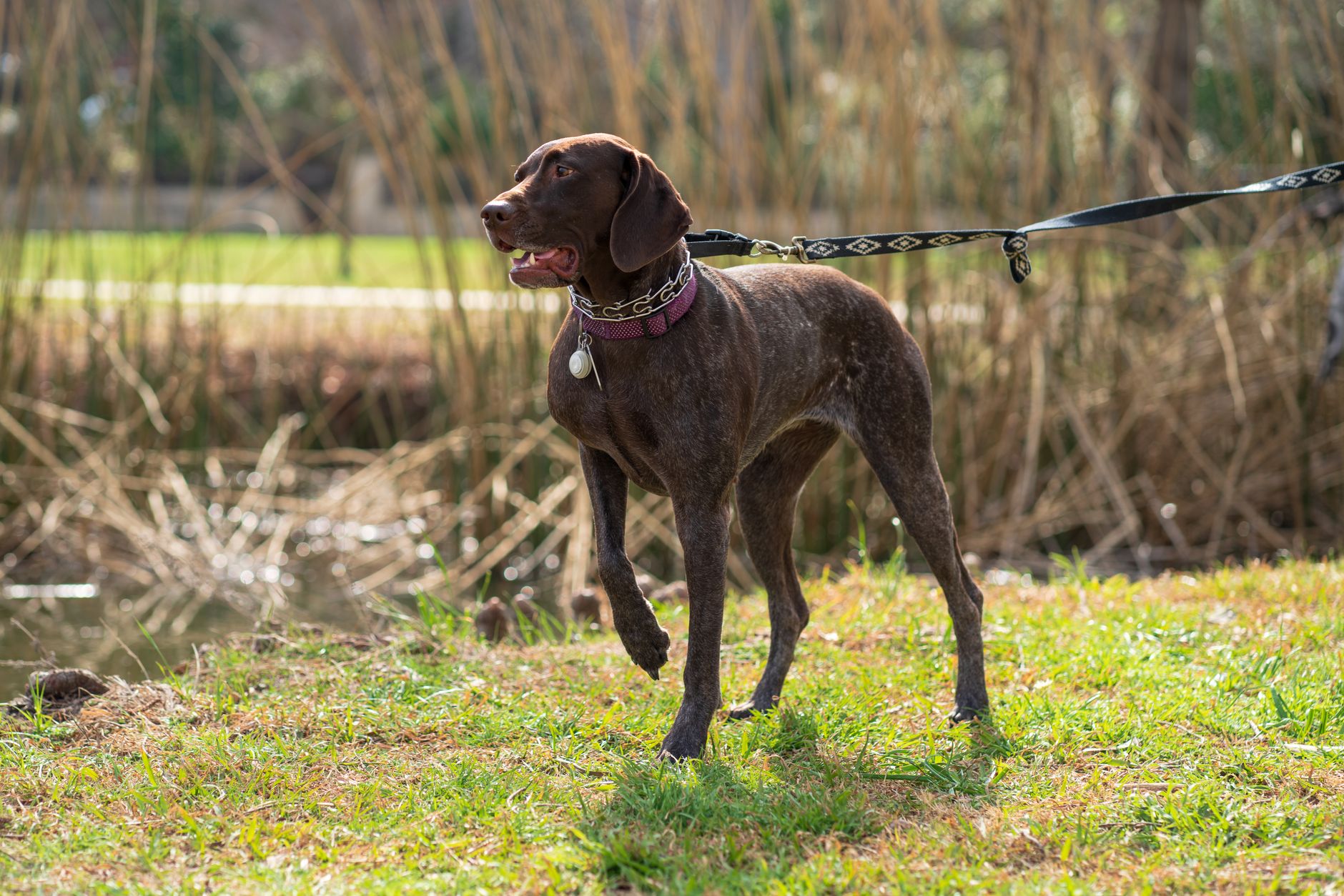
How to Stop a Labrador Retriever Pulling on the Lead (Step-by-Step)
Tired of being dragged around the block? Here's a step-by-step positive-reinforcement plan to stop your Labrador Retriever pulling on the lead — with real timelines.
Read the guide →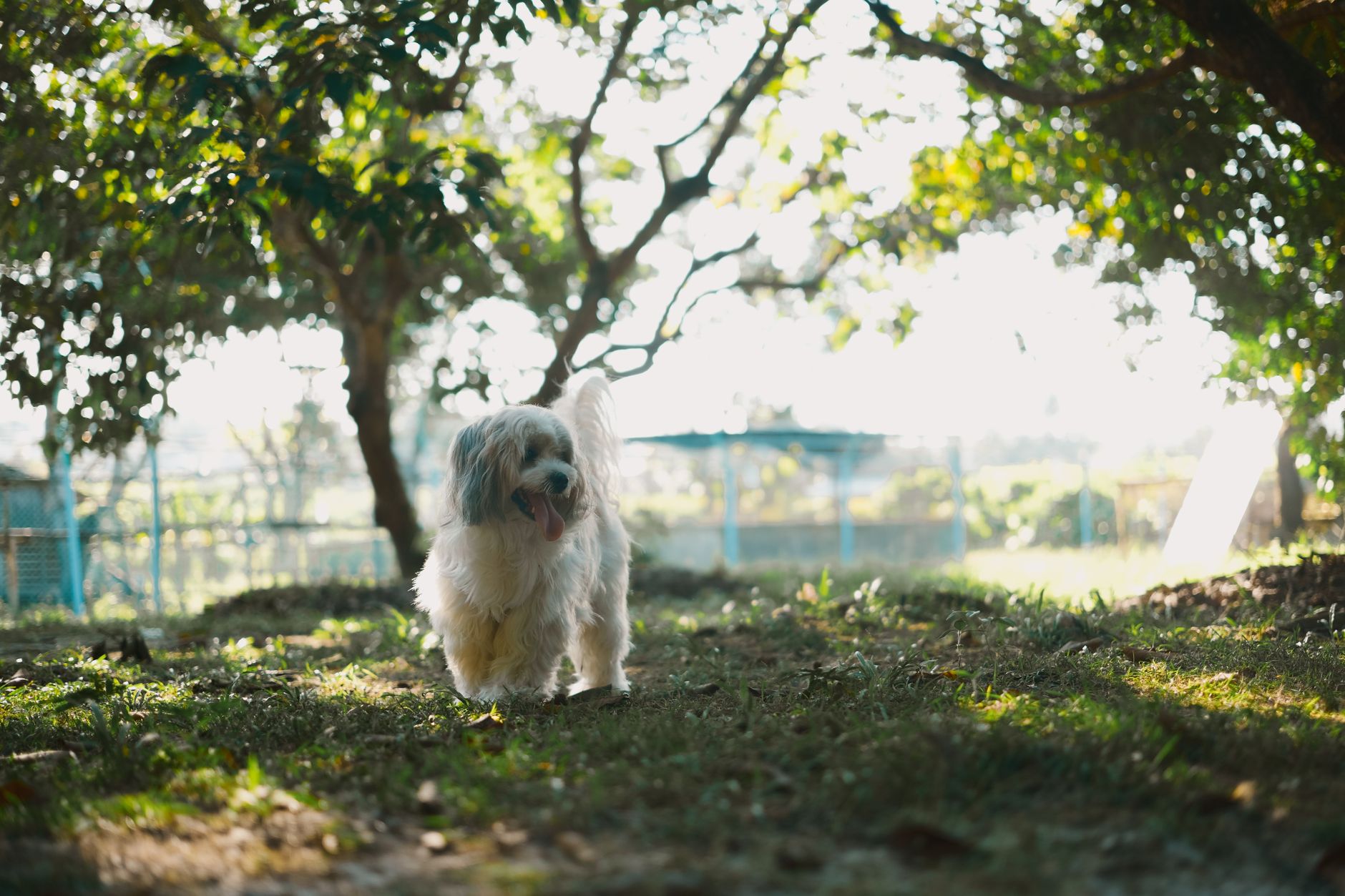
How to Stop a Labrador Retriever Barking at Strangers (Step-by-Step)
Stop your Labrador Retriever barking at strangers with this step-by-step positive-reinforcement plan. Realistic timelines, common mistakes & when to call a pro.
Read the guide →
Labrador Retriever Separation Anxiety: A Step-by-Step Fix
Labrador Retriever separation anxiety is fixable. Follow this positive-reinforcement step-by-step plan, avoid common mistakes, and know when to call a pro.
Read the guide →