
Kelpie Training Guide: A Realistic 8-Week Plan
A realistic 8-week kelpie training plan built around their intense drive and intelligence — short daily sessions that actually get results.

Written by Bradley Brown
Founder & editor · Reviewed 2026-07-15
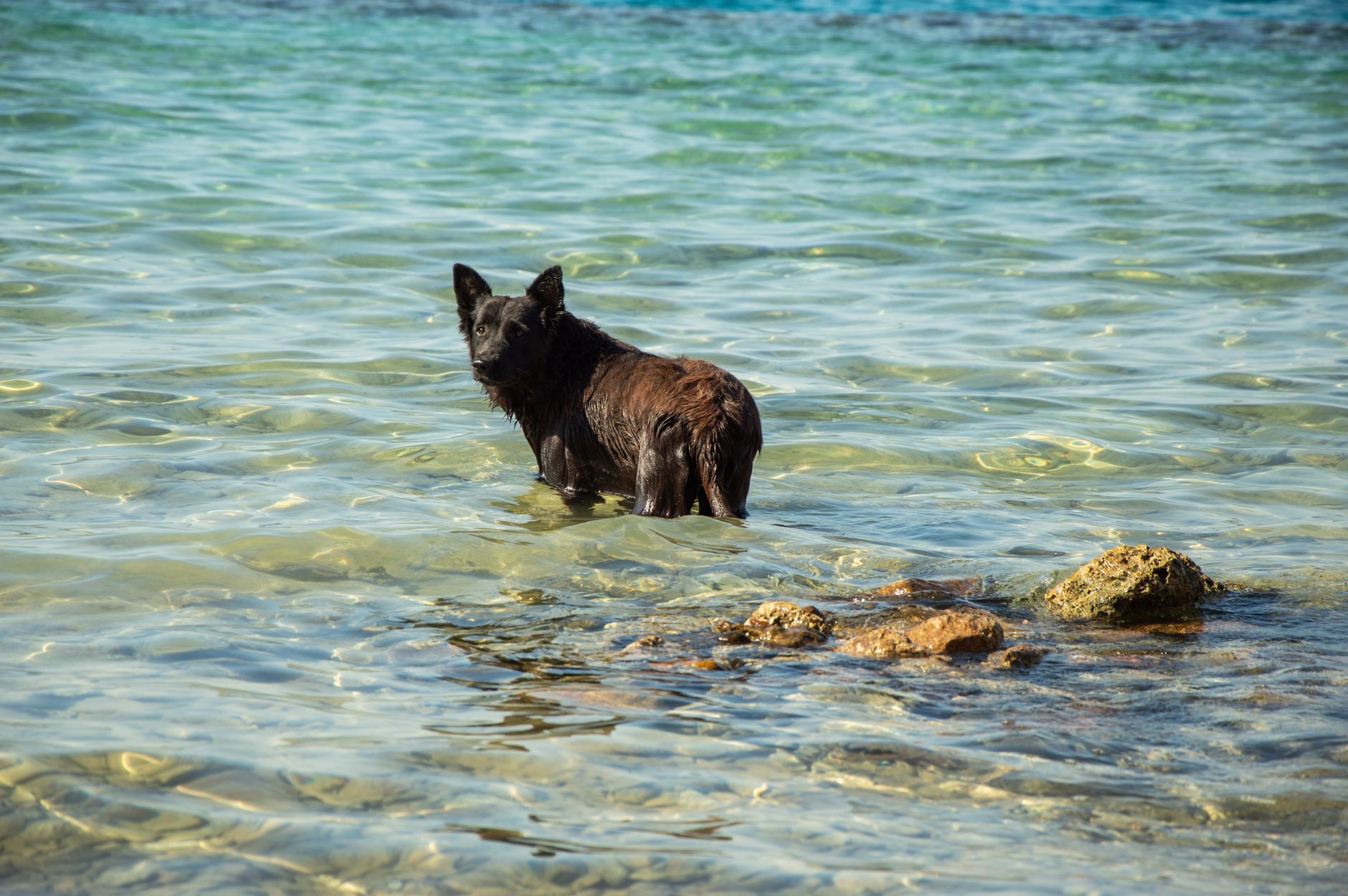
Kelpies are not difficult dogs — they're just dogs that were bred to make decisions independently for hours at a stretch, and they'll apply that same initiative to your couch, your chickens, and your neighbour's kids if you don't give them a job. Eight weeks of structured, short sessions won't turn your Kelpie into a robot, but it will give you a dog who listens, settles, and trusts you to call the shots.
What do Kelpies actually need before any training makes sense?
Before you teach a single command, you need to understand what you're working with. Kelpies were bred as working stock dogs on Australian stations — animals capable of running 60-plus kilometres a day, reading livestock behaviour, and acting without instruction. That drive doesn't switch off because they live in a suburban backyard.
The single biggest reason kelpie training fails is asking a mentally and physically exhausted dog to focus — or, more commonly, asking a under-stimulated dog to calm down enough to learn. Aim for a 20–30 minute physical outlet (a proper run, fetch, or off-lead romp — not just a walk) before every training session. The session itself only needs to be 5–10 minutes. A tired Kelpie is a teachable Kelpie.
Reward-based training is the clear winner with this breed. Kelpies are sensitive to tone and punishment-based methods tend to produce either a shut-down dog or an anxious one that redirects its stress into nipping or obsessive behaviours. Keep a pouch of high-value treats — small pieces of cooked chicken, cheese, or Fritz work well — and a cheerful voice ready.
Weeks 1–2: Why does "sit" and "drop" feel pointless with a Kelpie?
It doesn't — but the real goal of the first two weeks isn't the commands themselves. It's teaching your Kelpie that paying attention to you is the most rewarding game available.
Start with name recognition: say your dog's name once, and the instant they flick their eyes to you, mark it with a "yes!" or a clicker and reward. Do this 10–15 times per session. Within a few days, you'll have a dog who snaps to attention when called.
Layer in sit using luring (hold a treat at their nose, slowly move it back over their head — their bottom drops naturally), then drop (from sit, move the treat straight down to the floor between their front paws). Mark and reward the moment they hit the position, not after they've held it for five seconds — duration comes later.
The critical thing in these first two weeks: end every session before your dog loses interest. With Kelpies, that window is short but intense. Ten reps of brilliant engagement beats 30 reps of a distracted dog.
Weeks 3–4: How do I get my Kelpie to actually come when called?
Recall is the skill that keeps Kelpies safe, and it needs to be built carefully — because a Kelpie that has discovered the joy of self-directed running will weigh up your "come!" against that fun and make a calculated choice.
Make recall the highest-paying job on offer. Use a specific recall cue (many trainers use a whistle or a unique word like "here" rather than "come," which often gets overused and ignored). The moment your dog reaches you, throw a small party — treat, praise, brief tug game if they love that. Never call your dog to you for something unpleasant (bath, nail trim, end of park time) during this critical period. Go and get them instead.
Practice in low-distraction environments first: inside, then in a fenced yard, then on a long line (a 10-metre training lead, available at most pet stores for $15–$30 AUD) in a park. The long line is your safety net — it means your dog can't self-reward by ignoring you and bolting.
Also introduce loose-lead walking this fortnight. Stop dead the instant the lead tightens; restart when your dog returns to your side. It feels tedious, but Kelpies cotton on fast once they realise pulling simply doesn't get them where they want to go.
Weeks 5–6: My Kelpie is herding my kids — how do I deal with that in training?
Herding behaviour — stalking, staring, circling, nipping at heels — is deeply instinctive in Kelpies, and telling your dog off in the moment rarely fixes it. What does work is giving the behaviour an outlet and teaching an incompatible alternative.
During your weeks 5–6 sessions, introduce "go to your mat" (also called a place command). Lure your dog onto a mat or folded towel, reward heavily for standing or sitting on it, then build duration by rewarding them every few seconds for staying put. This becomes your "off switch" when the herding instinct fires — instead of chasing kids, your Kelpie has a job: hold the mat.
Simultaneously, if herding is directed at children or other pets, manage the environment so the dog can't rehearse the behaviour. Every repetition of chasing reinforces the habit. Baby gates and tethers aren't failures — they're training tools.
If your Kelpie has access to a herding ball (a large, push-able ball designed for dogs), 10 minutes of that daily can take the edge off the drive significantly.
Weeks 7–8: How do I stop my Kelpie getting bored and destructive?
By week 7, your Kelpie should have a reliable sit, drop, recall, and mat behaviour. Now you're building the most important skill of all: the ability to settle independently.
Introduce crate training or confinement settling if you haven't already. A crate isn't a punishment — it's a den. Feed meals inside it, toss treats in randomly throughout the day, and build up time gradually with a frozen Kong or long-lasting chew to occupy them. A Kelpie that can relax in a crate for an hour is a Kelpie you can safely leave without coming home to excavated furniture.
Layer in problem-solving toys as part of the daily routine: snuffle mats, Kongs stuffed and frozen, Licki Mats, puzzle feeders. These don't replace training, but they burn mental energy in a way that a walk simply can't. Budget around $20–$60 AUD for a few good enrichment items and rotate them so the novelty holds.
In these final two weeks, also start proofing — practising all your known commands in new locations, with new distractions, with different family members giving the cues. A Kelpie trained only in the backyard will look at you blankly at the dog park. Generalisation is a learned skill, not a given.
After 8 weeks — what keeps a Kelpie on track long-term?
Consistency matters more than perfection. Five to ten minutes of deliberate training daily beats a two-hour session on the weekend followed by nothing.
Kelpies thrive when they have a role. If you can progress to a dog sport — agility, flyball, trick training, even casual herding clinics (available through breed clubs in most Australian states for $50–$120 AUD per session) — your dog will be noticeably calmer and more connected to you in everyday life.
Don't panic if week three feels like you've gone backwards. Kelpies often test new skills against real-world temptations the moment they think they've mastered something. This is normal adolescent dog behaviour, not evidence that you've broken them. Hold the routine, keep sessions short and positive, and the reliability will come.
If you're genuinely stuck — persistent nipping, reactivity, separation anxiety — a single session with a force-free trainer (look for a member of the Pet Professional Guild Australia or the NDTF) can reset your approach fast and is worth every cent of the $80–$180 AUD it typically costs.
As an Amazon Associate we earn from qualifying purchases.
Frequently asked questions
How much exercise does a Kelpie need before training?
A 20–30 minute run, fetch session, or off-lead play before each training session is ideal. A physically tired Kelpie is far more able to focus during the 5–10 minute training window than one that's been sitting in the backyard all day. Structured walks alone rarely take the edge off a Kelpie's energy.
At what age should I start training my Kelpie?
As early as 8 weeks old — the moment your puppy comes home. Young Kelpies are sponges, and early socialisation and basic manners training is far easier than trying to reshape habits in an adolescent dog. Keep sessions to 3–5 minutes for very young puppies and build from there.
Are Kelpies easy to train compared to other breeds?
Kelpies are highly trainable but not always easy — there's a difference. They pick up new skills quickly but also pick up bad habits quickly, and their independent streak means they'll look for loopholes in any rule that isn't consistently enforced. Reward-based training with clear, consistent boundaries suits them best.
Why does my Kelpie ignore me when we're outside?
Outdoor environments offer far more interesting rewards than most owners can compete with initially. Recall and attention need to be trained in low-distraction settings first, then gradually proofed against real-world distractions. Using a long line during this proofing phase means your dog can't self-reward by ignoring you and running off.
Can a Kelpie live happily in a suburban home?
Yes, provided their mental and physical needs are genuinely met. A Kelpie with daily off-lead exercise, short training sessions, and enrichment toys can settle well in a suburban environment. Without those outlets, the same dog will often become destructive, vocal, or develop obsessive behaviours — it's a management issue, not a breed flaw.
How do I stop my Kelpie from herding children or other pets?
Manage the environment so the dog can't rehearse the behaviour, and train a strong 'go to your mat' command as an incompatible alternative. Herding instinct can't be fully eliminated, but it can be redirected — herding balls, dog sports like agility, and structured exercise all help reduce the intensity of the drive at home.
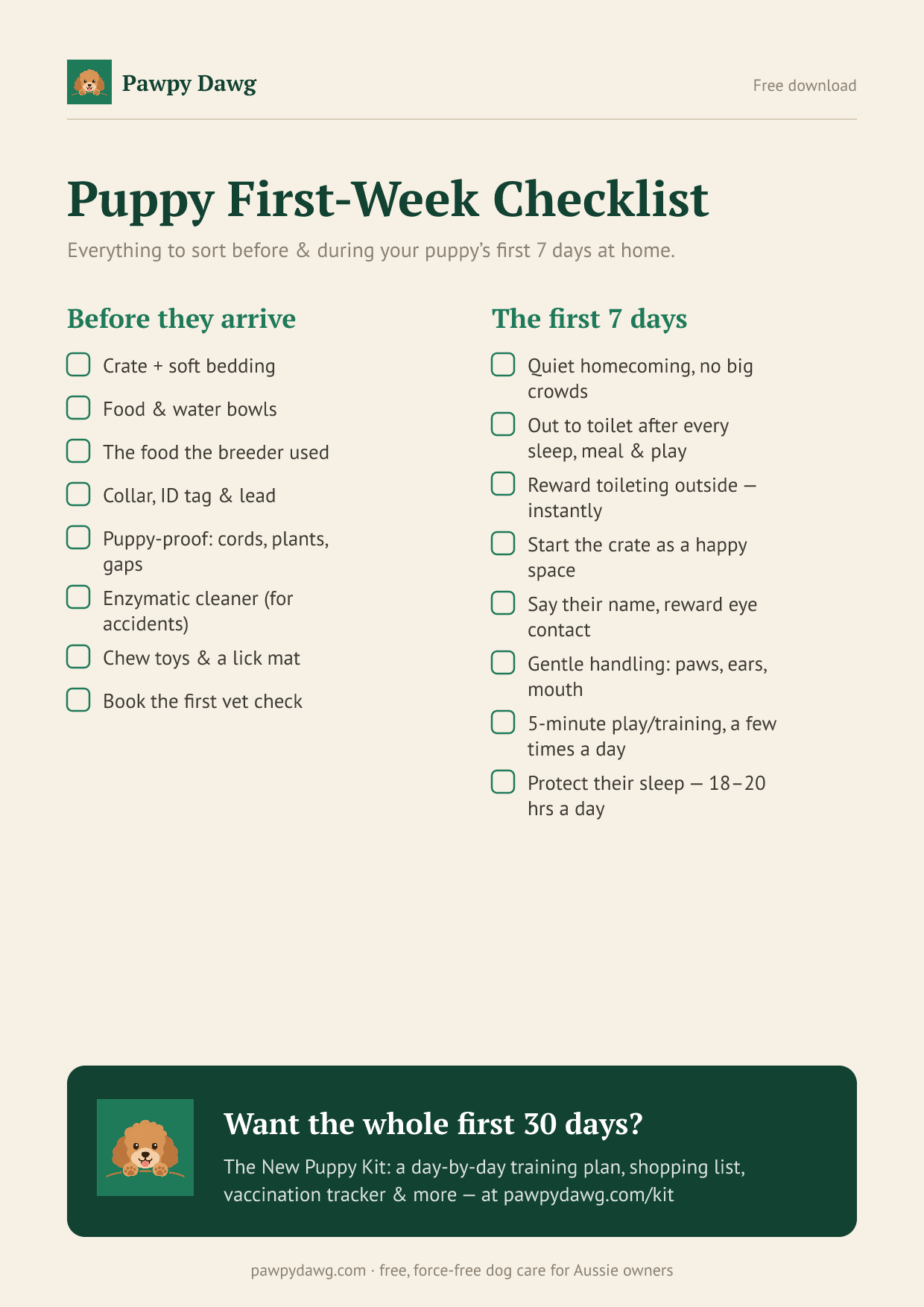
Free printable
Free: the Puppy First-Week Checklist
Everything to sort before and during your puppy's first 7 days home — a printable one-pager. Plus the occasional genuinely useful dog tip. No spam, unsubscribe anytime.
Related guides
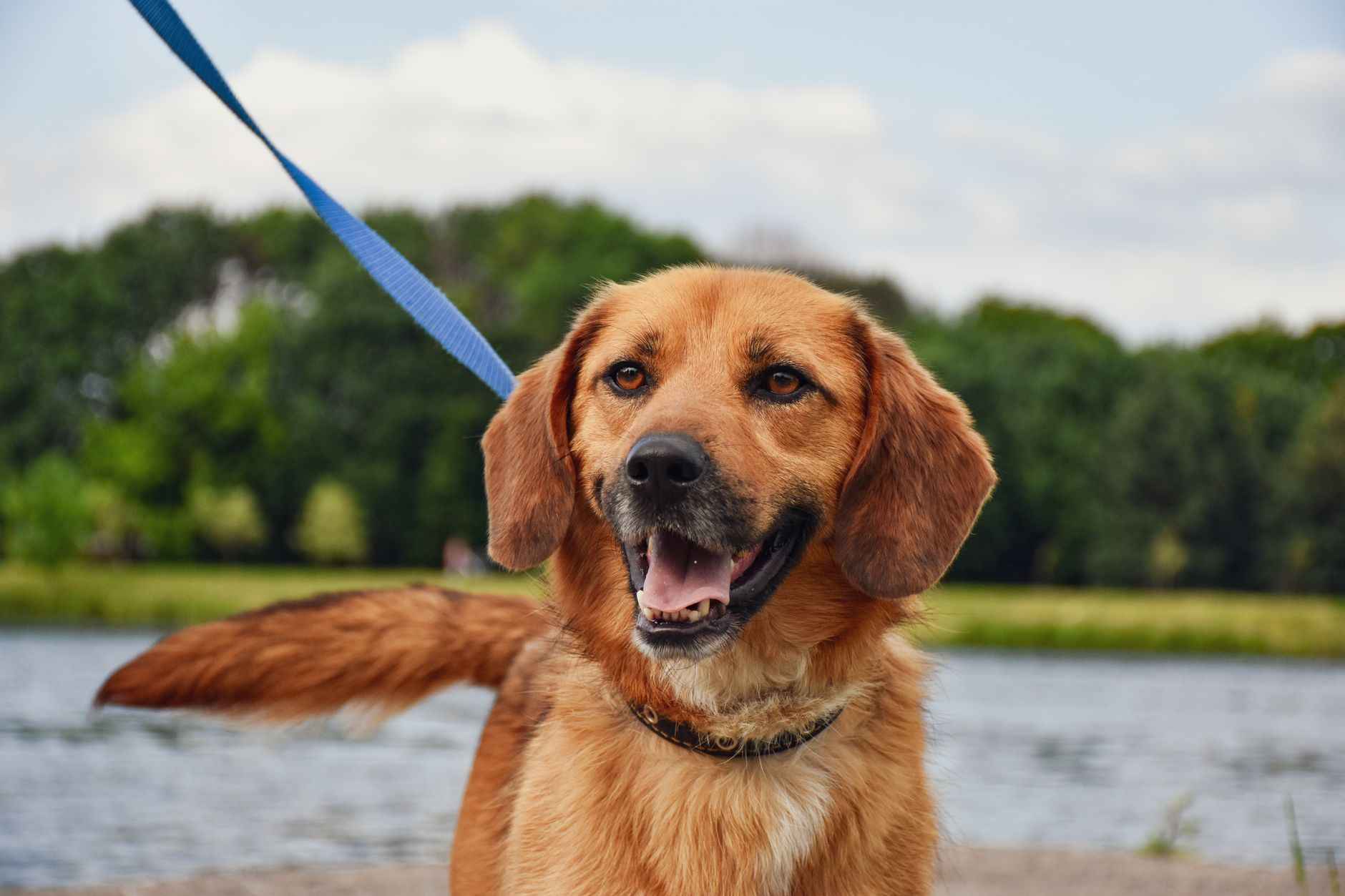
How to Stop a Kelpie Pulling on the Lead (Step-by-Step)
Tired of being dragged around the block? Fix kelpie pulling on the lead with this step-by-step positive-reinforcement plan, realistic timelines & pro tips.
Read the guide →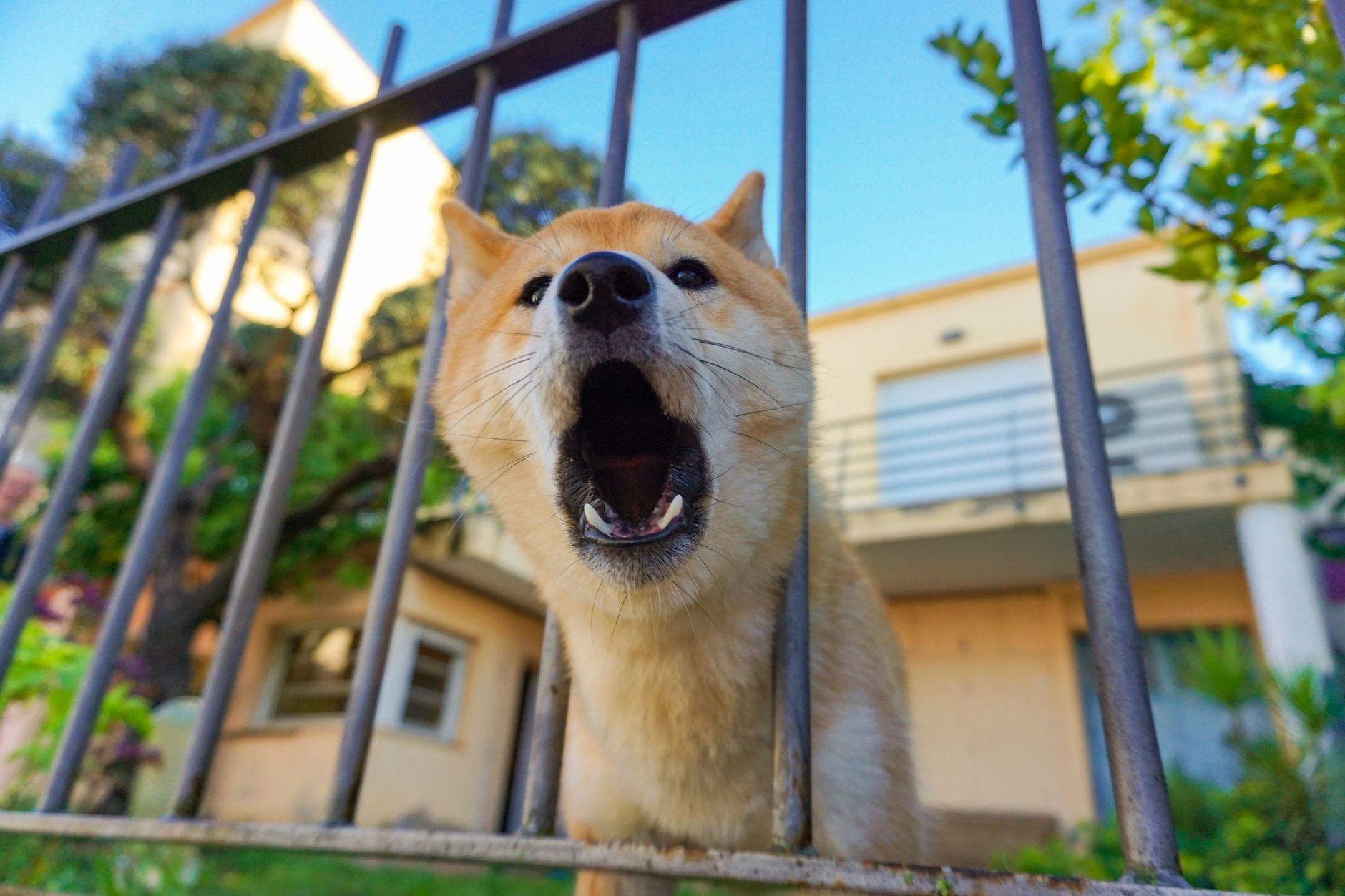
How to Stop a Kelpie Barking at Strangers (Step-by-Step)
Kelpie barking at strangers driving you mad? Get a realistic, positive-reinforcement plan with quick wins you can try today — no punishment needed.
Read the guide →
Kelpie Separation Anxiety: A Step-by-Step Fix
Kelpie separation anxiety is exhausting — but fixable. Get a realistic, positive-reinforcement plan, quick wins for today, and honest timelines.
Read the guide →