
How to Stop a Kelpie Pulling on the Lead (Step-by-Step)
Tired of being dragged around the block? Fix kelpie pulling on the lead with this step-by-step positive-reinforcement plan, realistic timelines & pro tips.

Written by Bradley Brown
Founder & editor · Reviewed 2026-07-10
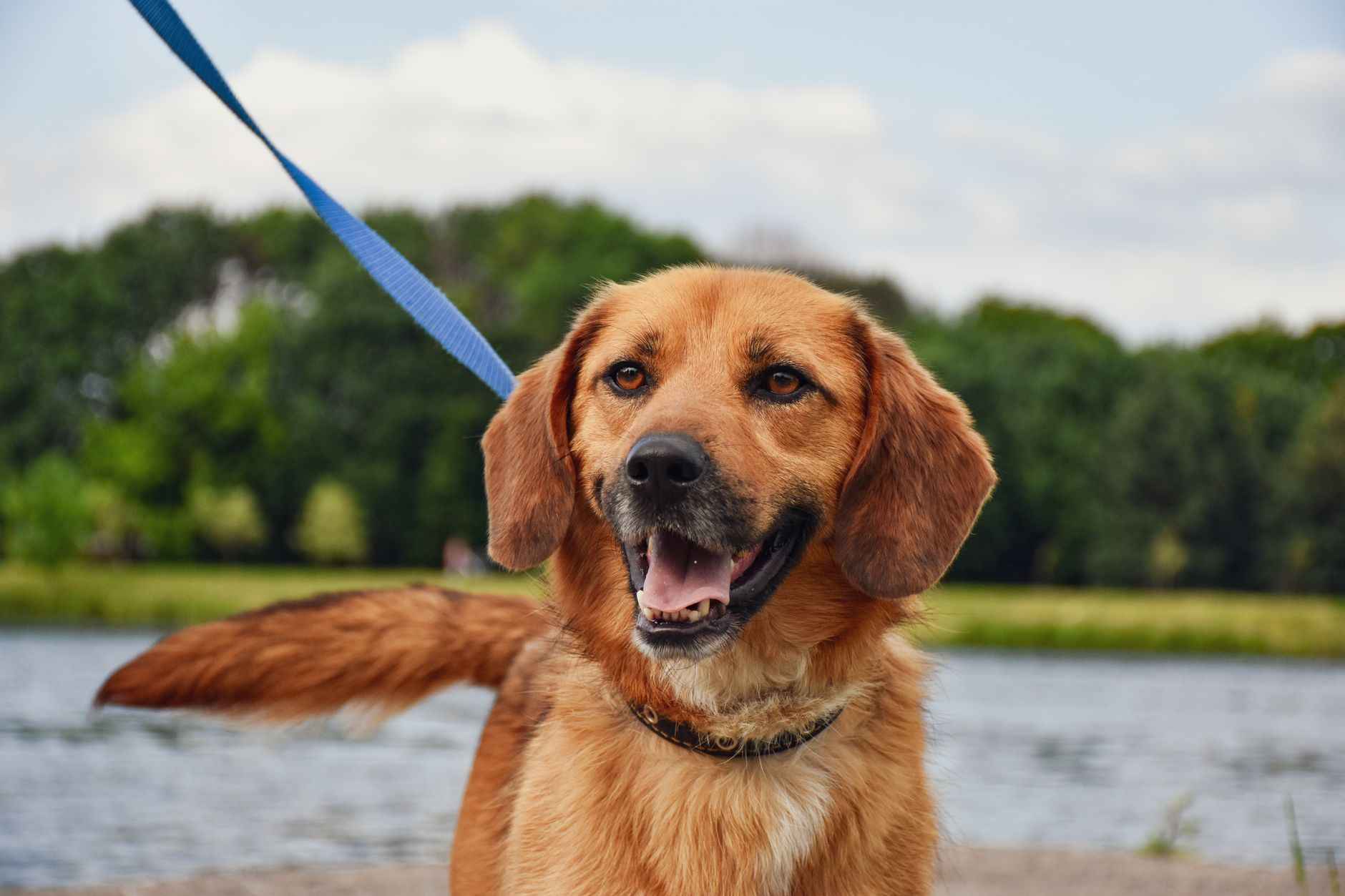
If your Kelpie has turned every walk into a full-body workout for you and a victory lap for them, you're not alone — and you haven't ruined your dog. Kelpies were literally bred to cover kilometres at speed while ignoring discomfort. Pulling on the lead isn't a sign of a "bad" dog or a failed owner; it's a working instinct in a pet-dog body. The good news: it's one of the most fixable behaviours in the book, and you can start turning it around tonight with a five-minute session in your backyard or lounge room.
Why Kelpies Pull More Than Most Breeds
Kelpies are high-drive herding dogs selected for relentless forward motion and independent problem-solving. When they hit the end of the lead and feel that pressure, their instinct is to push into it — the same oppositional reflex that keeps a working dog braced against a mob of sheep. Add in a nose full of neighbourhood smells and pent-up energy from sitting home all day, and the pull becomes almost irresistible for them.
Understanding this removes the blame. Your dog isn't being dominant or spiteful. They're doing exactly what thousands of years of breeding told them to do.
Your Quick Win for Today: The "Be a Tree" Reset
Before you overhaul anything, add this one move to your next walk — it costs nothing and works immediately to stop rewarding the pull.
How to do it:
- The moment the lead goes taut, stop walking completely. Plant your feet. Say nothing.
- Wait. Your Kelpie will eventually turn to look at you or step back to release the tension.
- The instant the lead goes slack, mark it ("yes!" or a clicker click) and walk forward again.
- That's it. Forward movement is the reward — no treats needed for this step.
This interrupts the learned pattern: pull → get where I want to go. It won't fix everything overnight, but after a consistent week most owners notice the pulling intervals getting shorter. It's the foundation everything else builds on.
The Full Step-by-Step Plan (5–10 Minutes a Day)
Step 1: Get Your Equipment Right
The right gear won't train your dog for you, but the wrong gear makes training harder.
| Equipment | Best for | Avoid if… |
|---|---|---|
| Flat collar | Calm, low-pull dogs | Your Kelpie is a strong puller — risk of trachea pressure |
| Front-clip harness (e.g. Rogz, EzyDog) | Most pullers; redirects without pain | Dog is very reactive — can restrict shoulder movement |
| Head halter (e.g. Halti, Gentle Leader) | Strong pullers, small handlers | Dog hasn't been properly conditioned to it — causes panic |
| Standard back-clip harness | Comfortable everyday wear | Active pullers — it actually amplifies pulling |
| Choke/prong/e-collar | — | Avoid entirely. Aversive tools suppress behaviour without teaching an alternative, and can increase anxiety in sensitive Kelpies. |
A front-clip harness is the safest starting point for most Kelpie owners. Budget around $35–$70 AUD for a quality one.
Step 2: Build a Loose-Lead "Language" at Home First
Kelpies are smart — they learn patterns fast, for better or worse. Before you hit the footpath, build the core skill somewhere boring (your hallway, backyard, living room).
The "magnet" drill — 3 minutes, once or twice a day:
- Grab 10–15 small, smelly treats (small cubes of cheese or cooked chicken work well).
- Put the harness on, hold the lead, and just stand there.
- When your dog drifts to your side or looks up at you, click/mark and treat.
- Take one step forward. If the lead stays loose, mark and treat again.
- If it goes taut, be a tree. Restart.
Goal: your dog learns that hanging near your hip predicts good things. You're not luring — you're rewarding the position when it naturally happens.
Step 3: Move the Training Outside (Gradually)
The backyard comes before the street. The quiet street before the busy one. Kelpies aren't distracted on walks because they're naughty — they're distracted because they're alert, intelligent dogs and outside is genuinely more interesting than you. You have to compete with that, and you do it by not throwing yourself in the deep end.
Progression ladder:
- Backyard with no distractions — 3–5 days
- Quiet footpath, early morning or evening — 3–5 days
- Normal neighbourhood walk — ongoing
If your dog is pulling constantly at any stage, you've moved up the ladder too fast. Step back a level.
Step 4: Proof and Generalise Over 4–8 Weeks
Realistic timeline: most Kelpies show noticeable improvement in 2–4 weeks of consistent daily sessions; a reliably loose lead in most environments typically takes 6–8 weeks. If someone tells you their Kelpie cracked it in three days, they either have a very low-drive dog or they're rounding up.
Keep sessions short:
- 5 minutes of focused loose-lead work beats a 30-minute frustrated stomp every time.
- End on a success — even a tiny one.
- Let your Kelpie have sniff time on a long lead or in an off-lead area separately. Sniffing is mentally exhausting in the best way and reduces the frantic energy that makes pulling worse.
Common Mistakes That Stall Progress
- Inconsistency — Every person in the household must use the same rules. One family member who lets the dog pull undoes days of work.
- Moving the goalposts too fast — Nailing it in the backyard does not mean nailing it outside the school at 3 pm pick-up. They're almost different skills.
- Jerking the lead — A sharp correction tells your dog something bad happened; it doesn't tell them what to do instead. It also spikes cortisol in anxious dogs.
- Using treats only occasionally — In the early stages, reward every moment of slack lead. You can fade treats later once the habit is formed.
- Walking when your dog is at peak energy — A Kelpie who has been home alone all day and is fizzing to explode is not in a learnable state. A 10-minute game of fetch or tug before the walk can take the edge off enough to actually train.
When to Call in a Professional
There's no shame in getting help — in fact, it's the smart move if:
- You've been consistent for 8 weeks and see zero improvement
- Your Kelpie lunges or reacts aggressively at other dogs or people on lead
- The pulling is causing you pain or you've been knocked over
- You have a young child or elderly person also walking the dog
Look for a trainer who uses positive reinforcement methods and holds a recognised credential (e.g. PPGA, NDTF, or a member of the Pet Professional Guild Australia). Expect to pay $80–$180 AUD for a one-on-one session — usually worth every cent for a Kelpie, who will work with you the moment they understand what you're asking.
The Short Version
Your Kelpie pulls because they're a Kelpie. The fix is consistent, short, reward-based sessions that teach them loose-lead walking pays better than pulling does. Start with the "be a tree" method today, get a front-clip harness if you don't have one, and keep sessions under 10 minutes. Most owners see real progress within a month. You've got this.
As an Amazon Associate we earn from qualifying purchases.
Frequently asked questions
How long does it take to stop a Kelpie from pulling on the lead?
Most Kelpie owners notice a meaningful improvement within 2–4 weeks of consistent daily training. A reliably loose lead across different environments typically takes 6–8 weeks. High-distraction areas like busy streets or dog parks will take the longest to proof, so be patient and progress gradually.
Are harnesses or head halters better for a Kelpie that pulls?
A front-clip harness is the best starting point for most Kelpie owners — it gently redirects forward momentum without causing discomfort. Head halters can be effective for very strong pullers but must be introduced slowly or they can cause stress. Avoid standard back-clip harnesses and any aversive tools such as choke or prong collars.
My Kelpie only pulls when they see other dogs. Is that different to regular pulling?
Yes — that's leash reactivity, which is a step beyond simple lead pulling. It usually involves a burst of arousal or frustration triggered by the sight of another dog. The foundation loose-lead skills still apply, but you'll also need a specific desensitisation and counter-conditioning plan. A qualified positive-reinforcement trainer can walk you through it.
Should I use treats every single time my Kelpie walks nicely?
In the early stages of training, yes — reward every instance of a loose lead to build the habit quickly. Once your Kelpie is reliably walking well, you can shift to a variable reward schedule and eventually replace most food treats with praise and the reward of moving forward. Fading treats too early is one of the most common reasons progress stalls.
Can a Kelpie be too old to learn to stop pulling?
No. While puppies learn fast, adult and even senior Kelpies can absolutely learn loose-lead walking — it simply may take a little longer to unlearn an ingrained habit. The same positive-reinforcement methods apply at any age. Consistency matters far more than the dog's age.
How much exercise does a Kelpie need before lead training becomes manageable?
There's no magic number, but most Kelpies benefit from at least 45–60 minutes of vigorous exercise per day. Crucially, a short burst of play or fetch immediately before a training walk can reduce peak arousal enough to make the session far more productive. Mental enrichment — sniff walks, puzzle feeders, trick training — counts too and can tire a Kelpie out as effectively as physical exercise.
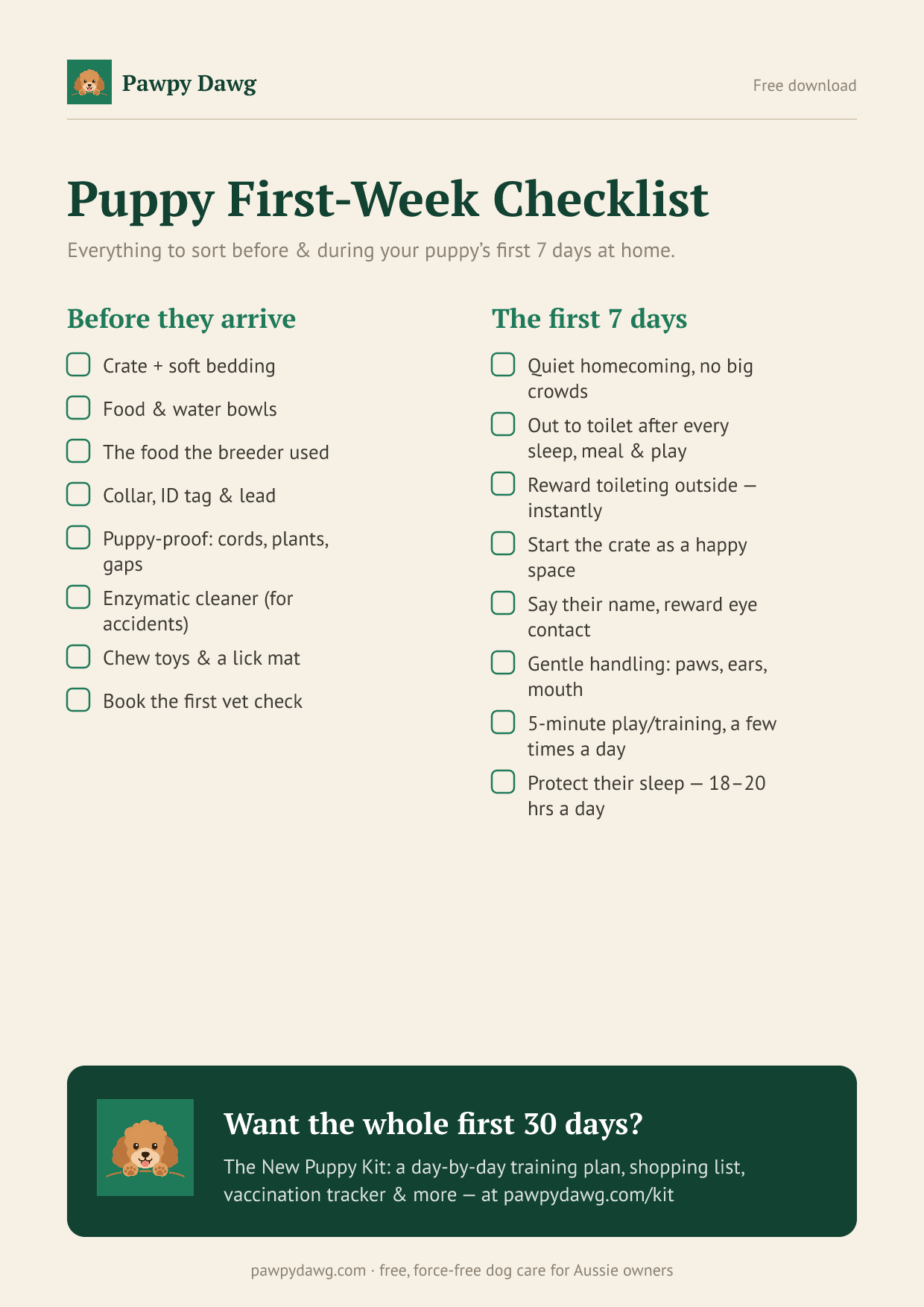
Free printable
Free: the Puppy First-Week Checklist
Everything to sort before and during your puppy's first 7 days home — a printable one-pager. Plus the occasional genuinely useful dog tip. No spam, unsubscribe anytime.
Related guides
How to Stop a Kelpie Barking at Strangers (Step-by-Step)
Kelpie barking at strangers driving you mad? Get a realistic, positive-reinforcement plan with quick wins you can try today — no punishment needed.
Read the guide →
Kelpie Separation Anxiety: A Step-by-Step Fix
Kelpie separation anxiety is exhausting — but fixable. Get a realistic, positive-reinforcement plan, quick wins for today, and honest timelines.
Read the guide →
How to Stop a Kelpie Jumping Up on People (Step-by-Step)
Tired of your Kelpie jumping up on people? This step-by-step positive-reinforcement guide gives you a realistic plan, quick wins, and common mistakes to avoid.
Read the guide →