
Kelpie Separation Anxiety: A Step-by-Step Fix
Kelpie separation anxiety is exhausting — but fixable. Get a realistic, positive-reinforcement plan, quick wins for today, and honest timelines.

Written by Bradley Brown
Founder & editor · Reviewed 2026-07-10
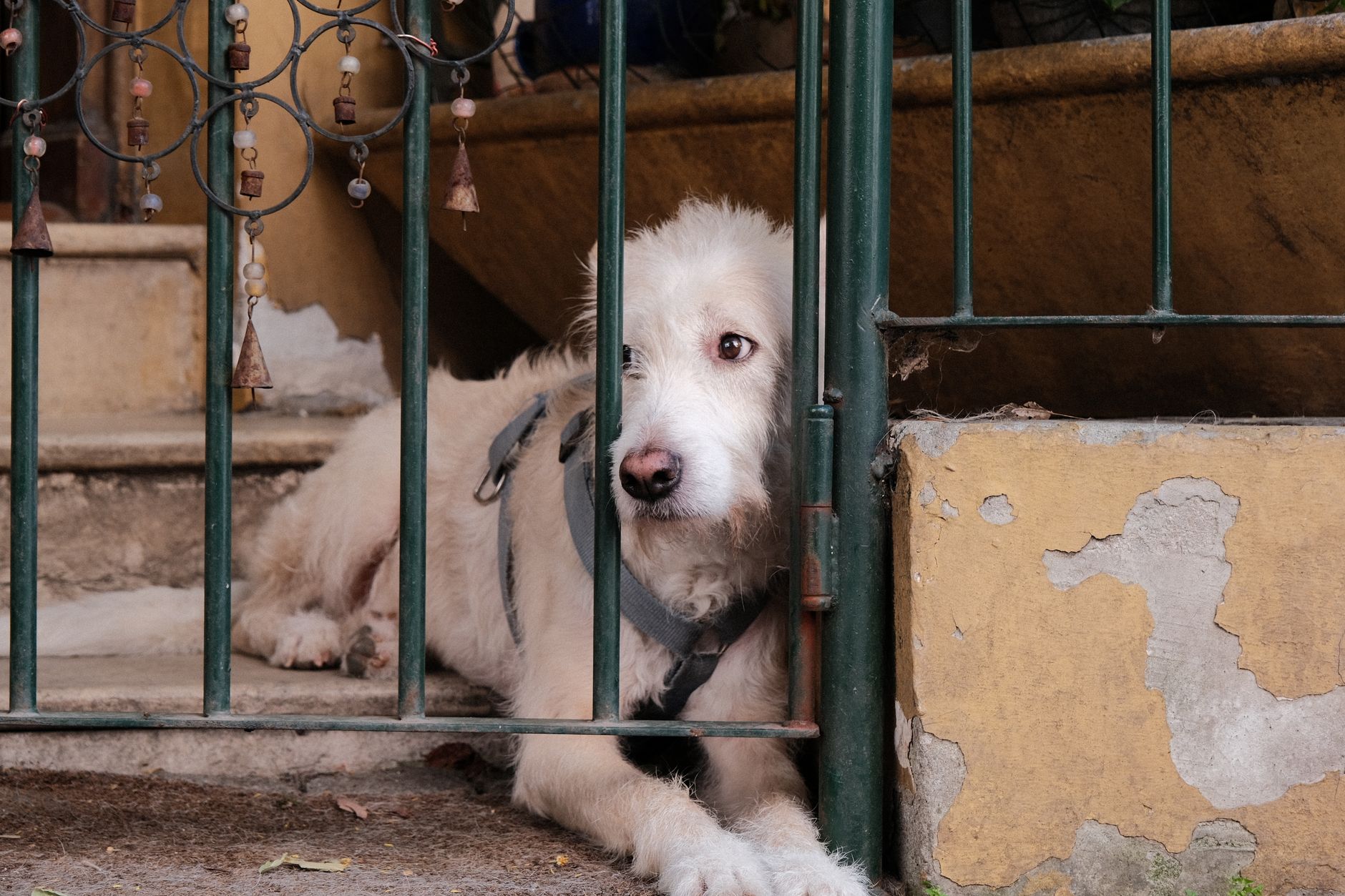
You came home to a shredded couch, a neighbour complaint, or a dog so frantic it had scratched through a door. Or maybe you just watched your Kelpie spiral into a panic the moment you picked up your keys. Either way — you're not a bad owner, and you haven't broken your dog. Kelpies are wired to work alongside humans almost every waking hour. When that contact disappears, their brain genuinely struggles. This is biology, not bad behaviour.
The good news: separation anxiety in Kelpies is one of the most well-researched problems in veterinary behaviour, and it responds well to a structured plan — even in just 5–10 minutes a day.
Quick win you can try today
Before anything else, do this tonight: stop making arrivals and departures a big deal.
- Leave the house without saying goodbye (no baby talk, no long cuddles at the door).
- When you return, ignore your dog for 60–90 seconds until they've settled, then greet them calmly.
This alone won't solve separation anxiety, but it removes the emotional spike that makes every departure feel catastrophic. Most owners notice a calmer dog within a few days.
Why Kelpies are especially vulnerable
Kelpies were bred to work 8–10 hours a day in constant communication with a handler. Their brains are stimulus-hungry and deeply bonded to their people. This means:
- They notice pre-departure cues (shoes, keys, bag) faster than almost any other breed.
- They don't "calm down eventually" — many escalate throughout the day without intervention.
- Boredom and separation anxiety overlap but are different problems. A Kelpie destroying things while calm is bored. A Kelpie that pants, paces, vocalises, or self-harms before you've even left is anxious.
Knowing which one you're dealing with matters — anxious dogs need desensitisation; bored dogs need enrichment. Most Kelpies with separation anxiety need both.
The step-by-step plan
Step 1 — Build a positive "alone place" (Days 1–5)
Pick a single safe space: a crate, a laundry, or a penned area. The goal is for your dog to choose to go there, not be forced.
- Toss high-value treats (chicken, cheese) into the space a few times a day without closing the door.
- Feed one meal a day inside it.
- Once your dog enters willingly, add a cue word like "settle."
Never use this space as punishment — not even once.
Step 2 — Practise micro-absences (Days 3–10)
This is the core of separation anxiety treatment. You're teaching your dog that your disappearance is temporary and always ends well.
Start absences that are shorter than the point your dog shows any stress. For most anxious Kelpies, that's 5–30 seconds initially.
| Absence length | What to do |
|---|---|
| 5–10 seconds | Step behind a door, reappear, reward calm |
| 30–60 seconds | Leave the room entirely, return before any sign of stress |
| 2–5 minutes | Leave the house briefly — go to the letterbox and back |
| 10–20 minutes | Short drives, a coffee run |
| 45–90 minutes | Build toward a typical workday departure |
Progress only when your dog is relaxed at the current level. Rushing this is the single most common mistake owners make. If your dog stresses at 2 minutes, don't jump to 20.
Step 3 — Flatten the pre-departure routine (Ongoing)
Kelpies learn departure sequences fast. The jingle of keys can trigger anxiety 20 minutes before you leave. Disrupt the pattern:
- Pick up keys and sit back down. Do this 10 times a day.
- Put on shoes, watch TV for 10 minutes, take them off.
- Grab your bag, feed a treat, put the bag down.
After a week or two, these cues lose their predictive power.
Step 4 — Layer in enrichment before departures (Ongoing)
A mentally tired Kelpie copes better alone. Give one of these 10–15 minutes before you leave:
- Kong stuffed with wet food and frozen — preoccupies them at departure
- Sniff work — hide kibble around the yard or house (uses more mental energy than a run)
- Short training session — 5 minutes of trick or obedience work
Do not exercise them into exhaustion hoping they'll "sleep it off" — a Kelpie's recovery time is fast, and anxiety will still kick in.
Step 5 — Manage the environment while you train
While you're building up absences, you need to prevent full panic sessions — each one reinforces the anxiety.
- Arrange for a dog walker, doggy daycare, or a trusted neighbour to break up long absences.
- Use a pet camera (roughly $50–$150 AUD) to watch for stress signals: pacing, panting, whining, not touching the Kong.
- Consider a calming supplement (Adaptil diffuser, Zylkene) — these won't fix anxiety alone but can lower baseline arousal while you train. Talk to your vet.
Common mistakes that stall progress
- Going too fast. If your dog is anxious at 3 minutes, doing 30-minute absences "to show them it's fine" makes things worse, not better.
- Punishing anxious behaviour. Destruction and barking are symptoms of panic. Punishing them increases anxiety.
- Inconsistency. Separation anxiety training only works if every absence is managed. One bad 8-hour day can undo two weeks of progress.
- Relying on a second dog. A companion animal can help, but a truly anxious Kelpie will often remain anxious even with another dog present.
Realistic timelines
| Severity | What it looks like | Typical timeline with consistent training |
|---|---|---|
| Mild | Settles within 10–15 mins, minor destruction | 2–6 weeks |
| Moderate | Vocalises or destroys for 30+ minutes | 2–4 months |
| Severe | Injures self, won't eat when alone, non-stop distress | 4–12 months, often needs vet support |
These timelines assume daily practice. Life happens — if you miss a week, you're not starting from scratch, but expect some regression.
When to get professional help
See your vet or a veterinary behaviourist if:
- Your dog injures itself trying to escape (bloody paws, broken teeth on crates)
- There's been no meaningful improvement after 6–8 weeks of consistent training
- The anxiety is severe enough that you can't create short enough absences to work below the stress threshold
- Your dog shows signs of generalised anxiety (fear of storms, strangers, new environments)
A vet can prescribe short-term or situational medication (such as fluoxetine or trazodone) that makes the dog trainable — medication alone won't fix the problem, but it can lower the floor enough for behaviour work to take hold. This isn't a last resort; in moderate to severe cases, it's often the fastest and kindest path forward.
The honest bottom line
Kelpie separation anxiety is fixable, but it rewards patience over intensity. Five focused minutes a day beats one heroic weekend effort. Your dog isn't punishing you, seeking revenge, or "dominant." They're genuinely distressed, and they need you to go slowly enough that they can learn the world doesn't end when you leave.
Start with the departure routine tonight. Build from there.
As an Amazon Associate we earn from qualifying purchases.
Frequently asked questions
How long does it take to fix separation anxiety in a Kelpie?
Mild cases often improve within 2–6 weeks of consistent daily training. Moderate separation anxiety typically takes 2–4 months, and severe cases can take up to 12 months, especially without veterinary support. Consistency matters more than intensity — even 5–10 minutes of structured practice each day adds up faster than sporadic long sessions.
Will getting a second dog help my Kelpie's separation anxiety?
Sometimes a companion animal reduces distress, but it's not reliable for true separation anxiety. Many Kelpies remain anxious even with another dog present because their anxiety is specifically tied to human absence. Address the anxiety directly through desensitisation training first, and consider a second dog only as a potential bonus, not a solution.
Is it okay to crate a Kelpie with separation anxiety?
A crate can help if your Kelpie has been taught to see it as a safe, comfortable space — but forcing an anxious dog into a crate can escalate panic and cause injury. If your dog already shows distress in a crate (drooling, frantic pawing, trying to escape), use a larger safe space like a dog-proofed laundry instead while you work on the training plan.
Should I use medication for my Kelpie's separation anxiety?
For moderate to severe separation anxiety, veterinary medication is often the kindest and most effective support — not a last resort. Drugs like fluoxetine or trazodone lower baseline anxiety enough for behaviour training to work properly. Speak to your vet; medication is typically used alongside a training plan, not instead of one.
Why does my Kelpie panic even when I'm only gone for a few minutes?
Separation anxiety isn't proportional to how long you're gone — it's triggered by the *anticipation* of being alone. Kelpies often learn departure cues (keys, shoes, bags) and begin spiralling before you've even left. Disrupting these pre-departure rituals and practising very short, calm absences helps break this conditioned response over time.
Can I train separation anxiety out of my Kelpie without professional help?
Mild to moderate cases often respond well to a consistent owner-led plan using the gradual desensitisation steps outlined above. However, if your dog is injuring itself, showing no improvement after 6–8 weeks, or the anxiety is severe, a veterinary behaviourist or certified trainer experienced in separation anxiety can significantly speed up progress and prevent setbacks.
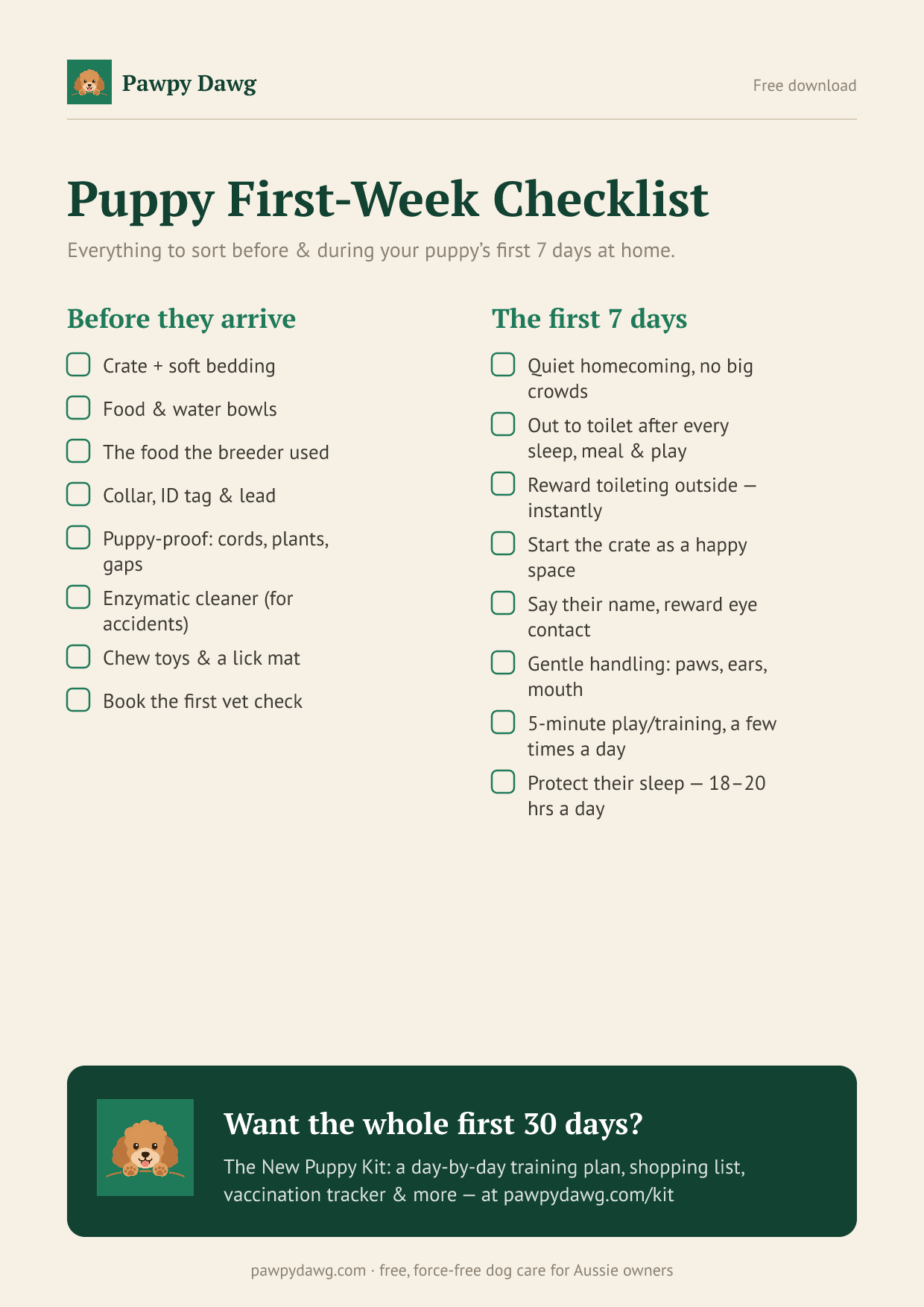
Free printable
Free: the Puppy First-Week Checklist
Everything to sort before and during your puppy's first 7 days home — a printable one-pager. Plus the occasional genuinely useful dog tip. No spam, unsubscribe anytime.
Related guides
How to Stop a Kelpie Pulling on the Lead (Step-by-Step)
Tired of being dragged around the block? Fix kelpie pulling on the lead with this step-by-step positive-reinforcement plan, realistic timelines & pro tips.
Read the guide →
How to Stop a Kelpie Barking at Strangers (Step-by-Step)
Kelpie barking at strangers driving you mad? Get a realistic, positive-reinforcement plan with quick wins you can try today — no punishment needed.
Read the guide →
How to Stop a Kelpie Jumping Up on People (Step-by-Step)
Tired of your Kelpie jumping up on people? This step-by-step positive-reinforcement guide gives you a realistic plan, quick wins, and common mistakes to avoid.
Read the guide →