
How to Toilet Train a Staffordshire Bull Terrier: A Realistic Plan
Struggling with Staffordshire Bull Terrier toilet training? Get a realistic, positive-reinforcement plan with quick wins, honest timelines & common mistakes to avoid.

Written by Bradley Brown
Founder & editor · Reviewed 2026-07-02
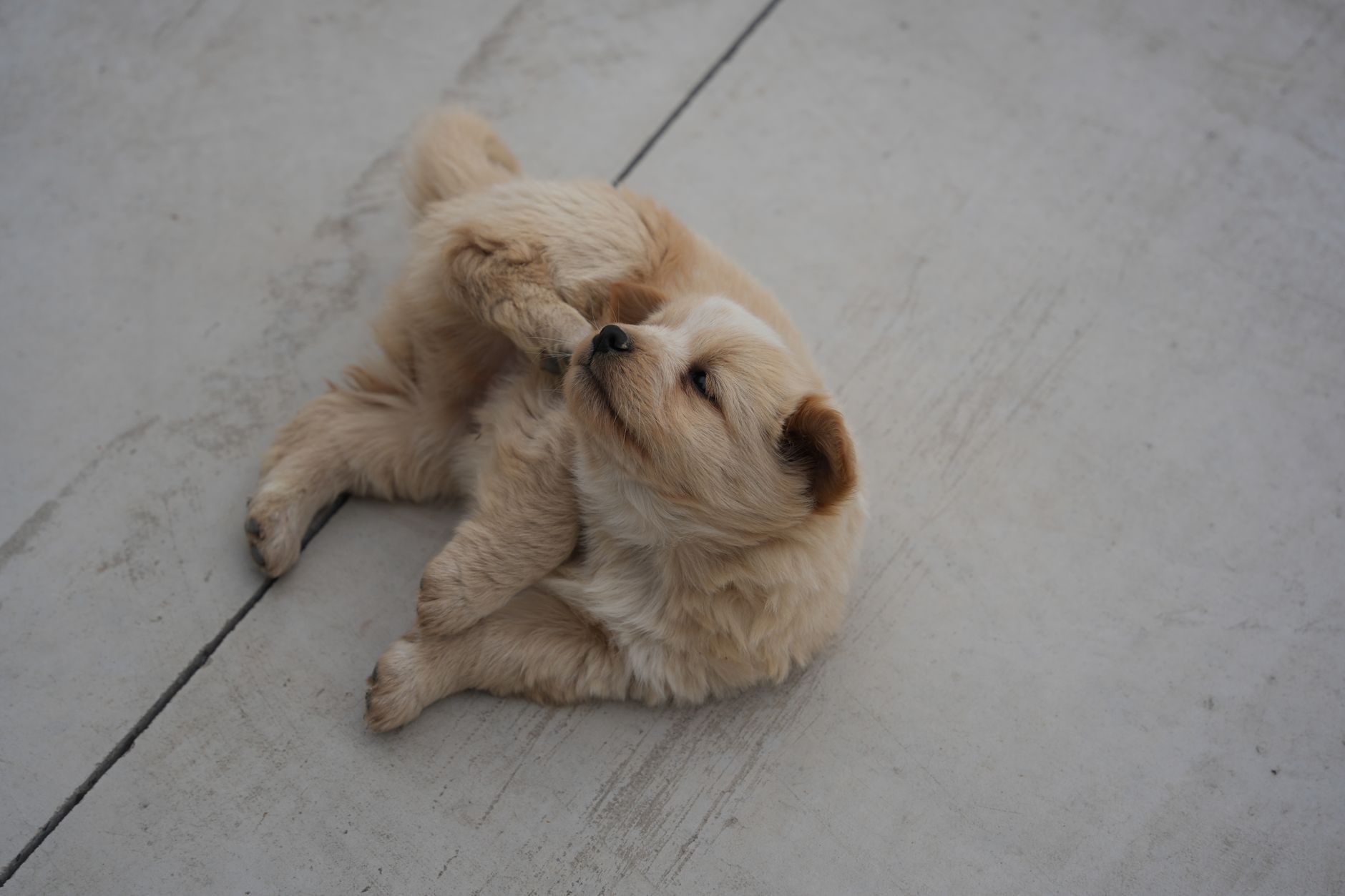
You didn't ruin your dog. You're just tired, possibly staring at a wet patch on the carpet at 11 pm, and wondering if Staffies are just like this. They're not. Staffordshire Bull Terriers are bright, eager-to-please dogs — which actually works in your favour here. The problem is almost never the dog. It's usually a gap in the routine, or a well-meaning but inconsistent approach that confused everyone involved.
Here's what actually works, in plain language, without requiring you to rearrange your life.
Your Quick Win for Tonight
Before anything else: pick one toilet spot outside and use it every single time. One spot. Same path to get there. When your Staffy sniffs, circles, or squats in that spot and goes, say "yes!" in a bright voice the moment they finish and immediately give a small, soft treat.
That's it. Start there. Consistency of location alone speeds up learning significantly because the smell of previous toileting acts as a cue for dogs to go again. You'll likely see a difference within a few days just from this one change.
Why Staffies Can Be Tricky to Toilet Train
Staffies aren't slow learners — they're stubborn learners. They respond brilliantly to positive reinforcement but will happily ignore pressure or punishment. Scolding a Staffy for an indoor accident (especially after the fact) achieves nothing except making them anxious around you at toilet time, which makes the problem worse.
They're also a breed that bonds intensely with their people, which means they'd rather be inside with you than outside alone. If going outside doesn't immediately result in something good, they'll do their business quickly and rush back in — or worse, hold on, come inside, and then go on the rug.
The Realistic Training Plan (5–10 Minutes a Day)
You don't need hour-long sessions. You need frequency and consistency, not duration.
Step 1: Set a Toilet Schedule
Take your Staffy outside at these times, every day:
- First thing in the morning (within 5 minutes of waking)
- After every meal (within 15–20 minutes)
- After naps
- After play sessions
- Before bed
- Once overnight for puppies under 12 weeks
For puppies, expect to go out every 1–2 hours during the day. A rough guide: puppies can hold their bladder for about one hour per month of age, up to a maximum of around 4–5 hours during the day.
Step 2: Use a Cue Word
Pick a word — "toilet," "outside," "go wees" — whatever you'll actually say consistently. Say it calmly as they're in the act. Over time, this word becomes a prompt you can use on cue (genuinely useful before car trips or vet visits).
Step 3: Reward Immediately and Specifically
Timing matters more than most people realise. Reward within 2 seconds of them finishing. Don't wait until you're back inside. Keep treats in your pocket or in a container by the back door. Small, soft treats — chicken, cheese, commercial training treats — work best.
Step 4: Manage the Indoor Environment
Supervision is everything during training. If you can't watch your dog, use:
- A crate (appropriately sized — they shouldn't be able to toilet in one corner and sleep in another)
- A puppy pen
- A leash attached to you (called "umbilical training")
This isn't punishment. It's preventing rehearsal of the wrong behaviour, which makes accidents less likely to become habits.
Step 5: Handle Accidents Without Drama
If you catch them in the act, interrupt calmly — a single "ah-ah" — and take them outside immediately. If you find an accident after the fact, say nothing to the dog. Clean it up with an enzymatic cleaner (available at most Australian pet shops and supermarkets; brands like Nature's Miracle or BioZet Attack work well). Standard cleaners mask the smell to humans but not to dogs, and the residual scent encourages repeat toileting in the same spot.
Common Mistakes That Stall Progress
| Mistake | Why It Backfires |
|---|---|
| Punishing accidents after the fact | Dogs can't connect past action to current reaction; creates anxiety |
| Letting them roam freely before trained | Rehearses the wrong behaviour, sets it in faster |
| Rewarding once they're back inside | The dog learns "coming inside = treat," not "toileting outside = treat" |
| Inconsistent toilet spot | Removes the scent cue that helps them understand where to go |
| Giving up access too soon | Most dogs need 4–8 weeks of consistent management before they're reliable |
Realistic Timelines
Be honest with yourself about this:
- Puppies (8–16 weeks): Physically cannot hold on reliably. Expect accidents. Aim for reducing frequency, not perfection.
- 4–6 months: Most Staffies are getting the idea but still have off days, especially in new environments or after excitement.
- 6–12 months: With consistent training, most are reliably toilet trained. Some adolescent dogs regress briefly — this is normal.
- Adult rescue dogs: Often faster than puppies because they have bladder control. Most adult Staffies can be retrained in 2–4 weeks with a solid routine.
If your adult dog was previously toilet trained and has suddenly started having accidents, see your vet first. Urinary tract infections, bladder stones, and hormonal issues (including in desexed dogs) can all cause sudden incontinence, and training won't fix a medical problem.
If You're Not Making Progress
Try these before calling it a failure:
- Go back to basics — more frequent trips outside, more supervision, smaller treats
- Rule out medical causes with a vet check
- Assess the reward — is your dog actually food motivated, or do they prefer play/praise?
- Check for anxiety — some dogs are reluctant to toilet outside due to noise sensitivity or fear; this needs addressing separately
If you've been consistent for 6–8 weeks and things aren't improving, a qualified trainer or veterinary behaviourist is worth the investment. Look for someone who uses reward-based methods — the Australian Veterinary Association recommends against punishment-based training for behavioural issues. A single session (typically $150–$300 AUD) can identify what's going wrong faster than months of trial and error.
A Note on Public Judgement
If your Staffy has an accident at the park, on a walk, or at someone's house — it is not a reflection of you as an owner. These dogs are confident, energetic, and easily excited. Excitement and new environments genuinely override bladder signals, especially in younger dogs. Carry waste bags, stay calm, and keep moving. You're training. That's already the right thing to be doing.
As an Amazon Associate we earn from qualifying purchases.
Frequently asked questions
How long does it take to toilet train a Staffordshire Bull Terrier?
Most Staffy puppies develop reliable habits between 4 and 6 months of age with consistent daily training, though full reliability often comes closer to 6–12 months. Adult rescue Staffies with good bladder control can often be retrained in as little as 2–4 weeks. Expect setbacks during adolescence — they're normal and temporary.
Why does my Staffy go to the toilet inside right after coming in from outside?
This usually means they didn't actually go outside, or they were distracted and didn't fully empty their bladder. Stay outside a little longer and reward the moment they toilet — not when they come back inside. If they don't go within 5 minutes, bring them in, supervise closely, and try again in 15–20 minutes.
Is crate training cruel for Staffordshire Bull Terriers?
No — when introduced positively, a crate gives dogs a secure, predictable space and reduces the chance of unsupervised accidents. The key is that the crate should be appropriately sized (just big enough to stand, turn, and lie down), never used as punishment, and time in the crate should be appropriate to the dog's age and needs. Most Staffies accept crates readily when properly introduced.
My Staffy is 1 year old and still having accidents — is it too late to train them?
It's absolutely not too late. Adult dogs can be toilet trained at any age. First rule out a medical cause with a vet check, then restart a structured routine with frequent outdoor trips, consistent rewards, and close supervision indoors. Many adult dogs learn faster than puppies because they have full bladder control — they just need the right guidance.
What's the best cleaner for dog toilet accidents inside the house?
Use an enzymatic cleaner, which breaks down the proteins in urine and faeces that standard cleaners leave behind. Residual scent signals to dogs that a spot is an acceptable toilet area. Products such as Nature's Miracle or enzyme-based laundry soakers are widely available at Australian pet shops and supermarkets. Avoid ammonia-based cleaners, which can actually attract dogs back to the same spot.
Should I punish my Staffy for toileting inside?
No — punishment, especially after the fact, is ineffective and can make training harder by creating anxiety around toileting in front of you. Dogs don't connect a past action to a current consequence. Calmly interrupt accidents you catch in progress, take them outside immediately, and reward success there. Clean up accidents without fuss and focus energy on preventing the next one.
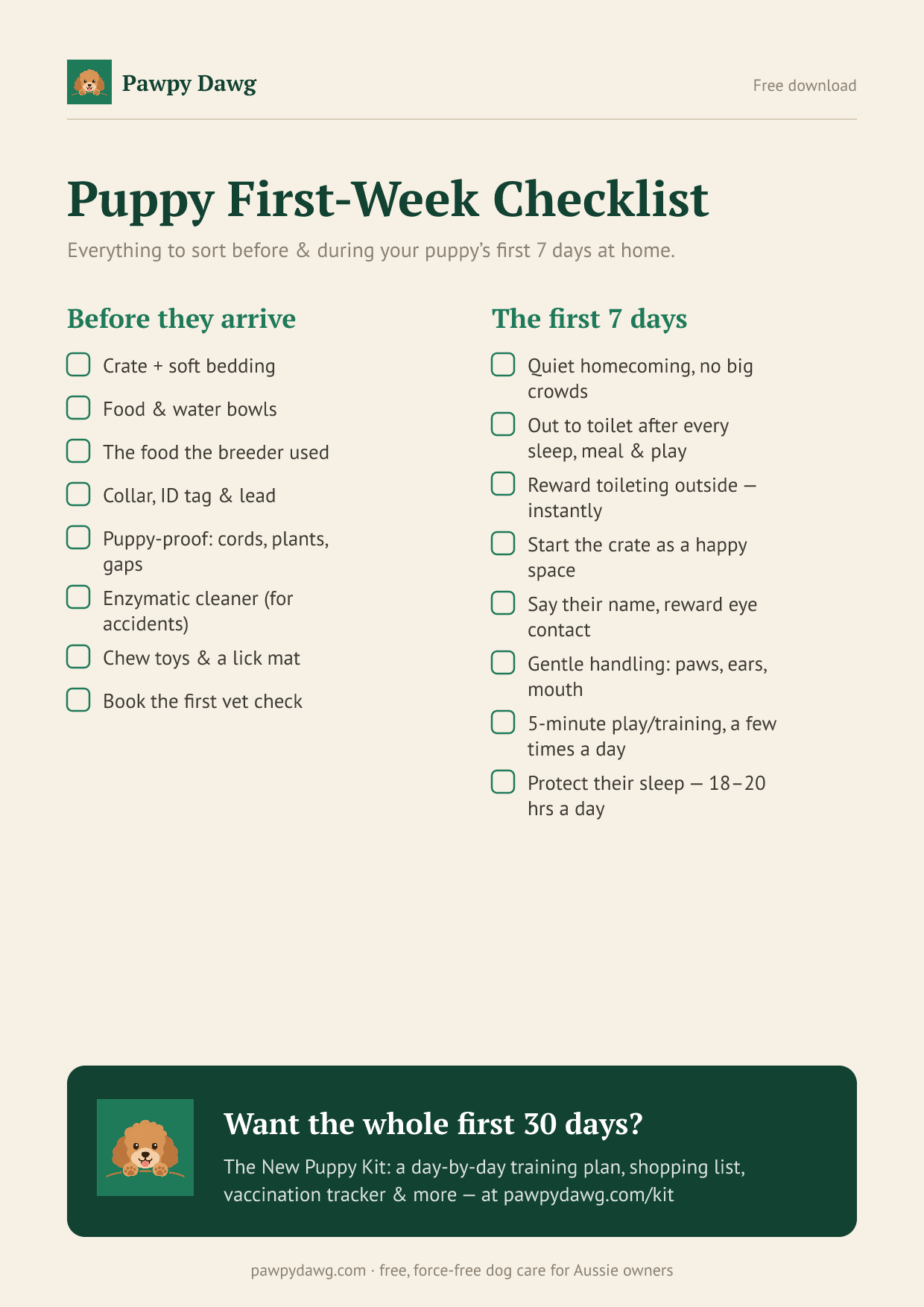
Free printable
Free: the Puppy First-Week Checklist
Everything to sort before and during your puppy's first 7 days home — a printable one-pager. Plus the occasional genuinely useful dog tip. No spam, unsubscribe anytime.
Related guides
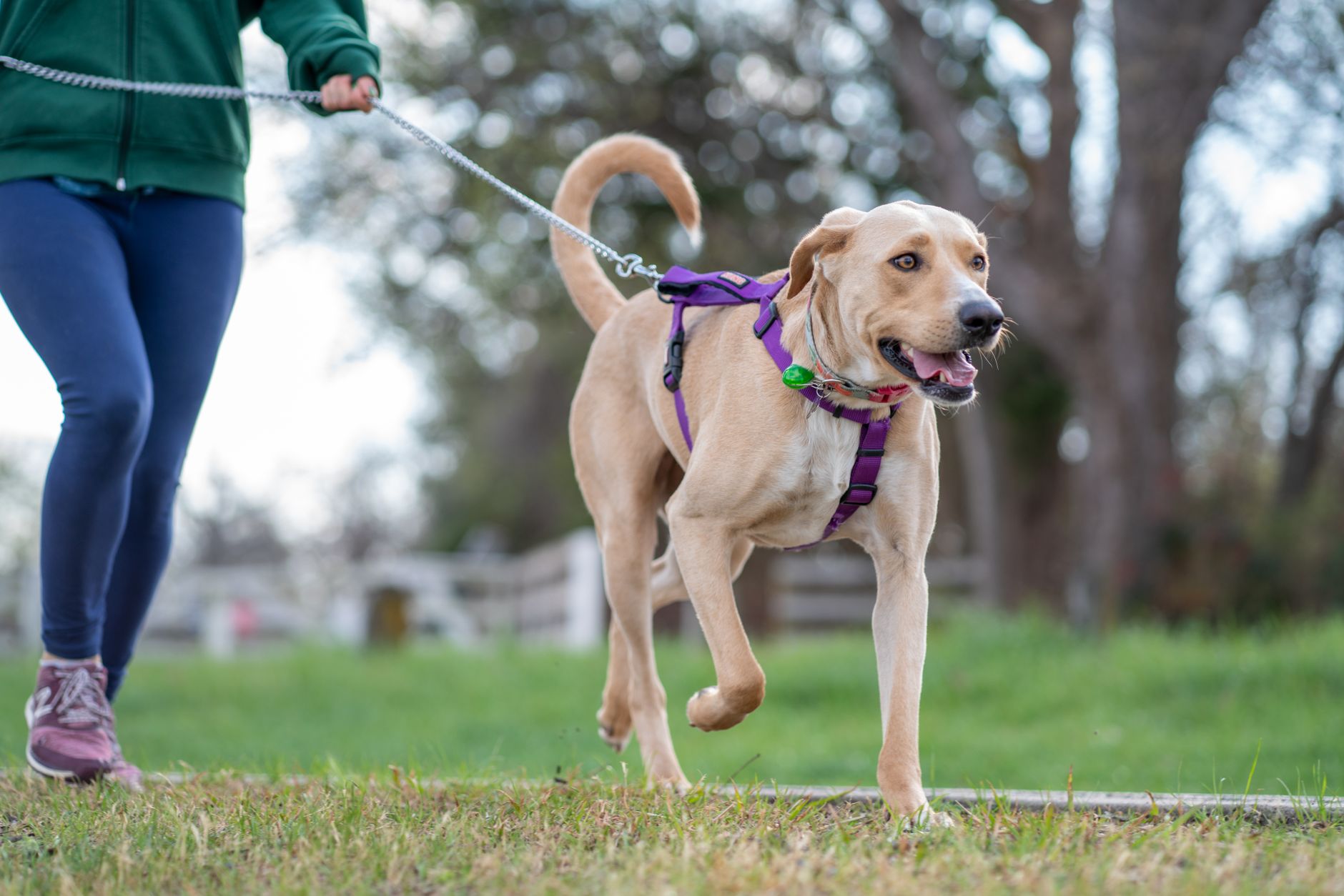
How to Stop a Staffordshire Bull Terrier Pulling on the Lead (Step-by-Step)
Tired of your Staffy dragging you down the street? Here's a practical, step-by-step positive-reinforcement plan to stop a Staffordshire Bull Terrier pulling on the lead.
Read the guide →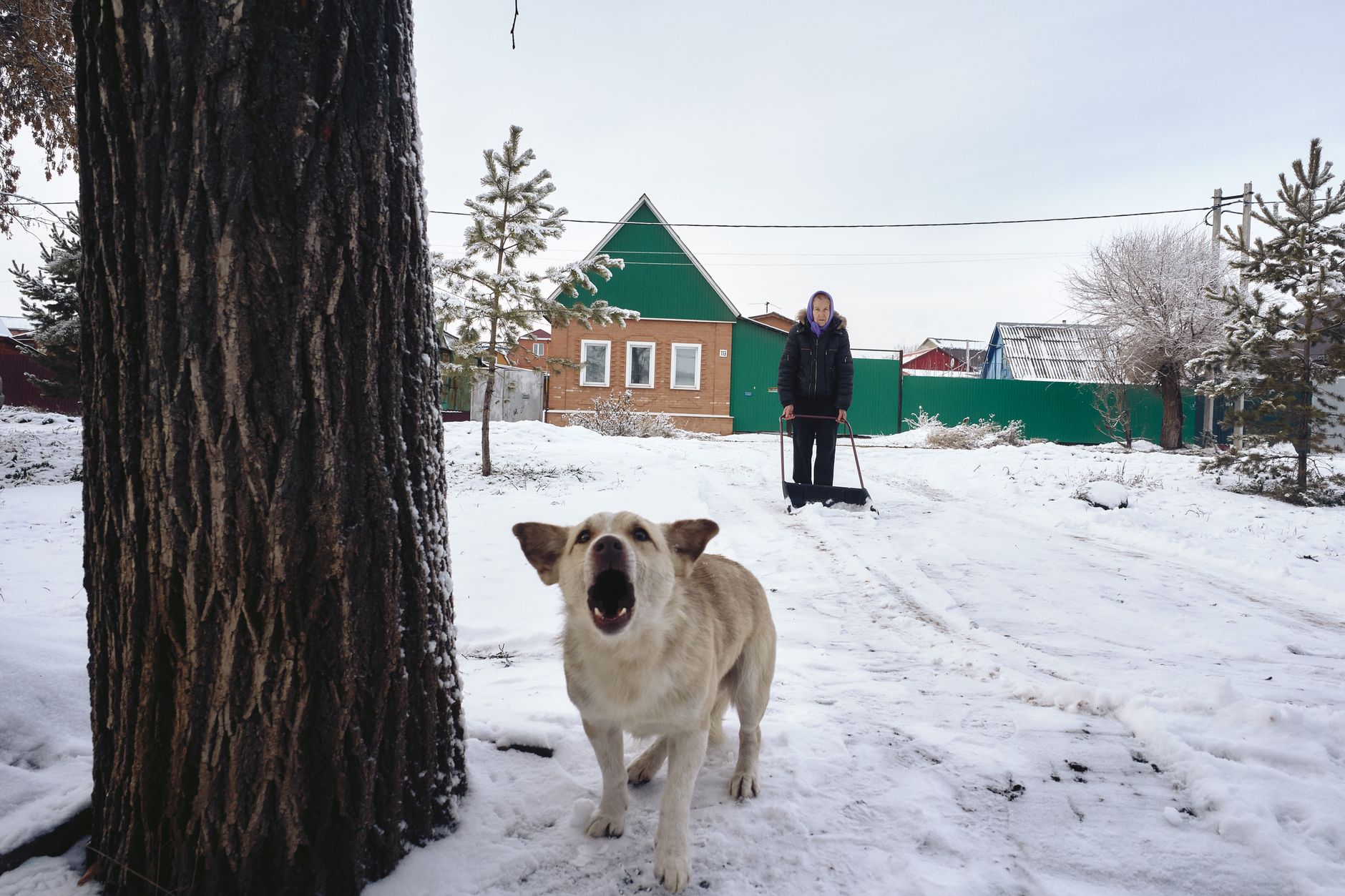
How to Stop a Staffordshire Bull Terrier Barking at Strangers (Step-by-Step)
Staffordshire Bull Terrier barking at strangers? A practical, positive-reinforcement plan with daily 5-min sessions, realistic timelines & when to get pro help.
Read the guide →
Staffordshire Bull Terrier Separation Anxiety: A Step-by-Step Fix
Staffordshire Bull Terrier separation anxiety is common and fixable. Get a realistic, step-by-step positive-reinforcement plan you can start today — no 60-min sessions needed.
Read the guide →