
How to Fix Resource Guarding in Your Staffordshire Bull Terrier
Staffordshire Bull Terrier resource guarding is stressful but fixable. Use this positive-reinforcement plan to stop growling & snapping — starting today.

Written by Bradley Brown
Founder & editor · Reviewed 2026-07-02
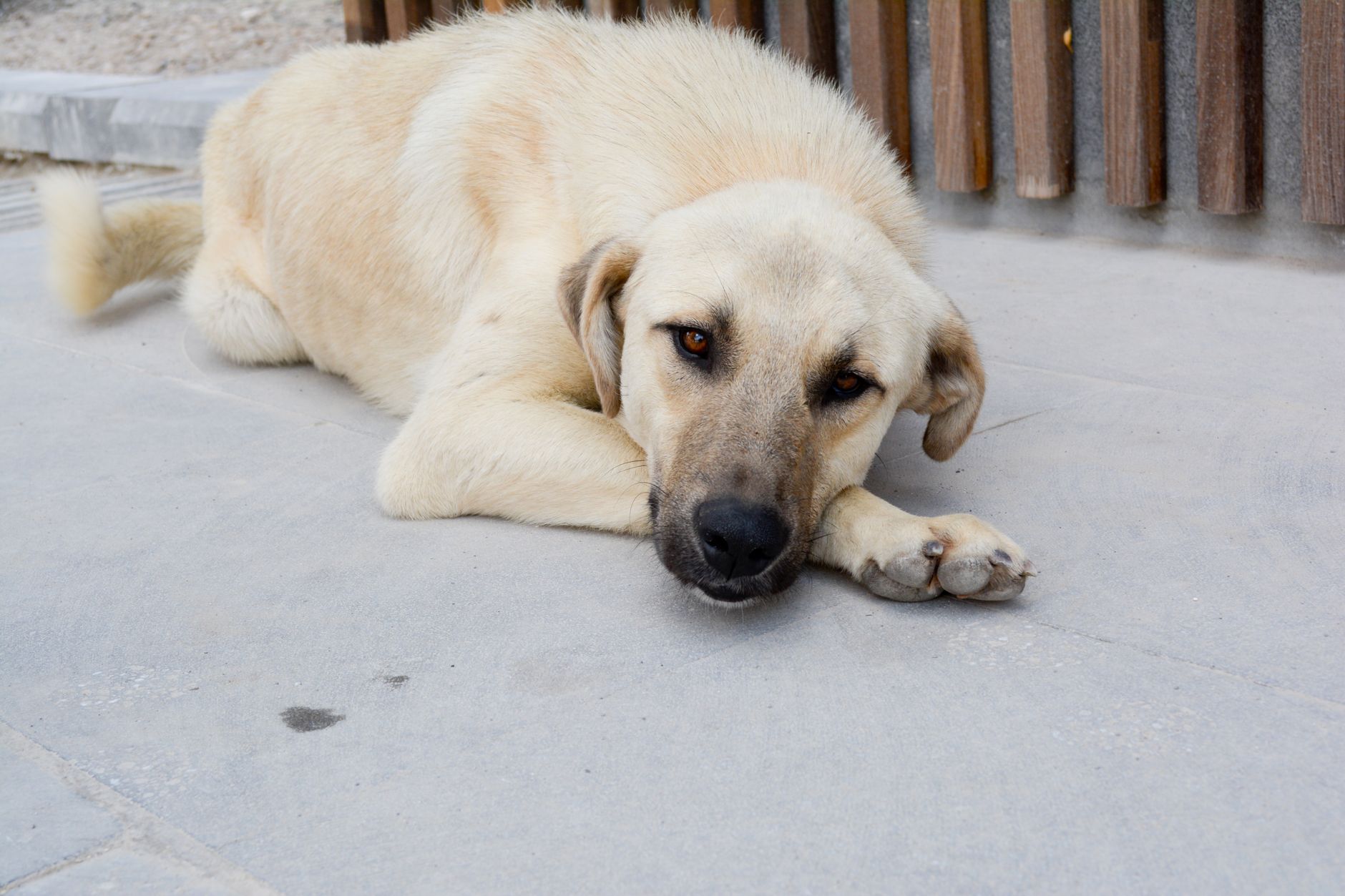
If your Staffy just growled at you over a bone — or snapped at another dog near their food bowl — take a breath. You haven't ruined your dog. Resource guarding is one of the most common behavioural issues vets and trainers see, and Staffordshires are no more "aggressive" for doing it. It's a completely normal canine survival instinct that happens to be inconvenient (and sometimes dangerous) in a home. The good news: it responds very well to positive-reinforcement training, even in dogs that have been doing it for years.
Here's a practical plan you can start tonight.
What Resource Guarding Actually Is
Resource guarding is your dog communicating "I'm worried you'll take this." The "resource" can be food, a chew, a toy, a sleeping spot, or even a person. Staffies are loyal, confident, and tenacious — traits that make them brilliant companions but also mean they can hold their ground around valued items more readily than some other breeds.
The behaviour typically escalates in a predictable ladder:
- Freeze (goes still over the item)
- Hard stare
- Lip curl or low growl
- Snap (no contact)
- Bite
Most owners first notice the growl and panic. That growl is actually communication — your dog is warning before escalating. Never punish the growl; it removes the warning signal and makes a bite more likely without fixing the underlying anxiety.
Your Quick Win for Tonight: The "Trade Up" Game
Before you read another word, here's something you can try in the next 10 minutes.
- Let your Staffy settle with a low-value item (a chew they're not obsessed with).
- Walk calmly toward them holding a high-value treat (small piece of cooked chicken or cheese works well).
- Say "swap" in a conversational tone and offer the treat near their nose — don't reach for the item.
- The moment they drop the item to take the treat, pick up the item, praise briefly, then give it straight back.
That last step is the key. Most dogs guard because they expect permanent loss. When they learn "a human approaching = treat, AND I get my thing back," the threat evaporates. Repeat 3–4 times in a single session, keep it light and rewarding.
The 5-Minute Daily Plan (Weeks 1–4)
You don't need hour-long sessions. Consistency beats duration every time.
Week 1–2: Build Positive Associations at a Distance
Your goal is simply to make your approach predict good things — not to take anything yet.
- During each of your dog's meals, walk past the bowl and casually toss a treat in. No stopping, no hovering. Walk away.
- Do this 3–4 times per meal. That's it.
- Repeat with chew sessions: approach, drop a treat beside the chew, leave.
You're rewiring the "human approaches = good things happen" association. Most Staffies start relaxing visibly within 7–10 days.
Week 3–4: Introduce the "Swap" More Formally
Once your dog is comfortable with your approach:
- Practise the Trade Up game (above) daily with progressively higher-value items.
- Start asking for a sit before the swap — this gives them an alternative behaviour and adds a calming pause.
- Practise with different family members, including children (with adult supervision and child coaching on how to offer treats properly).
Ongoing: Prevent Rehearsal
Every time your dog guards successfully — whether they froze you out or snapped and you backed off — the behaviour is reinforced. Management matters alongside training:
| Situation | Management Strategy |
|---|---|
| Feeding time | Feed in a separate, low-traffic area |
| High-value chews | Give only in a crate or pen when other pets/kids are around |
| "Favourite spot" guarding | Teach a reliable "off" cue using treats, never force |
| Multi-dog household | Feed dogs in separate rooms; pick up bowls when done |
| Visitors approaching | Put the chew away before guests arrive |
Common Mistakes That Make It Worse
Punishing the growl. As above — removing the warning doesn't remove the emotion behind it. It just makes the bite come sooner and with less notice.
The alpha roll or "dominance" correction. Outdated, disproven, and with a breed as physically strong as a Staffy, genuinely risky. Modern veterinary and behavioural science has moved well past dominance theory.
Inconsistency across the household. If one family member always yanks the bone away while another does Trade Up, your dog can't learn a reliable rule. Get everyone on the same page.
Moving too fast. Trying to take high-value items before you've built sufficient positive history usually triggers a stress response and sets training back. Slow is fast.
Telling the dog off mid-session. If they growl during a training rep, you've moved too close too fast. Just step back and make the next rep easier — don't scold.
Realistic Timelines
| Severity | What to Expect |
|---|---|
| Mild (freeze/growl over food only) | Noticeable improvement in 2–4 weeks with daily 5-min sessions |
| Moderate (growl/snap over multiple items) | Meaningful progress in 6–8 weeks; management ongoing |
| Severe (bite history or guarding multiple contexts) | Requires professional help alongside home work; months of consistent effort |
These aren't guarantees — every dog is an individual — but they're realistic benchmarks based on standard clinical guidance.
When to Call a Professional
Some situations genuinely warrant expert support, and asking for help is a sign of good ownership, not failure:
- Your dog has already made skin contact (broken skin or bruising).
- Children under 12 live in the home and guarding is more than very mild.
- Guarding is escalating despite 3–4 weeks of consistent training.
- You feel unsafe or anxious handling your dog — that tension communicates to them.
Look for a trainer or behaviourist who uses positive reinforcement and behaviour modification, holds credentials from the Delta Society Australia or the IAABC, and is willing to explain their methods clearly. Avoid anyone who suggests dominance-based corrections, leash corrections, or "flooding" for guarding specifically.
If the behaviour started suddenly in an otherwise settled dog, a vet check is worth doing first — pain (dental issues, joint pain) can trigger guarding that looks behavioural but has a physical root.
The One Thing to Remember
Your Staffy isn't trying to dominate you. They're anxious about losing something they value. Every session where you approach and good things happen — without them losing their resource — chips away at that anxiety. Patient, consistent, low-pressure repetition is what changes the behaviour long-term.
You've got this.
Frequently asked questions
Is resource guarding in Staffordshire Bull Terriers a sign of aggression?
Not in the clinical sense. Resource guarding is a normal, instinctive behaviour rooted in anxiety about losing a valued item — not a sign that your Staffy is dangerous or dominant. That said, it sits on a spectrum and should be addressed with training before it escalates to snapping or biting.
Can I use punishment to stop my Staffy from resource guarding?
No — punishment, including telling the dog off or physically correcting them, typically makes guarding worse over time. It suppresses the warning signals (like growling) without addressing the underlying anxiety, which increases the risk of a bite with no prior warning. Positive reinforcement is the evidence-based approach.
My Staffy guards their food bowl but not toys. Do I need to treat them separately?
Yes, guarding is context-specific, so you'll need to practise the Trade Up game and approach exercises in each context where guarding occurs. Progress in one area doesn't automatically transfer to another, though dogs often generalise faster once they understand the pattern.
How long does it take to fix resource guarding in a Staffy?
Mild food guarding can show clear improvement within 2–4 weeks of consistent daily training (5–10 minutes a day). Moderate cases typically take 6–8 weeks, and severe cases — especially where biting has occurred — can take several months and usually benefit from professional guidance alongside home work.
Is it safe to do this training with kids in the house?
Children should never be the primary trainer for resource guarding, and an adult should always supervise interactions between guarding dogs and kids under 12. Management — such as giving chews only in a crate or away from children — is essential until guarding is well under control. If the guarding is more than very mild, consult a professional behaviourist before involving children in training.
Should I see a vet before starting resource guarding training?
If the guarding came on suddenly in a dog that didn't previously show it, a vet check is a sensible first step — pain from dental disease, arthritis, or other conditions can trigger guarding behaviour. Otherwise, for gradual or longstanding guarding, you can start positive-reinforcement training straight away while keeping a vet visit in mind if progress stalls.
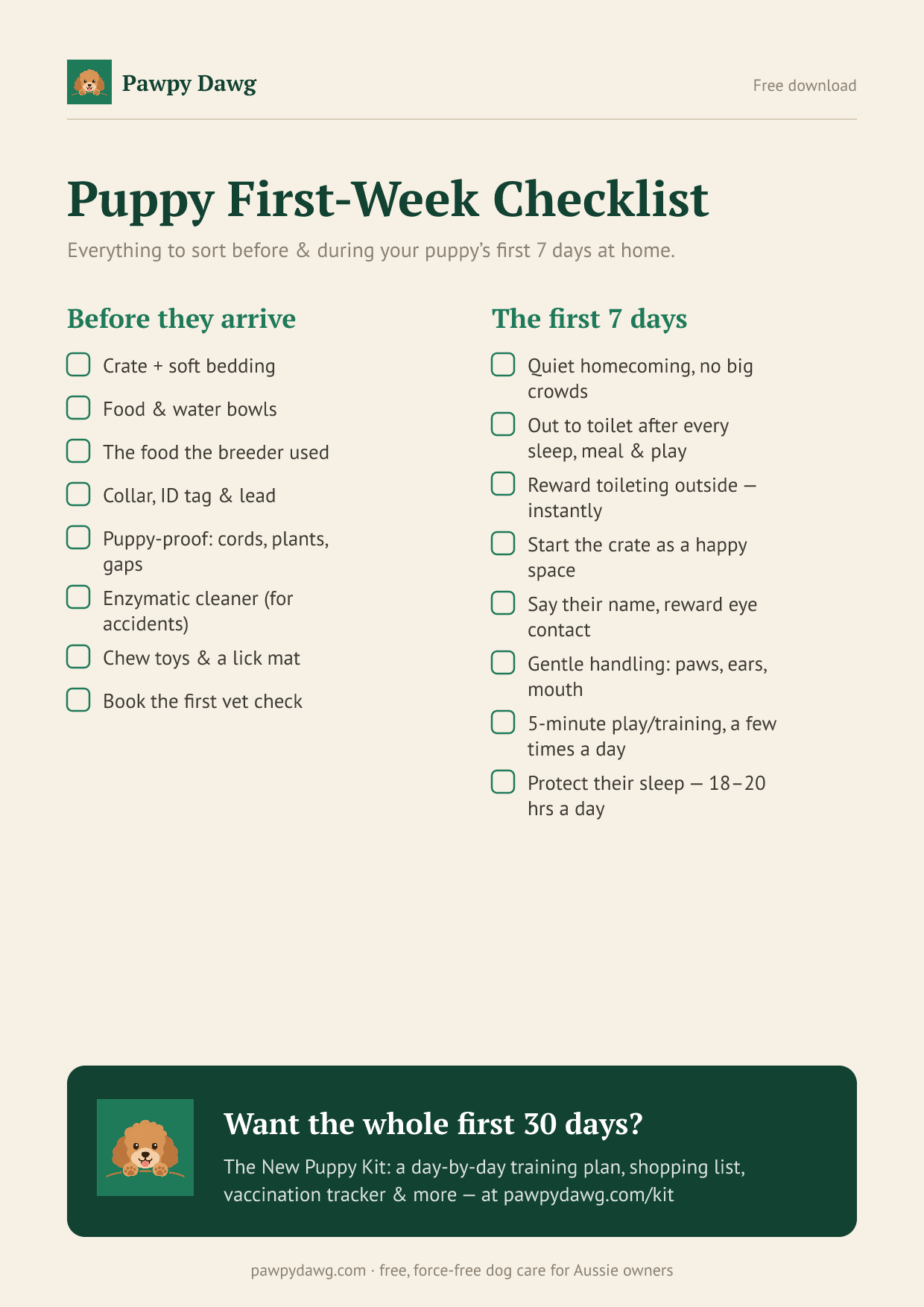
Free printable
Free: the Puppy First-Week Checklist
Everything to sort before and during your puppy's first 7 days home — a printable one-pager. Plus the occasional genuinely useful dog tip. No spam, unsubscribe anytime.
Related guides
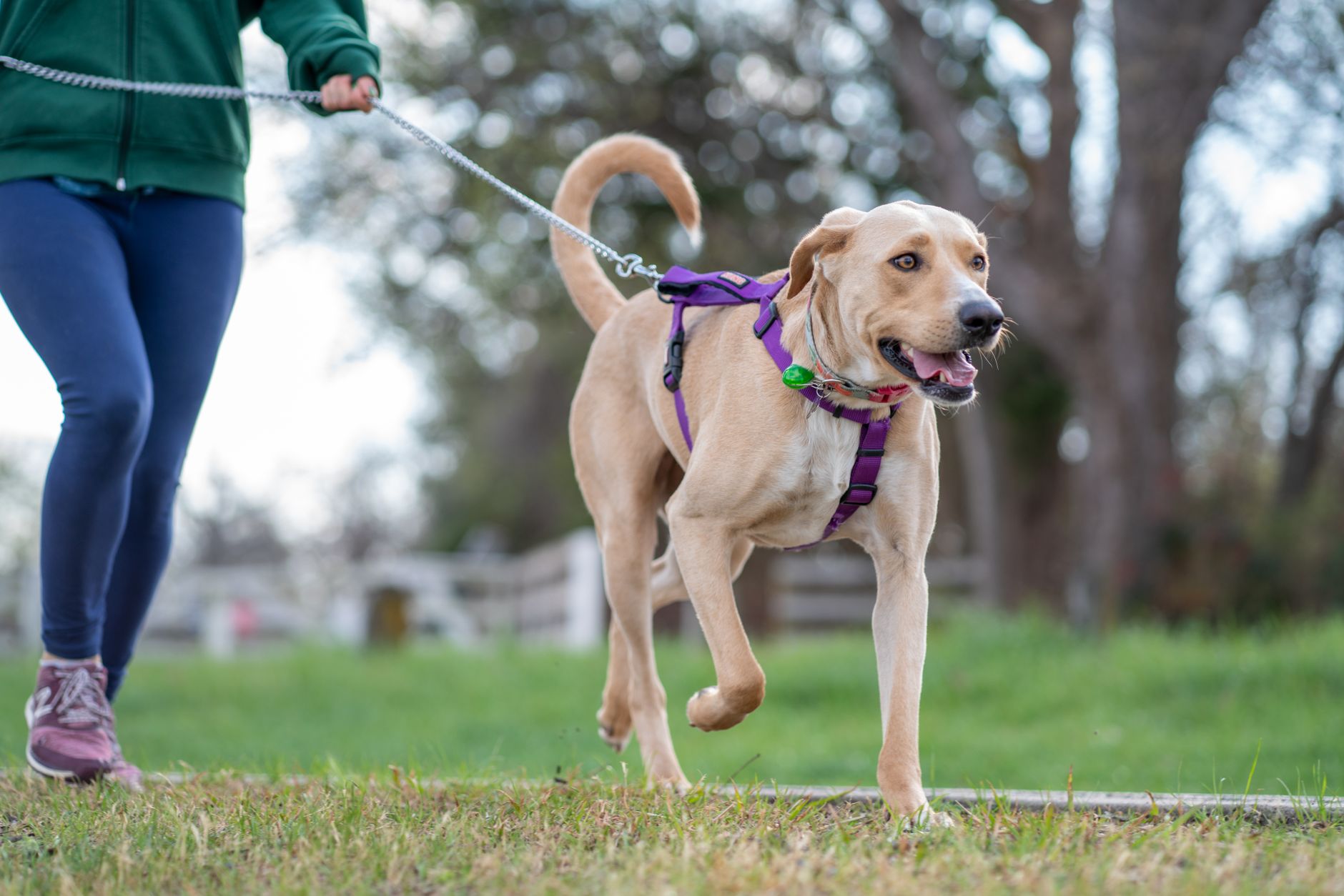
How to Stop a Staffordshire Bull Terrier Pulling on the Lead (Step-by-Step)
Tired of your Staffy dragging you down the street? Here's a practical, step-by-step positive-reinforcement plan to stop a Staffordshire Bull Terrier pulling on the lead.
Read the guide →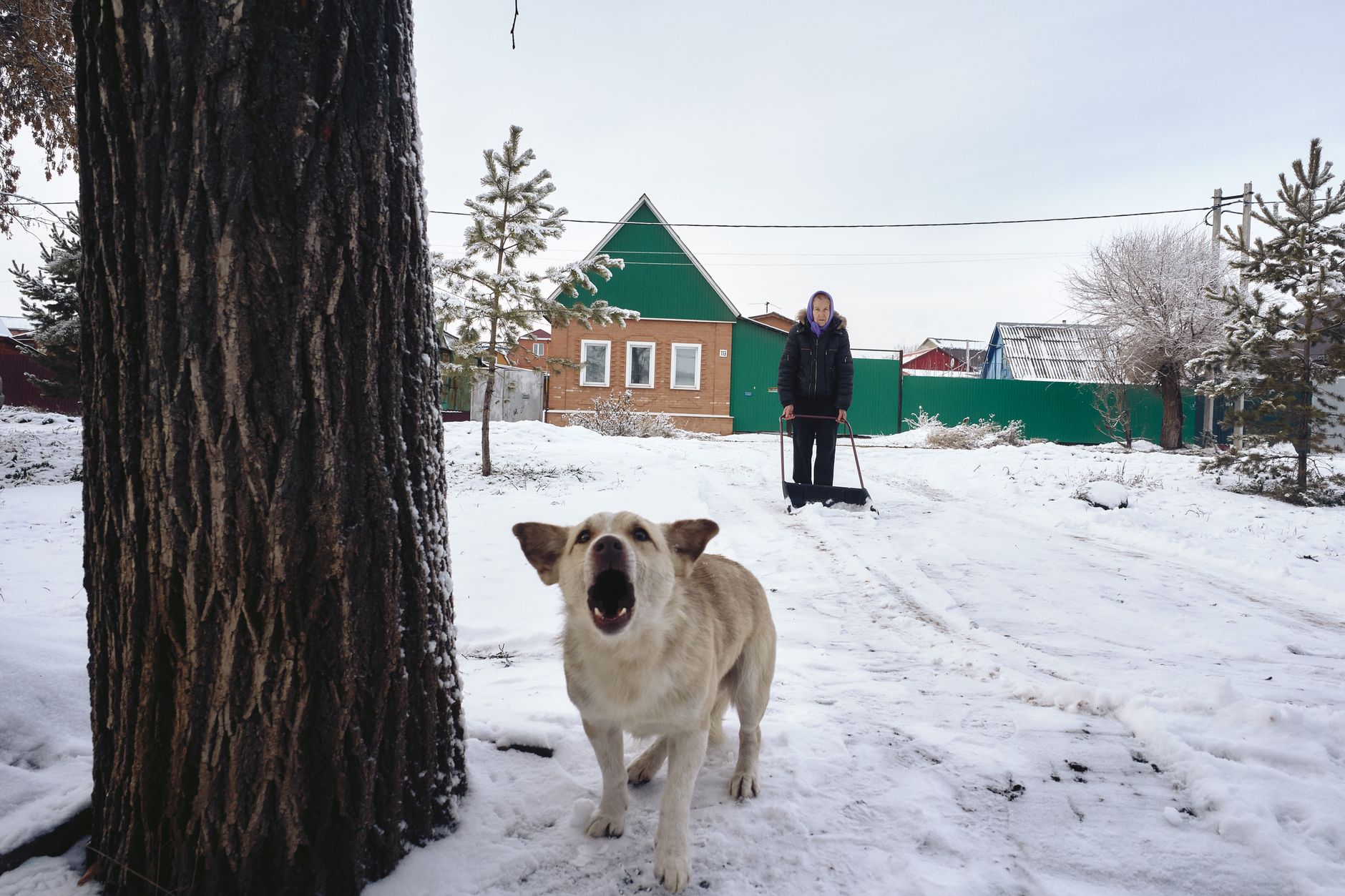
How to Stop a Staffordshire Bull Terrier Barking at Strangers (Step-by-Step)
Staffordshire Bull Terrier barking at strangers? A practical, positive-reinforcement plan with daily 5-min sessions, realistic timelines & when to get pro help.
Read the guide →
Staffordshire Bull Terrier Separation Anxiety: A Step-by-Step Fix
Staffordshire Bull Terrier separation anxiety is common and fixable. Get a realistic, step-by-step positive-reinforcement plan you can start today — no 60-min sessions needed.
Read the guide →