
Staffordshire Bull Terrier Not Coming When Called? A Step-by-Step Recall Fix
Staffordshire Bull Terrier not coming when called? Fix recall fast with this positive-reinforcement plan—quick wins today, realistic timelines, common mistakes avoided.

Written by Bradley Brown
Founder & editor · Reviewed 2026-07-02
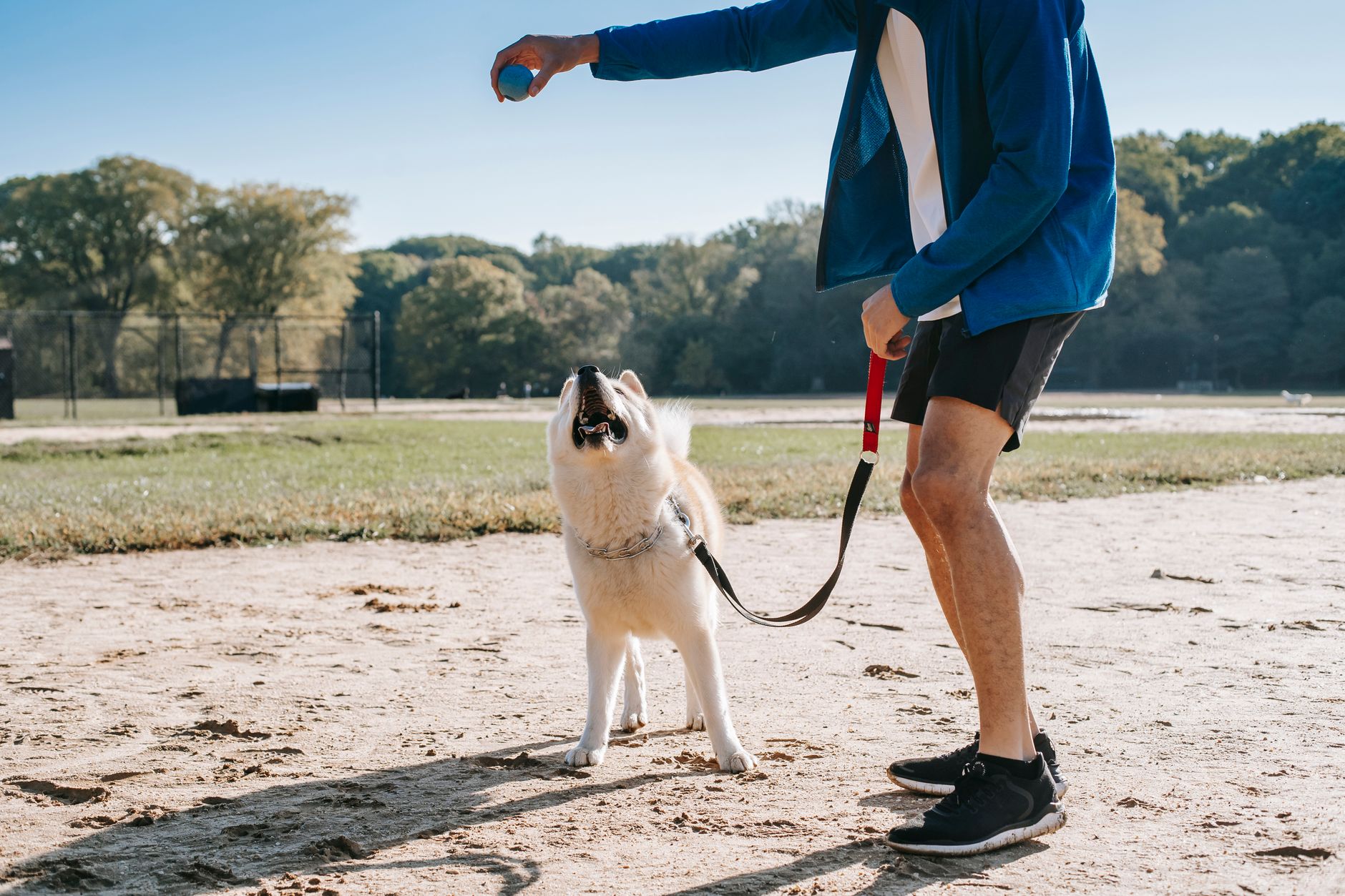
You called. Your Staffy looked directly at you, made deliberate eye contact, and then trotted the other way. If you're reading this after a bad walk or a near-miss at the park, you're not alone — and you haven't ruined your dog.
Staffies are confident, tenacious, and very good at making their own decisions. That's the breed working exactly as it was designed to. Poor recall isn't a character flaw in your dog or a training failure on your part. It's a solvable gap between what your Staffy finds rewarding right now (sniffing, running, playing with other dogs) and what you're offering when you call them back. This guide closes that gap.
Your Quick Win: Try This Today
Before reading another word, grab 10 small, high-value treats — think diced chicken, cheese, or Fritz — and do this once before dinner tonight:
- Let your Staffy wander a few metres away inside the house or in a secure backyard.
- In a bright, happy voice — not a command bark — call their name once followed by "come."
- The moment they take a single step toward you, start talking excitedly ("Yes! Good dog! Come on!").
- When they reach you, deliver every single treat one at a time in quick succession ("treat jackpot"), then give them a big fuss.
- Let them wander off again. Repeat 3–4 times. Stop while it's fun.
That's it. You've just started re-conditioning the recall cue into something genuinely worth responding to. Do this once or twice a day, every day, and you'll have a foundation within a week.
Why Staffies Struggle With Recall Specifically
Understanding the why makes the fix stick.
- High drive, low boredom threshold. Staffies are energetic, curious dogs. The outside world is a buffet of stimulation. You're competing with all of it.
- Selective hearing is self-reinforcing. Every time your Staffy ignored "come" and nothing happened, they learned ignoring works.
- The recall cue is poisoned. If "come" has ever preceded the end of fun (leashing up to go home, a bath, nail clipping), your Staffy has a rational reason to avoid it.
- Breed confidence. Staffies were bred to be tenacious and independent in the field. That same quality makes them less automatically deferential than, say, a Border Collie.
None of these are permanent. They're training problems, and training problems have training solutions.
The Step-by-Step Recall Rebuild
Work through these stages in order. Don't rush to the next stage until the current one is reliable — meaning your Staffy comes back at least 9 out of 10 times.
Stage 1 — Charge Up a New Cue (Week 1–2)
If "come" is already poisoned, retire it temporarily. Pick a new word — "here," "front," or even a whistle blast. From this point on, the new cue only ever predicts good things.
- Practice indoors with zero distractions, 5–10 minutes per session.
- Use the treat jackpot method from the quick win above.
- Vary the rewards: sometimes it's 5 treats, sometimes a quick game with a tug toy, sometimes a belly rub if your Staffy loves that. Unpredictability keeps them keen.
- Never repeat the cue. One cue, one chance. If they don't come, walk away or make yourself interesting (crouch down, clap, move away from them). Chasing teaches them that running away starts a fun game.
Stage 2 — Add Distance and Mild Distraction (Week 2–3)
Once recall is solid indoors:
- Move to a secure backyard or quiet outdoor space.
- Start with short distances (3–5 metres), then gradually increase.
- Introduce mild distractions: practice when another person is nearby, or when there's a low-level smell in the grass.
- Continue rewarding every single successful recall. This is not the time to fade treats.
Stage 3 — Long Line Work (Week 3–6)
A 10–15 metre long line (not a retractable lead) is your most important tool for the next few weeks. It lets your Staffy experience more freedom while ensuring recall is always practised successfully.
- Clip the long line to a well-fitted harness, not the collar.
- Call once. If they don't respond within 3 seconds, apply gentle, steady pressure on the line — don't jerk — and guide them toward you.
- When they arrive, jackpot reward as always. No scolding, even if you had to reel them in.
- Practise in progressively busier environments: quiet park, then a park with other dogs at a distance, then closer to distractions.
Stage 4 — Proofing in the Real World (Week 6+)
This is where most owners stall. Proofing means practising in the exact conditions that cause failure — near other dogs, at the off-leash park, on a beach — but setting yourself up to succeed.
- Practise recalls during off-leash time, not only at the end. Call your Staffy back, reward hugely, then release them to go play again. This prevents "come" from meaning "fun is over."
- Use the "two toys" trick: throw one toy, and when your Staffy picks it up, excitedly produce the second. They'll drop the first and come to you. Reward, then throw again.
- Vary your rewards based on the competition. Near a dog park, bring roast chicken. In a boring paddock, praise might be enough.
Common Mistakes That Stall Progress
| Mistake | Why It Backfires | Fix |
|---|---|---|
| Calling repeatedly ("Come! Come! COME!") | Teaches the dog the cue means nothing | One cue, then make yourself interesting |
| Punishing a slow recall | The dog learns arriving = bad outcome | Always celebrate arrival, no matter how long it took |
| Only calling at the end of a walk | Poisons the cue with "fun ending" | Recall mid-walk regularly, then release |
| Using recall for unpleasant events | Builds negative association | Use a different cue for baths/vet; or pair unpleasant things with big rewards |
| Moving to off-leash too soon | Sets the dog up to fail and self-reinforce ignoring | Use the long line until recall is genuinely reliable |
Realistic Timelines
- 1–2 weeks: Solid recall indoors and in a secure backyard.
- 3–6 weeks: Reliable recall on a long line in moderately distracting environments.
- 2–4 months: Reliable off-leash recall in most real-world situations.
These timelines assume one or two short sessions daily. Skipping days doesn't ruin progress, but consistency is the multiplier.
When to Call in a Professional
Most Staffy recall issues respond well to the plan above. Reach out to a force-free, positive-reinforcement trainer (look for members of the Pet Professional Guild Australia or Delta Society Australia) if:
- Your Staffy is showing reactivity or aggression toward other dogs or people when off-leash — recall training won't be enough here.
- You've worked consistently for 8+ weeks with little improvement.
- Recall breaks down completely near specific triggers (e.g., other dogs, wildlife) despite long-line work.
- You're feeling genuinely stressed or unsafe on walks.
A good trainer can usually make significant progress in just a few sessions. Budget roughly $80–$180 AUD per private session depending on your city; group classes typically run $150–$300 AUD for a 6-week course.
The Most Important Thing
Your Staffy is not being stubborn to spite you. They're being a Staffy — a dog bred to be bold, lively, and self-assured. Every single time they come back to you and something good happens, you're building a history of trust. That history is what recall is actually made of.
Start with the quick win tonight. Five minutes. Ten treats. You've got this.
As an Amazon Associate we earn from qualifying purchases.
Frequently asked questions
Why does my Staffordshire Bull Terrier ignore me when I call them outside but come fine at home?
The outdoors offers far more competing rewards — smells, sights, other animals — than your living room does. Recall is a skill that has to be trained specifically in each environment, not just once at home. You need to practise in progressively more distracting places, always making your reward more valuable than whatever your Staffy is currently doing.
Is it too late to teach recall if my Staffy is already an adult?
No — adult dogs learn recall just as effectively as puppies, and in some ways it's easier because they have better impulse control. The process takes the same steps regardless of age: charge up a reliable cue, build value with high-reward repetitions, and proof the behaviour across different environments. Consistent daily practice is the key factor, not the dog's age.
Should I use a long line or a retractable lead for recall training?
A fixed long line (10–15 metres) is strongly preferred over a retractable lead. Retractable leads create constant tension, which can teach dogs to pull rather than respond to line pressure, and they can snap under the force of a running Staffy. A long line attached to a harness gives your dog freedom while keeping you in control during the critical training phase.
My Staffy comes back but very slowly — is that okay?
A slow recall is still a recall, so always reward it warmly — never scold or look frustrated, or you'll make future recalls slower or non-existent. To speed things up, increase the value of your reward, add more excitement in your voice and body language as they're moving toward you, and practise from shorter distances so you can set them up for quick, enthusiastic responses.
Can I use an e-collar or citronella collar to fix my Staffy's recall?
Australian veterinary and animal behaviour organisations, including the Australian Veterinary Association, advise against aversive training tools such as e-collars for recall training. Punishment-based methods risk increasing anxiety, damaging your relationship with your dog, and creating new behaviour problems. Positive reinforcement — where coming back always predicts something genuinely good — is both more effective long-term and safer for your dog's welfare.
How many treats will I need to use forever — can I ever stop rewarding every recall?
Once recall is reliable across real-world environments (typically after a few months of consistent training), you can shift to a variable reward schedule — rewarding roughly every second or third recall rather than every single one. Intermittent rewards actually maintain behaviour very well because the dog never knows when the jackpot is coming. That said, in high-distraction situations it's always worth rewarding generously to keep the behaviour strong.
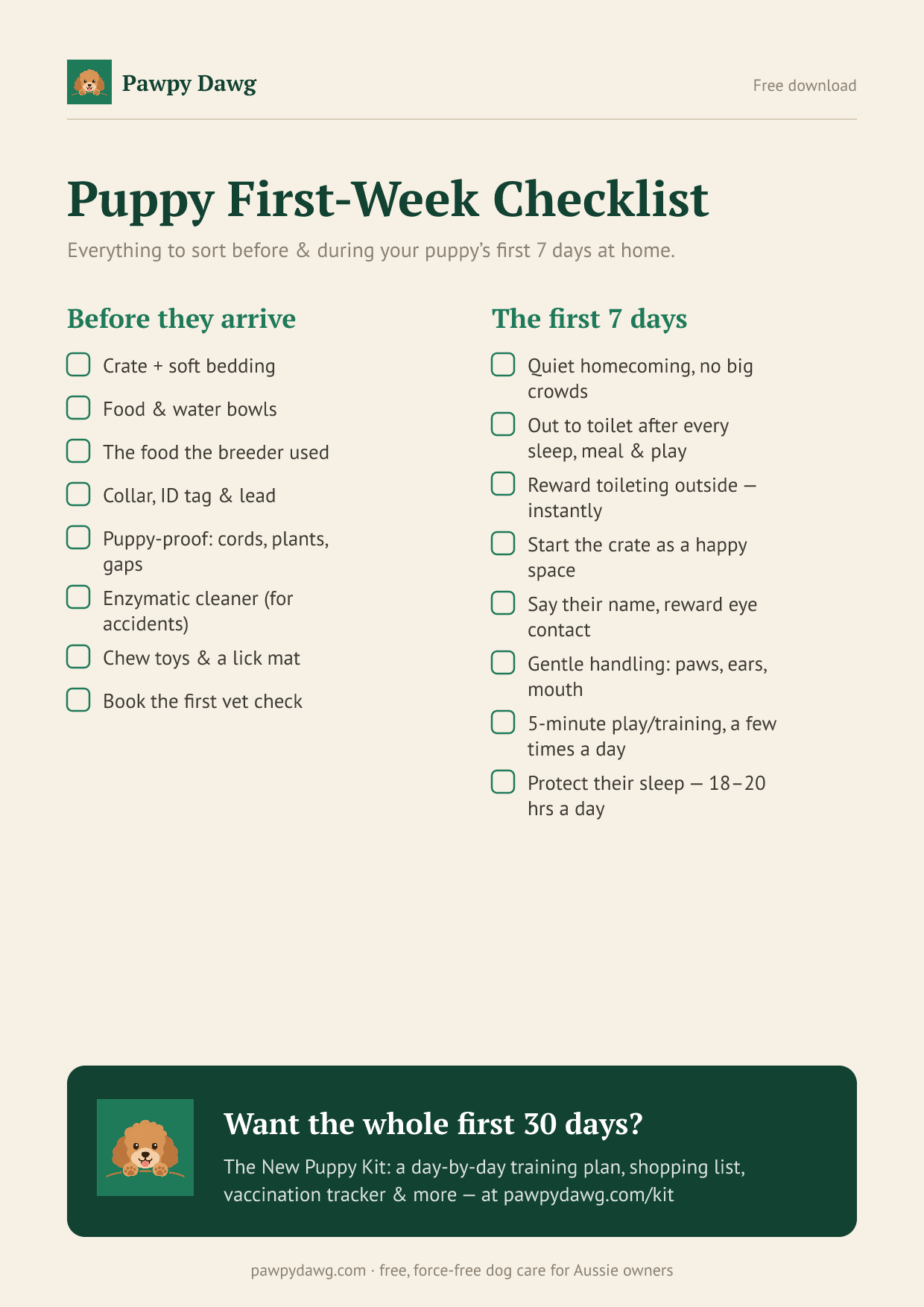
Free printable
Free: the Puppy First-Week Checklist
Everything to sort before and during your puppy's first 7 days home — a printable one-pager. Plus the occasional genuinely useful dog tip. No spam, unsubscribe anytime.
Related guides
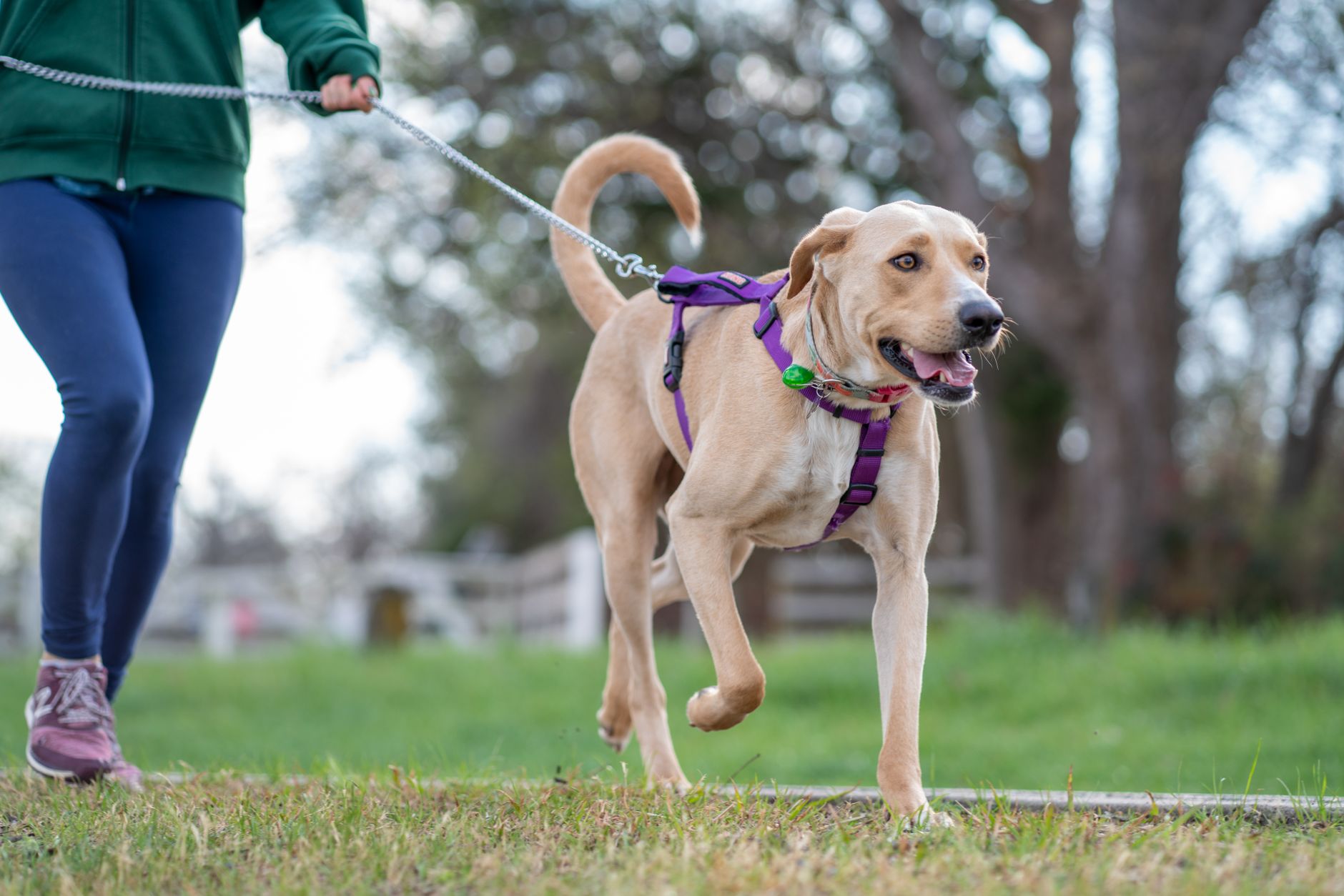
How to Stop a Staffordshire Bull Terrier Pulling on the Lead (Step-by-Step)
Tired of your Staffy dragging you down the street? Here's a practical, step-by-step positive-reinforcement plan to stop a Staffordshire Bull Terrier pulling on the lead.
Read the guide →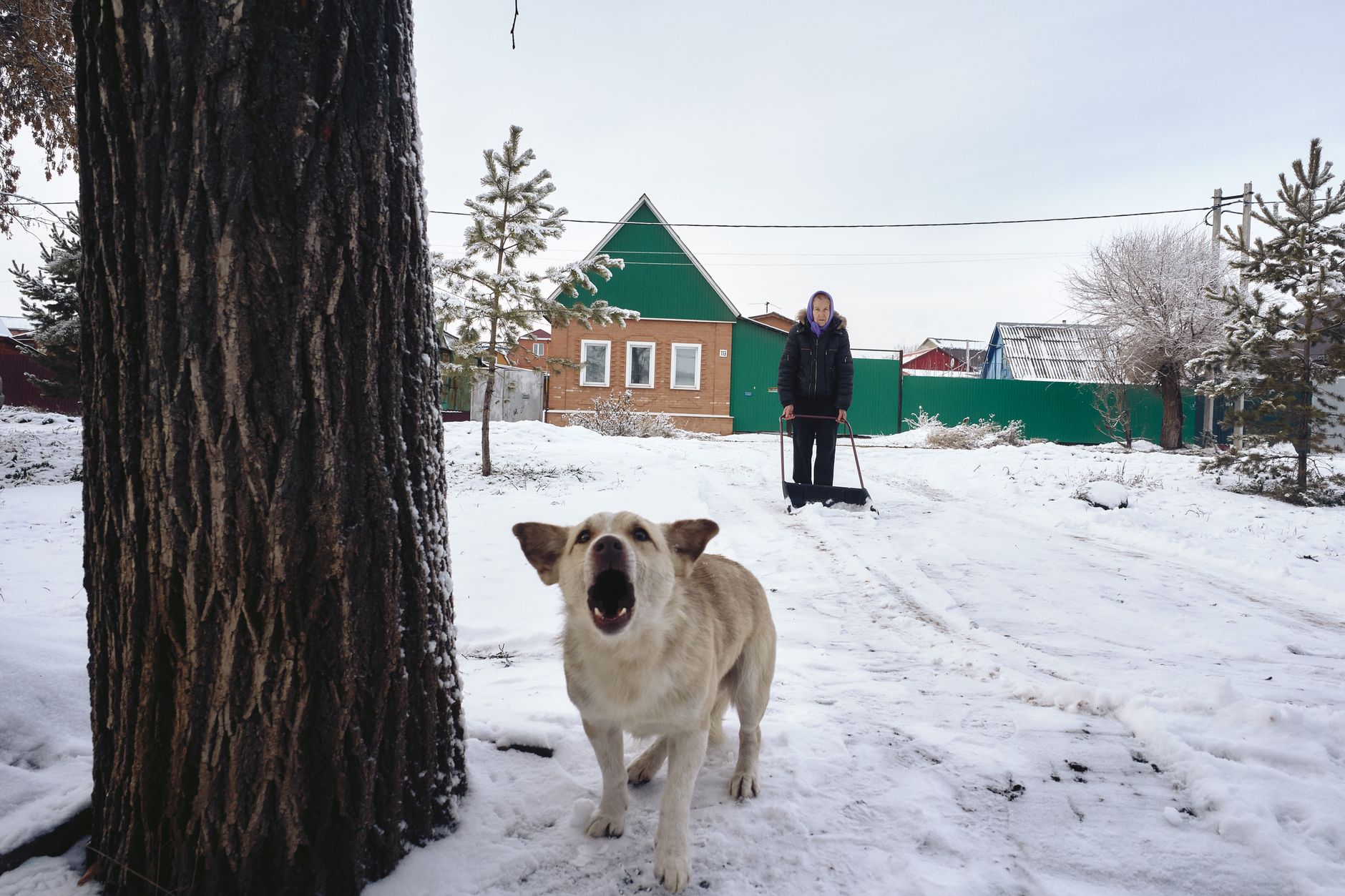
How to Stop a Staffordshire Bull Terrier Barking at Strangers (Step-by-Step)
Staffordshire Bull Terrier barking at strangers? A practical, positive-reinforcement plan with daily 5-min sessions, realistic timelines & when to get pro help.
Read the guide →
Staffordshire Bull Terrier Separation Anxiety: A Step-by-Step Fix
Staffordshire Bull Terrier separation anxiety is common and fixable. Get a realistic, step-by-step positive-reinforcement plan you can start today — no 60-min sessions needed.
Read the guide →