
Labrador Retriever Not Coming When Called? A Step-by-Step Recall Fix
Fix your Labrador Retriever not coming when called with this step-by-step positive-reinforcement plan. Realistic timelines, common mistakes, and when to get pro help.

Written by Bradley Brown
Founder & editor · Reviewed 2026-06-30
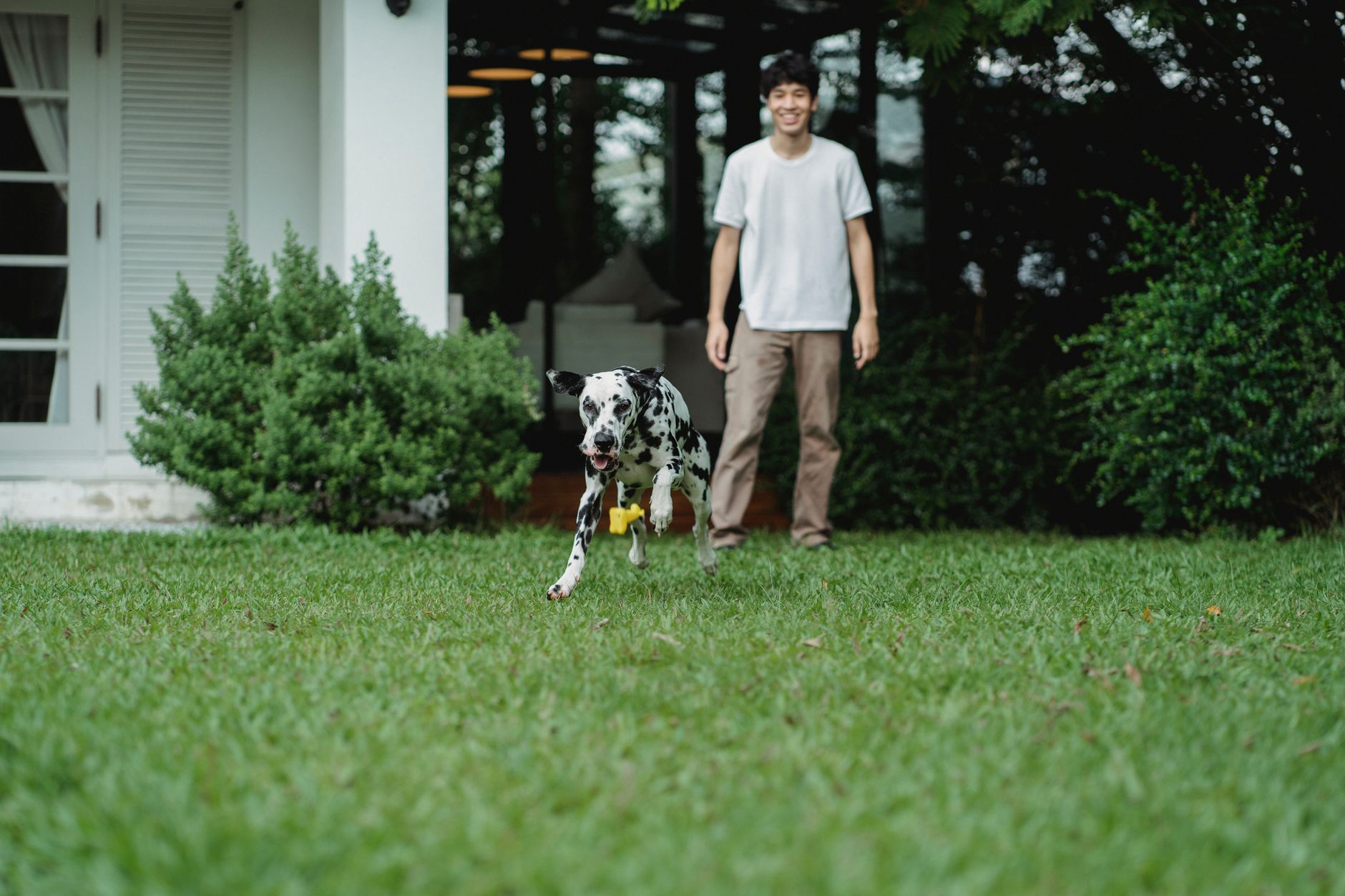
A Labrador that ignores your recall is more than frustrating — it's a genuine safety risk. Labs are bold, nose-driven dogs who will happily follow a scent straight into traffic or a neighbour's chook pen. The good news is that recall is a trainable skill, not a personality trait, and Labs respond exceptionally well to reward-based methods. Here's how to build a rock-solid recall from scratch.
Why Labs Struggle with Recall
Before you can fix the problem, it helps to understand what's driving it.
- Self-rewarding distractions — sniffing, chasing, playing with other dogs — are more exciting than coming back to you.
- Poisoned cue — if "come" has ever led to something the dog found unpleasant (being put on lead, bath time, being told off), your Lab has learned to avoid it.
- Insufficient reinforcement history — the dog simply hasn't been paid well enough, often enough, to make coming back a habit.
- Premature off-lead freedom — many owners skip the foundation work and let puppies roam freely before the recall is reliable.
None of these are character flaws. They're training gaps you can close.
Step-by-Step Recall Training Plan
Step 1: Pick a Fresh Recall Cue
If your Lab already ignores "come," start with a brand-new word — "here," "close," or even a specific whistle pattern. This gives you a clean slate uncontaminated by past failures. Use your old word only as a backup until the new cue is bombproof.
Step 2: Make Yourself the Best Thing in the Yard
For the first week, practise only in a low-distraction, secure area — your backyard is ideal.
- Let your dog wander a few metres away.
- Say your cue once, in a bright, upbeat tone.
- The moment your dog turns toward you, mark with "yes!" or a clicker.
- When they arrive, reward lavishly — multiple small treats (chicken, cheese, cooked liver), enthusiastic praise, or a short game of tug.
- Release with "off you go" so coming to you never means the fun ends.
Keep sessions to 3–5 minutes, repeated 2–3 times daily. Labs are food-motivated but they also bore quickly with repetition — keep it snappy.
Step 3: Add a Long Line Before You Go Off Lead
A 5–10 metre long line (available at most pet shops for around $15–$30 AUD) is your safety net. Attach it to a back-clip harness — not a collar — and let it drag on the ground.
- Call your dog.
- If they don't respond within 2–3 seconds, gently reel the line in (no jerking) and reward when they reach you.
- Never punish a dog that eventually comes — even if it took three attempts. Any negative reaction when they arrive will make the next recall slower.
Step 4: Proof Against Real-World Distractions (Gradually)
This is where most owners rush and undo their work. Use a distraction ladder — move up only when your dog succeeds at least 8 out of 10 times at the current level.
| Level | Environment | Distractions |
|---|---|---|
| 1 | Backyard | None |
| 2 | Backyard | Family members moving around |
| 3 | Quiet park (long line) | Distant dogs/people |
| 4 | Busier park (long line) | Dogs nearby, bikes, joggers |
| 5 | Busy park (off lead, fenced) | High activity |
Don't skip levels. A Lab who nails recall in the backyard but fails at a busy park simply hasn't been proofed at that level yet — it's not defiance.
Step 5: Practise "Random Recalls" Throughout the Day
Once your dog is reliable in the yard, weave recall into daily life. Call your Lab to come before meals, before a walk, before a game. These everyday repetitions build a strong reinforcement history without formal training sessions. Aim for 10–20 successful recalls per day across all contexts.
Step 6: Fade Treats (But Don't Eliminate Them)
After several weeks of success, you can vary the treat reward — sometimes give food, sometimes give a game, sometimes give just enthusiastic praise. This variable reinforcement schedule actually makes the behaviour more durable, not less. But continue to deliver a high-value reward randomly and unpredictably — Labs are optimists and will keep "playing" if there's a chance of a jackpot.
Common Mistakes That Stall Progress
- Repeating the cue multiple times. "Buddy, come. Buddy. Buddy, come HERE." Each repetition teaches your dog the word is optional. Say it once, then act.
- Only recalling to end fun. If your dog learns that "come" means lead goes on and park time ends, you've taught avoidance. Recall, reward, release back to play frequently.
- Using recall to tell the dog off. Never call your dog to you to scold them. Go to the dog instead.
- Progressing too fast. Jumping straight to an off-lead beach on day three is a recipe for failure and potentially a dangerous situation.
- Giving up on rewards too early. Recall is a high-stakes, high-distraction behaviour. It warrants high-value reinforcement indefinitely — especially in novel environments.
Realistic Timelines
| Stage | Typical Timeframe |
|---|---|
| Reliable in backyard | 1–2 weeks |
| Reliable in quiet park on long line | 3–4 weeks |
| Reliable in moderate distraction off lead | 6–10 weeks |
| Bombproof in high-distraction environments | 4–6 months of consistent practice |
These are averages. Puppies under 16 weeks often progress faster; adolescent Labs (6–18 months) — who are hormonally driven and distraction-prone — frequently take longer. Consistency matters more than speed.
When to Get Professional Help
Consider booking with a qualified, force-free trainer (look for a member of the Pet Professional Guild Australia or a certified trainer through the Delta Society) if:
- Your Lab has bolted and caused a safety incident.
- You've been training consistently for 8+ weeks with no meaningful improvement.
- Your dog shows signs of anxiety or extreme arousal that make focus impossible.
- You're unsure whether your technique is correct.
A single 1-hour session with a good trainer (typically $100–$180 AUD) can identify what's going wrong and give you a clear, personalised plan — often saving weeks of frustration.
Quick-Reference Recall Checklist
- Fresh recall cue chosen
- High-value treats sourced and ready
- Long line purchased and fitted to harness
- Practising in a fully secure area first
- Rewarding every single recall during early training
- Never punishing a dog that comes, regardless of delay
- Using "off you go" release so arrival doesn't always mean fun stops
- Moving up the distraction ladder only at an 80%+ success rate
- Logging 10–20 practice recalls per day across daily life
Recall isn't a one-time lesson — it's an ongoing relationship between you and your dog. Keep it positive, keep it frequent, and your Lab will make coming back to you the most obvious choice in the world.
As an Amazon Associate we earn from qualifying purchases.
Frequently asked questions
Why does my Labrador come when called at home but ignore me at the park?
This is a proofing gap, not disobedience. Your Lab has learned the recall cue works in one environment but hasn't yet generalised it to high-distraction settings. You need to systematically practise in progressively busier locations while using a long line to prevent failure. Start at the edge of the park with minimal activity and work your way up.
How long does it take to train a reliable recall in a Labrador?
Most Labs can achieve a reliable backyard recall within one to two weeks of consistent daily practice. A truly bombproof recall that holds up in busy, off-lead environments typically takes four to six months. Adolescent Labs (six to eighteen months) often take longer due to hormonal distraction. Consistency and gradual proofing are the deciding factors.
Should I punish my Labrador for not coming when called?
No — punishment when a dog finally returns teaches them that coming to you leads to something unpleasant, making future recalls slower or non-existent. Always reward your dog for coming, even if it took longer than you'd like. If you're frustrated, take a breath before your dog reaches you so your body language stays welcoming.
What are the best treats to use for recall training a Labrador?
Use something your Lab finds irresistible and doesn't get at other times — small pieces of cooked chicken, cheese, fritz, or commercial high-value treats work well. The treat should be pea-sized so you can deliver many rewards quickly without filling the dog up. Reserve your absolute best treats exclusively for recall practice to keep the value high.
Is it too late to teach recall to an older Labrador?
No — adult and senior Labs can absolutely learn a reliable recall. Older dogs often have better focus than adolescents and respond very well to reward-based training. The steps are identical to those used with puppies; you may simply need to undo some ingrained habits first, which can add a few extra weeks to the process.
Can I let my Labrador off lead while I'm still training the recall?
Only in fully secure, fenced areas. Until your recall is reliable at the level of distraction you'll encounter, keep your Lab on a long line in open spaces. This prevents self-rewarding escapes — a dog that runs off and has a great time has just been reinforced for ignoring you, which sets training back significantly.
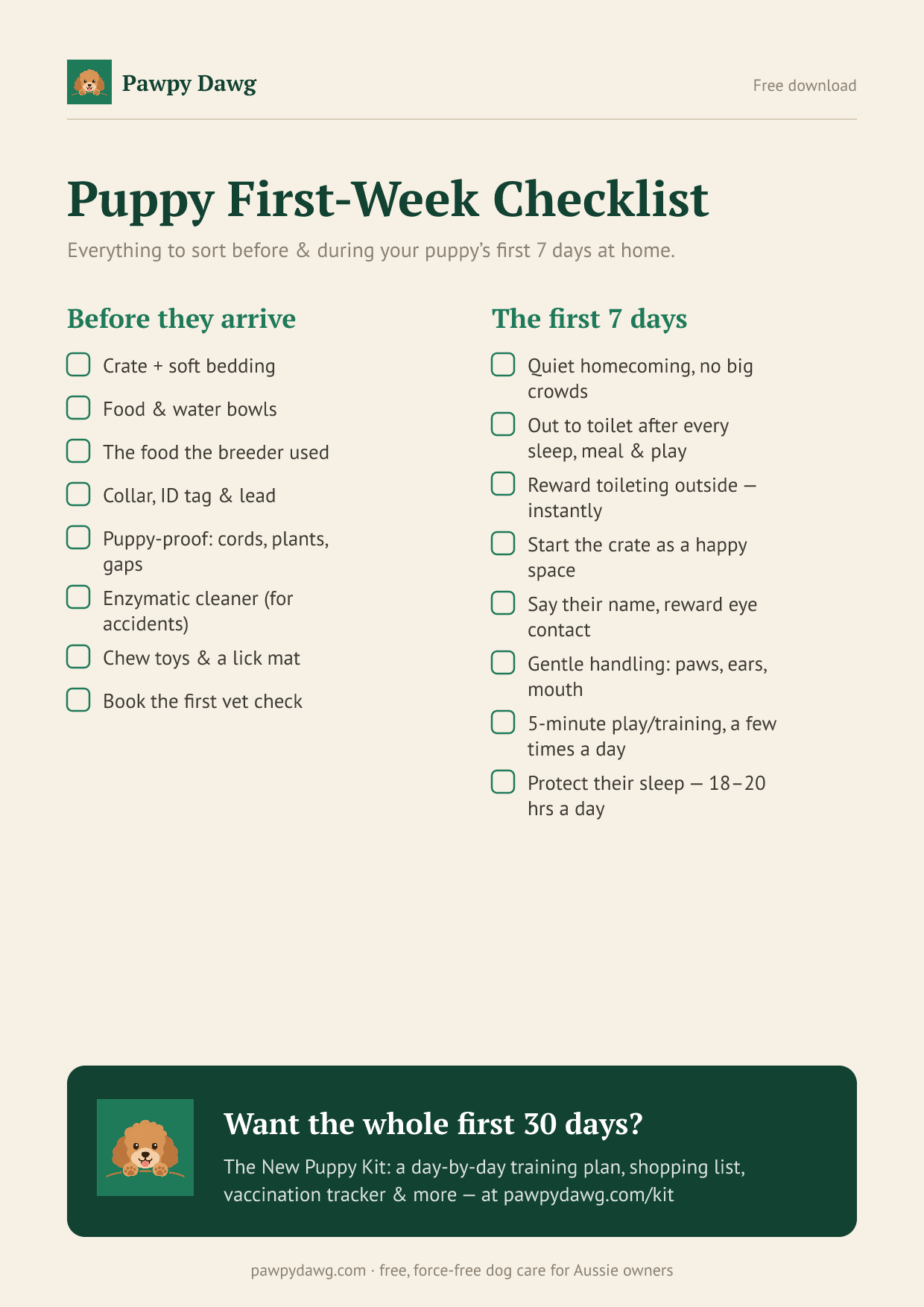
Free printable
Free: the Puppy First-Week Checklist
Everything to sort before and during your puppy's first 7 days home — a printable one-pager. Plus the occasional genuinely useful dog tip. No spam, unsubscribe anytime.
Related guides
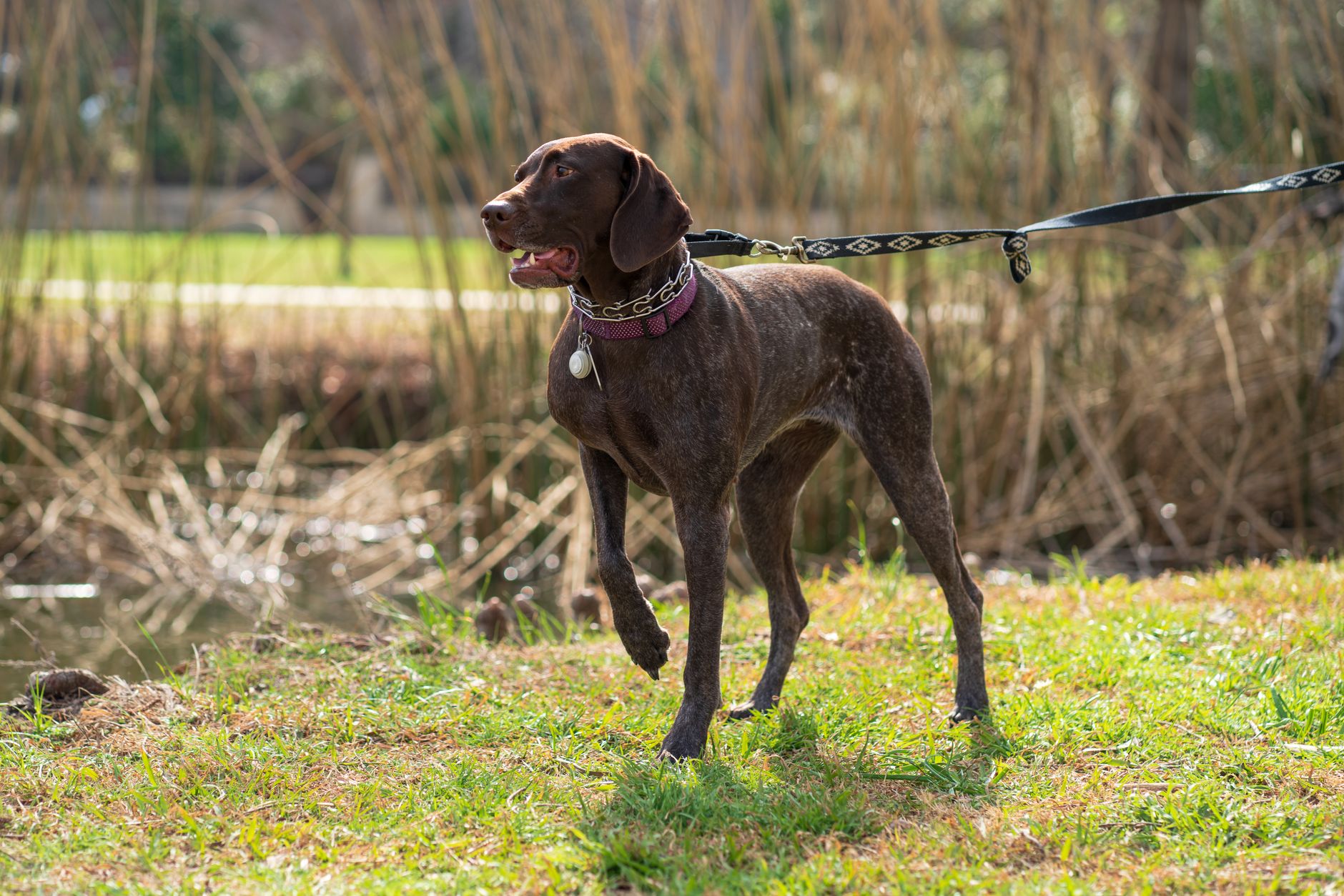
How to Stop a Labrador Retriever Pulling on the Lead (Step-by-Step)
Tired of being dragged around the block? Here's a step-by-step positive-reinforcement plan to stop your Labrador Retriever pulling on the lead — with real timelines.
Read the guide →
How to Stop a Labrador Retriever Barking at Strangers (Step-by-Step)
Stop your Labrador Retriever barking at strangers with this step-by-step positive-reinforcement plan. Realistic timelines, common mistakes & when to call a pro.
Read the guide →
Labrador Retriever Separation Anxiety: A Step-by-Step Fix
Labrador Retriever separation anxiety is fixable. Follow this positive-reinforcement step-by-step plan, avoid common mistakes, and know when to call a pro.
Read the guide →