
How to Stop a Labrador Retriever Biting and Mouthing (Step-by-Step)
Struggling with labrador retriever biting and mouthing? Get a clear, positive-reinforcement plan with step-by-step techniques, timelines & when to seek help.

Written by Bradley Brown
Founder & editor · Reviewed 2026-06-30

Labradors are mouthy by nature — they were bred to carry things in their mouths all day. That doesn't mean biting and mouthing is something you simply put up with. With consistent training, most Labs learn bite inhibition within four to eight weeks. Here's exactly how to get there.
Why Labradors Bite and Mouth in the First Place
Understanding the cause makes the solution far more obvious.
- Puppy teething (3–6 months): Sore gums drive chewing and mouthing. It's instinctive, not aggressive.
- Play behaviour: Puppies use their mouths to explore and interact, the same way they did with their littermates.
- Overstimulation: A Lab that's overtired or overexcited loses self-control quickly.
- Demand attention: If mouthing has ever earned a reaction — even a yelp or a push — the dog has learned it works.
- Lack of impulse-control training: Labs are enthusiastic and high-energy. Without practice, self-regulation doesn't develop on its own.
Adult Labs who mouth are usually carrying a habit that was accidentally reinforced as puppies. The fix is the same — it just takes a little longer.
Step-by-Step Plan to Stop Biting and Mouthing
Step 1 — Teach Bite Inhibition First (Don't Skip This)
Before you aim for zero mouth contact, teach your Lab to bite softly. This is the approach recommended by veterinary behaviourists and is the foundation of all good bite-training. A dog that has never learned bite inhibition is more dangerous if it ever does bite in adulthood.
How to do it:
- During play, let your Lab mouth your hand normally.
- The moment you feel any pressure, say "Ouch!" in a sharp, surprised tone and let your hand go limp.
- Pause play for 10–20 seconds — turn away slightly, avoid eye contact.
- Resume. Repeat every time pressure is felt.
- Over one to two weeks, gradually lower your threshold until even light mouthing triggers the pause.
Your Lab will start offering a much gentler mouth — or no mouth at all — to keep the game going.
Step 2 — Redirect to an Acceptable Outlet
Telling a Labrador not to use its mouth without offering an alternative is like telling a river not to flow — the energy has to go somewhere.
- Keep a tug toy or chew toy within arm's reach during every play session.
- The moment your Lab goes for skin, calmly say "Toy" and swap your hand for the toy.
- Praise enthusiastically when they take it.
- Rotate toys weekly so novelty stays high — Labs get bored of the same options fast.
Good toy choices for heavy-chewing Labs: rubber Kongs, Goughnuts, braided rope toys, and bully sticks for solo chewing.
Step 3 — Use Time-Outs Consistently
If bite inhibition feedback (Step 1) isn't landing — particularly with overexcited puppies — a brief time-out removes the reward (your attention) entirely.
Time-out protocol:
- The moment biting occurs, say a calm, neutral cue like "Too bad."
- Stand up, leave the room, or place the puppy behind a baby gate for 30–60 seconds. No drama, no scolding.
- Return and resume interaction calmly.
- If biting restarts immediately, repeat.
Consistency is everything here. One family member letting it slide undoes everyone else's work.
Step 4 — Manage the Environment
Puppies bite most when they're tired, hungry, or overstimulated. Prevention is far easier than correction.
| Situation | What to Do |
|---|---|
| Bitey after a big play session | Enforce a nap in a crate or pen |
| Goes wild when guests arrive | Crate or baby-gate before guests enter, release once calm |
| Bites during lead walking | Stop walking; resume when the lead is slack and no mouthing |
| Bites during grooming | Break sessions into 30-second increments with treats throughout |
| Evening "zoomie" biting | Schedule this as a known tired period; swap to calm enrichment |
Step 5 — Build Impulse Control Through Daily Training
A Lab with good impulse control defaults to thinking before acting. These short drills pay dividends across every area of behaviour.
- "Leave it": Place a treat on the floor, cover with your foot. Reward the moment your dog looks away from it. Build to uncovered treats, then food on low surfaces.
- Sit before everything: Before meals, before play, before the lead goes on. Repetition builds the habit of pausing.
- Mat/place training: Teach your Lab to go to a mat on cue. A dog on its mat can't be mouthing you.
Keep sessions to three to five minutes, two to three times daily. Labs learn better in short, frequent bursts than long drills.
Common Mistakes That Slow Progress
- Rough play with hands: Wrestle-style play teaches the dog that hands are toys. Use toys for all physical play.
- Inconsistency across the household: Everyone must respond the same way, every time.
- Punishing after the fact: If you didn't catch it within two seconds, the dog cannot connect the punishment to the behaviour.
- Using physical corrections: Scruff shakes, alpha rolls, and muzzle grabs have been shown to increase aggression and damage trust. Avoid them entirely.
- Expecting overnight results: Realistic timeline is four to eight weeks of daily, consistent effort for puppies. Adult dogs with long-standing habits may take two to three months.
Realistic Timeline
| Week | What to Expect |
|---|---|
| 1–2 | Mouthing frequency may temporarily increase as the dog tests the new rules |
| 3–4 | Noticeable reduction in pressure; dog begins offering toys or pausing |
| 5–6 | Mouthing largely replaced by toy-seeking or sitting for attention |
| 7–8 | Reliable bite inhibition in place; occasional relapses with excitement |
| 8+ | Solidified habit; maintenance only needed |
When to Get Professional Help
Most Labrador mouthing is entirely normal and resolves with the steps above. Seek help from an accredited behaviourist (look for membership with the PPGA or Delta Society Australia) if you see:
- Growling, stiffening, or snapping alongside the mouthing
- Biting that breaks skin regularly in an adult dog
- No improvement after eight weeks of consistent training
- Fear or anxiety as an apparent trigger
A qualified professional can assess whether there's an underlying behavioural or medical issue driving the behaviour. Initial consultations typically range from $150 to $350 AUD depending on location and the practitioner's qualifications.
The mouthiness that makes a Lab puppy exhausting is the same enthusiasm that makes the breed so rewarding to live with. Channel it properly, stay consistent, and your Lab will become the gentle, sociable dog the breed is known for.
Frequently asked questions
At what age should a Labrador stop biting and mouthing?
Most Labs naturally reduce mouthing as teething ends around six months, but without deliberate training the habit often persists well into adulthood. With consistent bite-inhibition training started early, most puppies show major improvement by four to six months of age. Adult dogs can still be retrained — it simply takes longer, usually two to three months of daily work.
Is my Labrador's mouthing aggressive or just playful?
Playful mouthing is usually soft, wiggly, and comes with relaxed body language — no stiff posture, growling, or hard staring. Aggressive biting typically involves tension in the body, a fixed gaze, or growling before or during the bite. If you're unsure or the behaviour feels threatening, consult an accredited behaviourist rather than trying to manage it alone.
Should I use a spray bottle or physical correction to stop my Lab biting?
No. Aversive methods like spray bottles, scruff shakes, or muzzle holds can increase anxiety and aggression and damage your relationship with your dog. Mainstream veterinary and behaviourist guidance strongly favours positive reinforcement — redirecting to toys, withdrawing attention, and rewarding calm behaviour — as both more effective and safer long-term.
My Labrador only bites during play — is that still a problem?
Yes, because the dog is learning that using its mouth on people is acceptable in certain contexts, and it can generalise that habit to other situations. It's also a safety issue around children or visitors who don't know the dog. Apply the same bite-inhibition and redirection techniques during play as you would at any other time.
How do I stop my Lab mouthing children specifically?
Children move unpredictably and often shriek, which excites dogs and makes mouthing more likely. Supervise all interactions, never leave young children and a mouthy dog unsupervised, and teach children to stand still like a 'tree' rather than running if the dog mouths them. Practise the same redirection-and-pause technique adults use, and consider management tools like baby gates to give the dog a break before it becomes overaroused.
Can I use a muzzle while training my Labrador not to bite?
A basket muzzle can be a useful short-term safety tool — for example, around young children while you're actively working on training — provided the dog has been conditioned to wear it comfortably using positive reinforcement. It doesn't teach the dog anything on its own, so it should complement your training plan, not replace it.
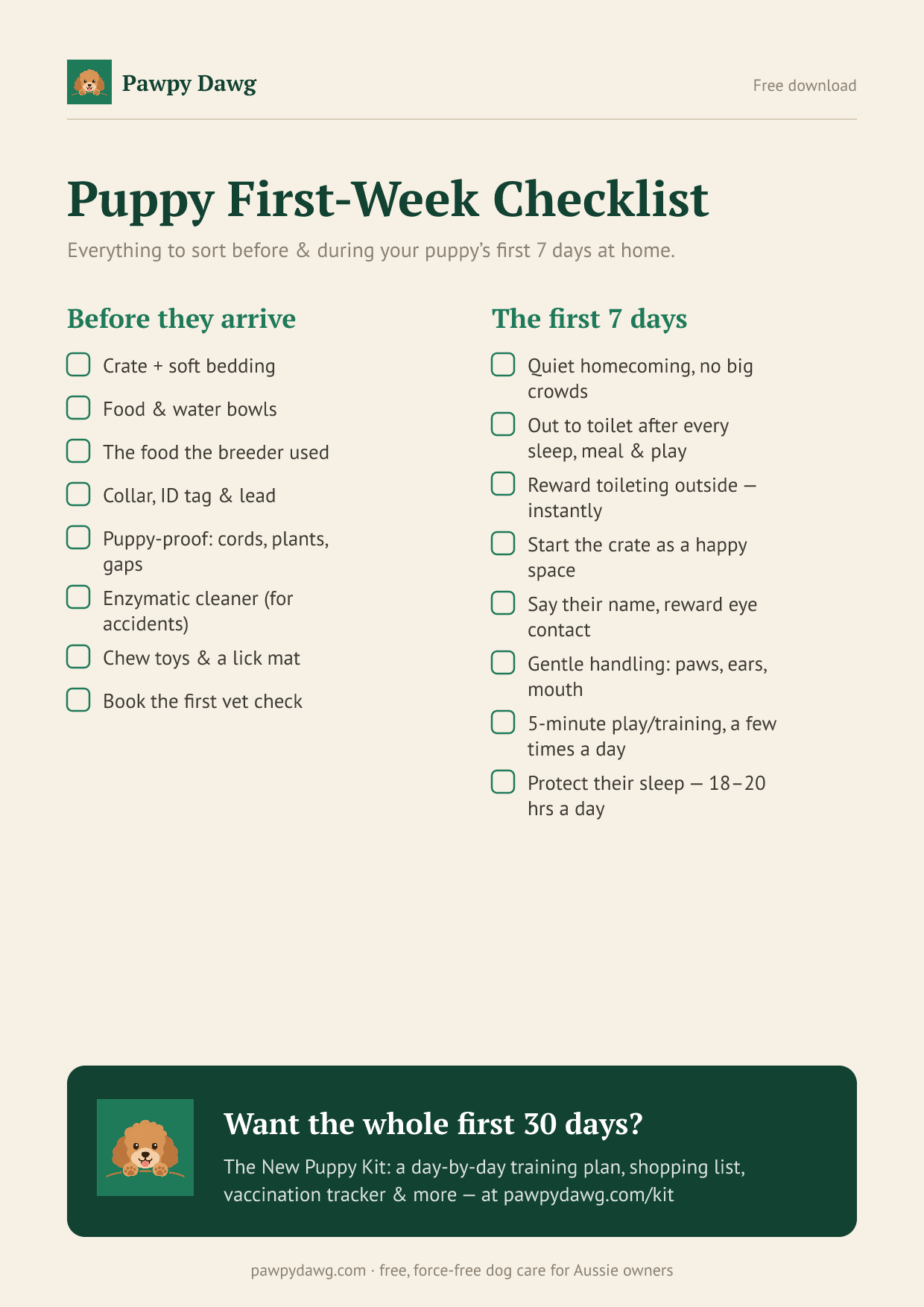
Free printable
Free: the Puppy First-Week Checklist
Everything to sort before and during your puppy's first 7 days home — a printable one-pager. Plus the occasional genuinely useful dog tip. No spam, unsubscribe anytime.
Related guides
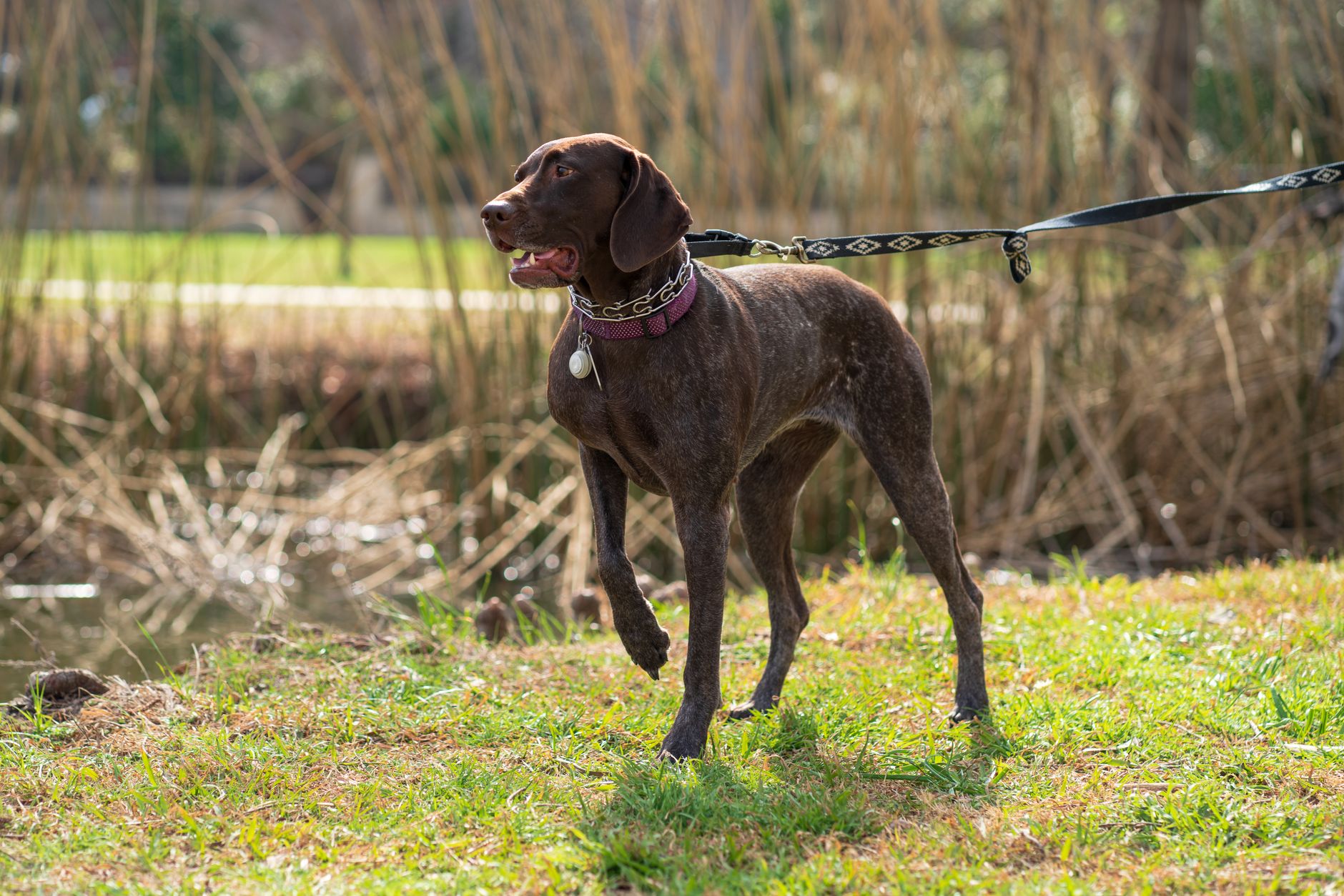
How to Stop a Labrador Retriever Pulling on the Lead (Step-by-Step)
Tired of being dragged around the block? Here's a step-by-step positive-reinforcement plan to stop your Labrador Retriever pulling on the lead — with real timelines.
Read the guide →
How to Stop a Labrador Retriever Barking at Strangers (Step-by-Step)
Stop your Labrador Retriever barking at strangers with this step-by-step positive-reinforcement plan. Realistic timelines, common mistakes & when to call a pro.
Read the guide →
Labrador Retriever Separation Anxiety: A Step-by-Step Fix
Labrador Retriever separation anxiety is fixable. Follow this positive-reinforcement step-by-step plan, avoid common mistakes, and know when to call a pro.
Read the guide →