
How to Toilet Train a Kelpie: A Realistic Plan
Struggling with kelpie toilet training? Get a realistic, positive-reinforcement plan with quick wins, common mistakes to avoid, and honest timelines.

Written by Bradley Brown
Founder & editor · Reviewed 2026-07-11
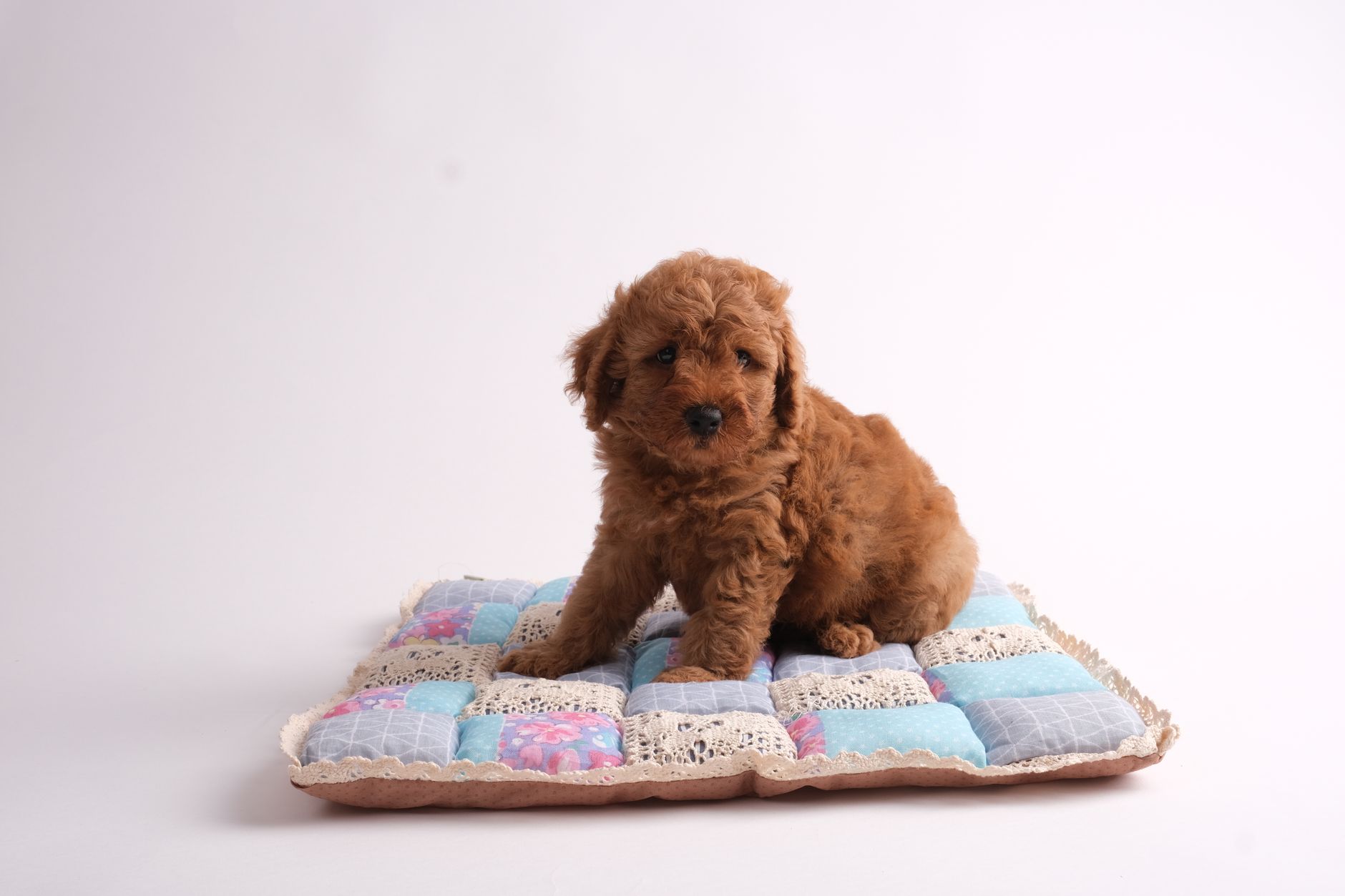
You let them out three times in an hour, and they still squatted on the kitchen floor the moment you turned your back. If you're reading this at 11 pm after mopping up another puddle, you're not alone — and your kelpie is not broken.
Kelpies are brilliant dogs, and that intelligence can actually work against early toilet training. They notice everything, form habits fast, and if they've already learned that inside is an acceptable option, they'll keep choosing it until you give them an unambiguous reason not to. The good news: that same sharp brain means they respond quickly once the rules are crystal clear.
Quick win you can try tonight: Pick one specific outdoor toilet spot and take your dog there on-lead right now. Stand still, wait up to three minutes, and the moment they go, mark it with a calm "yes" and give a small, high-value treat. That single consistent spot will start building a location habit from your very first session.
Understanding What You're Working With
Kelpies were bred to work long days with minimal direction. They are high-drive, observant, and deeply routine-oriented — which is exactly why inconsistency kills toilet training faster than almost anything else.
A few things to know before you start:
- Puppies under 12 weeks have almost no bladder control. Accidents are physiological, not defiance.
- Puppies can generally hold on for roughly one hour per month of age (up to about 6–8 hours for adults). A 10-week-old kelpie physically cannot last more than 1–2 hours.
- Adults rehomed from shelters may have learned to toilet inside previously. Expect a reset period of 2–6 weeks, not 2–6 days.
The Core Routine (5–8 Minutes a Day, Spread Out)
You don't need a complicated programme. You need a predictable one.
Step 1: Control the Schedule
Take your kelpie outside to their designated spot at these key moments every single day:
- Immediately after waking (morning and naps)
- Within 10–15 minutes of eating or drinking
- After any excitement or play session
- Before you leave the house
- Last thing before bed
Set phone alarms if you need to. Consistency beats duration every time.
Step 2: Use a Cue Word
Pick a word — "toilet," "go on," "outside," whatever feels natural — and say it once, calmly, as they begin to go. Over time, this cue becomes a command you can use when you're in a hurry or it's raining and you need them to get on with it.
Step 3: Reward the Moment It Happens
Timing is everything. Reward within 2 seconds of them finishing, not when they get back inside. Use something genuinely good — small pieces of cooked chicken, cheese, or their favourite training treat. A verbal marker ("yes!") the instant they finish, followed immediately by the treat, is the clearest signal you can send.
Step 4: Supervise or Confine
When you can't watch your kelpie, they should not have free run of the house. Use a crate, an exercise pen, or a puppy-proofed room. Dogs naturally avoid toileting where they sleep, so a correctly sized crate (just big enough to stand, turn, and lie down) is one of your most effective tools. This is not cruel — it is management while the habit is still forming.
Common Mistakes That Stall Progress
| Mistake | Why It Backfires | Fix |
|---|---|---|
| Punishing accidents after the fact | Dogs live in the moment — they connect your anger to your presence, not the puddle | Clean up quietly and move on |
| Letting them roam unsupervised too soon | One unseen accident resets the habit loop | Earn freedom room by room over weeks |
| Rewarding once they're back inside | The outdoor act is what you want to reinforce | Treat outside, immediately |
| Multiple "toilet spots" or no fixed spot | Dilutes the location cue | One spot, on-lead, every time |
| Reducing trips too quickly | Kelpies need the schedule locked in first | Hold the full routine for at least 3–4 weeks before relaxing |
Cleaning Up Accidents the Right Way
Smell is everything to a dog. Any trace of urine or faeces left inside acts as an invitation to return to the same spot. Standard household cleaners — including anything with ammonia — do not neutralise the odour compounds dogs detect.
Use an enzymatic cleaner (widely available at Petbarn, PetO, and most vet clinics for around $15–$25 AUD). Soak the area thoroughly, allow it to work for the time listed on the label, then blot dry. Skip this step and you're essentially leaving a neon sign on your carpet.
Realistic Timelines
Be honest with yourself about where you're starting from:
- 8–12 week puppy, starting fresh: Expect reliable daytime toileting in 4–8 weeks with a consistent routine. Night-time accidents can persist until 4–5 months of age.
- 3–6 month puppy with some bad habits already: Allow 6–10 weeks of consistent work.
- Adult kelpie rehomed or regressing: Treat it like starting from scratch. Most owners see solid improvement within 3–6 weeks, but some dogs take a full 8 weeks to fully reset.
If you're not seeing any improvement after four weeks of genuine consistency, that's a signal to look deeper — not to give up.
When Something Else Is Going On
Toilet training plateaus or sudden regressions in a previously trained dog are worth a vet check. Urinary tract infections (UTIs) are common in dogs and cause urgent, frequent, or uncontrollable urination that looks exactly like a training failure. Other causes include:
- Intestinal parasites (worms)
- Dietary changes causing loose stools
- Anxiety or stress (separation anxiety in kelpies is well-documented)
- Hormonal issues in desexed or entire dogs
A vet visit costs around $80–$120 AUD and can rule out a physical cause in one appointment. If your dog is straining, urinating blood, or having accidents paired with other behavioural changes, book sooner rather than later.
When to Bring in a Trainer
You have not "ruined" your dog by reaching out for help — professional trainers exist precisely because some dogs need more than a good article.
Consider booking a session with a reward-based trainer (look for a member of the Pet Professional Guild Australia or Delta Society Australia) if:
- Accidents are happening despite 4+ weeks of a consistent routine
- Your kelpie is showing anxiety signs (panting, pacing, destructive behaviour) that complicate training
- You've had a big household change — new baby, new home, new pet — that triggered a regression
A single consultation ($100–$180 AUD) often unlocks the specific sticking point faster than weeks of solo troubleshooting.
A Simple Daily Checklist
- Took dog out immediately after waking
- Supervised OR confined when indoors
- Used the same outdoor spot on-lead
- Marked and treated within 2 seconds of going outside
- Cleaned any accident with an enzymatic cleaner
- Did not punish after the fact
- Maintained the schedule after meals and naps
Tick those boxes for four straight weeks and you will have a kelpie well on their way to being reliably toilet trained. It's not magic — it's just consistency, which is the one thing kelpies respond to better than almost anything else.
As an Amazon Associate we earn from qualifying purchases.
Frequently asked questions
How long does kelpie toilet training take?
It depends on age and history. A young puppy starting fresh usually develops reliable daytime habits within 4–8 weeks of consistent work. Adult kelpies being retrained from scratch typically show solid improvement within 3–6 weeks, though some take up to 8 weeks. Night-time reliability in puppies often comes a few weeks after daytime reliability, usually around 4–5 months of age.
My kelpie keeps toileting in the same spot inside — how do I stop it?
Dogs are strongly drawn back to spots that still carry their scent, so the first step is a thorough clean with an enzymatic cleaner, not a standard household product. After cleaning, block access to that area temporarily, or place their food bowl there — dogs rarely toilet where they eat. Pair this with a strict outdoor toilet schedule to reinforce the correct location.
Is it okay to use a crate for kelpie toilet training?
Yes, and it's one of the most effective tools available. Dogs instinctively avoid soiling their sleeping space, so a correctly sized crate — just large enough to stand, turn, and lie down — significantly reduces unsupervised accidents. It should never be used as punishment and shouldn't confine a puppy for longer than their bladder can physically manage.
Why is my adult kelpie suddenly having accidents after being toilet trained?
A regression in a previously reliable dog is often a sign of an underlying issue rather than a training failure. Common causes include urinary tract infections, intestinal parasites, dietary changes, anxiety, or hormonal shifts. Have your vet rule out a physical cause first, then reassess whether there has been a change in routine, environment, or household that may be triggering stress-related accidents.
Should I punish my kelpie for toileting inside?
No — and this is especially important to understand with kelpies. Dogs cannot connect a punishment to something that happened more than a second or two ago, so scolding after the fact only teaches them to be anxious around you. Catching them mid-act and calmly redirecting them outside is fine, but raising your voice or using physical corrections typically slows progress and can damage your dog's trust.
How often should I take my kelpie puppy outside to toilet?
A general guide is once per hour per month of age — so a 10-week-old puppy needs a trip outside roughly every 1–2 hours during waking hours. Always add a trip immediately after waking, after meals, after play, and before bed. As your puppy matures and builds a reliable habit, you can gradually extend the time between trips.
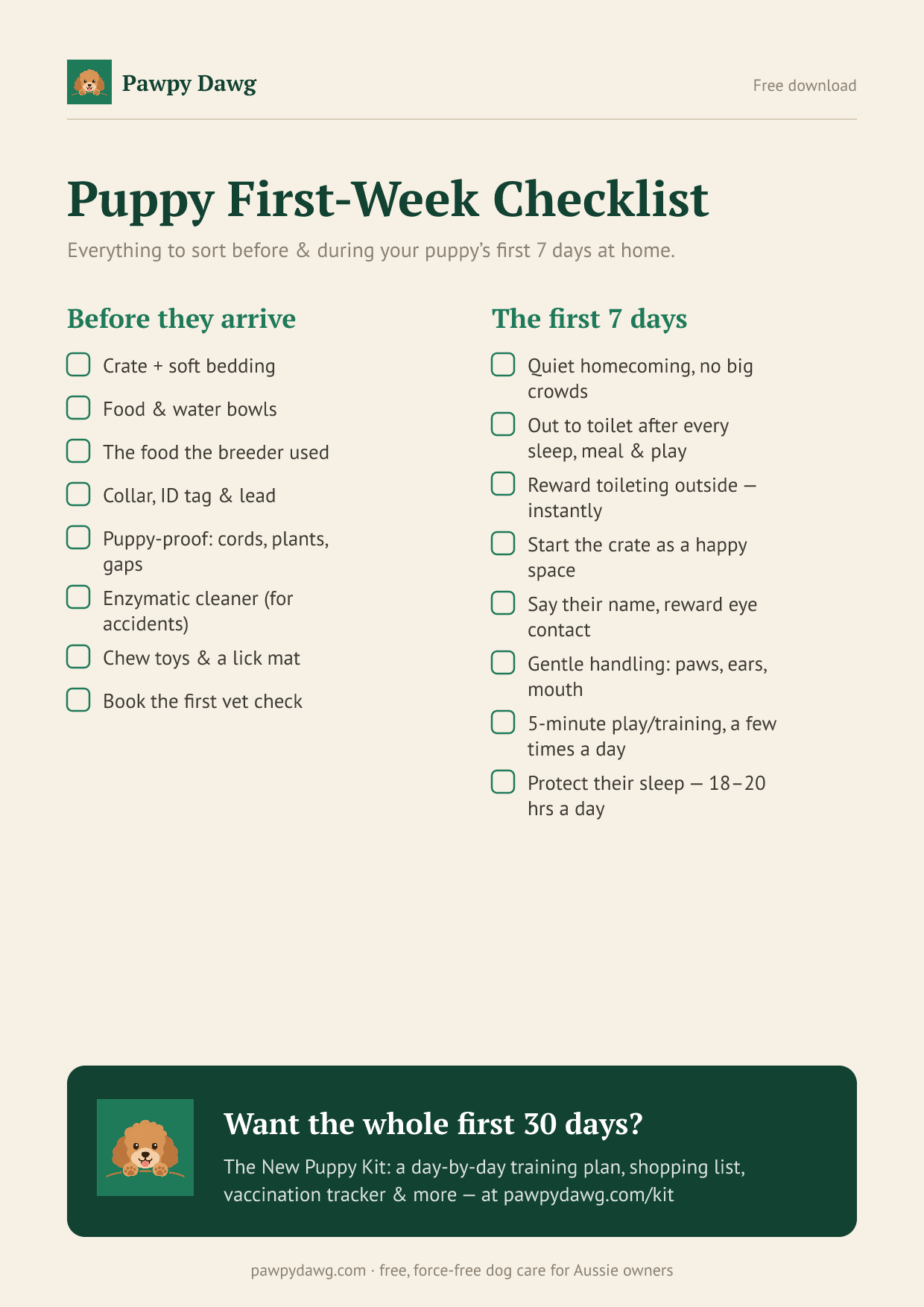
Free printable
Free: the Puppy First-Week Checklist
Everything to sort before and during your puppy's first 7 days home — a printable one-pager. Plus the occasional genuinely useful dog tip. No spam, unsubscribe anytime.
Related guides
How to Stop a Kelpie Pulling on the Lead (Step-by-Step)
Tired of being dragged around the block? Fix kelpie pulling on the lead with this step-by-step positive-reinforcement plan, realistic timelines & pro tips.
Read the guide →
How to Stop a Kelpie Barking at Strangers (Step-by-Step)
Kelpie barking at strangers driving you mad? Get a realistic, positive-reinforcement plan with quick wins you can try today — no punishment needed.
Read the guide →
Kelpie Separation Anxiety: A Step-by-Step Fix
Kelpie separation anxiety is exhausting — but fixable. Get a realistic, positive-reinforcement plan, quick wins for today, and honest timelines.
Read the guide →