
How to Fix Resource Guarding in Your Kelpie
Kelpie resource guarding driving you mad? Get a vet-backed, positive-reinforcement plan with quick wins, realistic timelines & honest pro-help advice.

Written by Bradley Brown
Founder & editor · Reviewed 2026-07-11
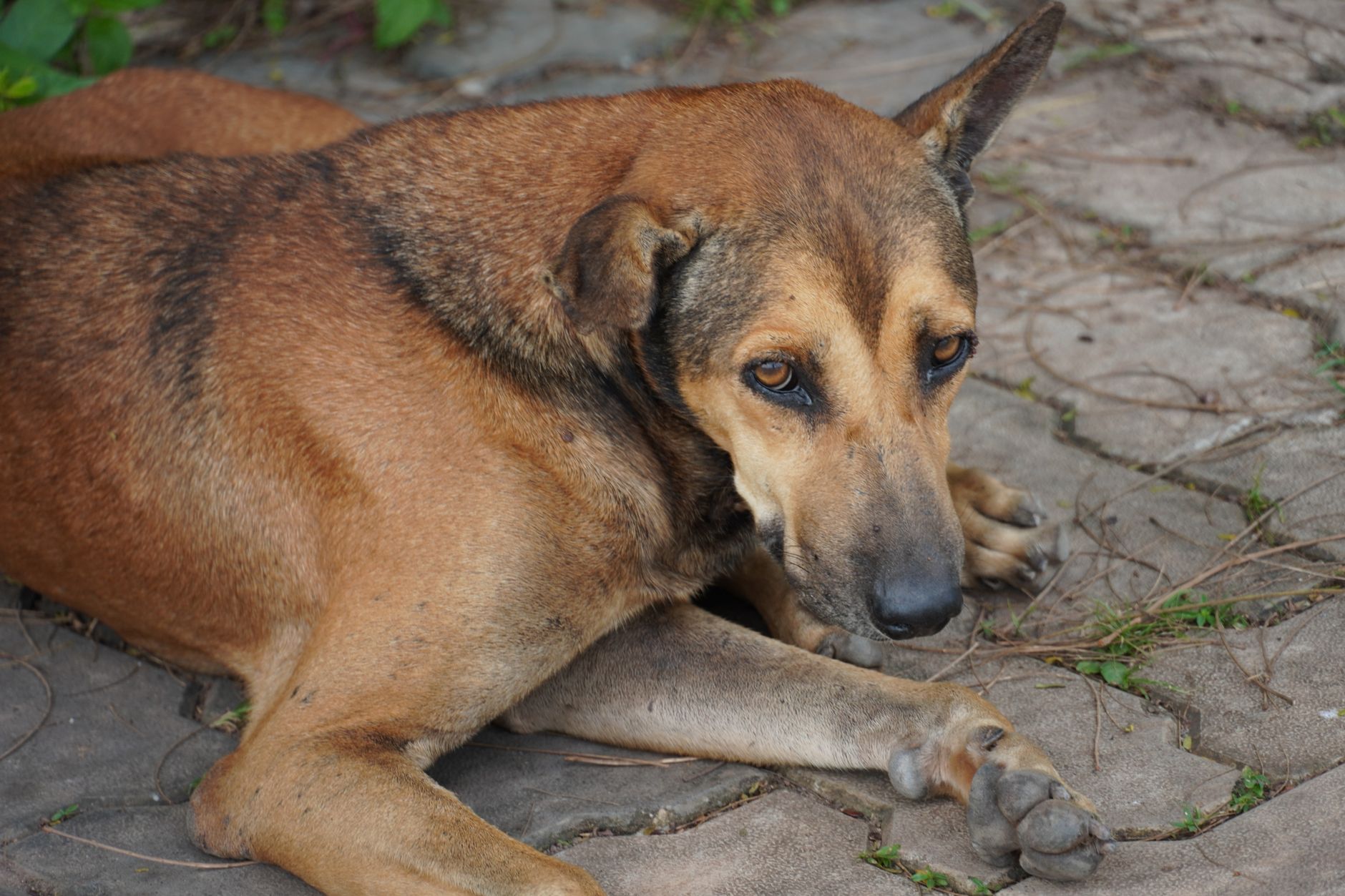
If your Kelpie just snapped over a chew, froze over the food bowl, or gave you that stare when you walked near their toy — you're not alone, and you haven't ruined your dog. Resource guarding is one of the most common behaviour complaints in working breeds, and Kelpies, with their intense focus and drive, can be particularly prone to it. It doesn't mean your dog is aggressive or broken. It means they're doing something that made evolutionary sense for thousands of years. The good news: it's fixable, and you don't need hours a day to see real progress.
What Resource Guarding Actually Is (and Isn't)
Resource guarding is when a dog uses body language, growling, snapping, or biting to keep people or other animals away from something they value — food, toys, a resting spot, even you. In Kelpies, it often looks like:
- A hard stare or "whale eye" (whites of the eyes showing) when you approach their bowl
- Freezing or eating faster when someone walks past
- Growling, lip-lifting, or snapping near chews or high-value toys
- Body blocking you away from another pet or a person
Important: Growling is communication, not aggression. If you punish a growl, you remove the warning signal — and the next step is a bite with no notice. Never punish the growl. Work on what's causing it instead.
Your Quick Win for Today: The Trade Game
Before you read another word, try this tonight. It takes two minutes.
- Find something your Kelpie values moderately (not their absolute favourite — start easy).
- Let them have it.
- Walk up calmly, hold out a small, high-value treat (chicken, cheese, devon).
- Say "swap" in a neutral, cheerful tone.
- The moment they drop the item, drop the treat on the floor near their nose.
- While they eat, quietly pick up the item, then give it straight back to them.
That last step is the critical one most people skip. Giving the item back teaches your Kelpie that you approaching doesn't mean losing their stuff — it means a bonus treat and they keep the thing. Do this 3–5 times per session, two or three sessions today. You're already doing the work.
The Full Plan: Building Trust Over Time
Week 1–2: Approach Means Good Things
Goal: Change the emotional response to your approach near resources.
- Feed from your hand once a day. Stand next to the bowl, toss a small piece of chicken in while they eat. Walk away. Repeat.
- Don't loom or reach into the bowl yet. You're just teaching: person near bowl = bonus food appears.
- Keep sessions to 5 minutes max. Kelpies are sharp — they learn fast, but they also stress fast if pushed.
Week 3–4: Add Distance, Then Proximity
- Graduate to approaching the bowl, dropping a treat, and moving away.
- Practise the Trade Game with progressively higher-value items (work up the value ladder gradually).
- Introduce a "leave it" cue as a separate exercise away from guarded items first, then apply it later.
Week 5–6: Real-Life Rehearsal
- Practise during actual meals, not just training setups.
- Ask family members to run the same protocols — consistency between all humans is non-negotiable.
- Add mild distractions (TV on, another person walking through) so the behaviour becomes reliable in real conditions.
Common Mistakes That Slow Progress
| Mistake | Why It Backfires | What to Do Instead |
|---|---|---|
| Punishing the growl | Removes the warning; increases bite risk | Redirect and manage the environment |
| Taking the item and NOT giving it back | Confirms their fear that you'll steal things | Always return low-to-mid value items during training |
| Using the same treat they're guarding | No contrast in value | Use a better treat than what they're guarding |
| Training only when guarding happens | Reactive, not proactive | Run sessions at neutral times daily |
| Rushing to high-value items too fast | Sets the dog up to fail | Progress slowly up the value ladder |
| Inconsistency between family members | Dog learns the rule is optional | Brief every household member on the protocol |
Managing the Environment While You Train
Training takes weeks. Management starts today:
- Feed your Kelpie separately from other pets until the behaviour is well managed.
- Pick up high-value chews when guests visit or when children are present.
- Use a baby gate or exercise pen to give your dog a safe space to eat or chew without needing to guard.
- Don't set up situations where guarding is likely to happen and then do nothing — every unmanaged incident is a rehearsal of the unwanted behaviour.
Management isn't failure. It's damage control while the training does its job.
Realistic Timelines
There's no universal answer, but here's a rough guide for most Kelpies with mild-to-moderate guarding:
- 2–4 days: Dog is less tense when you approach during low-value situations
- 2–3 weeks: Consistent improvement with food bowl and moderate-value toys
- 6–8 weeks: Reliable behaviour in most real-life contexts with low-to-moderate value items
- 3–6 months: High-value items and multi-dog households well managed
Severe cases — history of biting, guarding of multiple resource types, guarding directed at children — will take longer and need professional support.
When to Call in a Professional
Some situations are beyond a DIY plan, and recognising that is smart ownership, not failure:
- Your Kelpie has already made contact (a bite, even a small one)
- The guarding is escalating despite consistent training
- Children under 12 live in or regularly visit the home
- Guarding extends to multiple locations, people, or resource types
- You're feeling anxious or unsafe around your own dog
Look for a trainer or veterinary behaviourist who uses positive reinforcement and force-free methods. In Australia, check for membership with the Pet Professional Guild Australia or a vet referral to a registered veterinary behaviourist (ANZCVS Chapter of Veterinary Behaviour). Expect fees of $150–$350 AUD for an initial consult, which is genuinely worth it for safety-critical issues.
A Note on Kelpies Specifically
Kelpies are bred to work independently, make quick decisions, and control movement — of livestock, of situations, of resources. That instinct doesn't disappear because they live in a suburban backyard. It means they can be more motivated to guard than your average Labrador, and they're also smart enough to learn the rules quickly once you're consistent. Channel that intensity. Use high-value rewards. Keep sessions short and snappy. A bored Kelpie with nothing to do will guard harder; a mentally stimulated Kelpie with a clear framework relaxes faster.
You haven't ruined your dog. You've just found the next thing to work on together.
Frequently asked questions
Is resource guarding normal in Kelpies?
Yes, resource guarding is a natural canine behaviour seen across all breeds, but working breeds like Kelpies can show it more intensely due to their driven, independent temperament. It's not a sign of a 'bad' dog or poor ownership — it's an instinct that can be modified with consistent, positive-reinforcement training.
Can resource guarding in dogs get worse if ignored?
It can. Without intervention, a dog that only freezes or growls may escalate to snapping or biting if they learn that subtler signals don't work. Early, calm training is much easier than addressing well-rehearsed guarding behaviour later.
Should I alpha-roll or dominate my Kelpie to stop resource guarding?
No. Dominance-based techniques like alpha rolls are not supported by current veterinary or animal behaviour science, and with a resource-guarding dog they significantly increase the risk of a bite. Positive reinforcement — teaching the dog that your approach predicts good things — is both safer and more effective.
My Kelpie guards me from my partner. Is that resource guarding?
Yes, this is sometimes called 'owner guarding' and is a form of resource guarding. Your dog sees you as a high-value resource and is trying to control access to you. The same principles apply: management, positive reinforcement, and consistent rules. If there's been any aggression toward the guarded-against person, consult a professional behaviourist.
How long will it take to stop my Kelpie's resource guarding?
Most dogs show noticeable improvement with low-to-moderate value items within 2–4 weeks of consistent daily practice. High-value items or more ingrained guarding can take 3–6 months. Severe cases involving biting history will require professional guidance and a longer timeline.
Is it safe to work on resource guarding myself, or do I need a trainer?
Mild guarding — growling or freezing with no bite history — is generally manageable with a structured DIY plan using positive reinforcement. If your dog has bitten, the guarding is escalating, or children are in the home, consult a qualified force-free trainer or veterinary behaviourist before proceeding.
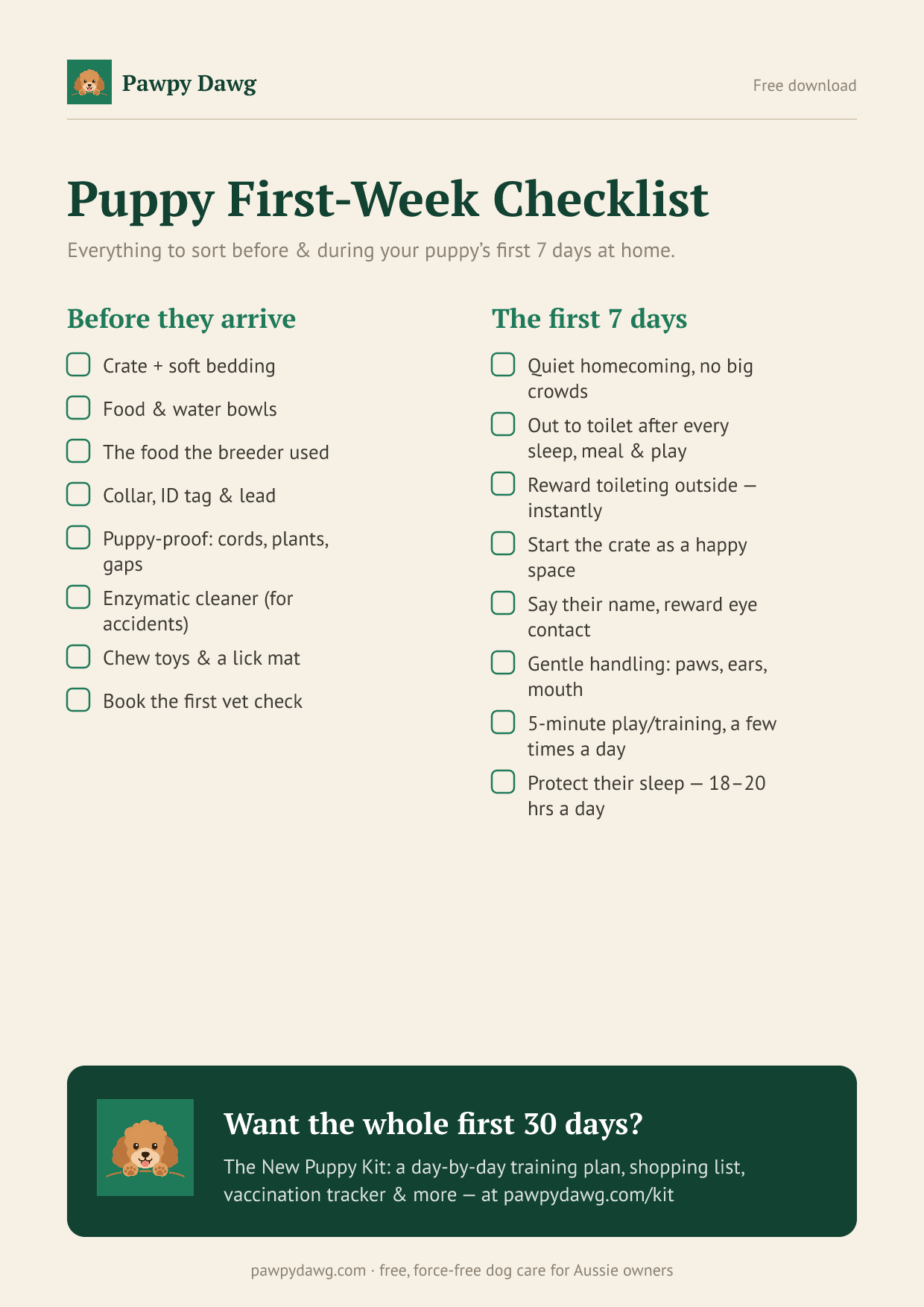
Free printable
Free: the Puppy First-Week Checklist
Everything to sort before and during your puppy's first 7 days home — a printable one-pager. Plus the occasional genuinely useful dog tip. No spam, unsubscribe anytime.
Related guides
How to Stop a Kelpie Pulling on the Lead (Step-by-Step)
Tired of being dragged around the block? Fix kelpie pulling on the lead with this step-by-step positive-reinforcement plan, realistic timelines & pro tips.
Read the guide →
How to Stop a Kelpie Barking at Strangers (Step-by-Step)
Kelpie barking at strangers driving you mad? Get a realistic, positive-reinforcement plan with quick wins you can try today — no punishment needed.
Read the guide →
Kelpie Separation Anxiety: A Step-by-Step Fix
Kelpie separation anxiety is exhausting — but fixable. Get a realistic, positive-reinforcement plan, quick wins for today, and honest timelines.
Read the guide →