
Kelpie Not Coming When Called? A Step-by-Step Recall Fix
Kelpie not coming when called? Fix recall fast with this positive-reinforcement plan — short daily sessions, real timelines, and common mistakes to avoid.

Written by Bradley Brown
Founder & editor · Reviewed 2026-07-10
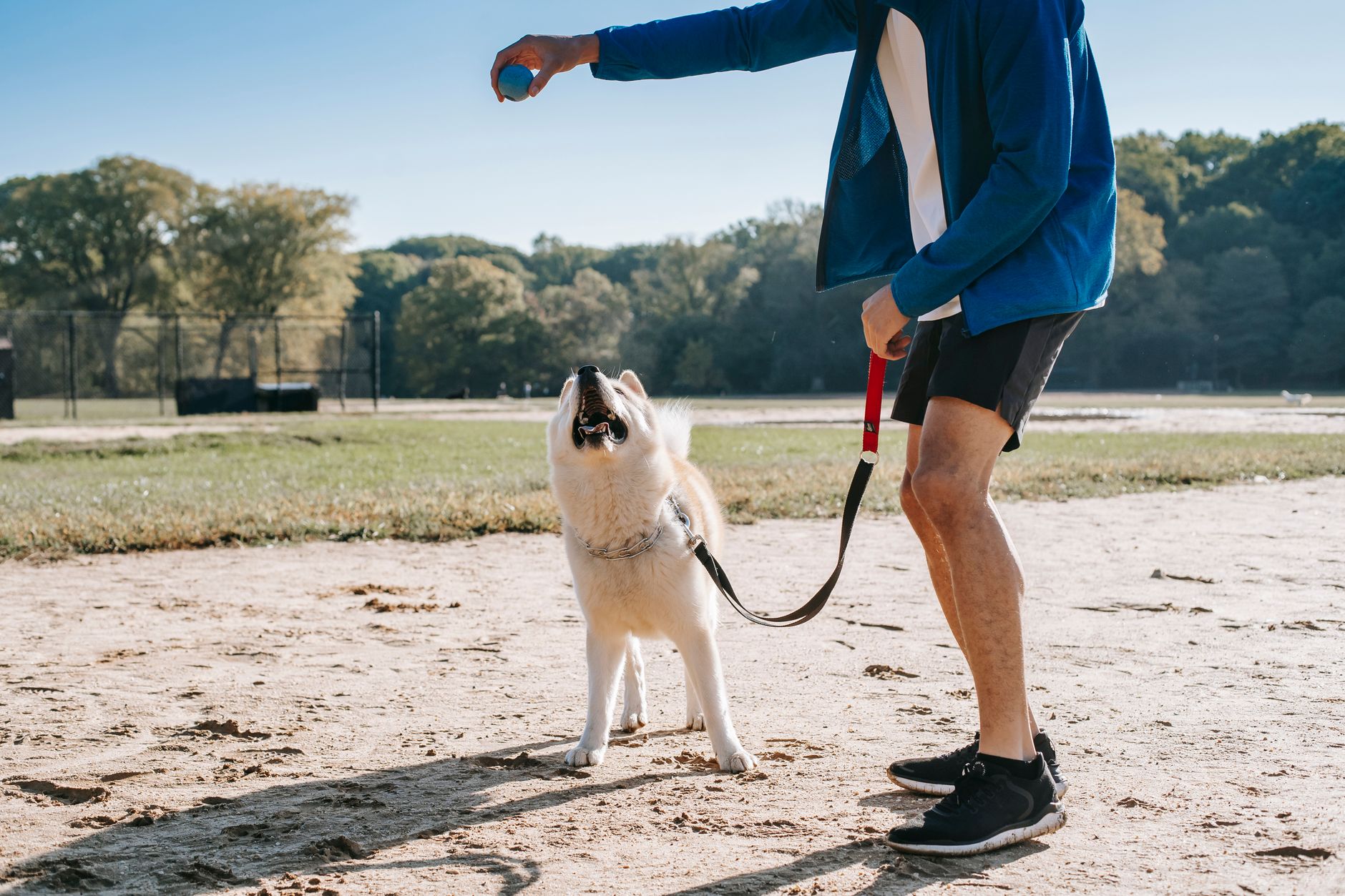
You called. Your Kelpie looked straight at you, made brief, devastating eye contact, and sprinted in the opposite direction. If you've just come home from that walk — or you're sitting next to a shredded couch wondering what went wrong — you're in the right place.
Here's the reassurance first: a Kelpie ignoring a recall isn't a sign you've ruined your dog or that you're a bad owner. It's a sign you have a highly intelligent, high-drive working breed that hasn't yet been given a good enough reason to come back. That's entirely fixable, and it's not your fault.
Try This Today (Seriously, Right Now)
Before we go any further, here's one thing you can do in the next ten minutes.
The "surprise party" recall:
- Grab the smelliest, highest-value treat in your kitchen — diced cooked chicken, cheese, fritz, or a squeeze of peanut butter on a spoon.
- Let your Kelpie wander to the other end of the house or garden.
- In your most excited, almost-silly voice, call their name once followed by "come!" — then immediately crouch down, open your arms, and act like something amazing is happening.
- The moment they arrive, deliver the treat and praise like they've just won the Melbourne Cup.
That's it. One rep. You've just started rebuilding the recall association. Do it two or three more times today, always ending on a win. Never call them and then do something they dislike (bath, nail clip, end of play) during these early sessions.
Why Kelpies Are Wired to Ignore You
Kelpies were bred to work away from their handler, making independent decisions across large paddocks. Checking back with a human wasn't part of the job description — persistence and self-direction were. That instinct is still very much present in your suburban dog.
Add to that a high arousal threshold (once they're stimulated, the world outside barely registers) and a brain that learns fast — including that "come" sometimes means fun stops — and you have a dog that's not being stubborn. It's being a Kelpie.
The Step-by-Step Recall Fix (5–10 Minutes a Day)
Week 1–2: Build the Foundation Indoors
Keep sessions to 5 minutes maximum. Short and successful beats long and frustrating every time.
- Pick one recall word and commit to it. "Come," "here," or a whistle — your choice, but use it consistently. If "come" is already poisoned (associated with punishment or fun ending), pick a fresh word like "close" or "here."
- Practise in the lounge room. Low distraction, high success rate. Call, reward, repeat.
- Use a treat hierarchy. Dry kibble for easy wins, chicken or cheese for harder ones. Kelpies are smart enough to notice the difference.
- Reward every single recall at this stage. Every. Single. One. You're building a reflex, not testing it.
What to avoid this week:
- Don't repeat the cue if they don't come. One call, then go get them calmly (no anger, no lecture).
- Don't call them and then leave the park. You're building the association, not testing loyalty.
Week 3–4: Add Distance and Mild Distraction
- Move practice to the garden or a quiet area outside.
- Use a long line (5–10 metres) — not a retractable lead. This gives your Kelpie freedom while ensuring you can gently guide them back if needed. Long lines are available at most Australian pet stores for $20–$50 AUD.
- "Catch" them checking back on you naturally — the moment they glance your way, mark it with a happy "yes!" and a treat. This builds the habit of orienting back to you.
- Introduce mild distractions: another person walking past, a ball on the ground nearby.
Week 5–8: Real-World Proofing
This is where most owners give up too soon. Real-world recall takes longer than indoor recall. That's normal.
| Environment | Difficulty | Strategy |
|---|---|---|
| Quiet backyard | Low | Reliable? Move on. |
| Quiet suburban park, early morning | Medium | Long line, high-value treats |
| Dog park with other dogs | Very High | Do NOT practise here yet |
| Beach or open field with distractions | High | Long line, build up slowly |
| Dog park | Very High | Graduate to this last |
The dog park is a trap for recall training. Dogs learn quickly that "come" at the dog park means fun ends. Practise arrival and departure games instead — call them, treat, release back to play. This teaches that coming to you doesn't always mean leaving.
The Three Most Common Mistakes
1. Repeating the cue. "Bindi, come. Bindi! BINDI, COME HERE." Each unanswered repeat teaches your dog the word is optional. Say it once. If they don't respond, calmly walk to them.
2. Punishing a slow return. If your dog eventually trudges back after thirty seconds and you scold them, you've just punished the return, not the delay. They don't connect the dots the way we do. Always reward the arrive, regardless of how long it took.
3. Only practising recall when you need it. Recall called ten times a day for fun, and once when it matters, is a very different muscle to recall called once every few days when you're leaving the park. Practise the boring version constantly so the important one works.
Realistic Timelines
- Days 1–7: Reliable recall indoors, beginning of a positive association.
- Weeks 2–4: Reliable in low-distraction outdoor environments on a long line.
- Weeks 5–12: Reliable in moderate distraction. High-distraction environments take longer.
- 3–6 months: Solid, trustworthy recall across most real-life situations.
If anyone promises you a reliable off-lead Kelpie recall in two weeks, they're selling something.
When to Get a Professional Involved
Most Kelpie recall problems respond well to consistent positive training. But consider booking a session with a qualified, force-free trainer (look for members of the Pet Professional Guild Australia or Delta Society) if:
- Your dog has bolted into traffic or genuinely dangerous situations.
- There's anxiety or fear driving the avoidance (hiding, cowering, stress signals when you approach).
- You've been consistent for 8+ weeks with no meaningful improvement.
- Your dog has a high prey drive and has chased wildlife, cyclists, or cars — this requires specific threshold work.
A one-hour consult with a professional trainer typically costs $100–$200 AUD and is worth every cent if safety is at stake. Many also offer online sessions if you're in a regional area.
The Short Version (Stick This on the Fridge)
- ✅ One recall word, used once per attempt
- ✅ Always reward the return, no matter what
- ✅ 5–10 minutes a day, not one 45-minute session per week
- ✅ Long line before off-lead freedom
- ✅ High-value treats for hard environments
- ❌ No punishment for slow returns
- ❌ No off-lead practice in high-distraction areas until the skill is solid
- ❌ No repeated cues
Your Kelpie is not broken. They're brilliant, fast, and built for independence — and that same brain that's running rings around you right now will master this faster than most breeds once the right motivation clicks into place. Start with one good rep tonight.
As an Amazon Associate we earn from qualifying purchases.
Frequently asked questions
Why does my Kelpie ignore me when I call but listen perfectly at home?
Recall is a location-specific skill until it's been thoroughly proofed across many environments. Your Kelpie has learned the word works at home, but outside there are competing distractions — smells, movement, other dogs — that are far more rewarding than the cue currently is. You need to gradually build the skill in progressively more distracting environments, rewarding generously at each stage.
Is it too late to teach recall to an older Kelpie?
No. Adult and senior dogs learn new behaviours very effectively — in some ways better than puppies, because they have longer attention spans. The process is the same: start in low-distraction environments, reward heavily, and build up slowly. An older dog with a long history of ignoring recall may just need a fresh cue word so you're not working against an established 'that word means nothing' habit.
Should I use an e-collar or shock collar to fix my Kelpie's recall?
No — and particularly not as a first response. Aversive tools like e-collars can suppress behaviour through pain or fear, but they don't teach the dog what to do, and they risk creating anxiety, aggression, or a dog that associates coming to you with discomfort. Mainstream veterinary and animal behaviour organisations, including the RSPCA Australia, recommend positive reinforcement-based methods. If you feel you've exhausted positive approaches, consult a qualified behaviourist rather than reaching for an aversive device.
How long should each recall training session be?
Keep sessions to 5–10 minutes, once or twice a day. Short sessions with high success rates build the skill faster than long sessions that end in frustration. Stop while your dog is still keen and always end on a successful rep — this leaves them wanting more at the next session.
Can I practise recall at the dog park?
The dog park is one of the worst places to practise recall until the skill is very solid. The high distraction makes failure almost inevitable, and repeated failures erode the cue. Instead, practise recall games on arrival and during the visit — call your dog, reward them, then immediately release them back to play. This teaches them that coming to you doesn't always mean leaving, which is one of the biggest reasons dogs avoid recall at parks.
What treats work best for Kelpie recall training?
Use the highest-value treat your dog goes crazy for — diced cooked chicken, cheese, fritz, or liver treats are popular choices with Australian owners. Save your very best treats exclusively for recall so the reward feels special and worth interrupting whatever the dog is doing. In low-distraction environments you can use lower-value rewards, but in challenging real-world situations, bring out the good stuff.
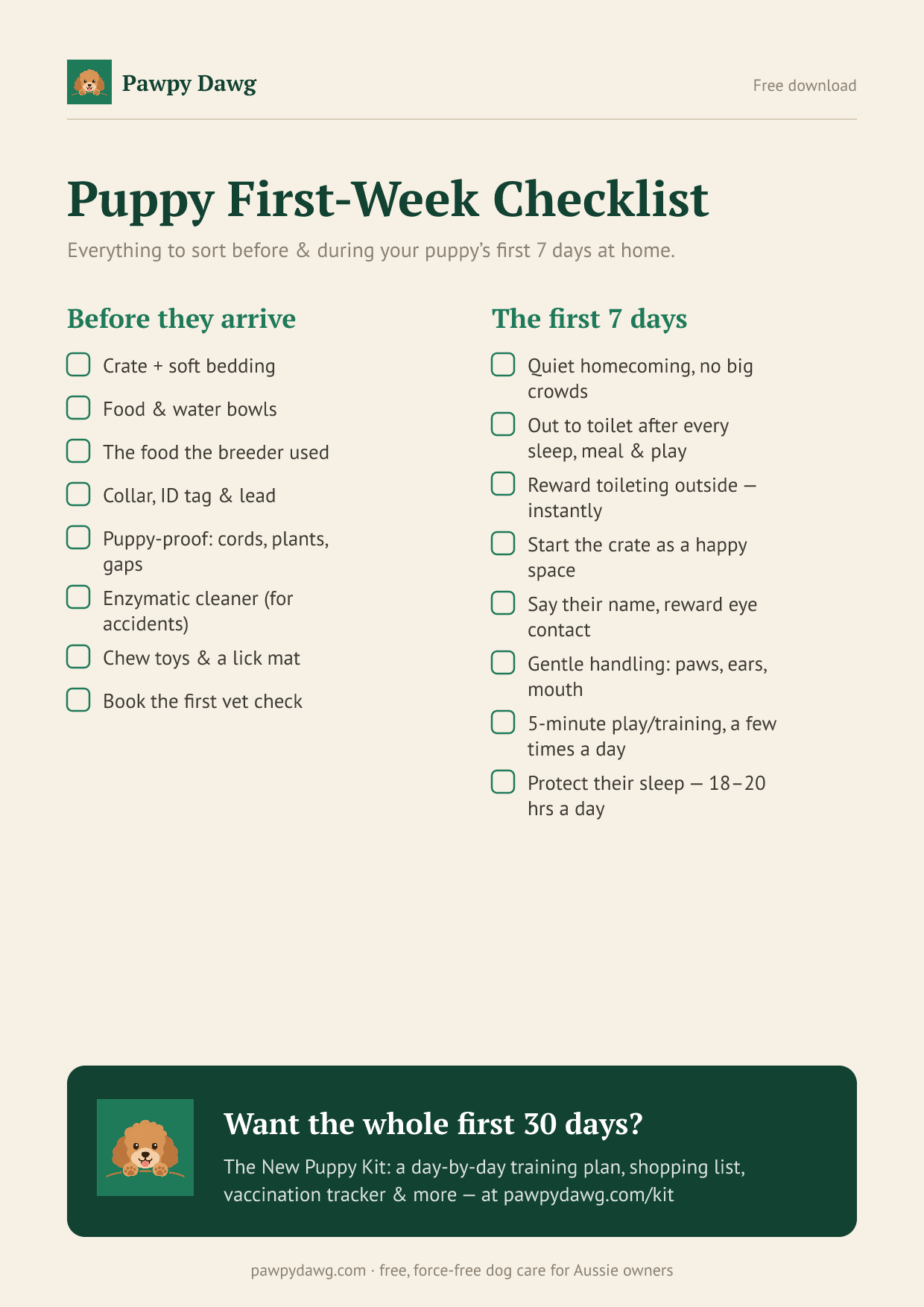
Free printable
Free: the Puppy First-Week Checklist
Everything to sort before and during your puppy's first 7 days home — a printable one-pager. Plus the occasional genuinely useful dog tip. No spam, unsubscribe anytime.
Related guides
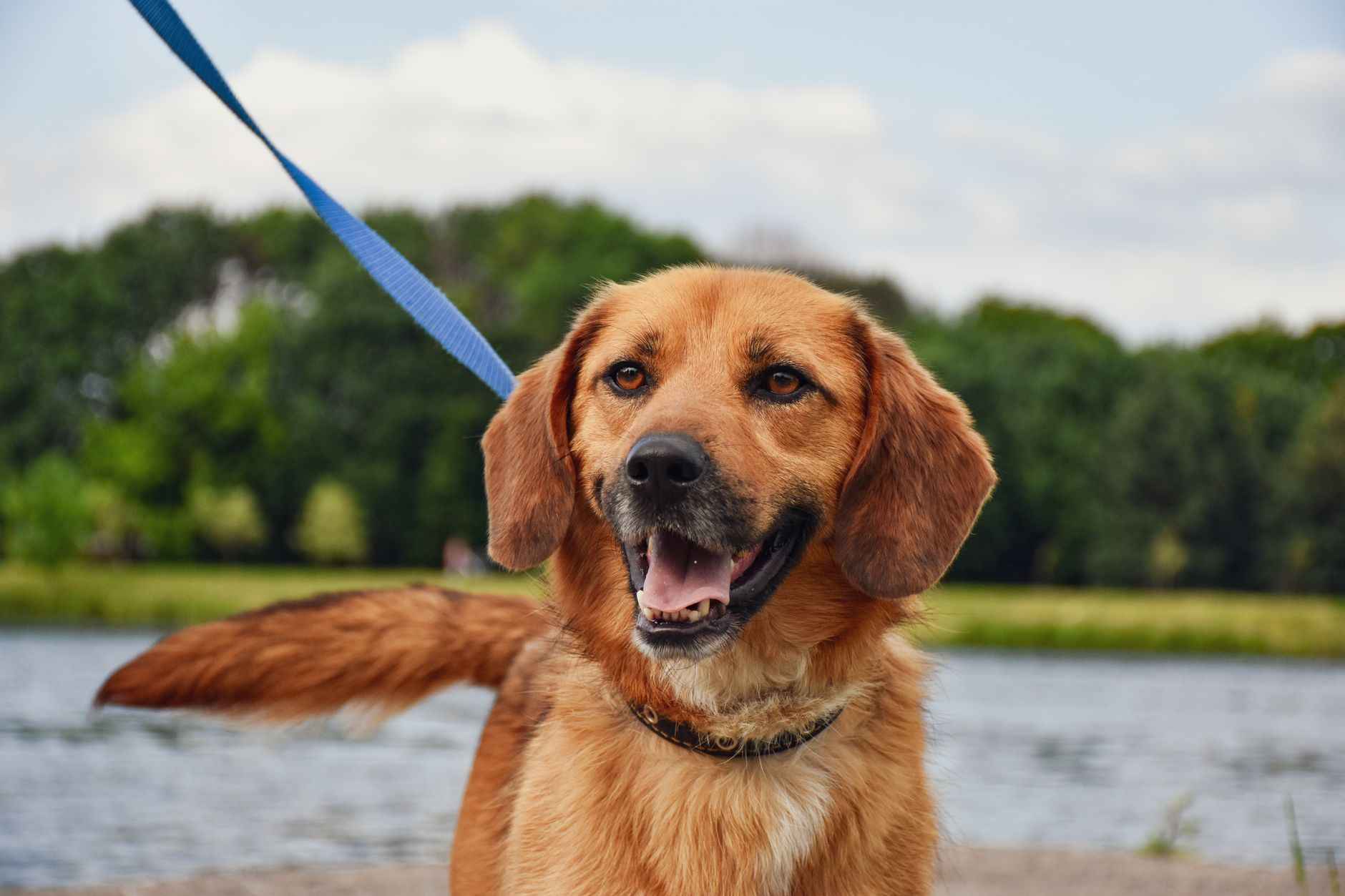
How to Stop a Kelpie Pulling on the Lead (Step-by-Step)
Tired of being dragged around the block? Fix kelpie pulling on the lead with this step-by-step positive-reinforcement plan, realistic timelines & pro tips.
Read the guide →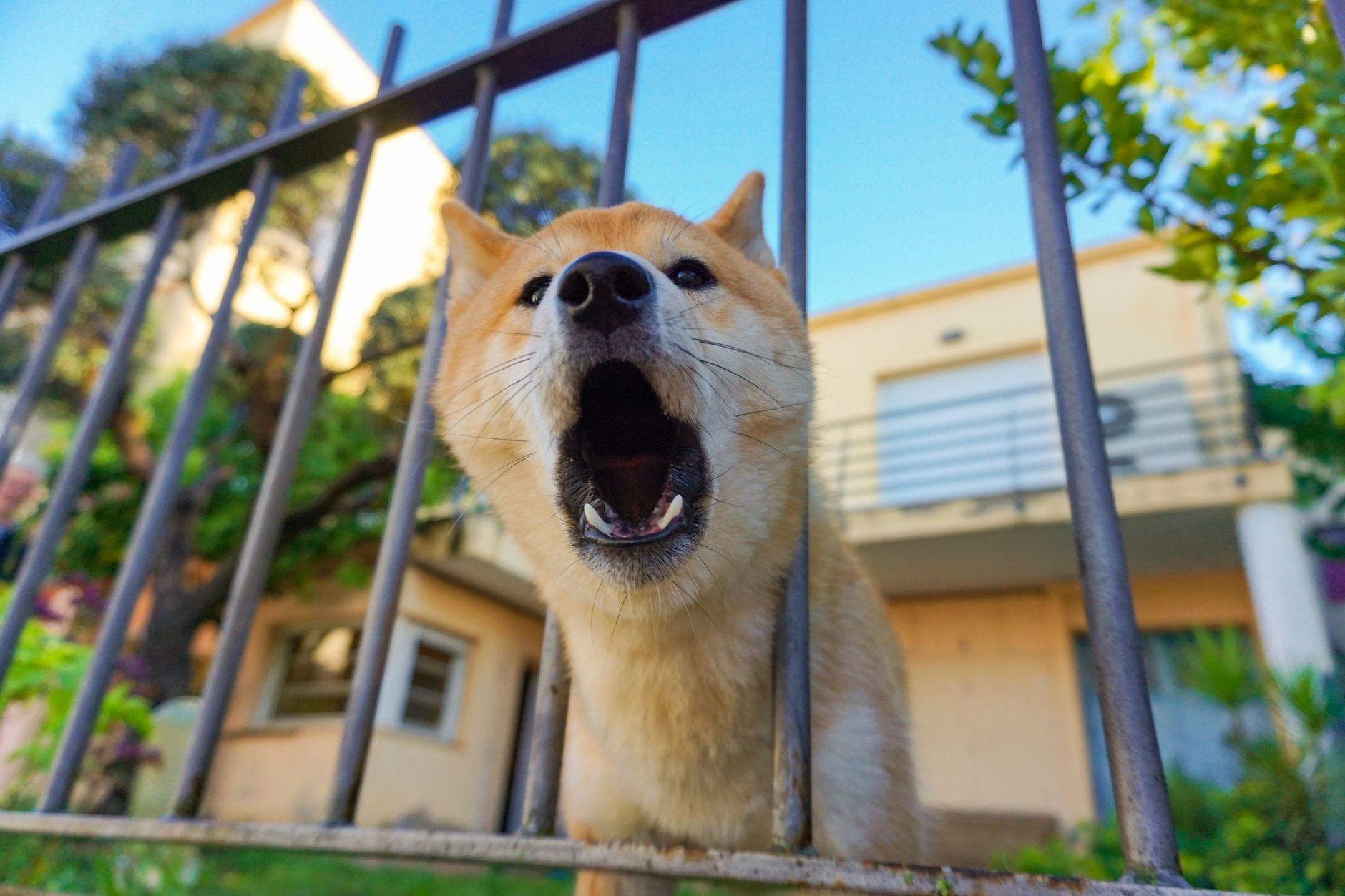
How to Stop a Kelpie Barking at Strangers (Step-by-Step)
Kelpie barking at strangers driving you mad? Get a realistic, positive-reinforcement plan with quick wins you can try today — no punishment needed.
Read the guide →
Kelpie Separation Anxiety: A Step-by-Step Fix
Kelpie separation anxiety is exhausting — but fixable. Get a realistic, positive-reinforcement plan, quick wins for today, and honest timelines.
Read the guide →