
How to Stop a Kelpie Jumping Up on People (Step-by-Step)
Tired of your Kelpie jumping up on people? This step-by-step positive-reinforcement guide gives you a realistic plan, quick wins, and common mistakes to avoid.

Written by Bradley Brown
Founder & editor · Reviewed 2026-07-10
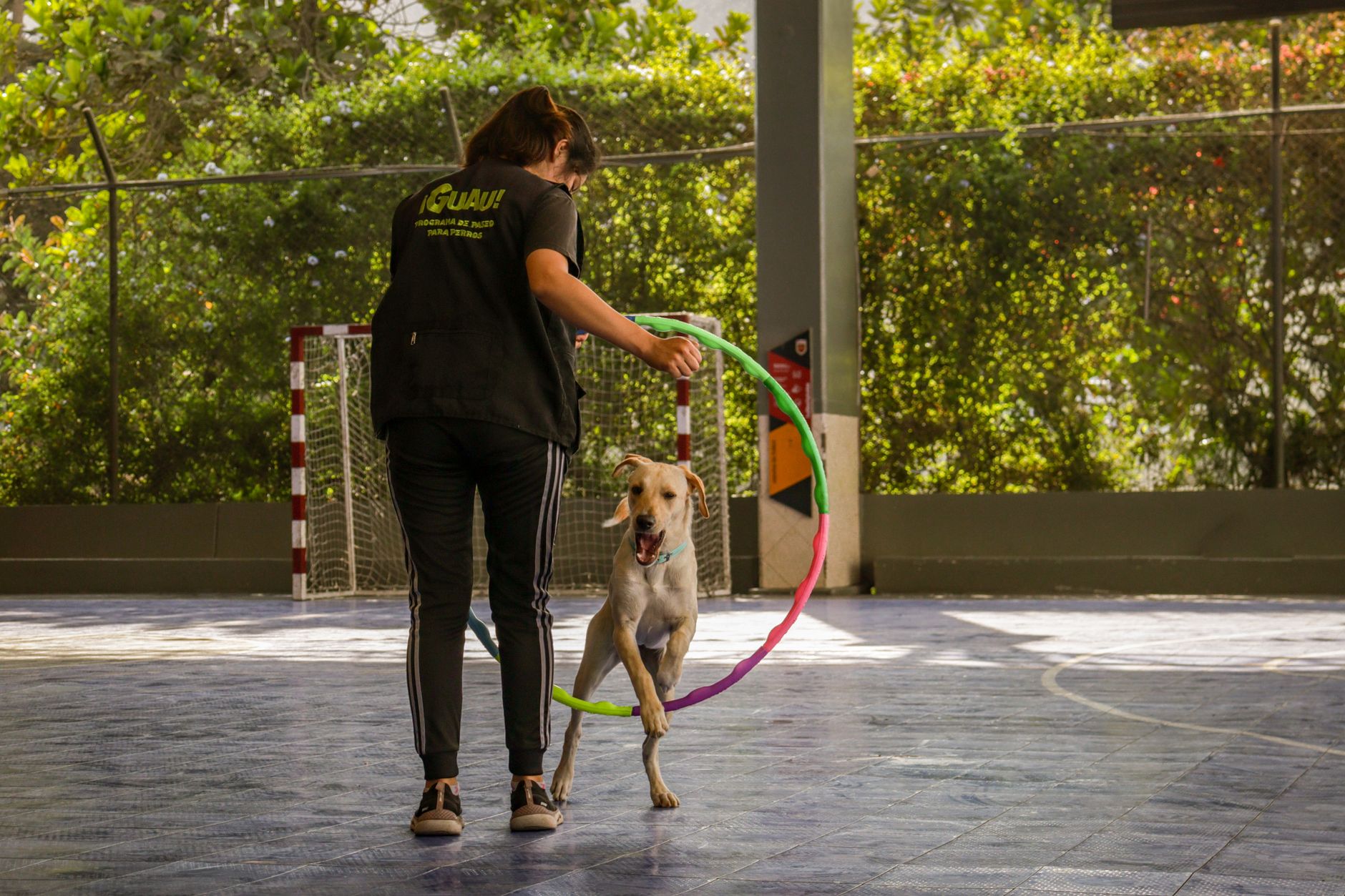
Your Kelpie just launched itself at a stranger on the footpath — again. You yanked the lead, apologised profusely, and walked home feeling like you've somehow failed. You haven't. Jumping up is completely normal Kelpie behaviour, and it's one of the most fixable problems in dog training. The dog isn't dominant, spiteful, or ruined. They're just doing what has accidentally been rewarded: jumping up gets attention, every single time.
Here's what actually works — and a five-minute exercise you can start tonight.
Why Kelpies Jump Up More Than Most Breeds
Kelpies are bred to work closely with people, read body language, and demand interaction. That intensity is a feature, not a bug — but it means they pursue attention with the same drive they'd use to muster sheep. Add in the fact that every person who has ever bent down, laughed, or pushed the dog away has inadvertently rewarded the jump, and you've got a deeply practised habit.
The good news: habits can be replaced. Kelpies are exceptionally fast learners. The same brain that locked in "jump for attention" will lock in the new rule just as quickly once you make the rules consistent.
Your Quick Win for Tonight: The Four-Paws Rule
Before you read anything else, try this on your next interaction with your dog — even in your lounge room right now.
The rule: Your dog gets zero attention (zero eye contact, zero touch, zero talking) when any paw leaves the ground. The moment all four paws are on the floor, they get calm, immediate praise and a treat.
How to do it:
- Walk through your front door as normal.
- The instant your Kelpie jumps, turn your back, cross your arms, and go completely still and silent.
- The second all four paws hit the floor — even for half a second — say "yes" in a calm, clear voice and reward with a small treat or a brief pat.
- If they jump again, repeat the turn-away immediately.
- Keep the whole thing under 60 seconds. Then go about your evening.
That's it. One rule, applied every single time, by every single person. Consistency is the whole game.
Step-by-Step Training Plan (5–10 Minutes a Day)
Step 1: Control the Environment First (Days 1–3)
Before you can train an alternative behaviour, reduce the opportunities for the old one to be rehearsed and rewarded.
- Ask guests to ignore the jump. Brief everyone who enters your home: "Please turn your back and don't touch her until all four paws are on the ground." Put a sticky note on the door if it helps.
- Use a lead indoors if your Kelpie rushes visitors. A trailing house lead (supervised only) lets you calmly step on it before the jump happens, removing the opportunity without any confrontation.
- Stop all accidental rewards. Pushing, saying "off", or looking at the dog while jumping — all of these count as attention. Silence and stillness are your tools.
Step 2: Teach a Competing Behaviour (Days 3–10)
A dog can't sit and jump at the same time. Build a solid automatic sit as your Kelpie's default greeting behaviour.
- Practice sit in a calm room first — 10 reps, 10 treats, two minutes. Your Kelpie almost certainly knows sit already; you're just attaching it to greetings.
- Add mild excitement. Ask a family member to walk in enthusiastically. Before the dog can jump, ask for "sit." Reward immediately when the bum hits the floor.
- Build to real greetings. As the sit becomes reliable indoors, practise at the front door, then on the footpath with familiar people, then with strangers.
Realistic timeline: Most Kelpies show clear improvement within 1–2 weeks of consistent practice. Full reliability with strangers typically takes 4–6 weeks, because every new person is a new context for the dog to generalise to.
Step 3: Proof It in the Real World (Weeks 2–6)
This is where most owners stall. The dog sits beautifully at home, then launches at the barista. That's not regression — it's just a new environment the dog hasn't practised in yet.
- Start easy, then escalate. Begin with calm adults you can brief. Progress to children, excitable adults, and strangers in busy areas.
- Keep a treat pouch on your walks. You need to be faster than the jump. As a known person approaches, ask for "sit" before contact is made, reward the sit, then allow the greeting.
- Give the greeter a treat to deliver. This is a game-changer. When strangers reward the sit themselves, the dog learns that sitting — not jumping — makes new people into treat dispensers.
Common Mistakes That Slow Progress
| Mistake | Why It Backfires | Fix |
|---|---|---|
| Kneeing or pushing the dog away | Physical contact is still attention; many dogs find it stimulating | Turn away completely — no touch |
| Saying "off" or "no" repeatedly | Verbal attention rewards the jump | Silence until four paws land |
| Inconsistency between family members | The dog learns jumping works on some people | Everyone uses the same rule, every time |
| Only training at home | Behaviour doesn't generalise automatically | Practise in multiple locations with different people |
| Rewarding too late | The dog is rewarded for standing, not for the sit | Mark the moment all four paws land — use a clicker if timing is tricky |
When to Get Professional Help
Most Kelpie jumping problems resolve with the steps above. Consider calling a professional trainer or veterinary behaviourist if:
- The jumping is accompanied by mouthing, nipping, or scratching that breaks skin — especially with children.
- Your dog is also displaying anxiety, reactivity, or other concerning behaviours on lead.
- You've been consistent for six or more weeks with no improvement.
- The jumping is so intense it's genuinely unsafe (large, powerful dog, elderly family members, young toddlers).
Look for a trainer who uses positive-reinforcement methods and holds qualifications from a recognised body such as the Pet Professional Guild Australia or the NDTF. A good trainer should welcome your questions about their methods.
Keep It in Perspective
Your Kelpie jumps because they like people. That's a genuinely lovely quality in a dog — it just needs redirecting. You haven't ruined anything. The behaviour you've seen for months or years can begin to shift meaningfully within days when the rules become clear and consistent.
Five minutes of deliberate practice today is worth more than an hour of frustrated corrections. Start with the four-paws rule tonight, loop in the people you live with, and trust the process.
As an Amazon Associate we earn from qualifying purchases.
Frequently asked questions
How long does it take to stop a Kelpie jumping up on people?
Most Kelpies show noticeable improvement within one to two weeks of consistent training. Full reliability with strangers — in different locations and contexts — typically takes four to six weeks. The biggest factor is consistency: every person the dog meets needs to follow the same rules.
Should I knee my Kelpie in the chest to stop them jumping?
No. Kneeing, pushing, or any physical correction still counts as attention and physical contact, which many dogs find rewarding or exciting rather than unpleasant. It can also cause injury and damage trust. Turning your back and going completely silent the moment the jump happens is far more effective.
My Kelpie only jumps on some people — why?
Because some people are accidentally rewarding the jump. Even a single person bending down, laughing, or making eye contact teaches the dog that jumping is worth trying. Kelpies are excellent at reading which humans will respond, so everyone needs to follow the same four-paws rule consistently.
Can an older Kelpie be retrained to stop jumping, or is it too late?
It's never too late. Older dogs can absolutely learn new habits — it may simply take a little longer to overwrite a deeply practised behaviour. The same positive-reinforcement approach works at any age; just expect the process to take closer to the six-week end of the timeline.
Is jumping up a sign of dominance in Kelpies?
No. Jumping up is attention-seeking behaviour, not dominance. Kelpies are highly social, people-oriented dogs and jumping is their way of initiating contact — it has simply been rewarded (even accidentally) enough times to become a strong habit. Treating it as a dominance issue and responding with physical corrections is both ineffective and unnecessary.
How do I stop my Kelpie jumping on strangers when I'm out walking?
Keep treats on you and ask for a sit before a greeter makes contact. If possible, hand the stranger a treat to deliver directly — this teaches your dog that sitting (not jumping) is what makes new people exciting and rewarding. Practise with calm, familiar people first, then gradually work up to strangers in busier environments.
Free printable
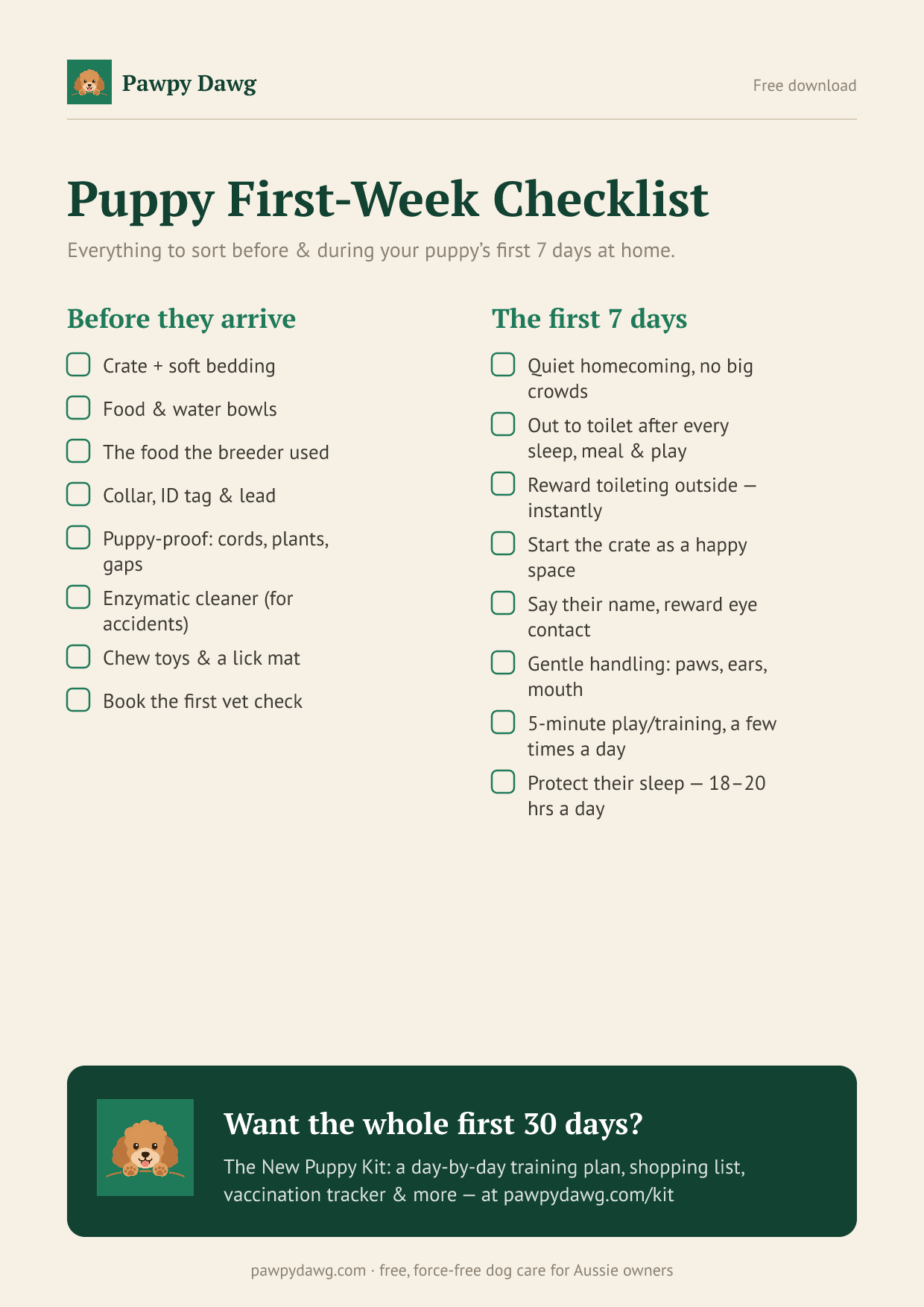
Free: the Puppy First-Week Checklist
Everything to sort before and during your puppy's first 7 days home — a printable one-pager. Plus the occasional genuinely useful dog tip. No spam, unsubscribe anytime.
Related guides
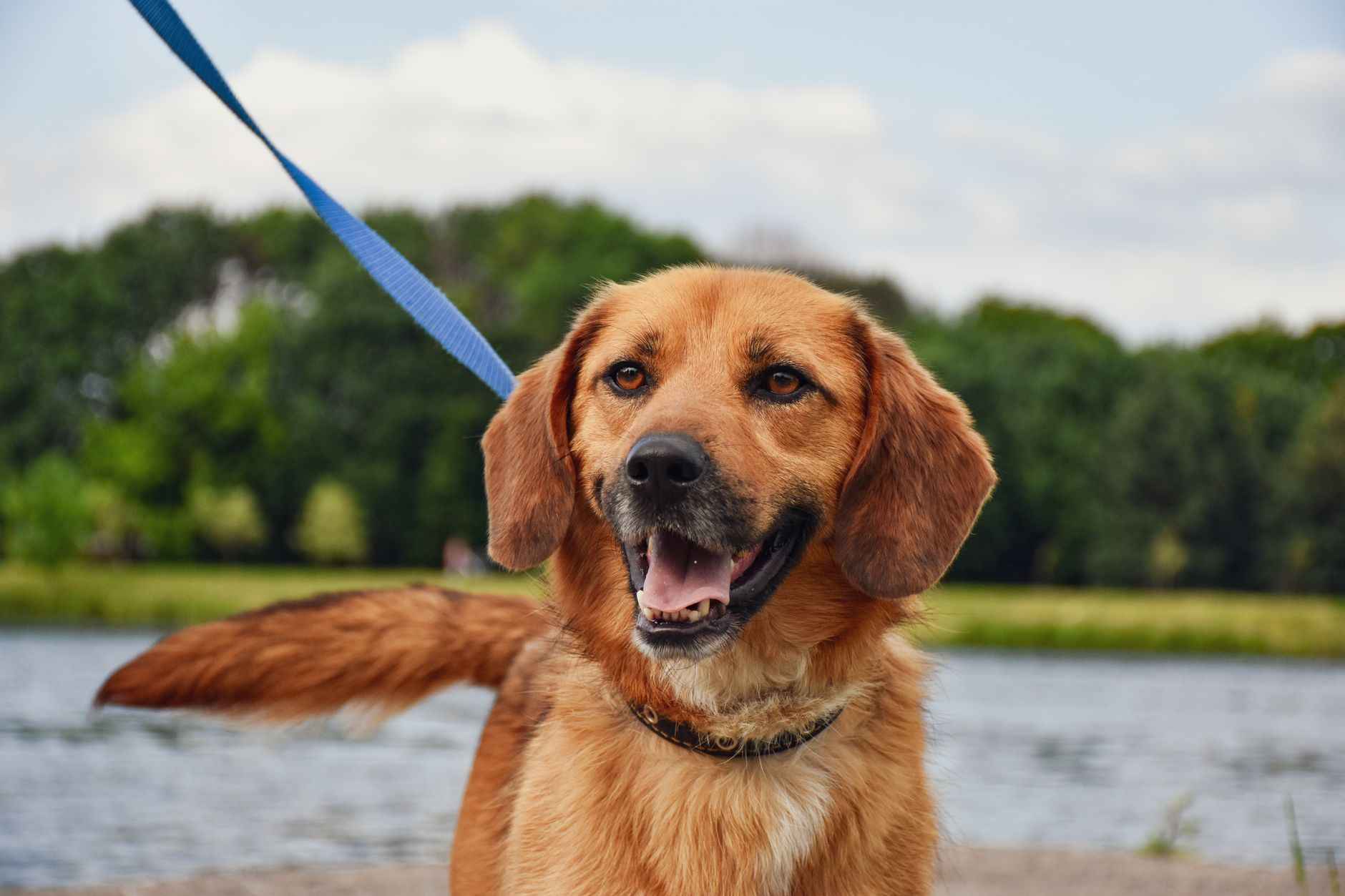
How to Stop a Kelpie Pulling on the Lead (Step-by-Step)
Tired of being dragged around the block? Fix kelpie pulling on the lead with this step-by-step positive-reinforcement plan, realistic timelines & pro tips.
Read the guide →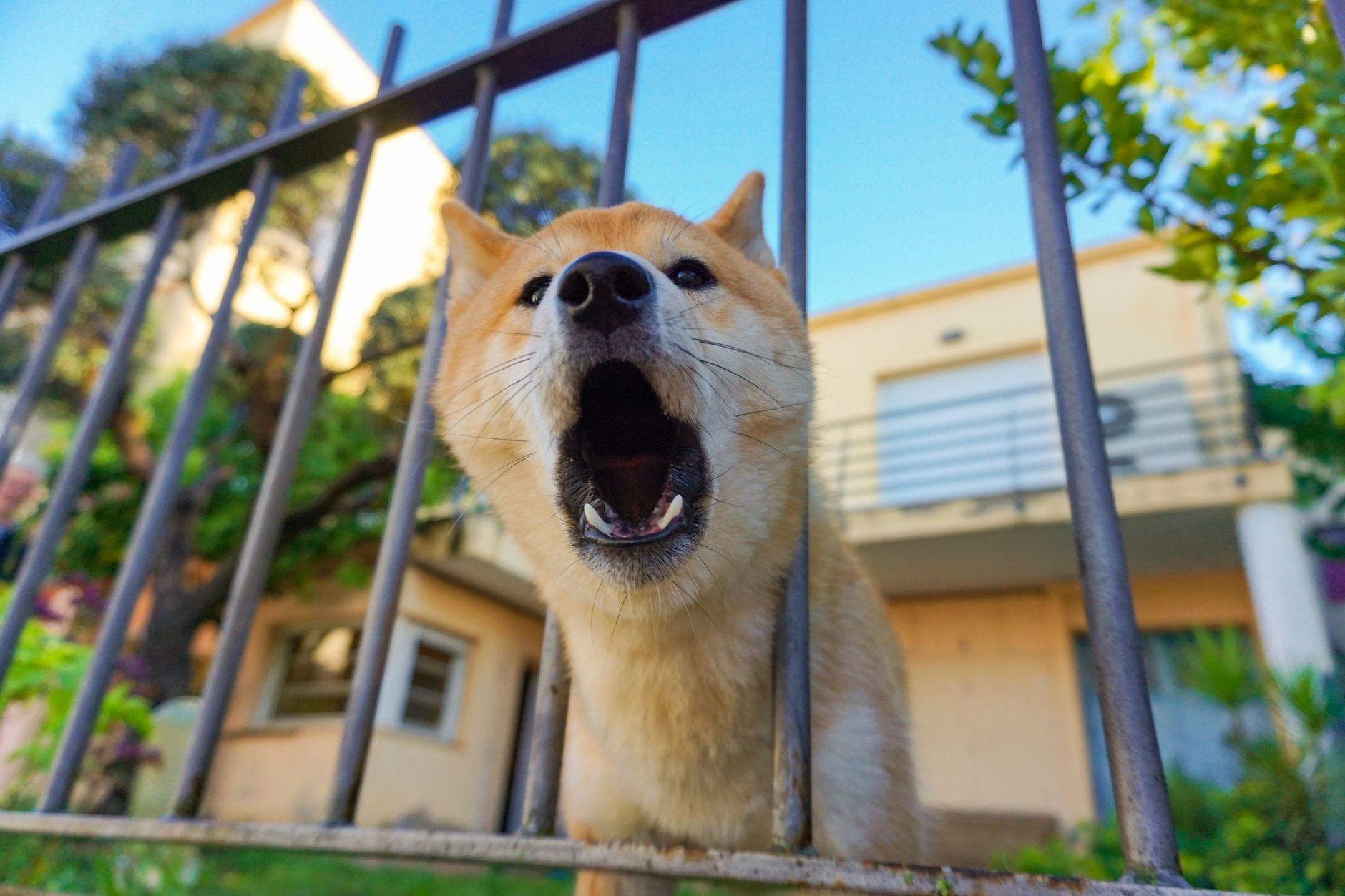
How to Stop a Kelpie Barking at Strangers (Step-by-Step)
Kelpie barking at strangers driving you mad? Get a realistic, positive-reinforcement plan with quick wins you can try today — no punishment needed.
Read the guide →
Kelpie Separation Anxiety: A Step-by-Step Fix
Kelpie separation anxiety is exhausting — but fixable. Get a realistic, positive-reinforcement plan, quick wins for today, and honest timelines.
Read the guide →