
How to Stop a Kelpie Chewing Everything (Step-by-Step)
Struggling with kelpie destructive chewing? Get a realistic, positive-reinforcement plan with quick wins, common mistakes, and timelines that actually work.

Written by Bradley Brown
Founder & editor · Reviewed 2026-07-10
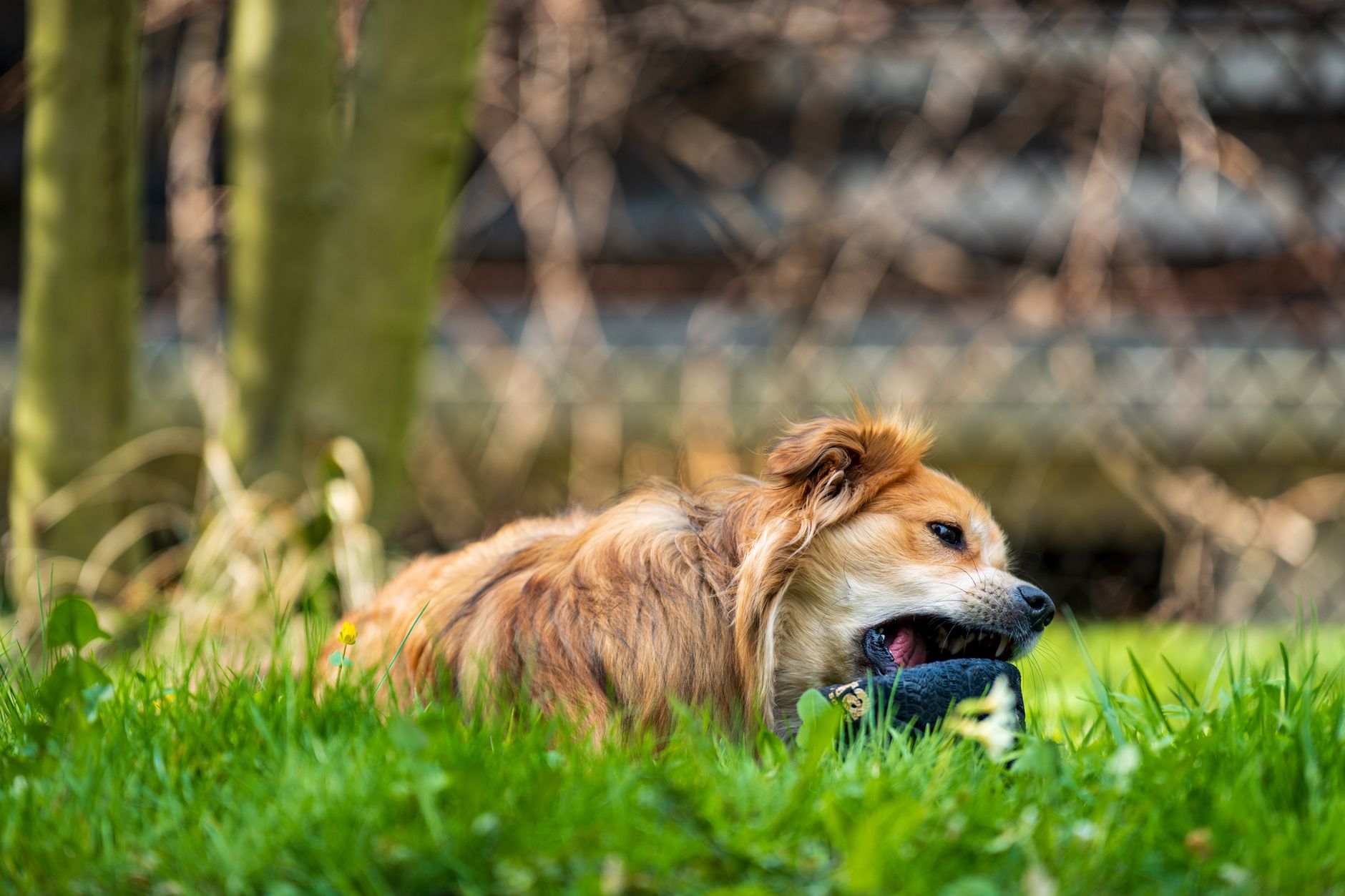
Your Kelpie has eaten the couch cushion. Again. Maybe it was the garden hose, the skirting boards, or your favourite pair of runners. You're exhausted, you're embarrassed, and you're quietly wondering whether you've broken your dog.
You haven't. Kelpie destructive chewing is one of the most common complaints Australian owners bring to trainers — and it's almost always fixable. The behaviour makes complete sense for the breed; it just needs redirecting, not punishing.
Here's your practical, no-nonsense plan.
Why Kelpies Chew More Than Most Breeds
Kelpies were purpose-bred to work 8–12 hours a day across open paddocks. A suburban backyard and a 20-minute walk simply don't cut it for their brain or body. When that energy has nowhere to go, chewing becomes a self-soothing outlet — it releases endorphins, relieves stress, and kills boredom all at once.
Common triggers include:
- Insufficient mental stimulation — physical exercise alone isn't enough; Kelpies need to think
- Separation anxiety — chewing spikes when left alone, especially if the dog is under-exercised beforehand
- Teething (in puppies under 6 months) — gums are uncomfortable and chewing brings relief
- Attention-seeking — if chewing a shoe got a big reaction last time, the dog has learned it works
Reassurance: None of these causes is your fault in a moral sense. They're all predictable outcomes of owning a high-drive working breed and not yet having the right toolkit. The toolkit is below.
Your Quick Win for Today (5 Minutes, Right Now)
Before you read another word: go find one high-value chew your dog doesn't currently have access to. A frozen Kong stuffed with peanut butter (xylitol-free), a bully stick, or a raw meaty bone all work. Give it to your dog now.
You've just given them a legal, satisfying outlet. That single swap — forbidden item → appropriate chew — is the foundation of the entire plan. Everything else builds on it.
Step-by-Step Plan to Stop Destructive Chewing
Step 1: Manage the Environment First (Week 1)
Positive reinforcement only works when the dog can't keep practising the unwanted behaviour. Management isn't "cheating" — it's what every professional trainer does on day one.
- Crate or pen your Kelpie when you can't supervise directly. A crate is not cruel; used correctly, it's a den the dog chooses to relax in.
- Tether the dog to you using a 1.5–2 m house lead indoors so you can interrupt and redirect instantly.
- Remove temptation — shoes in cupboards, cables behind furniture, garden tools in the shed. If they can't reach it, they can't chew it.
- Baby-gate off high-risk rooms (laundry, study) until the habit is broken.
Think of this week as setting your dog up to succeed rather than fail.
Step 2: Build a Rotation of Approved Chews (Week 1–2)
One chew gets boring. Kelpies need novelty. Keep 3–5 different chew types on rotation and swap them every couple of days to maintain interest.
| Chew Type | Best For | Notes |
|---|---|---|
| Frozen stuffed Kong | Separation anxiety, alone time | Stuff with wet food, freeze overnight |
| Raw meaty bone (raw only) | Deep chewing drive, dental health | Supervise; never cooked bones |
| Bully stick | Moderate chewers | Source from reputable Australian suppliers |
| Deer antler | Aggressive chewers | Long-lasting; monitor for tooth cracking |
| Licki mat with wet food | Calm, slow engagement | Great pre-departure routine |
Aim to have one chew available at all times during the management phase.
Step 3: Redirect, Don't Just Correct (Ongoing)
When you catch your Kelpie chewing something inappropriate, stay calm. A loud "no" or physical correction teaches the dog to chew when you're not watching — the opposite of what you want.
The redirect sequence:
- Say "uh-oh" or use a neutral interrupter (a short clap works)
- Immediately offer an approved chew
- The moment they take it, say "yes!" and give calm verbal praise
- Walk away — don't hover, which can create anxiety around chewing
Repeat this every single time. Consistency across every household member is non-negotiable. One person allowing couch chewing "just this once" sets the training back significantly.
Step 4: Meet the Mental Exercise Quota (Week 2 Onwards)
This is where most owners underinvest. Physical tiredness doesn't replace mental tiredness — a Kelpie that has just run 5 km can still destroy a garden in the afternoon if its brain wasn't engaged.
Add one or two of these into your daily routine (5–10 minutes each):
- Scatter feeding — throw their kibble across the lawn instead of bowl-feeding
- Sniff walks — let the dog set the pace and sniff freely for 15 minutes; sniffing is cognitively exhausting
- Basic training session — sit, drop, stay, recall. Five minutes of focused training tires a Kelpie more than a 20-minute run
- Puzzle feeders — Nina Ottosson-style boards (available from most Australian pet stores for $20–$60 AUD) or a simple muffin-tin puzzle
- "Find it" game — hide 5–10 pieces of kibble around the house and tell the dog to find them
You don't need to do all of these every day. Pick two and rotate.
Step 5: Teach "Leave It" and "Drop It" (Week 2–3)
These two cues give you a verbal tool so management props eventually become less necessary.
"Leave it" in 3 steps:
- Hold a treat in your closed fist. Let the dog sniff and paw at it. The moment they back off, mark with "yes" and reward from your other hand.
- Progress to a treat on the floor covered by your foot. Same principle.
- Eventually, say "leave it" just before presenting the item.
"Drop it":
- Let the dog have a low-value chew.
- Offer a high-value treat close to their nose.
- When they drop the chew, say "drop it," reward, then give the chew back — this teaches that dropping doesn't mean losing the item permanently.
Practice each cue for 2–3 minutes per session, twice a day.
Common Mistakes That Slow Progress
- Punishing after the fact — dogs don't connect a scolding to something that happened 10 minutes ago. You'll only create anxiety.
- Rotating punishment AND reward — mixed signals confuse dogs and slow learning significantly.
- Expecting results in 48 hours — realistic timeline is 2–6 weeks of consistent management and redirection for meaningful change; some dogs take 3 months.
- Giving up on the crate too soon — most owners abandon crate training after two nights of whining. Stick with it; the payoff is worth it.
- Ignoring the chewing trigger — if your dog chews only when alone, that's separation anxiety and needs a separate protocol (or professional help).
When to Get Professional Help
Most Kelpie destructive chewing responds well to the steps above within 4–8 weeks. Seek a qualified trainer or veterinary behaviourist if:
- The chewing is accompanied by vocalising, panting, pacing, or toileting when alone — this points to separation anxiety requiring a specific desensitisation plan
- The behaviour is escalating despite consistent management
- Your dog is injuring themselves (paws, mouth) during chewing episodes
- You're feeling overwhelmed — there's no shame in getting help, and a single session with a good trainer (typically $100–$200 AUD) can shift things quickly
Look for trainers accredited through the Delta Institute or Pet Professional Guild Australia, who use force-free methods.
Realistic Timeline at a Glance
| Week | Focus | Expected Change |
|---|---|---|
| 1 | Management + chew rotation | Fewer incidents (environment controlled) |
| 2–3 | Redirect + mental enrichment | Dog choosing approved chews more often |
| 4–6 | "Leave it"/"drop it" solid | Noticeably less chewing of forbidden items |
| 8–12 | Gradual freedom increase | Trust rebuilt; management props reduced |
Progress won't be perfectly linear — you'll have setbacks, especially on high-energy days or days when the routine slips. That's normal. Consistency over weeks matters far more than perfection on any single day.
As an Amazon Associate we earn from qualifying purchases.
Frequently asked questions
At what age do Kelpies stop chewing everything?
Most Kelpie puppies chew most intensely between 3 and 8 months, when teething discomfort peaks. However, because Kelpies are a high-drive working breed, destructive chewing driven by boredom or under-stimulation can continue well into adulthood if the underlying needs aren't met. With consistent training and adequate mental enrichment, most owners see a significant improvement by 12–18 months of age.
Is destructive chewing a sign my Kelpie has separation anxiety?
It can be, but not always. Chewing that happens specifically when you leave — and is accompanied by barking, howling, pacing, or toileting indoors — is more likely linked to separation anxiety. Chewing that happens when you're home (or randomly throughout the day) is more likely boredom or insufficient mental stimulation. A trainer or vet behaviourist can help you distinguish between the two.
What chews are safe for Kelpies?
Safe options include raw meaty bones (never cooked, as cooked bones splinter), bully sticks, deer antlers (monitor for tooth cracking in heavy chewers), and stuffed rubber Kongs. Always supervise your dog with any chew and remove it if it becomes small enough to swallow whole. Avoid rawhide, which can cause digestive blockages.
Should I scold my Kelpie for chewing things they shouldn't?
No — and especially not after the fact. Dogs don't connect a telling-off to something that happened minutes ago, so late punishment only creates anxiety and confusion. If you catch them in the act, use a calm interrupter and immediately redirect to an approved chew, then reward. Consistent redirection is far more effective than correction.
How much exercise does a Kelpie actually need to stop destructive chewing?
Exercise alone rarely solves the problem, because Kelpies need mental engagement as much as physical activity. A combination of 45–60 minutes of physical exercise plus 10–15 minutes of active mental stimulation (training, puzzle feeders, scatter feeding) daily is a reasonable target for most adult Kelpies. Skipping the mental component often means a physically tired dog that still chews out of boredom.
How long will it take to stop my Kelpie's destructive chewing?
With consistent management and daily redirection, most owners notice a meaningful reduction in incidents within 2–4 weeks. Reliable, lasting change — where you can trust the dog with more freedom — typically takes 8–12 weeks. Dogs with underlying anxiety or a long history of the behaviour may take longer, and professional support can speed the process significantly.
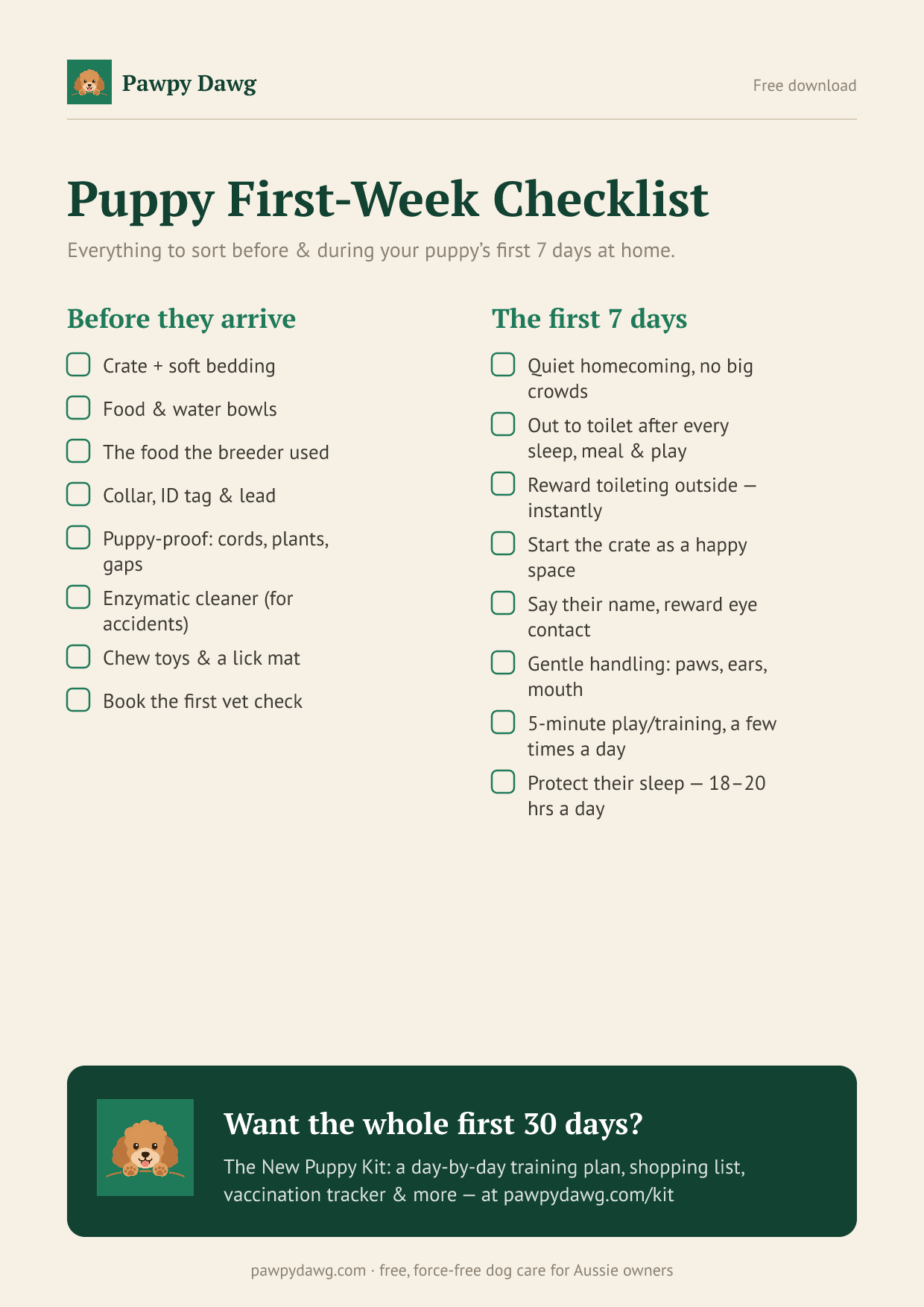
Free printable
Free: the Puppy First-Week Checklist
Everything to sort before and during your puppy's first 7 days home — a printable one-pager. Plus the occasional genuinely useful dog tip. No spam, unsubscribe anytime.
Related guides

How to Stop a Kelpie Pulling on the Lead (Step-by-Step)
Tired of being dragged around the block? Fix kelpie pulling on the lead with this step-by-step positive-reinforcement plan, realistic timelines & pro tips.
Read the guide →
How to Stop a Kelpie Barking at Strangers (Step-by-Step)
Kelpie barking at strangers driving you mad? Get a realistic, positive-reinforcement plan with quick wins you can try today — no punishment needed.
Read the guide →
Kelpie Separation Anxiety: A Step-by-Step Fix
Kelpie separation anxiety is exhausting — but fixable. Get a realistic, positive-reinforcement plan, quick wins for today, and honest timelines.
Read the guide →