
How to Stop a Kelpie Biting and Mouthing (Step-by-Step)
Tired of Kelpie biting and mouthing? Get a realistic, positive-reinforcement plan with quick wins, common mistakes to avoid, and when to call a pro.

Written by Bradley Brown
Founder & editor · Reviewed 2026-07-10

Your Kelpie has just left tooth marks on your arm — again — and you're Googling this at 10 pm wondering if you've somehow broken your dog. You haven't. Biting and mouthing in Kelpies is one of the most reported frustrations from owners of the breed, and it has everything to do with what Kelpies are, not what you've done wrong.
Here's what you need right now, before anything else.
Quick win you can try tonight: The moment teeth touch skin, go completely still and silent, turn your back, and walk out of the room for 30–60 seconds. No yelling, no pushing the dog away (that's a game). Return calmly. Repeat every single time. This "social penalty" works because Kelpies are intensely social — losing your attention is genuinely aversive to them. It won't fix everything overnight, but it will start shifting the pattern immediately.
Why Kelpies Bite and Mouth More Than Other Breeds
Kelpies were bred to control livestock using eye, body pressure, and — yes — a controlled bite called a "heeling" bite to the hock. That instinct doesn't switch off because you live in a suburb. What looks like aggression in your living room is often just a working dog doing what thousands of years of selective breeding wired it to do.
Common triggers include:
- Arousal and overstimulation — running children, fast movement, high-pitched voices
- Under-stimulation — a bored Kelpie is a mouthy Kelpie
- Play that escalated — games that involve hands and feet teach the dog that hands and feet are fair game
- Teething (in puppies under 6 months) — the jaw literally hurts and chewing brings relief
- Herding behaviour — nipping at heels, ankles, or the backs of legs
None of these mean your dog is dominant, aggressive, or ruined. They mean your dog is a Kelpie.
Step-by-Step Plan to Stop the Biting
Step 1 — Audit Your Interaction Style (Day 1)
Before changing the dog, look at what's happening in the 10 seconds before each bite or mouth. Keep a 3-day tally on your phone:
- What was everyone doing?
- What time of day?
- Who was involved?
Most owners find a clear pattern within 48 hours — usually late afternoon or after a walk when the dog is still amped up. Knowing the trigger lets you intervene before the mouth opens.
Step 2 — Replace the Behaviour, Don't Just Punish It (Days 1–7)
Punishment alone (sprays, loud noises, physical correction) suppresses the bite but doesn't teach the dog what to do instead. It also damages trust with a breed that is acutely sensitive to its owner's emotional state.
Instead, teach an incompatible behaviour — something the dog literally cannot do at the same time as biting:
- Keep a handful of small, high-value treats (think tiny pieces of cheese or cooked chicken — about the size of your thumbnail) in your pocket during high-risk times.
- The instant your dog starts to get mouthy, calmly say "yes" or click (if you use a clicker), then redirect to a sit or drop and reward that.
- After a few repetitions, the dog learns: "When I'm excited around this person, sitting pays."
Keep each training session to 5 minutes maximum. Two or three short sessions per day beat one long one — Kelpies lose focus and arousal spikes again if sessions drag on.
Step 3 — Manage the Environment (Week 1 Ongoing)
Management isn't cheating — it's smart. While the dog is learning, reduce opportunities for the problem behaviour:
| Situation | Management strategy |
|---|---|
| Children running in the yard | Kelpie on a lead or behind a barrier until recall is solid |
| Greeting at the door | Dog sits for a toy/treat before guests interact |
| Rough-and-tumble play | Stop immediately; switch to fetch or a tug toy with a handle |
| High-arousal periods (post-walk) | 10-minute settle with a chew or stuffed Kong before free interaction |
Step 4 — Meet the Exercise and Mental Stimulation Quota (Week 1 Ongoing)
A tired Kelpie is a calmer Kelpie. The breed's baseline need is high — most adults need 60–90 minutes of genuine exercise daily, plus mental work. If the physical quota isn't being met, no training protocol will fully work.
Mental outlets that drain energy fast:
- Sniff walks — let the dog lead and smell everything; 20 minutes of sniffing is cognitively equivalent to a much longer physical run
- Food puzzles — rotate 2–3 different puzzle feeders so novelty stays high
- Trick training — 5-minute sessions of "find it," "spin," or heel work
- Flirt poles — safer than hand play and burns energy rapidly
Step 5 — Be Boringly Consistent (Weeks 2–6)
This is where most people fall off. The rule is: every person in the household responds the same way, every time. One family member who thinks it's cute when the puppy gnaws their hand will undo a week of progress in a single session.
Brief the whole household. Put a sticky note on the fridge if you have to: Teeth on skin = turn away, leave the room, 30 seconds.
Common Mistakes That Slow Progress
- Using your hands to push the dog away — this is interactive and exciting; it escalates arousal
- Inconsistent responses — ignoring biting on tired days sends mixed signals
- Waiting too long to redirect — intervene at the first sign of arousal (hard stare, fast movement), not after the mouth has already connected
- Punishment without replacement — saying "no" without showing the dog what yes looks like
- Expecting overnight results — realistic timeline for noticeable improvement is 2–4 weeks of consistent work; full resolution often takes 6–12 weeks
When to Get Professional Help
Most Kelpie mouthing is normal puppy or breed behaviour, but get a qualified trainer or veterinary behaviourist involved if:
- The biting leaves puncture wounds or bruising on adults
- The dog stiffens, growls, or shows whites of the eyes before biting
- Biting is getting worse, not better, after 3–4 weeks of consistent work
- You feel unsafe around your own dog
Look for a trainer who uses positive reinforcement and holds credentials from the PPGA (Pet Professional Guild Australia) or equivalent. Expect to pay $80–$180 AUD per session for a qualified behaviourist; a group class runs roughly $150–$300 AUD for a 6-week course. It's worth every cent if you're at your wit's end.
What "Fixed" Actually Looks Like
Adult Kelpies with good bite inhibition will still mouth occasionally — during play or when they're extremely excited. The goal isn't a robot; it's a dog who self-regulates, who mouths gently if at all, and who responds when you redirect them. That's a realistic, healthy outcome.
You're not behind. The breed is demanding, and you're doing the work. That already puts you ahead of most.
As an Amazon Associate we earn from qualifying purchases.
Frequently asked questions
At what age do Kelpies stop biting and mouthing?
Most puppies go through a peak mouthing phase between 8 weeks and 6 months while teething. With consistent training, many Kelpies settle significantly by 12–18 months as they mature. Without intervention, the behaviour can persist into adulthood, particularly in under-exercised dogs.
Is my Kelpie being aggressive or just playing?
Most Kelpie biting and mouthing is play or herding behaviour, not aggression. Warning signs of genuine aggression include stiff body posture, a fixed stare, growling or snapping with no play signals, and bites that seem purposeful rather than excitable. If you're seeing these, consult a veterinary behaviourist rather than trying to train through it alone.
Should I scruff or alpha-roll my Kelpie to stop biting?
No. Physical corrections like scruffing, alpha-rolling, or holding the muzzle shut are not recommended by mainstream veterinary or animal behaviour bodies. They can increase fear and anxiety, damage your bond, and in some dogs escalate the biting rather than reduce it. Positive-reinforcement-based methods are safer and more effective.
Why does my Kelpie bite my ankles and heels specifically?
Ankle and heel nipping is a classic herding instinct — Kelpies were bred to control livestock by nipping their hocks. Moving legs trigger the chase-and-nip sequence automatically. The fix is to stop moving the moment the nip happens (movement rewards the behaviour), then redirect to a sit or a toy.
How much exercise does a Kelpie need to reduce problem behaviours?
Most adult Kelpies need 60–90 minutes of physical exercise per day, plus additional mental stimulation such as training sessions, puzzle feeders, or scent work. Under-exercised Kelpies channel that energy into mouthing, destructive chewing, and barking. Meeting the exercise quota is a prerequisite for any training plan to work well.
Can I use a spray bottle or citronella collar to stop my Kelpie biting?
These aversive tools can suppress biting in the short term but don't teach the dog what to do instead, and they risk creating anxiety or a negative association with you. Most professional trainers and veterinary behaviourists recommend against them in favour of teaching an incompatible behaviour and managing the environment while the dog learns.
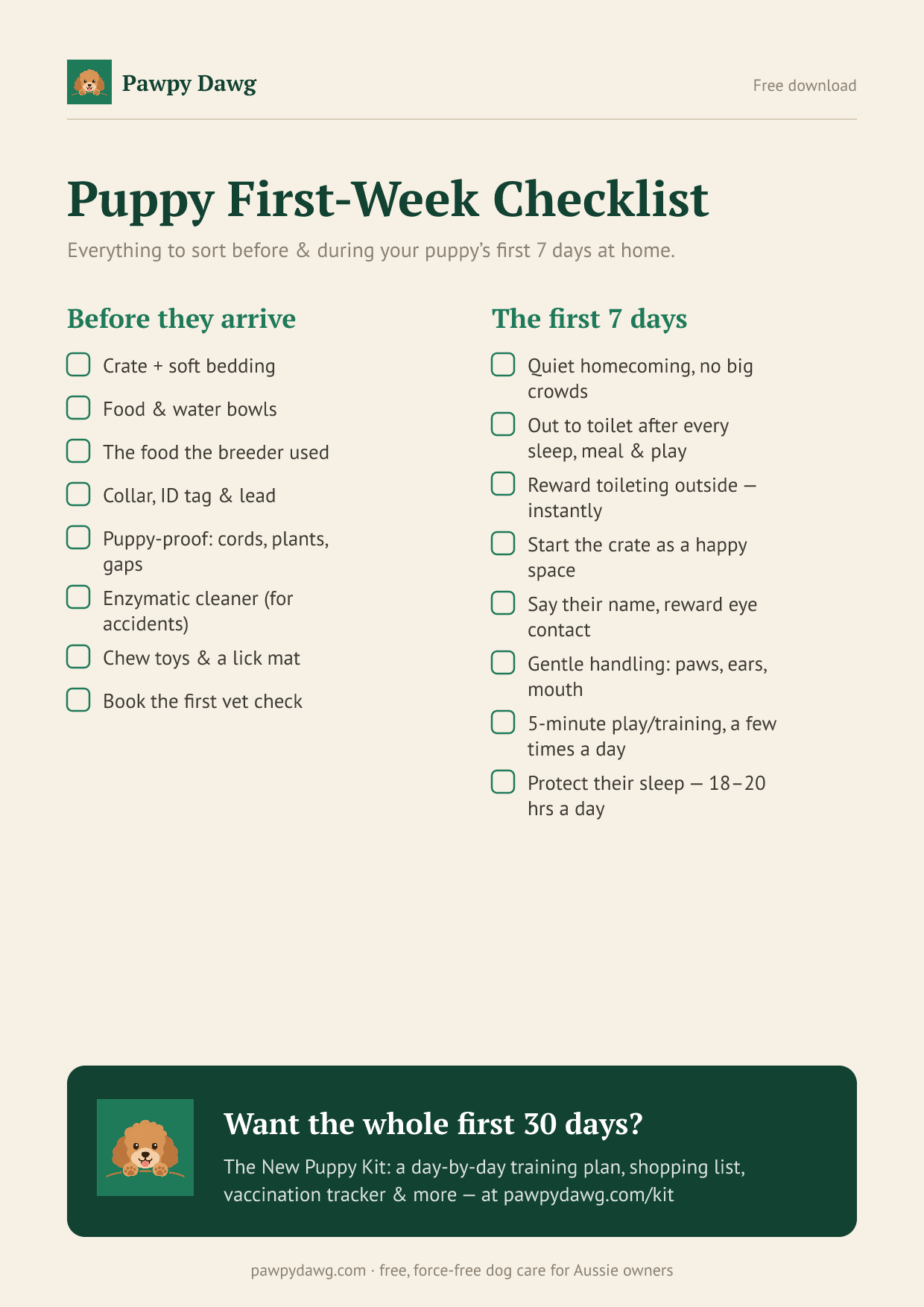
Free printable
Free: the Puppy First-Week Checklist
Everything to sort before and during your puppy's first 7 days home — a printable one-pager. Plus the occasional genuinely useful dog tip. No spam, unsubscribe anytime.
Related guides
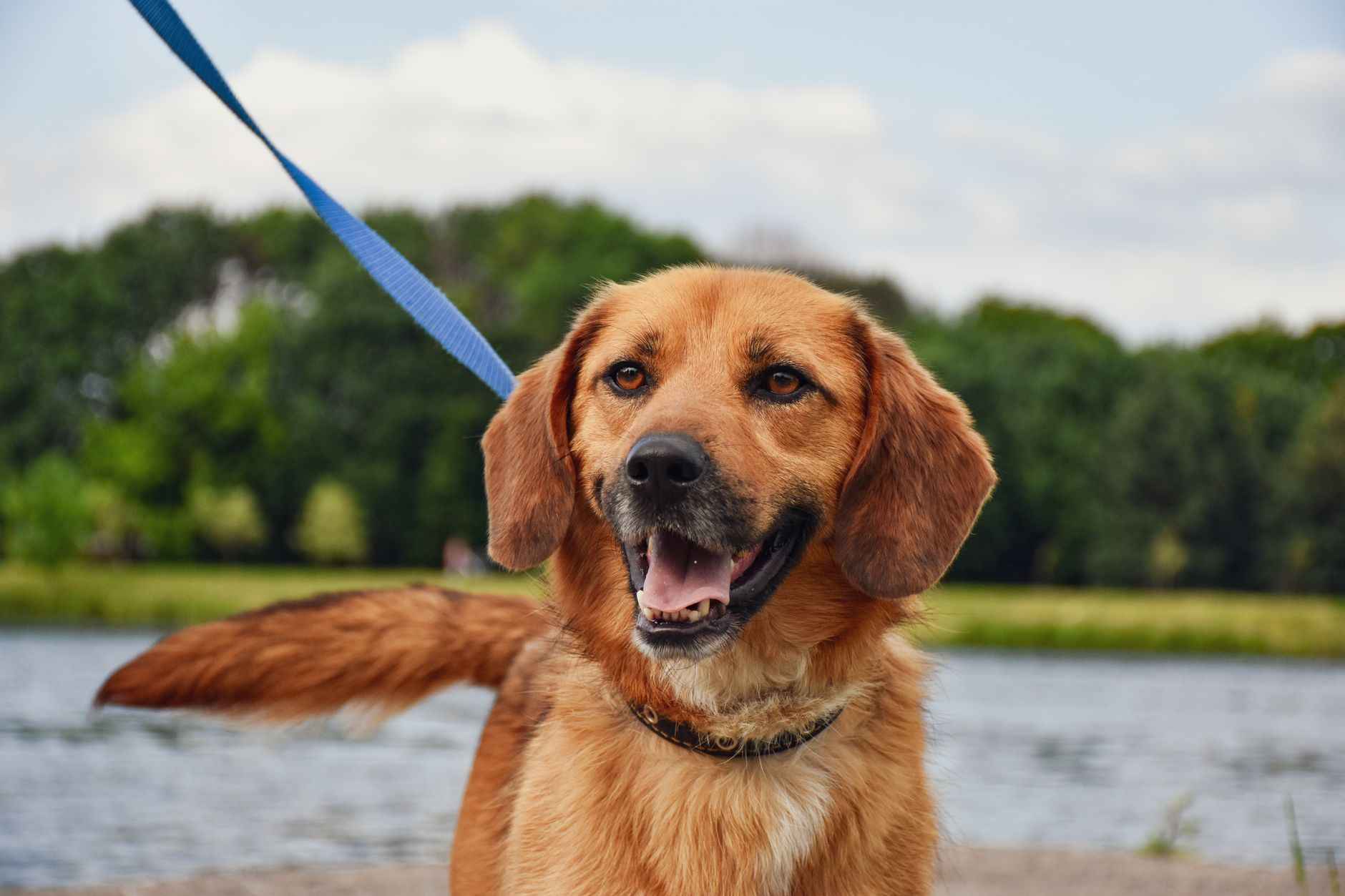
How to Stop a Kelpie Pulling on the Lead (Step-by-Step)
Tired of being dragged around the block? Fix kelpie pulling on the lead with this step-by-step positive-reinforcement plan, realistic timelines & pro tips.
Read the guide →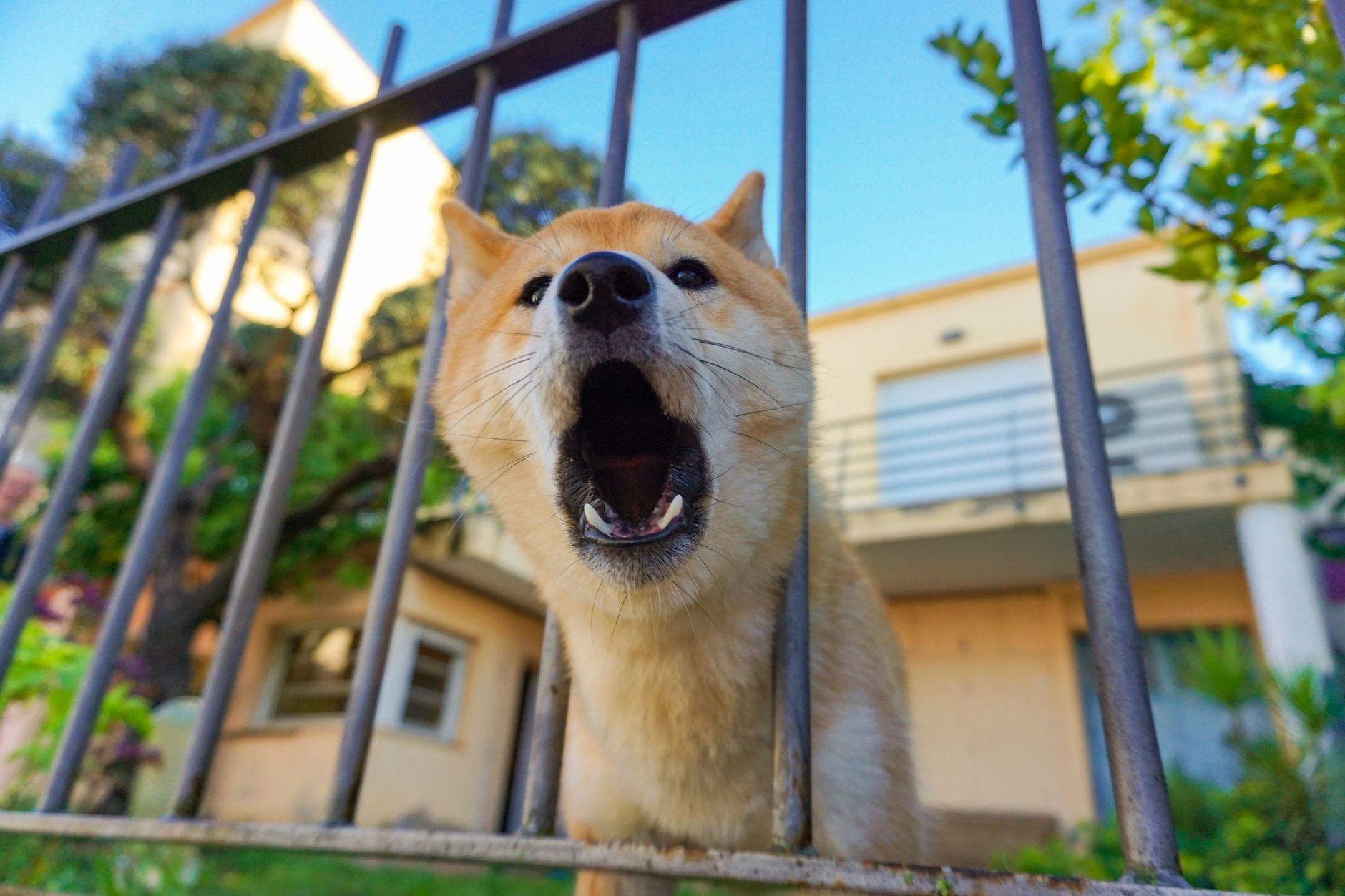
How to Stop a Kelpie Barking at Strangers (Step-by-Step)
Kelpie barking at strangers driving you mad? Get a realistic, positive-reinforcement plan with quick wins you can try today — no punishment needed.
Read the guide →
Kelpie Separation Anxiety: A Step-by-Step Fix
Kelpie separation anxiety is exhausting — but fixable. Get a realistic, positive-reinforcement plan, quick wins for today, and honest timelines.
Read the guide →