
Jack Russell Terrier Not Coming When Called? A Step-by-Step Recall Fix
Jack Russell terrier not coming when called? Here's a positive-reinforcement recall fix with quick wins, common mistakes, and realistic timelines for busy owners.

Written by Bradley Brown
Founder & editor · Reviewed 2026-07-14
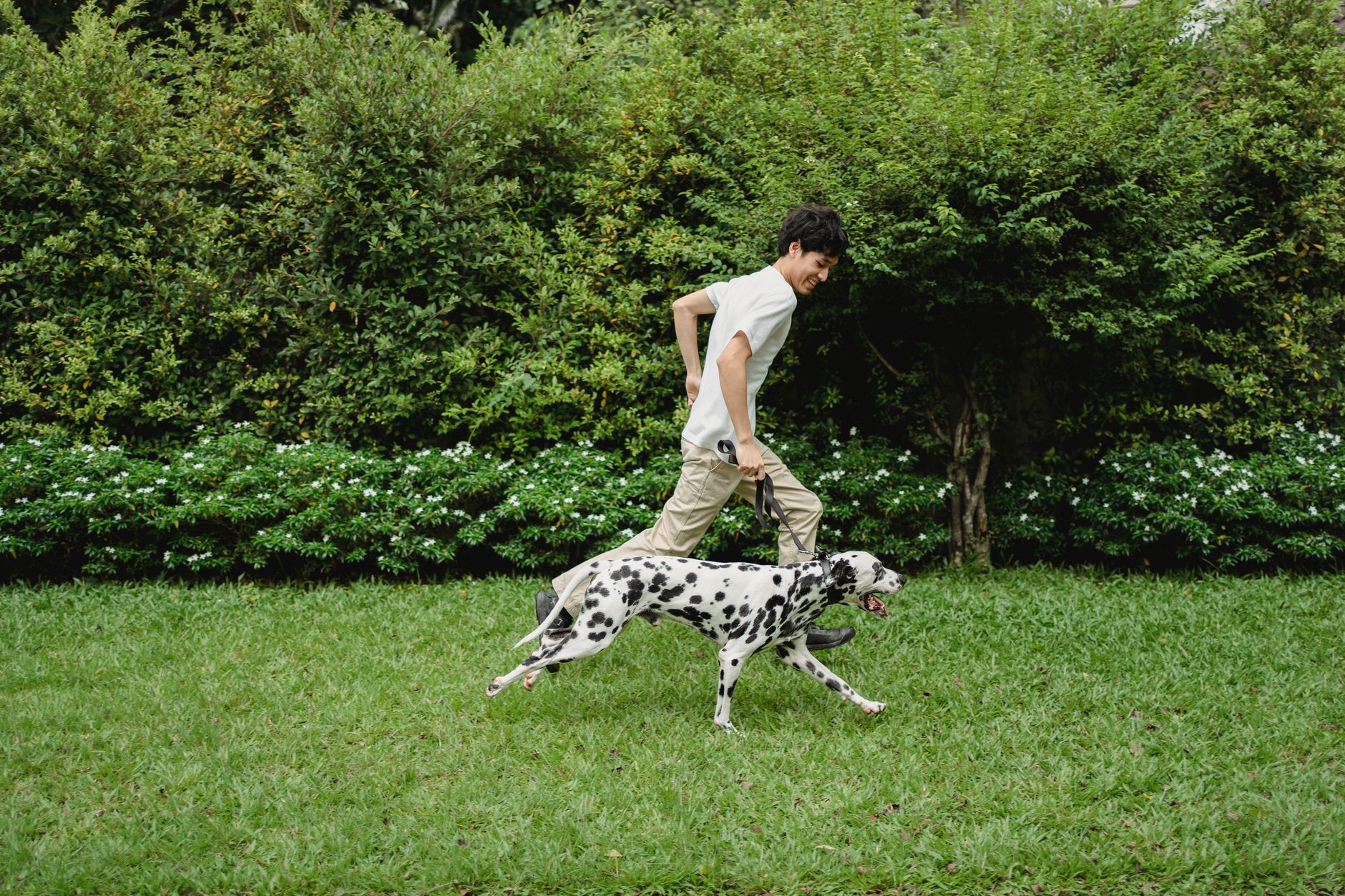
You call your Jack Russell's name. He glances at you, then sprints in the opposite direction like you've just suggested a bath. You're standing in the middle of the park, treats in hand, feeling like a complete idiot. Sound familiar?
You haven't ruined your dog. Jack Russells were purpose-bred to chase prey into burrows and work independently of their handler — ignoring you when something interesting is happening is literally in their DNA. That doesn't mean recall is hopeless. It means you need a strategy that's actually worth more to your dog than whatever he's currently doing.
Here's one you can start tonight.
Your Quick Win for Today: The "Jackpot Recall" in Your Living Room
Before you read another word, try this tonight — it takes three minutes.
- Let your Jack Russell wander to another end of the room or hallway.
- In your most excited voice (yes, embarrassingly excited), call his name once, then say "come."
- The instant he reaches you, give him five small treats in a row, one after another, while praising him like he's just won Best in Show.
- Repeat four or five times, then stop. Always end while he's winning.
That's it. You're rebuilding the association between your recall cue and the best thing that's ever happened to him. Do this indoors for a few days before you take it anywhere near a distraction.
Why Jack Russells Are Notorious for Bad Recall
Understanding the "why" helps you stop blaming yourself — and stop using strategies that backfire.
- Prey drive is extreme. A scent, a rustle, a bird — any of these can hijack your dog's brain entirely. He's not being defiant; he's being a terrier.
- Independence was the whole point. Unlike retrievers bred to work with a handler, Jack Russells were bred to make decisions alone underground. Self-sufficiency is hardwired.
- Punishment has poisoned the cue. If "come" has ever been followed by something unpleasant — being put on lead, being told off, a bath, the end of fun — your dog has learned that coming to you is a bad deal.
- Intermittent reinforcement. You've probably rewarded recall sometimes. That creates a gambling mentality: "Maybe I'll come, maybe I won't, let's see." Consistency is everything in the early stages.
The 5-Minute Recall Rebuild: Week by Week
You don't need hour-long training sessions. Five to ten minutes daily, split into two short bursts, is more effective and far more sustainable.
Week 1 — Make Your Cue Mean "Amazing Things Are About to Happen"
- Do all recall practice indoors or in a fully enclosed, low-distraction space.
- Use a new cue word if recall is already poisoned. "Here," "come on," or even your dog's name plus a hand clap. Fresh word, fresh start.
- Reward with something genuinely high-value: real chicken, cheese, fritz, or a piece of sausage. Dry kibble won't cut it against a pigeon.
- Call once, only once. Repeating "come come come" teaches your dog that the first call is optional.
- Never call your dog to do something he dislikes during this phase. Go and get him instead.
Week 2 — Add Distance and a Long Line
- Move practice to the backyard or a quiet outdoor space.
- Attach a 5–10 metre long line (a light rope or purpose-made training lead) to a well-fitted harness. This is your safety net — not for dragging, but for preventing self-rewarding bolts if he ignores you.
- Call once. If he comes, jackpot reward. If he doesn't move within two seconds, use light pressure on the long line to guide him toward you, then reward warmly when he arrives. Arriving still earns a reward — you're building the habit, not punishing the delay.
- Practise 8–10 repetitions, two sessions a day.
Week 3 — Introduce Mild Distractions
- Still on the long line. Now practise near (not in the middle of) mild distractions: a quiet footpath, a low-traffic park corner.
- Increase reward value when distractions are present. A distraction-free recall earns chicken; a recall away from a squirrel earns the whole rotisserie.
- Keep sessions short. The moment your dog stops engaging, end on a success and go home.
Week 4 and Beyond — Real-World Proofing
- Only drop the long line in securely fenced areas.
- Practise recall during play, not just to end it. Call him, reward, then send him back to play. This stops "come" from reliably meaning "fun's over."
- Vary your rewards: sometimes food, sometimes a game of tug, sometimes just wild praise and a scratch behind the ears.
Common Mistakes That Reset Your Progress
| Mistake | Why It Hurts | Fix |
|---|---|---|
| Calling repeatedly ("Buster! Buster! Buster!") | Teaches him the first call means nothing | Call once, then act |
| Scolding him when he finally comes | Punishes the arrival, not the delay | Always reward the dog who came, no matter how long it took |
| Using recall only to end off-lead time | "Come" predicts the end of fun | Practise mid-play recalls, then release him again |
| Using low-value treats | Kibble can't compete with a rabbit scent | Match reward value to distraction level |
| Rushing to off-lead in open spaces | Sets him up to fail before the habit is solid | Long line first, open areas last |
Realistic Timelines
Don't let anyone tell you this takes "just a weekend." Honest benchmarks for a Jack Russell:
- Reliable recall indoors: 1–2 weeks of consistent practice
- Reliable in a quiet, enclosed backyard: 3–4 weeks
- Reliable in a low-distraction park (on long line): 6–8 weeks
- Off-lead recall in a moderately distracting environment: 3–6 months for many Jack Russells, and that's normal
Some dogs get there faster. Some take longer — particularly adults who've had years of reinforcement for ignoring you. Progress, not perfection, is what you're after.
Management While You're Training
Training takes time. In the meantime, don't set your dog up to practise the wrong thing.
- Use a long line any time he's off lead in an unfenced area.
- Choose fully fenced parks until recall is solid. Many councils across Australia now have designated off-lead areas — use them.
- If your dog has a history of bolting into traffic or aggressing at other dogs, keep him on lead in public spaces until a trainer has assessed the situation.
When to Call in a Professional
Most Jack Russells with recall issues don't need a behaviourist — they need consistent, reward-based training. But seek professional help if:
- Your dog bolts and doesn't return, creating a genuine safety risk.
- Recall failure is accompanied by aggression, extreme fear, or anxiety.
- You've been consistent for 8–10 weeks and seen zero improvement.
- You're feeling overwhelmed or dreading walks.
Look for a trainer accredited with the Delta Institute, PPGA (Pet Professional Guild Australia), or APDT Australia who uses positive reinforcement methods. Expect to pay $80–$180 AUD for an initial consultation, depending on your state.
The Short Version
Your Jack Russell isn't broken, stubborn, or untrainable. He's doing exactly what his breeding tells him to do. Your job is to make coming back to you the most reliably brilliant thing that happens in his day — and to build that habit so thoroughly, in so many environments, that it becomes his default.
Start in your living room tonight. Five treats in a row. That's your first step.
As an Amazon Associate we earn from qualifying purchases.
Frequently asked questions
Why does my Jack Russell ignore me but listen to other people?
This usually means your recall cue has been unintentionally poisoned — your dog has learned that coming to you sometimes leads to something unpleasant (lead going on, bath, end of play), while strangers are unpredictable and therefore more interesting. It's not personal. Rebuild the cue consistently using high-value rewards, and your dog will generalise that coming to you is always worthwhile.
Is it too late to train recall in an older Jack Russell?
No. Adult dogs absolutely can learn reliable recall — it just takes longer because you're overwriting years of reinforcement history. Use a fresh cue word, keep sessions short, and be consistent with high-value rewards. Most adult Jack Russells show clear improvement within 4–8 weeks of daily practice.
Should I use an e-collar (shock collar) to stop my Jack Russell from running off?
Most evidence-based veterinary and animal behaviour organisations advise against e-collars, particularly for recall, as they can cause fear, anxiety, and aggression, and may make the problem worse. Positive reinforcement recall training, combined with a long line for safety, is both effective and far less likely to cause lasting harm.
How do I stop my Jack Russell bolting out the front door?
Teach a solid 'wait' or 'stay' at the door before any recall work goes outdoors. Practise asking your dog to sit and wait while you open the door, rewarding him for holding position before releasing him. A baby gate or double-door system provides a physical backstop while you're training.
What treats work best for recall training a Jack Russell?
The treat needs to be more exciting than whatever your dog is currently doing, so real meat tends to work best — cooked chicken, cheese, frankfurt slices, or commercial high-meat treats. Keep pieces tiny (pea-sized) so you can reward frequently without filling your dog up. Save the very best treats exclusively for recall practice so they stay special.
How long should recall training sessions be for a Jack Russell?
Keep sessions to five minutes maximum, ideally split into two short bursts per day. Jack Russells are quick learners but also easily bored, and short sessions maintain enthusiasm and focus. Always end on a successful rep so the last thing your dog remembers is getting it right.
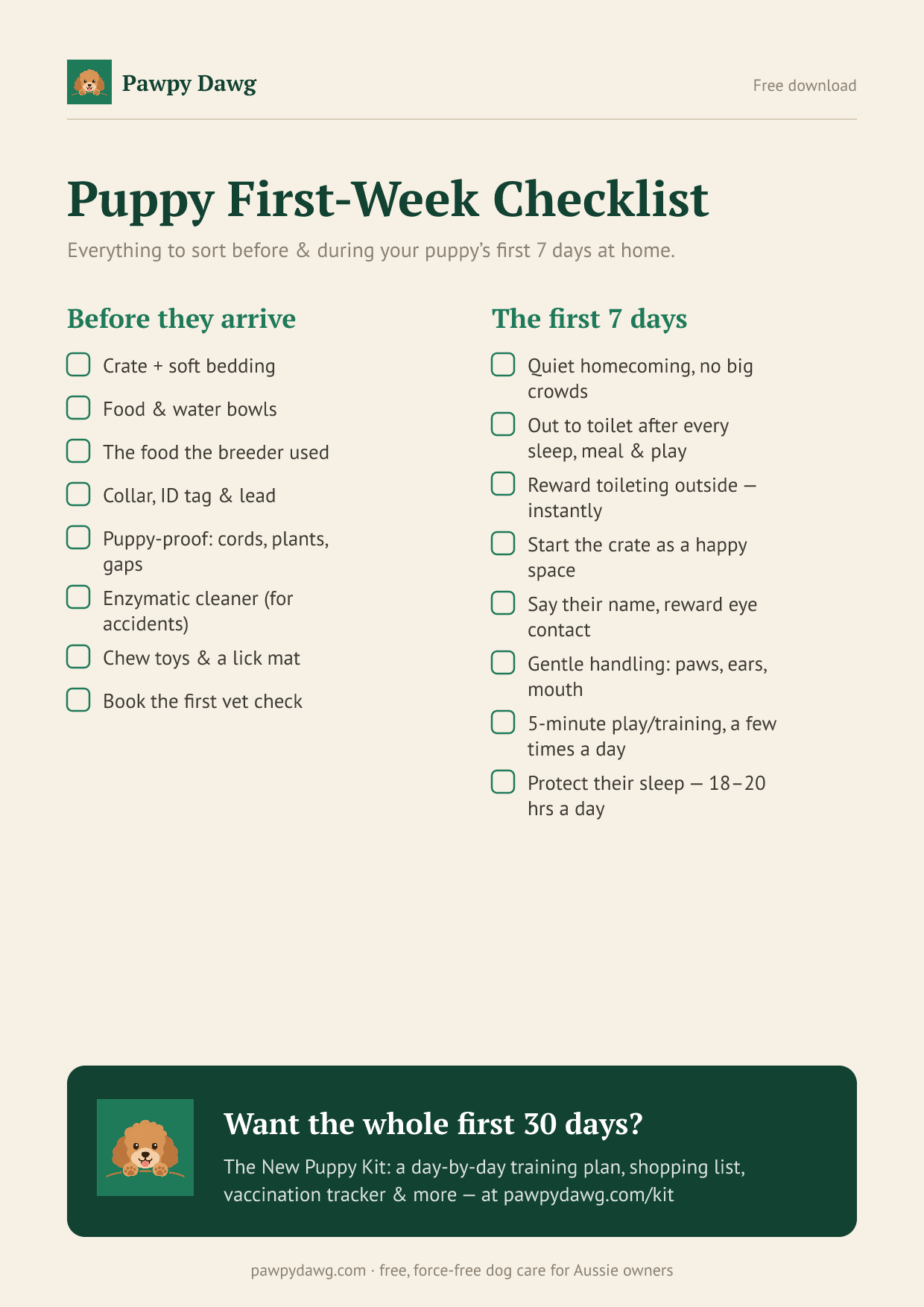
Free printable
Free: the Puppy First-Week Checklist
Everything to sort before and during your puppy's first 7 days home — a printable one-pager. Plus the occasional genuinely useful dog tip. No spam, unsubscribe anytime.
Related guides
How to Stop a Jack Russell Terrier Pulling on the Lead (Step-by-Step)
Tired of your Jack Russell terrier pulling on the lead? This step-by-step positive-reinforcement plan gets results in 5–10 min/day. Start today.
Read the guide →
How to Stop a Jack Russell Terrier Barking at Strangers (Step-by-Step)
Tired of your Jack Russell terrier barking at strangers? This step-by-step positive-reinforcement plan gets real results in 5–10 min daily sessions.
Read the guide →
Jack Russell Terrier Separation Anxiety: A Step-by-Step Fix
Struggling with Jack Russell terrier separation anxiety? Get a realistic, step-by-step positive-reinforcement plan — with a quick win you can try tonight.
Read the guide →