
How to Stop a Jack Russell Terrier Jumping Up on People (Step-by-Step)
Tired of your Jack Russell terrier jumping up on people? This step-by-step positive-reinforcement plan gets real results in minutes a day — starting tonight.

Written by Bradley Brown
Founder & editor · Reviewed 2026-07-14
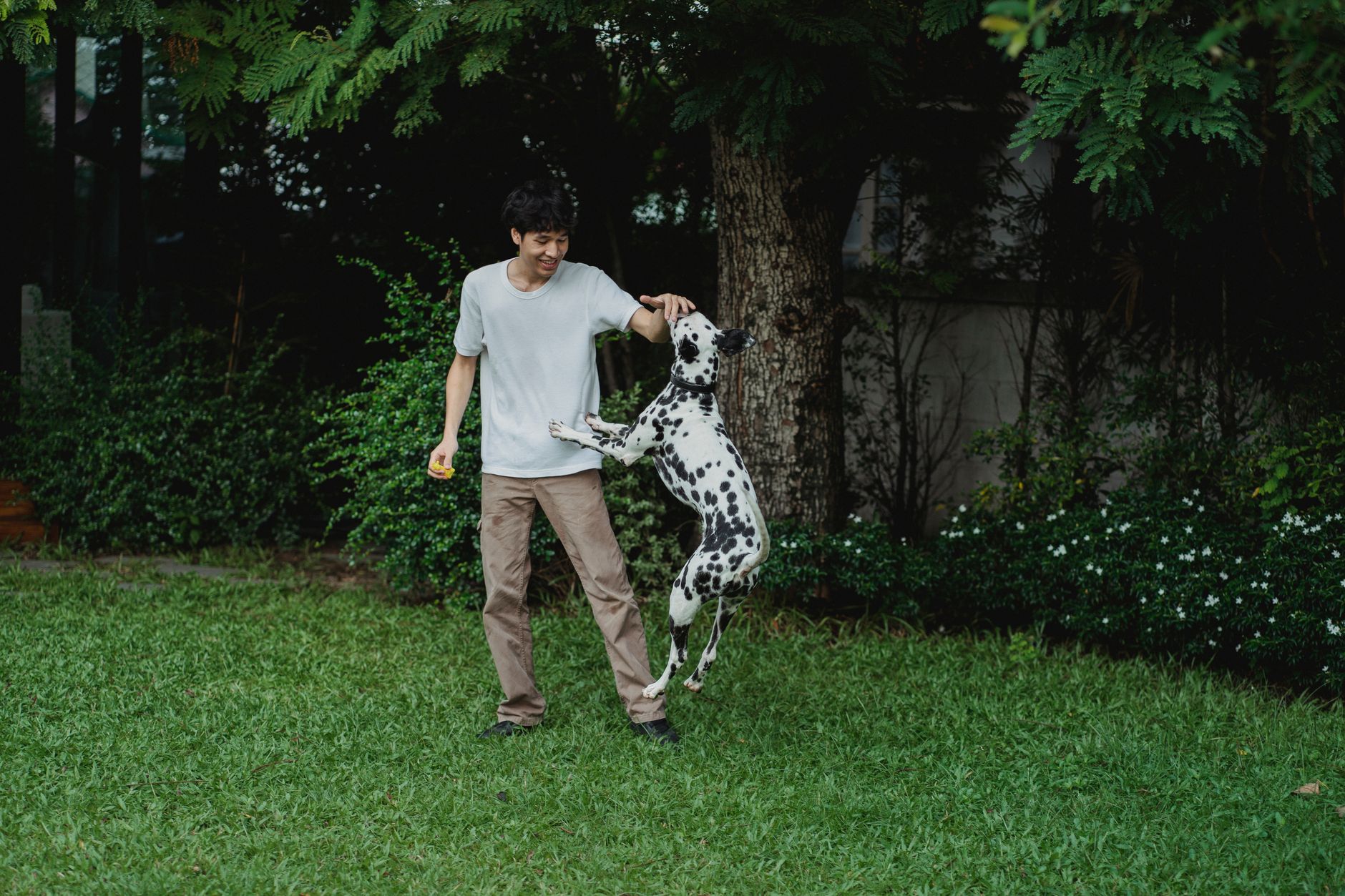
Your Jack Russell just launched itself at a stranger on the footpath — again. You apologised, yanked the lead, and felt that familiar mix of embarrassment and exhaustion. You're not alone, and you haven't ruined your dog. Jumping up is one of the most common behaviours Jack Russells are surrendered for, yet it's also one of the most reliably fixable. Give yourself ten minutes tonight, and you can start turning this around.
Why Jack Russells Jump Up (It's Not Dominance)
Jack Russells were bred to work independently, think fast, and interact intensely with people. Jumping up is almost always about greeting and attention — your dog has learned, usually accidentally, that launching at a human face is the fastest way to get a reaction. Every time someone said "oh, he's so cute!" while he had paws on their chest, the behaviour got stronger.
It is not a power play. It is not a sign of a "bad dog." It is a very normal dog doing what has worked brilliantly up until now.
Your Quick Win for Tonight (Try This Right Now)
Before you read another word: next time your Jack Russell jumps up, turn your back completely and cross your arms. Say nothing. No "no," no "off," no eye contact. The moment all four paws hit the floor, calmly turn around and reward with a quiet "good dog" and a treat or a pat.
That's it. One repetition won't fix everything, but it gives you an immediate tool and — crucially — it starts teaching your dog that jumping gets nothing, and four-on-the-floor gets everything.
The Step-by-Step Plan (5–10 Minutes a Day)
Step 1: Decide on Your House Rule and Tell Everyone
The single biggest mistake owners make is inconsistency. If you ignore the jumping but your partner lets the dog up on their lap when they come home, your dog is learning that jumping sometimes works — which actually makes the behaviour more persistent, not less (this is called intermittent reinforcement, and it's powerful).
Your rule, pick one:
- Four paws on the floor at all times for greetings
- Sit before any greeting is allowed
Write it on the fridge. Text it to your family. Brief any regular visitors. One week of everyone doing the same thing is worth months of you training solo.
Step 2: Practise "Four on the Floor" at the Front Door (5 Minutes)
This is where most jumping happens, so start here.
- Set up a treat pouch or have treats in your pocket before you walk in.
- Open the door. Your dog will likely jump.
- Step back outside, close the door. Wait 5 seconds. Try again.
- Repeat until your dog keeps paws on the ground (even briefly).
- The moment all four paws are down, calmly reward — treat delivered low, near the floor, so you're not accidentally luring the dog back up.
Keep sessions to 5 minutes maximum. Jack Russells have sharp minds and short patience for repetitive drills — short and successful beats long and frustrated every time.
Step 3: Add a "Sit" as the Default Greeting
Once your dog is regularly keeping paws down at the door, build on it.
- As you approach, ask for a sit before your dog has a chance to jump.
- Reward the sit immediately.
- Gradually ask for the sit in other contexts: before you put the bowl down, before clipping the lead on, before opening the car door.
This works because you're giving your dog a job to do with their body during the high-excitement moment of a greeting. A sitting dog physically cannot jump up at the same time.
Step 4: Handle Greetings with Visitors and Strangers
This is the hard part — you can't control what strangers do.
Brief your visitors before they come in:
"Could you do me a favour — if Biscuit jumps up, just turn your back and ignore him until he's got four paws on the floor. Then you can say hello. It's making a huge difference."
Most people are genuinely happy to help when asked directly.
On walks:
- Keep your dog on a slightly shorter lead when approaching people.
- Ask for a sit before the person reaches you.
- If your dog jumps, step forward between dog and person, blocking access, and reset.
- Carry treats and reward the calm greeting generously.
Common Mistakes to Avoid
| Mistake | Why It Backfires |
|---|---|
| Saying "off" or "down" repeatedly | Becomes background noise; dog learns to ignore it |
| Kneeing the dog in the chest | Can cause injury; increases anxiety and unpredictability |
| Holding the dog's paws to "punish" | Painful and confusing — breaks trust |
| Greeting the dog while they're jumping to "calm them down" | Rewards the jump directly |
| Only training at home | The dog doesn't generalise — practice in varied locations matters |
Step 5: Add Distractions Gradually
Once your dog is solid at home, take the training on the road — literally.
- Practise sits and calm greetings outside your neighbour's house, then at the park gate, then near a café.
- Increase the level of distraction slowly. If your dog fails more than 3 times in a row, you've moved too fast — go back one step.
- Carry high-value treats for outdoor sessions (real chicken, cheese, or liver treats outperform dry kibble when distractions are high).
Realistic Timelines
- Days 1–3: Your dog will be confused. Behaviour may temporarily get worse (an "extinction burst" — they're trying harder because the old strategy isn't working). Stick with it.
- Week 1–2: You'll notice jumping reducing at home, especially at the front door.
- Week 3–4: Visitors get calmer greetings. Walks improve.
- 6–8 weeks: Most Jack Russells with consistent training are reliably greeting calmly in familiar contexts.
Jumping around strangers on unpredictable walks can take longer — three to four months is entirely normal. You haven't failed if it takes time.
When to Get Professional Help
Most jumping is straightforward to resolve with the above plan. Consider calling a qualified trainer (look for someone accredited with the Delta Society Australia or the Pet Professional Guild Australia) if:
- Your dog is also growling or snapping during greetings
- The jumping is accompanied by mouthing or biting
- You've been consistent for 8+ weeks with no improvement
- The behaviour is causing genuine safety concerns (e.g., knocking over a child or elderly person)
A single session with a good trainer — typically $80–$180 AUD for an in-home consult — can fast-track results and rule out anything else going on.
The Short Version
Your Jack Russell is not broken. They're a smart, enthusiastic dog doing what has worked. Your job is to make jumping boring and four-on-the-floor the most rewarding thing in the room. Start with the "turn your back" move tonight, add the door-training drill this week, and get everyone in the house on the same page. Five minutes a day, done consistently, genuinely works.
As an Amazon Associate we earn from qualifying purchases.
Frequently asked questions
How long does it take to stop a Jack Russell from jumping up?
Most owners see clear improvement at home within 2–4 weeks of consistent training. Greetings with strangers and on walks typically take 6–12 weeks. Three to four months for full reliability across all situations is completely normal for a high-energy terrier breed — consistency matters far more than speed.
Why does my Jack Russell only jump up on some people and not others?
Dogs are excellent readers of human body language. People who tense up, turn away, or ignore the dog are inadvertently doing the right thing and get jumped on less. People who make eye contact, lean in, or talk to the dog are signalling 'interact with me' — which rewards the jump. It's not personal; it's classical conditioning at work.
Should I use the knee-in-the-chest method to stop jumping?
No. Kneeing a dog can cause injury and tends to increase anxiety or unpredictability rather than reducing jumping. Mainstream veterinary and animal behaviour guidance now firmly recommends positive reinforcement — rewarding the behaviour you want — rather than physical corrections. It also works better long-term.
My Jack Russell jumps up on guests the moment they walk in the door. What's the best fix?
Brief guests before they enter — ask them to turn their back and ignore the dog until all four paws are on the floor. At the same time, practise your own door-training drills daily so the dog is already practised at calm greetings before real visitors arrive. Putting the dog briefly behind a baby gate while guests settle in, then allowing a calm greeting, is also a very effective management tool while training is in progress.
Is jumping up a sign my Jack Russell isn't getting enough exercise?
Under-exercise can increase general arousal levels, which makes any excitable behaviour worse — so it's worth checking your dog's daily activity. That said, jumping is primarily a learned greeting behaviour, not purely an energy problem. Plenty of very well-exercised Jack Russells still jump up enthusiastically. Exercise helps; training is still required.
Can an older Jack Russell be retrained to stop jumping up?
Yes. Dogs learn throughout their lives, and an older dog who has been jumping for years can absolutely be retrained. It may take slightly longer because the habit is more ingrained, but the same positive-reinforcement steps apply. Older dogs often actually focus better in training sessions than young puppies.
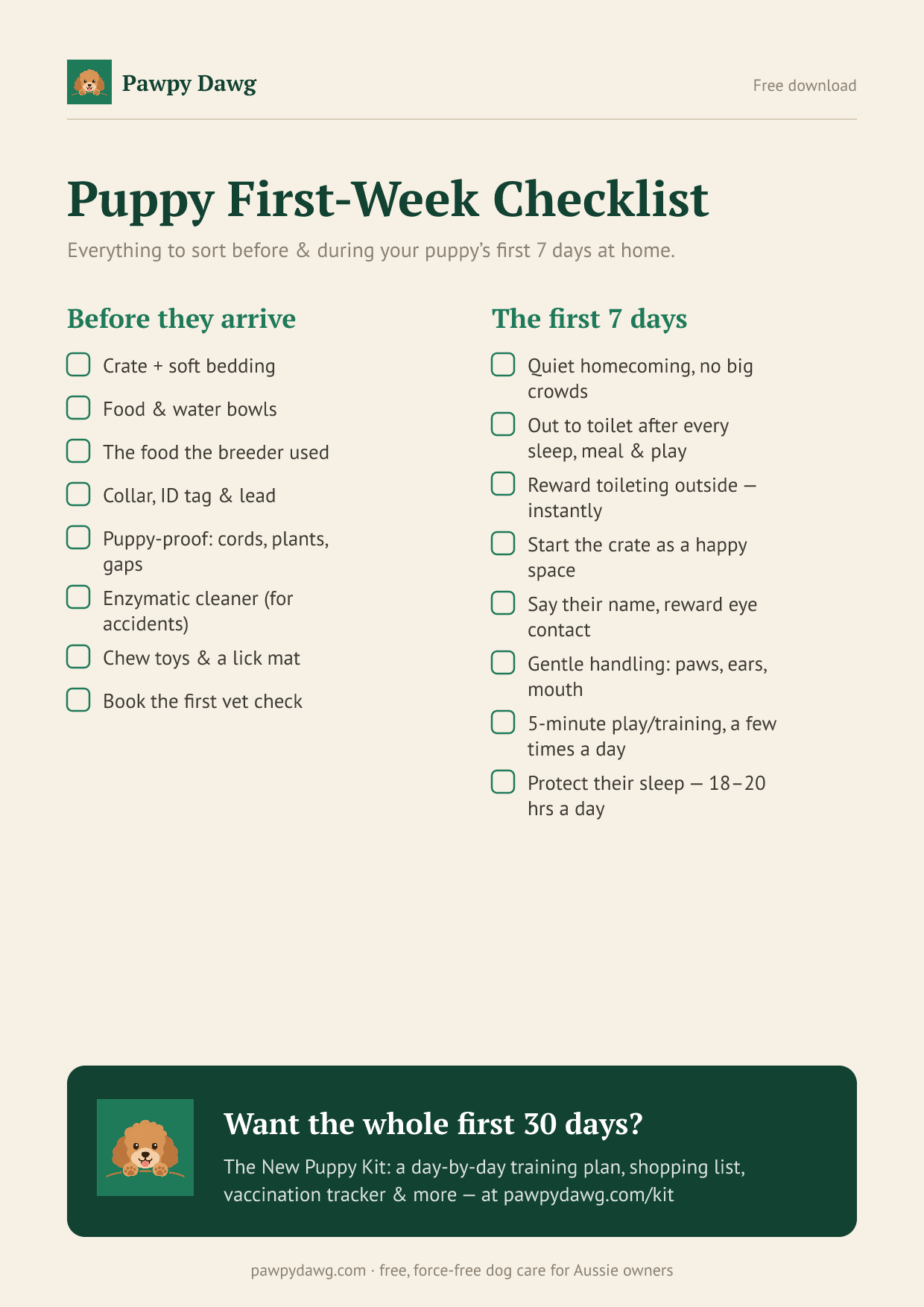
Free printable
Free: the Puppy First-Week Checklist
Everything to sort before and during your puppy's first 7 days home — a printable one-pager. Plus the occasional genuinely useful dog tip. No spam, unsubscribe anytime.
Related guides
How to Stop a Jack Russell Terrier Pulling on the Lead (Step-by-Step)
Tired of your Jack Russell terrier pulling on the lead? This step-by-step positive-reinforcement plan gets results in 5–10 min/day. Start today.
Read the guide →
How to Stop a Jack Russell Terrier Barking at Strangers (Step-by-Step)
Tired of your Jack Russell terrier barking at strangers? This step-by-step positive-reinforcement plan gets real results in 5–10 min daily sessions.
Read the guide →
Jack Russell Terrier Separation Anxiety: A Step-by-Step Fix
Struggling with Jack Russell terrier separation anxiety? Get a realistic, step-by-step positive-reinforcement plan — with a quick win you can try tonight.
Read the guide →