
How to Stop a Jack Russell Terrier Chewing Everything (Step-by-Step)
Struggling with jack russell terrier destructive chewing? Get a realistic, positive-reinforcement plan—quick wins today, step-by-step fixes, and honest timelines.

Written by Bradley Brown
Founder & editor · Reviewed 2026-07-14
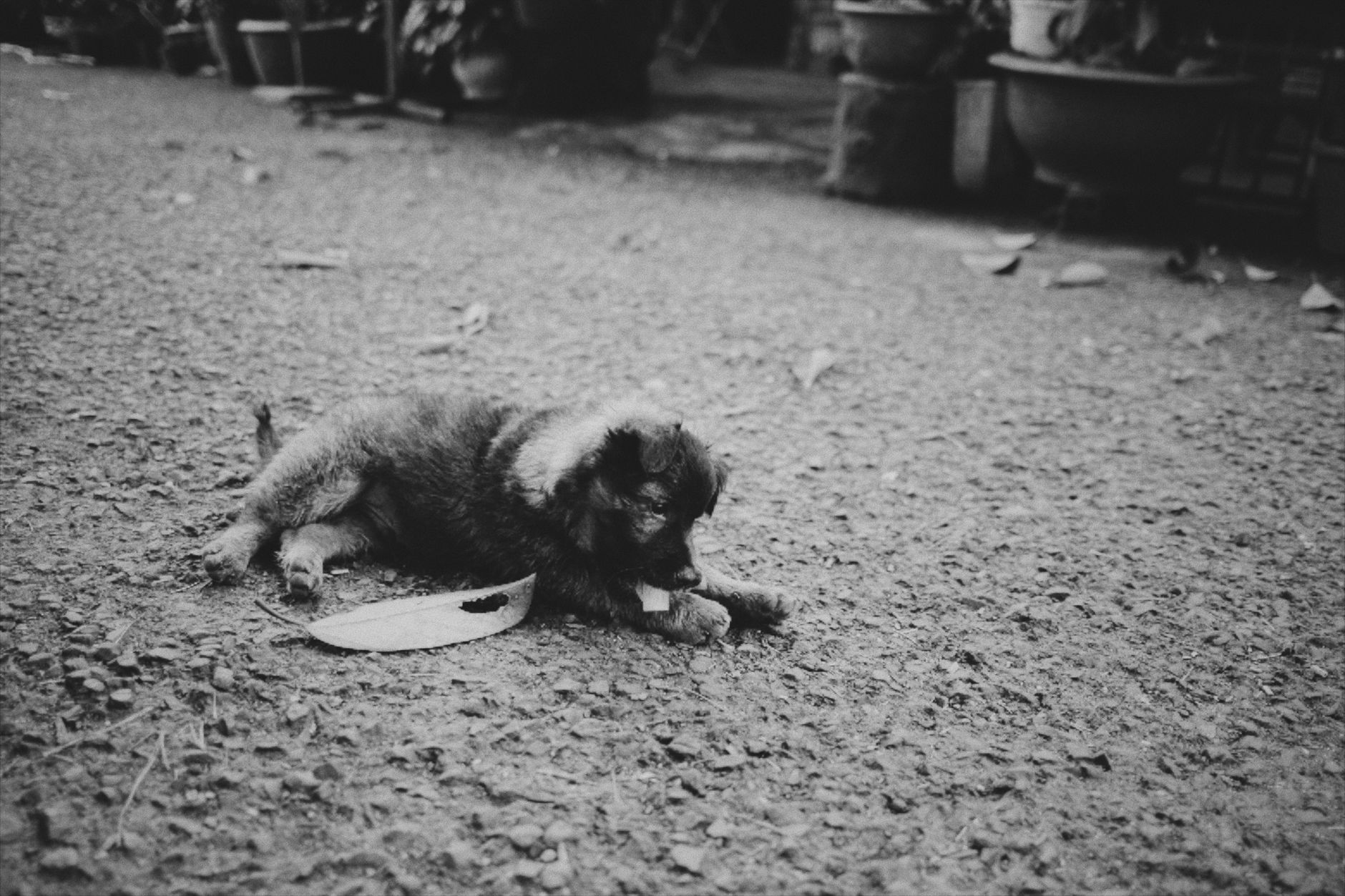
You come home to a gutted couch cushion, a chewed skirting board, or — the classic — your favourite shoe reduced to confetti. If you're reading this at 10 pm after the worst walk of the week, you're in the right place. Jack Russells are not broken, and neither is your relationship with yours. Destructive chewing is one of the most common complaints from JRT owners, it has clear causes, and it absolutely responds to a consistent plan.
Why Jack Russells Chew So Much
Jack Russells were bred to bolt foxes from their earths — a job that demands relentless drive, a hard jaw, and zero give-up attitude. That genetic package doesn't disappear in a suburban home. What looks like wilful destruction is usually one of three things:
- Under-stimulation — not enough mental or physical outlet for a working-dog brain
- Anxiety or frustration — particularly separation anxiety or boredom while alone
- Normal puppy teething — peaks around 4–6 months, but can continue to 12–18 months
Understanding the cause shapes the fix. A teething 14-week-old needs different management than an anxious three-year-old home alone for eight hours.
Your Quick Win: Do This Today
Before you read another word, grab something your dog is allowed to chew — a rubber Kong, a bully stick, a rope toy — and rub it between your palms for 30 seconds to transfer your scent. Give it to your dog right now.
Your scent makes the item immediately more attractive than the furniture. This single swap won't solve everything, but it interrupts the pattern tonight and gives your dog a legal outlet. Put it in the spot they usually chew (near the couch, by the door) so it's the first thing they find.
The Step-by-Step Plan (5–10 Minutes a Day)
Step 1 — Audit the Environment (Day 1, 10 minutes)
Walk through every room your dog accesses and remove or block the highest-value targets: shoes in closed wardrobes, cables behind furniture or in cable conduit, TV remotes off the coffee table. This isn't admitting defeat — it's stopping the rehearsal of the behaviour while you train.
Quick audit checklist:
- Shoes, socks and clothing stored away
- Electrical cables protected or blocked off
- Kids' toys off the floor
- Tissue boxes, remote controls, books elevated
- Baby gates or closed doors limiting unsupervised access
Step 2 — Set Up a Chew Station (Day 1–2, 10 minutes)
Designate one spot — a mat, a crate, a corner of the lounge — as the "yes" zone. Stock it with three to four rotating chew items so novelty stays high. Rotate every two to three days; the same toy left out for a week loses its appeal fast.
Good chew options for Jack Russells:
| Type | Best For | Approximate Cost | Watch Out For |
|---|---|---|---|
| Rubber Kong (stuffed) | Solo settling, separation | $20–$40 | Stuff with low-calorie fillers |
| Bully sticks | Heavy chewers | $5–$15 each | Supervise; can be a choking risk |
| Rope toys | Tug + chew combo | $10–$20 | Replace when fraying badly |
| Deer antler (split) | Long-lasting gnaw | $15–$30 | Avoid whole/hard antler — tooth fracture risk |
| Himalayan yak chews | Persistent chewers | $12–$25 | Soften in microwave when small |
Step 3 — Redirect, Don't Punish (Ongoing, seconds each time)
When you catch your dog chewing something off-limits, calmly say "ah-ah" once, swap the item with an approved chew, and the moment they take it, mark with a quiet "yes" or a click and give brief praise. That's it. No drama, no lengthy scolding.
Punishment after the fact — even 30 seconds later — achieves nothing except eroding trust. Dogs don't connect retrospective scolding to the act. The only thing that works is catching it happening and redirecting immediately.
Step 4 — Drain the Energy (Daily, 10–20 minutes)
A tired Jack Russell is a less destructive Jack Russell. You don't need an hour — but the exercise has to be mentally engaging, not just a leash walk around the block.
High-value options:
- Scatter feeding kibble in the backyard (sniffing is exhausting — 15 minutes of sniff work equals ~45 minutes of walking)
- Five minutes of "find it" — hide treats around a room and let them hunt
- Short training sessions (sit, drop, spin, touch) — JRTs love a job
- Flirt pole in the backyard for 10 minutes before you leave for work
Step 5 — Manage Alone Time Actively
If chewing spikes when you're out, that's a separation/boredom issue, not a spite issue. Your dog is not getting revenge. They're stressed or bored, and chewing self-soothes.
Set up for success before you leave:
- Give a stuffed, frozen Kong as you walk out the door (the freezing extends the distraction to 20–30 minutes)
- Confine to a dog-proofed space rather than giving full-house access
- Leave a worn item of your clothing nearby (a genuinely calming scent cue)
- Consider a puzzle feeder for breakfast rather than a bowl
Common Mistakes That Slow Progress
Giving too many toys at once. More than four or five out at a time and nothing feels special. Rotate.
Inconsistency between family members. If one person redirects and another ignores or yells, the dog learns nothing reliable. Five minutes agreeing on the house rules saves weeks of confusion.
Buying cheap chews that disappear in two minutes. For a Jack Russell, a chew needs to last. Thin rawhide is gone in 90 seconds and adds zero value.
Expecting instant results. Habits take time to shift. Most owners see meaningful improvement in two to four weeks of consistent management and redirection. If you're still seeing the same level of destruction at six weeks, something in the environment or routine needs reassessing.
Realistic Timeline
| Week | What to Expect |
|---|---|
| 1–2 | Chewing continues, but you're catching more incidents and redirecting successfully |
| 2–4 | Frequency drops as the chew station becomes the default go-to |
| 4–6 | Most owners see 60–80% reduction; occasional slip-ups are normal |
| 6–12 | Behaviour largely managed; young dogs may need continued supervision until 18 months |
When to Get Professional Help
Most Jack Russell chewing is a management and training problem — entirely solvable without a professional. But get help if:
- Chewing is accompanied by panting, pacing, barking, or toileting when left alone (this points to clinical separation anxiety, which responds to a behaviour modification programme and sometimes short-term veterinary support)
- Your dog is destructive while you're home and present, especially if also showing aggression
- You've been consistent for six-plus weeks and seen no improvement
A qualified force-free trainer or veterinary behaviourist (look for CAAB or registered membership with the Delta Society Australia/Pet Professional Guild Australia) can assess what's happening and give you a tailored plan — usually in one or two sessions.
You haven't ruined your dog. JRTs are feisty, clever, and deeply trainable — that's the same set of traits that makes them chew the skirting board and the traits that will have them choosing their Kong instead, once the plan is running. Start with that quick win tonight.
As an Amazon Associate we earn from qualifying purchases.
Frequently asked questions
At what age do Jack Russells stop chewing everything?
Most Jack Russells ease off destructive chewing between 12 and 18 months, once adult teeth are fully settled and they've learned what is and isn't acceptable. However, under-stimulated or anxious adults can chew at any age, so ongoing mental enrichment matters throughout their life.
Why does my Jack Russell only chew things when I leave the house?
Chewing that spikes during alone time is usually a sign of separation-related stress or boredom — not spite or revenge. Dogs self-soothe through chewing, and the behaviour is triggered by your absence. A frozen stuffed Kong given as you leave, combined with a confined safe space, can significantly reduce this within a few weeks.
Is it too late to stop my adult Jack Russell from chewing?
No — adult dogs learn new habits just as reliably as puppies, though it can take a little longer to shift an established pattern. The same principles apply: remove access to off-limits items, provide appropriate outlets, and consistently redirect. Most adult dogs show clear improvement within four to six weeks.
What are the best chew toys for Jack Russells?
Jack Russells are strong chewers for their size, so they need durable options. Stuffed rubber Kongs, bully sticks, split deer antlers, and Himalayan yak chews are all popular choices. Rotate several items to keep novelty high, and always supervise with any new chew until you know how your dog handles it.
Should I tell my dog off after I find something chewed?
No — delayed punishment doesn't work and can damage your dog's trust in you. Dogs can't connect a scolding to something that happened even a minute ago. Only a calm, immediate redirect at the moment of chewing has any training value. If you find damage after the fact, simply manage the environment better going forward.
Could my Jack Russell's chewing be a sign of anxiety?
It can be. If the chewing is accompanied by other signs — excessive barking, pacing, panting, toileting indoors, or attempting to escape — when left alone, separation anxiety is likely. In that case, standard management tips help but won't fully resolve the issue; a consultation with a veterinary behaviourist or force-free trainer is the most effective next step.
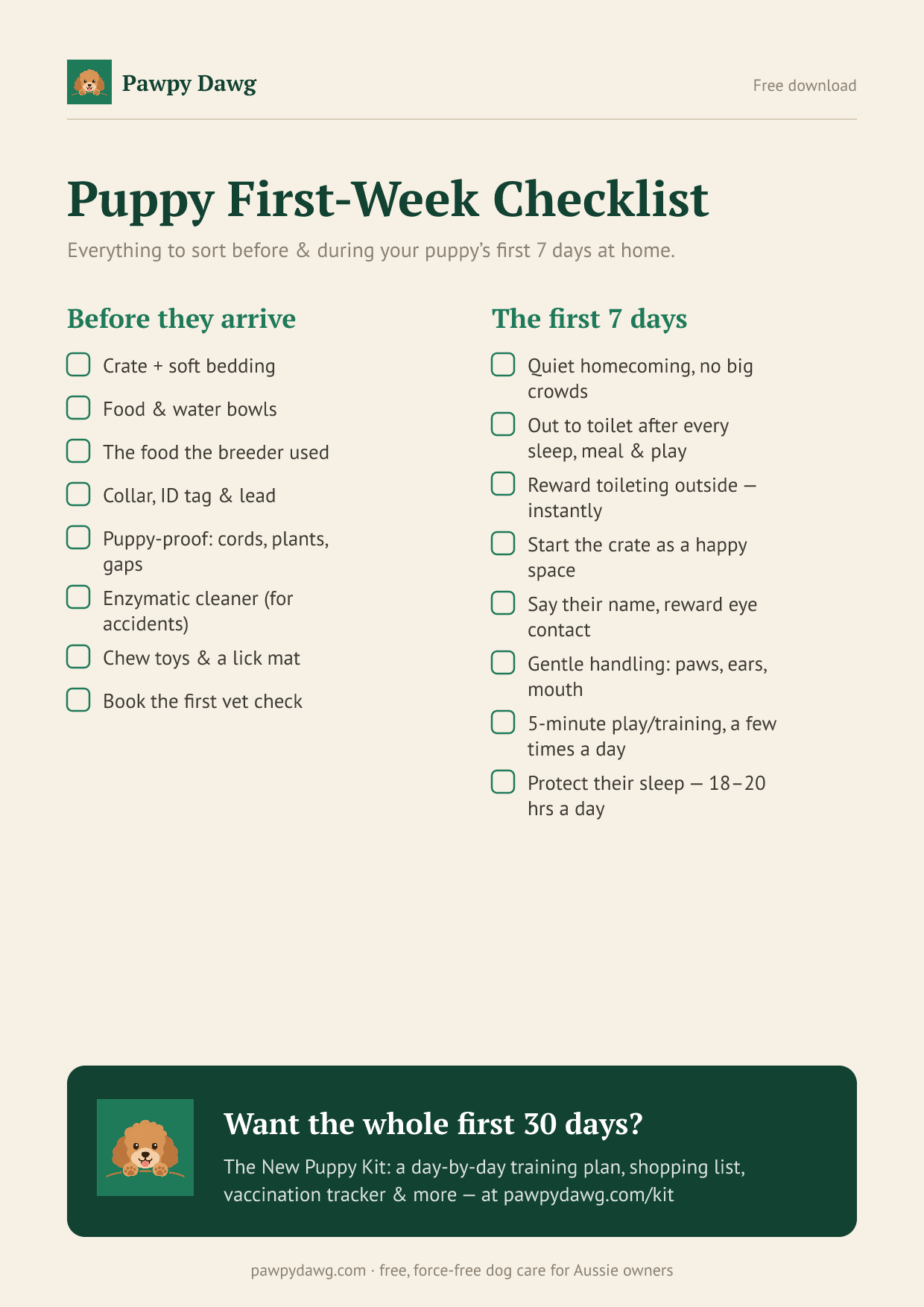
Free printable
Free: the Puppy First-Week Checklist
Everything to sort before and during your puppy's first 7 days home — a printable one-pager. Plus the occasional genuinely useful dog tip. No spam, unsubscribe anytime.
Related guides

How to Stop a Jack Russell Terrier Pulling on the Lead (Step-by-Step)
Tired of your Jack Russell terrier pulling on the lead? This step-by-step positive-reinforcement plan gets results in 5–10 min/day. Start today.
Read the guide →
How to Stop a Jack Russell Terrier Barking at Strangers (Step-by-Step)
Tired of your Jack Russell terrier barking at strangers? This step-by-step positive-reinforcement plan gets real results in 5–10 min daily sessions.
Read the guide →
Jack Russell Terrier Separation Anxiety: A Step-by-Step Fix
Struggling with Jack Russell terrier separation anxiety? Get a realistic, step-by-step positive-reinforcement plan — with a quick win you can try tonight.
Read the guide →