
How to Toilet Train a Groodle: A Realistic Plan
Groodle toilet training doesn't have to be a nightmare. Get a realistic, positive-reinforcement plan with quick wins, honest timelines & common mistake fixes.

Written by Bradley Brown
Founder & editor · Reviewed 2026-07-13
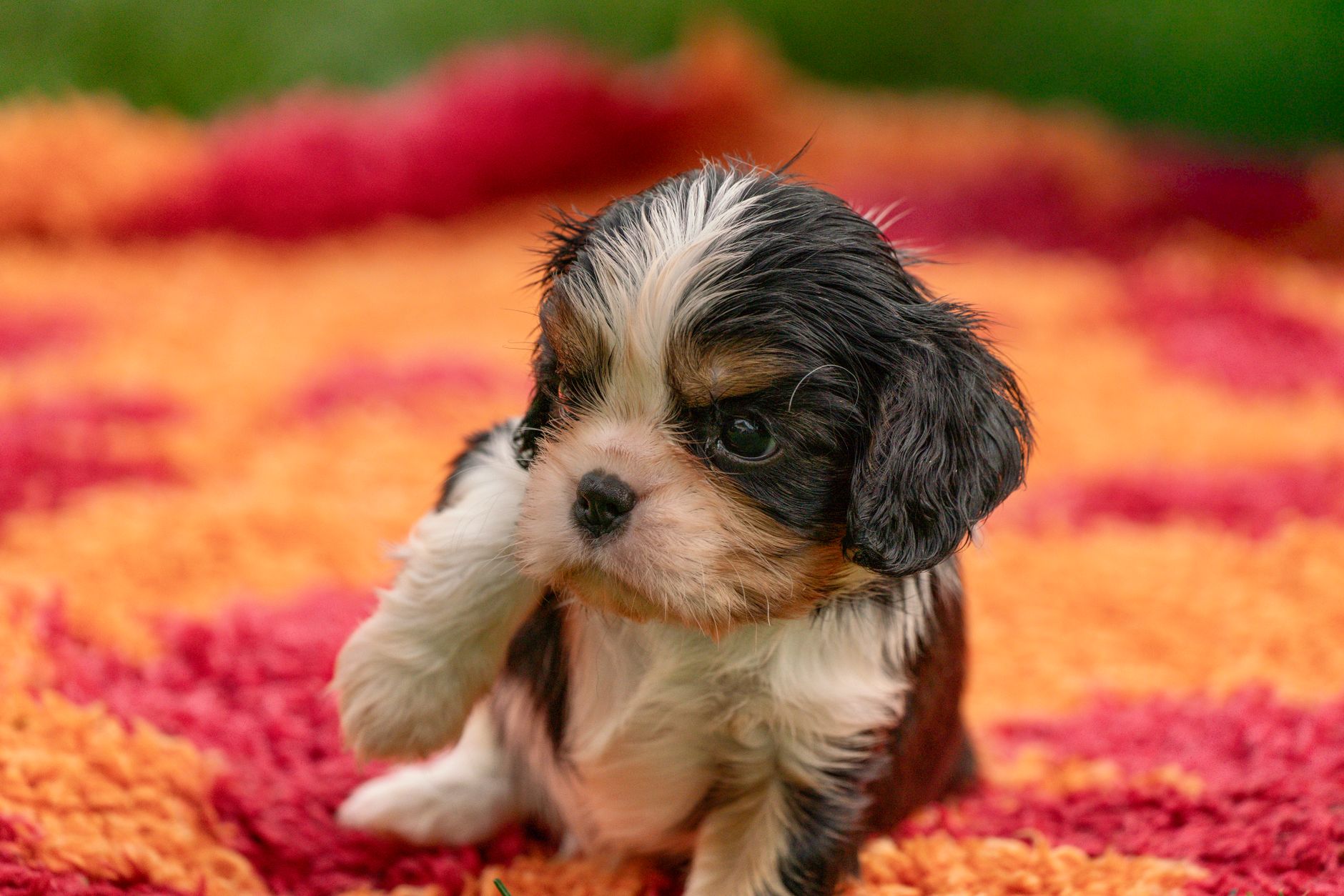
You came home to another puddle — or worse — and you're done. Maybe it happened on your good rug, maybe right after a walk where you stood outside for ten solid minutes waiting. Either way, you're not a bad owner. Groodles are smart, sensitive dogs, and toilet training them is genuinely one of the trickier parts of puppyhood. The good news? The behaviour is completely normal, it's not permanent, and with a consistent five-minute routine you can start turning things around tonight.
Try This Right Now (Your Quick Win)
Before anything else: pick one spot outside where you want your Groodle to toilet. Take them there on lead, stand still, wait up to three minutes, and the moment they go — say a calm "good dog" and give a small treat immediately (within two seconds). That's it. One successful repetition with instant reward is worth more than a week of frustrated scolding. Do it again last thing before bed tonight.
Why Groodles Can Be Tricky to Toilet Train
Groodles (Golden Retriever × Poodle crosses) are eager to please, which actually works against you in one specific way: they're so tuned in to your emotions that anxiety, excitement, or even guilt on your part can cause them to sniff around nervously — and then wee somewhere random. They're also high-energy and easily distracted outside, which means they can forget why they're there and then toilet the moment they get back inside and relax.
None of this is a character flaw in your dog. It's breed-typical behaviour, and it responds well to structure.
The Core Routine (5–10 Minutes a Day, Broken Up)
Consistency beats intensity every time. You don't need hour-long training sessions — you need the same short sequence repeated predictably.
When to Take Them Out
Take your Groodle to their toilet spot at these trigger times:
- First thing in the morning (bladder is full — don't delay)
- Within 15 minutes of every meal
- Immediately after naps
- After play sessions
- Before bed
Puppies under 12 weeks need a trip roughly every 1–2 hours during waking time. By 16 weeks, most can hold it for 2–3 hours. By six months, you're typically looking at 3–4 hours between trips.
The Spot-and-Reward Method
- Attach the lead and walk calmly to your chosen spot — no detours.
- Stand still and give them a chance to sniff and settle. Keep your energy neutral; don't cheer or fuss before they've gone.
- The instant they finish toileting, mark it ("yes!" or a clicker) and reward with a treat they love.
- Then — and only then — let them have a play or a sniff around. The reward is the treat plus the fun that follows. This matters.
- If they don't go within three minutes, go back inside, supervise closely for 10–15 minutes, and try again.
Inside Supervision
When your Groodle is inside and hasn't just toileted outside, treat them like they're about to have an accident — because they might be. Keep them in the same room as you, use a lead tethered to your belt if needed, or confine them to a puppy-proofed space. Crate training (positive, never punitive) can be enormously helpful here: dogs instinctively avoid soiling their sleeping area.
Common Mistakes That Stall Progress
| Mistake | Why It Backfires | Fix |
|---|---|---|
| Punishing accidents after the fact | Dogs can't connect past behaviour to current consequences; it just creates anxiety | Clean it up silently with an enzyme cleaner |
| Letting them roam the house too soon | Too much freedom before reliable toileting = more accidents | Earn freedom gradually, room by room |
| Waiting outside too long | Dog gets bored, forgets to toilet, goes inside | Cap outdoor toilet trips at 3–5 minutes; go back in if nothing happens |
| Cleaning with ammonia-based products | Ammonia smells like urine and re-marks the spot for your dog | Use an enzyme-based cleaner (e.g., Nature's Miracle, Urine Off — both available at Australian pet stores) |
| Inconsistent reward timing | A treat given 30 seconds after toileting teaches nothing | Treat within 2 seconds of finishing |
| Skipping night-time management | Puppies can't hold it overnight until ~16–20 weeks | Set an alarm for a middle-of-the-night toilet trip, or use a crate near your bed |
Realistic Timelines: What to Actually Expect
This is where most owners get caught out — not by failing at the method, but by expecting it to work faster than biology allows.
- 8–12 weeks: Accidents are the norm. Aim for more successes than accidents, not perfection.
- 12–16 weeks: You should start seeing clear patterns. Accidents reduce noticeably with consistent management.
- 4–6 months: Most Groodles are mostly reliable indoors, with occasional slip-ups.
- 6–12 months: Full reliability for most dogs, though adolescence (around 6–9 months) can bring temporary regression — this is normal and passes.
If you've been consistent for four weeks and see zero improvement, that's a signal to dig deeper — not to blame the dog.
Dealing With Setbacks
Regression is not failure. A puppy that was doing well and suddenly starts having accidents again is usually telling you something: a change in routine, a new stress, an illness, or simply adolescence reshuffling their brain. Check for:
- Urinary tract infections — if your Groodle is squatting frequently, producing tiny amounts, or seems uncomfortable, see your vet before continuing training. UTIs are common in puppies and mimic poor toilet training.
- Recent changes — new baby, moved house, different food, a disrupted schedule.
- Too much freedom too soon — wind back the supervision and rebuild from there.
When to Get Professional Help
Most Groodle owners crack toilet training on their own, but there are situations worth a professional opinion:
- Accidents are happening with no pattern at all after 6+ weeks of consistent work
- Your dog seems anxious or fearful around the toilet area or outdoors generally
- You're seeing submissive urination (weeing when greeted or when you approach them) — this is a confidence issue, not a toileting issue, and needs a different approach
- You're at your limit and the stress is affecting your relationship with your dog
A certified dog trainer (look for someone accredited through the Delta Institute or the Pet Professional Guild Australia) can often identify the sticking point in one session. Expect to pay $80–$180 AUD for a private consultation — usually worth every cent if it ends months of frustration.
A Quick-Reference Checklist
Use this to audit your current approach:
- Designated toilet spot, always used consistently
- Taking dog out at all trigger times (morning, post-meal, post-nap, post-play, bedtime)
- Rewarding within 2 seconds of toileting outside
- Supervising closely indoors or using a crate when unsupervised
- Cleaning accidents with enzyme cleaner only
- Not punishing or reacting dramatically to accidents
- Tracking progress week by week (not day by day)
If you can tick most of these boxes and you're still struggling after four weeks, call in a trainer. There's no shame in it — that's exactly what they're for.
As an Amazon Associate we earn from qualifying purchases.
Frequently asked questions
How long does groodle toilet training usually take?
Most Groodles show significant improvement by 16 weeks of age with consistent training, and are reliably toilet trained by six months. Some take closer to 12 months, especially if there were early inconsistencies. Adolescence around 6–9 months can cause temporary regression, which is normal and resolves with a brief return to basics.
My groodle keeps toileting inside right after coming back from outside — why?
This usually happens because the dog got distracted outside and didn't actually toilet, then relaxed indoors and let go. Keep outdoor toilet trips focused: go straight to the spot on lead, wait up to three minutes, and if nothing happens, go back inside and supervise closely before trying again in 10–15 minutes. Reward heavily the moment they do toilet outside.
Is it okay to use puppy pads for groodle toilet training?
Puppy pads can be useful in high-rise apartments or for very young puppies, but they teach dogs that toileting inside is acceptable, which can prolong the process. If you do use them, place them progressively closer to the door and then outside over several weeks. Most trainers recommend going straight to outdoor training where possible.
Should I punish my groodle for toileting inside?
No — punishment after the fact is ineffective and damages trust. Dogs cannot connect a past action to a current consequence, so they simply learn to be anxious around you, not to avoid toileting inside. Clean up silently with an enzyme cleaner and refocus on rewarding the behaviour you want outside.
At what age can a groodle puppy sleep through the night without a toilet trip?
Most puppies can reliably hold their bladder overnight from around 16–20 weeks, though some take longer. Until then, a middle-of-the-night toilet trip (or a crate positioned close to your bed so you hear them stir) helps avoid overnight accidents and keeps training consistent.
Could a medical issue be causing my groodle's toilet training problems?
Yes, and it's worth ruling out early. Urinary tract infections are common in puppies and cause frequent, urgent, small-volume urination that looks exactly like poor training. If your dog is squatting often with little output, straining, or seems uncomfortable, book a vet appointment before continuing your training programme.
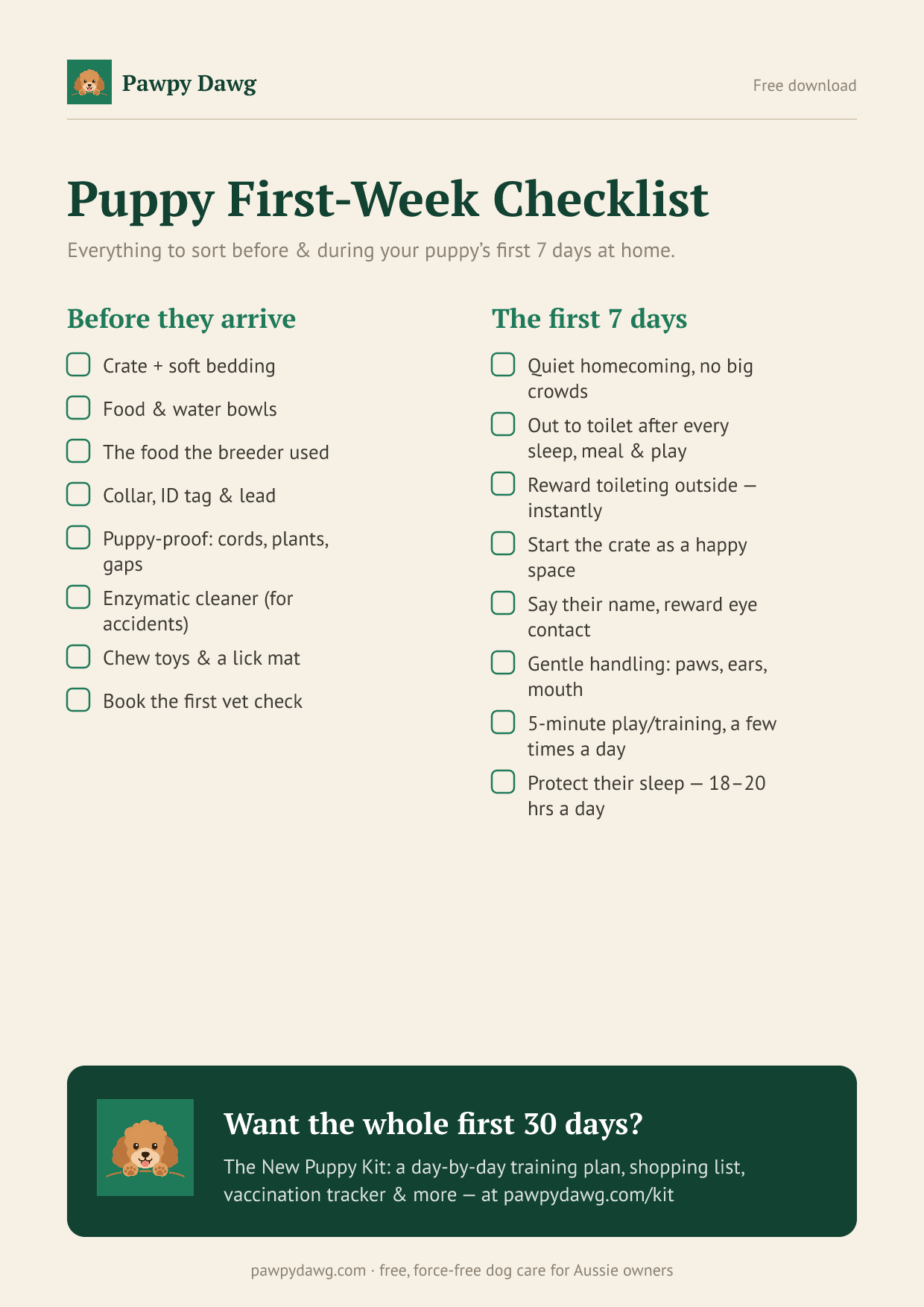
Free printable
Free: the Puppy First-Week Checklist
Everything to sort before and during your puppy's first 7 days home — a printable one-pager. Plus the occasional genuinely useful dog tip. No spam, unsubscribe anytime.
Related guides
How to Stop a Groodle Pulling on the Lead (Step-by-Step)
Groodle pulling on the lead? Get a step-by-step positive-reinforcement plan, realistic timelines, common mistakes, and when to call a pro trainer.
Read the guide →
How to Stop a Groodle Barking at Strangers (Step-by-Step)
Groodle barking at strangers driving you mad? Follow this positive-reinforcement plan with realistic timelines, common mistakes, and when to call a pro.
Read the guide →
Groodle Separation Anxiety: A Step-by-Step Fix
Groodle separation anxiety is stressful — for you and your dog. This step-by-step positive-reinforcement plan gets results in minutes a day.
Read the guide →