
How to Stop a Groodle Barking at Strangers (Step-by-Step)
Groodle barking at strangers driving you mad? Follow this positive-reinforcement plan with realistic timelines, common mistakes, and when to call a pro.

Written by Bradley Brown
Founder & editor · Reviewed 2026-07-11
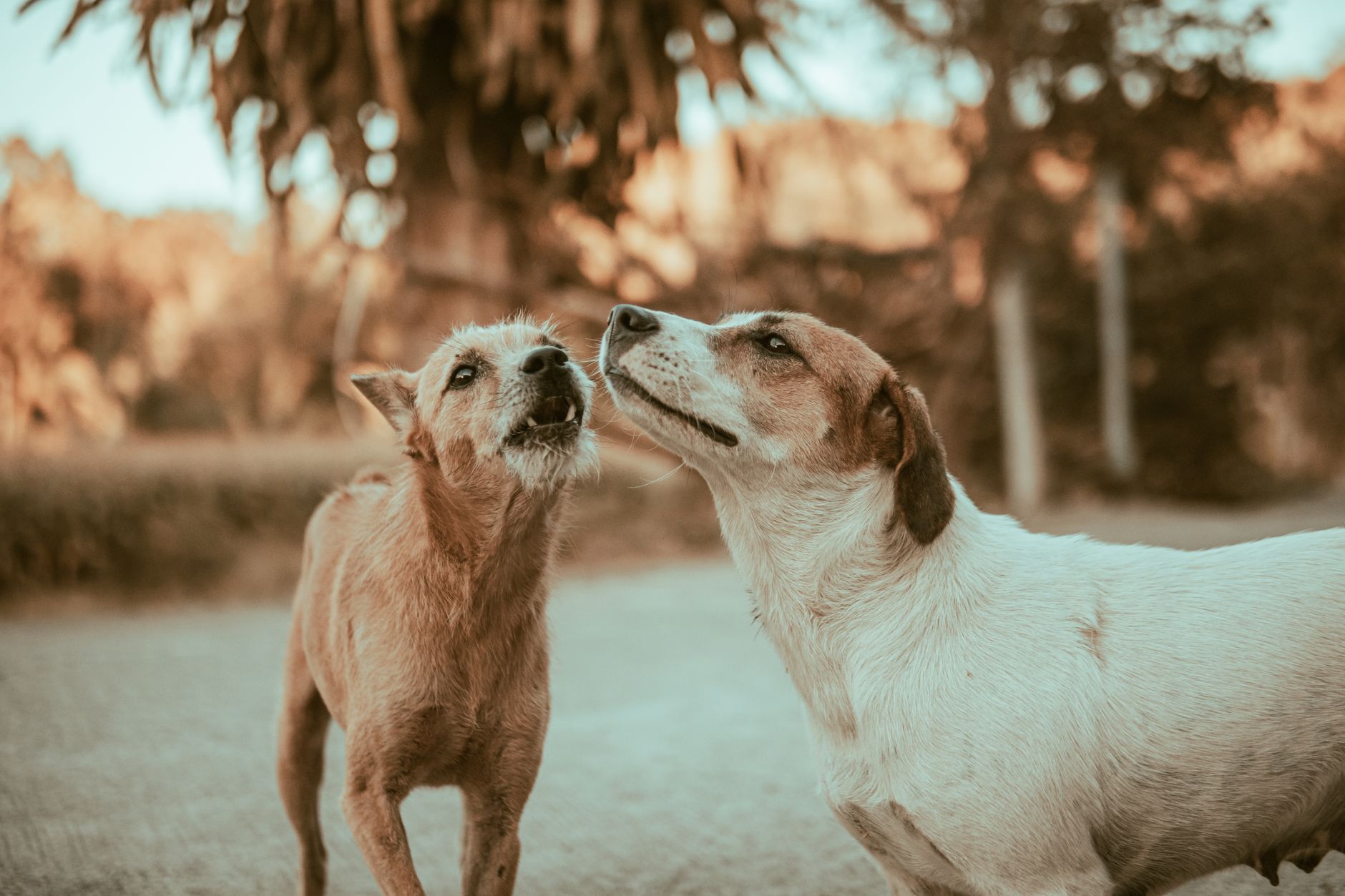
You came home to a shredded cushion, or you've just dragged your Groodle away from yet another stranger on the footpath while mouthing "sorry" at a startled pedestrian. You're not a bad owner. Your dog isn't broken. Groodles are smart, social, and emotionally tuned-in dogs — and that exact combination can make them reactive barkers when the world feels unpredictable. The good news: this is one of the most treatable behaviour problems in dogs, and you can start making progress tonight.
Why Groodles Bark at Strangers
Before you can fix it, it helps to know what's actually happening. Barking at strangers usually falls into one of two camps:
- Fear/anxiety barking — the dog is uncomfortable and is trying to create distance. The bark says "stay away." Body language includes tucked tail, flattened ears, or backing away.
- Alert/excitement barking — the dog is aroused and frustrated, often because they want to get to the person. The bark says "let me at them!" Body language includes a stiff forward lean, high tail, and lunging.
Groodles, being a Golden Retriever × Poodle cross, are typically sociable by nature — so pure fear reactivity is less common than excitement-frustration reactivity. That said, a lack of early socialisation, a single scary experience, or adolescent hormone surges (common between 6–18 months) can tip any dog into a fear response. Knowing which type you're dealing with shapes how you train.
Quick check: Does your dog settle quickly after the stranger passes, or do they stay wound up for several minutes? Prolonged arousal suggests higher anxiety and may benefit from professional support sooner rather than later.
Your Quick Win for Today: The Emergency U-Turn
You don't need a full training programme to have a better walk tonight. Use the Emergency U-Turn:
- The moment you spot a stranger at a distance where your Groodle hasn't yet reacted, calmly say "let's go" in a neutral, upbeat tone.
- Turn and walk briskly in the opposite direction.
- As soon as your dog trots alongside you calmly, mark it with "yes!" and give a high-value treat (cheese, chicken, or whatever makes their eyes light up).
You're not running away — you're managing distance so your dog stays under their threshold (the point where they tip into barking). Below threshold = brain engaged, learning possible. Above threshold = no learning happens, the barking habit gets stronger.
Practise this on every walk until the systematic training below starts to take effect.
The Step-by-Step Training Plan (5–10 Minutes a Day)
Step 1: Set Up for Success — Manage the Environment First
Reduce the number of times your dog gets to rehearse barking. Every bark-fest cements the habit.
- Walk at quieter times (early morning or after 8 pm) while training is underway.
- Cross the street proactively before your dog reacts.
- At home, use a window film or baby gate to limit fence-line or window barking at passersby.
- Ditch the retractable lead — a fixed 1.8 m lead gives you far more control and communication.
Step 2: Find the Magic Distance (Threshold Training)
In a low-distraction setting (a quiet park, a side street), identify the distance at which your dog notices a stranger but hasn't yet barked. This is the edge of their threshold — your training zone.
- Stand at that distance. The moment your dog looks at the stranger, say "yes!" and deliver a treat right to their nose.
- Repeat: stranger appears → dog looks → you mark and treat.
- You're teaching: strangers predict amazing things, not strangers are scary/exciting enough to bark at.
This is called counter-conditioning paired with desensitisation, and it's the gold standard approach endorsed by veterinary behaviourists worldwide.
Step 3: Add a Cue — "Watch Me"
Once your dog is reliably glancing at strangers and looking back to you for a treat (this typically takes 3–7 sessions), add a focus cue:
- As the stranger comes into view, say "watch me" in a calm voice.
- Reward your dog for making eye contact with you rather than fixating on the stranger.
- Gradually hold the eye contact for 2–3 seconds before rewarding.
This gives your dog a job to do, which reduces arousal and gives you a tool to use before a bark starts.
Step 4: Slowly Decrease Distance
Only move closer to strangers when your dog is consistently calm at the current distance across three consecutive sessions. Rushing this step is the number-one reason training stalls.
| Week | Target distance from strangers | Sessions per week |
|---|---|---|
| 1–2 | 10–15 m (or wherever they're calm) | 4–5 × 5–10 min |
| 3–4 | 6–8 m | 4–5 × 5–10 min |
| 5–6 | 3–5 m | 4–5 × 5–10 min |
| 7–8 | Passing on footpath | 4–5 × 5–10 min |
These are approximate — some dogs progress faster, some slower. Neither is a character flaw.
Step 5: Generalise the Training
Your Groodle needs to learn the rule applies everywhere, not just the park where you trained. Practise in shopping centre car parks, outside cafés, near school pick-up zones. Each new environment may require stepping back to a slightly larger distance initially — this is completely normal and expected.
Common Mistakes That Slow Progress
- Punishing the bark — yelling, lead jerks, or spray bottles suppress the warning signal without addressing the underlying emotion. The anxiety or frustration remains; the dog just has fewer ways to express it, which can escalate to snapping.
- Flooding — forcing your dog to sit next to strangers and "just deal with it." This almost always makes reactivity worse.
- Inconsistency — letting barking slide on bad days trains the dog that persistence pays off. Consistency matters more than perfection; aim for 80% of walks going to plan.
- Using low-value treats — dry kibble is rarely motivating enough for a highly aroused dog. Use real food: cooked chicken, cheese, or commercial training treats.
- Training past threshold — if your dog is already barking, you've gone too close, too fast. Step back. No shame in it.
Realistic Timeline
Most owners notice meaningful improvement within 3–6 weeks of consistent training. A reliable response around strangers in most contexts typically takes 2–4 months. Dogs with a longer history of reactivity or significant anxiety may take longer.
If you're seeing no improvement after four weeks of consistent work, or if your dog has ever lunged aggressively or snapped at a stranger, it's time to bring in a professional.
When to Get Professional Help
Look for a trainer who uses positive reinforcement methods and holds credentials such as:
- Certificate IV in Companion Animal Services (Australian standard)
- CPDT-KA (Certified Professional Dog Trainer — Knowledge Assessed)
- Membership with the Pet Professional Guild Australia
Avoid trainers who rely on choke chains, prong collars, or e-collars for reactivity — these tools add aversive pressure to an already stressed dog and are not supported by current veterinary behavioural science.
If your vet suspects an anxiety disorder underlying the reactivity, a referral to a veterinary behaviourist may also be appropriate. In some cases, short-term medication alongside behaviour modification produces significantly faster results. Costs vary, but a behaviour consultation with a vet behaviourist typically runs $250–$500 AUD; trainer programmes range from $150–$400 AUD for a block of sessions.
A Note on Groodle Adolescence
If your dog is between 6 and 18 months old, you may feel like the polite puppy you raised has been replaced by a chaos agent. Adolescent hormonal changes genuinely do affect the brain's fear circuitry and impulse control. This phase passes. Keep training short, keep your expectations realistic, and don't let one bad week convince you the whole programme has failed.
You haven't ruined your dog. You've just got some work to do — and now you know exactly where to start.
As an Amazon Associate we earn from qualifying purchases.
Frequently asked questions
Why is my Groodle suddenly barking at strangers when they were fine as a puppy?
This is extremely common and usually comes down to adolescence. Between 6 and 18 months, hormonal changes affect a dog's fear response and impulse control, so a previously social dog can become reactive seemingly overnight. A single frightening experience during this period can also trigger lasting wariness. The behaviour is normal and very trainable — it doesn't mean your socialisation efforts failed.
How long does it take to stop a Groodle barking at strangers?
Most owners see noticeable improvement within 3–6 weeks of consistent daily training. Reliable calm behaviour in most real-world situations typically takes 2–4 months. Dogs with a longer history of reactivity or underlying anxiety may take longer, and adding professional support can speed things up considerably.
Should I tell strangers to ignore my reactive Groodle?
Yes — during the training period, ask strangers not to approach, make eye contact, or reach out to pat your dog. Unsolicited interactions from strangers can spike your dog's arousal above threshold and undo a training session quickly. A simple 'he's in training, please don't approach' is all you need to say.
Is a Groodle barking at strangers a sign of aggression?
Barking alone is a communication behaviour, not aggression — it's your dog expressing discomfort, frustration, or excitement. However, if the barking is accompanied by lunging, snapping, or growling at close range, the risk of escalation is higher and you should consult a qualified positive-reinforcement trainer or veterinary behaviourist promptly.
Can I use a no-bark collar to stop my Groodle barking at strangers?
Aversive collars (shock, citronella, ultrasonic) are not recommended for reactivity. They suppress the barking without addressing the underlying fear or frustration, and can increase anxiety or cause the dog to associate the pain or discomfort with the stranger, potentially making aggression more likely. Positive counter-conditioning is safer and produces more lasting results.
What treats work best for training a reactive Groodle?
You need something your dog finds genuinely exciting — standard dry kibble usually isn't enough when a dog is aroused. Cooked chicken breast, small cubes of cheese, fritz (devon), or high-value commercial treats like Ziwi Peak or Black Hawk training treats work well for most dogs. Keep pieces small (pea-sized) so you can reward frequently without filling your dog up.
Free printable
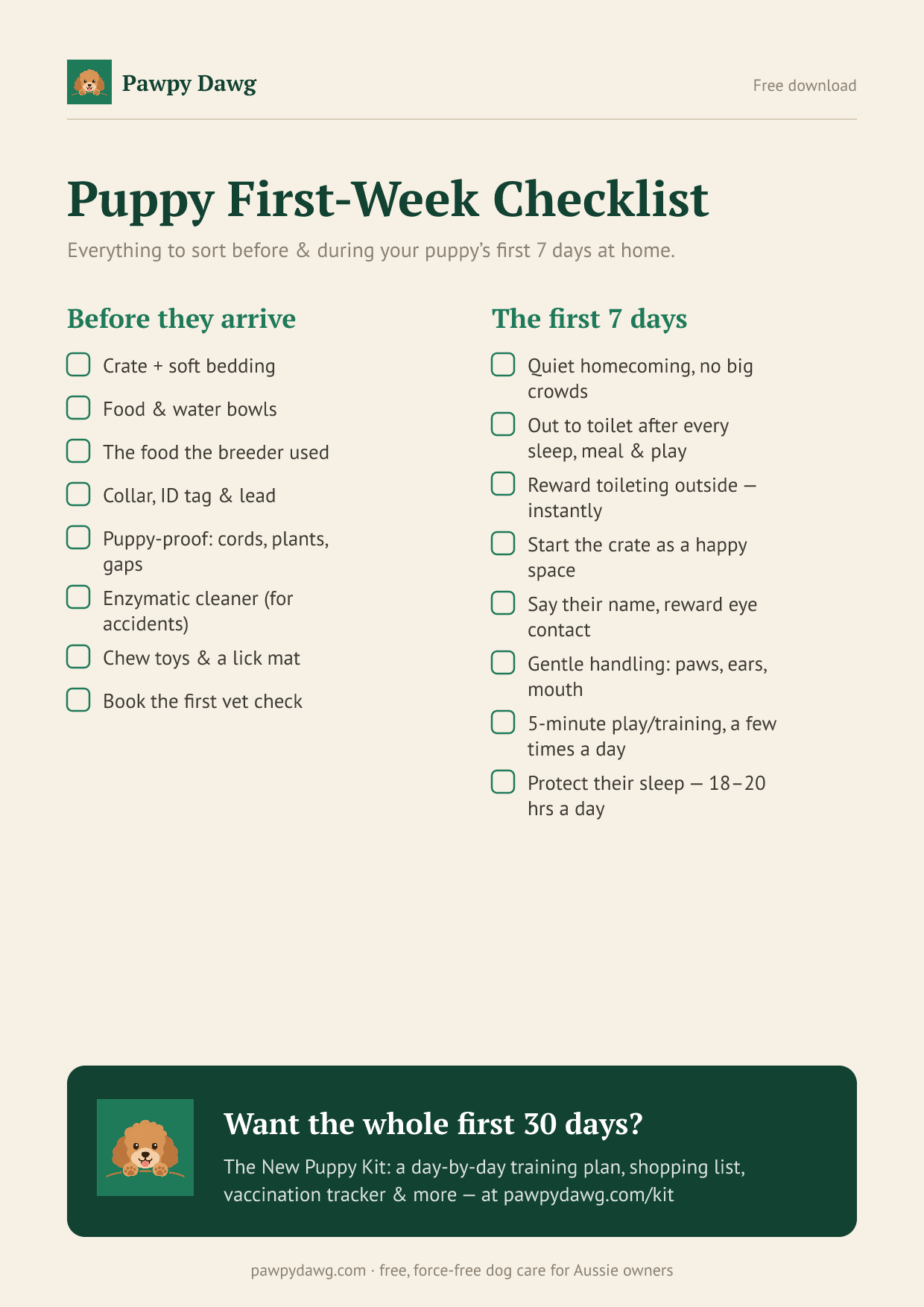
Free: the Puppy First-Week Checklist
Everything to sort before and during your puppy's first 7 days home — a printable one-pager. Plus the occasional genuinely useful dog tip. No spam, unsubscribe anytime.
Related guides
How to Stop a Groodle Pulling on the Lead (Step-by-Step)
Groodle pulling on the lead? Get a step-by-step positive-reinforcement plan, realistic timelines, common mistakes, and when to call a pro trainer.
Read the guide →
Groodle Separation Anxiety: A Step-by-Step Fix
Groodle separation anxiety is stressful — for you and your dog. This step-by-step positive-reinforcement plan gets results in minutes a day.
Read the guide →
How to Stop a Groodle Jumping Up on People (Step-by-Step)
Tired of your Groodle knocking people over? Here's a step-by-step positive-reinforcement plan to stop groodle jumping up on people — fast, realistic, and guilt-free.
Read the guide →