
How to Fix Resource Guarding in Your Groodle
Groodle resource guarding got you stressed? Stop growling & snapping fast with this positive-reinforcement plan, realistic timelines & pro-help signs.

Written by Bradley Brown
Founder & editor · Reviewed 2026-07-13
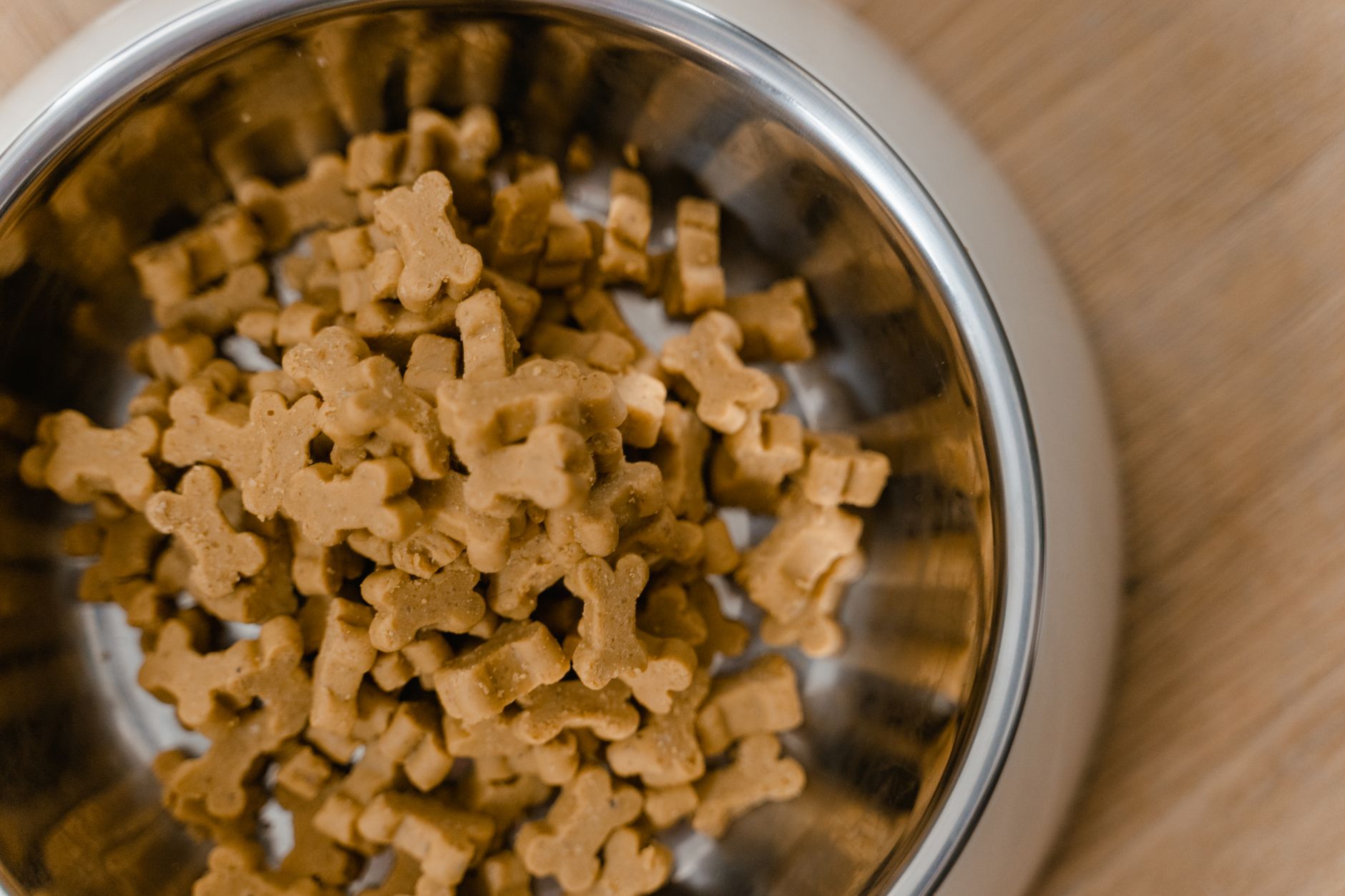
You came home to a growl — maybe over a bone, a toy, or just the good spot on the couch. Or your Groodle snapped at your child when she reached for his bowl. Either way, it's rattling, and if you're reading this at 11 pm feeling like you've somehow broken your dog, you haven't. Resource guarding is one of the most common behaviour issues vets and trainers see, and Groodles — for all their sunny reputations — are absolutely not exempt.
Here's what actually matters: this is a normal, instinctive behaviour with a clear, trainable solution. It is not a sign of a dangerous dog or a failed owner. Let's get into it.
What Resource Guarding Actually Is (and Why Groodles Do It)
Resource guarding is when a dog uses body language, growling, snapping, or biting to keep people or other animals away from something it values — food, toys, a sleeping spot, even a person.
It's rooted in survival instinct. In the wild, resources run out. Dogs who protected their share survived. Your Groodle's brain hasn't fully received the memo that you refill the bowl every single day.
Groodles (Golden Retriever × Poodle) can inherit the Poodle's sensitivity and the Golden's food motivation — a combination that sometimes makes resource guarding show up more intensely than owners expect. It has nothing to do with how loved or well-fed the dog is. It's biology, not betrayal.
Your Quick Win: Try This Today
Before any structured programme, do this at your dog's next meal — it takes two minutes and starts shifting the association immediately.
The Trade-Up Game:
- Put your dog's bowl down as normal and let them eat.
- Walk calmly up beside them and toss a small, high-value treat (e.g., a tiny piece of cooked chicken or cheese) into the bowl without reaching for it.
- Walk away. That's it.
You're teaching your dog that a human approaching the bowl means bonus food arrives, not food disappears. Repeat at every meal for a week. Most dogs visibly relax within a few days. Do not hover, do not stare — keep it casual.
The Core Training Plan (5–10 Minutes a Day)
Stage 1: Build a Positive Association (Week 1–2)
Continue the Trade-Up Game. Add it to other guarded items:
- Toss treats near (not at) the guarded toy while the dog has it.
- Approach the dog's resting spot, drop a treat on the floor nearby, and walk away.
- Never loom or reach — always approach side-on, toss, retreat.
Goal: The dog's body language softens when you approach. Watch for: tail loosening, ears relaxing, the dog looking up at you instead of hunching over the item.
Stage 2: Teach a Reliable "Drop It" (Week 2–4)
- Offer a low-value toy (e.g., an old knotted rope).
- Once the dog takes it, show a high-value treat near their nose and say "drop it" in a calm, even tone.
- The moment they release the toy, give the treat and hand the toy straight back.
Giving the toy back is critical. You're proving that "drop it" doesn't mean losing the thing forever — it means a treat bonus and then getting the item again. This collapses the whole logic of guarding.
Practice 3–5 repetitions per session, once or twice a day. Keep it short and cheerful.
Stage 3: Generalise the Behaviour (Week 4–8)
Once "drop it" is solid with low-value items, work up to higher-value ones gradually. Also practise:
- Different people: Include all household members, including kids (supervised, with an adult guiding the child's approach).
- Different rooms: Kitchen, backyard, lounge — wherever guarding has occurred.
- Different contexts: On-lead, off-lead, before and after exercise.
Common Mistakes That Make It Worse
| Mistake | Why It Backfires |
|---|---|
| Punishing the growl | Removes the warning signal — dog skips to snapping |
| Alpha rolls / food bowl "dominance" exercises | Increases anxiety and unpredictability; not supported by current behavioural science |
| Yanking items away without trading | Confirms the dog's fear that you'll steal things |
| Inconsistency between family members | Dog learns the rules are random and stays on guard |
| Flooding (forcing the dog near the trigger) | Can trigger a defensive bite and undo weeks of progress |
The growl is not the problem. Punishing a growl is like removing the battery from a smoke alarm — the fire is still there, you've just lost your warning. Thank your dog for communicating, then work on the underlying anxiety.
Realistic Timelines
Most Groodles with mild-to-moderate resource guarding show clear improvement within 4–8 weeks of consistent daily work (5–10 minutes per session). Severe cases — those involving snapping, biting, or guarding many different items — may take 3–6 months with professional guidance.
Progress is rarely linear. A bad day in week five doesn't erase week four. Note your dog's best moments, not just the setbacks.
Managing the Environment While You Train
Training takes time; management keeps everyone safe right now.
- Feed in a separate room from other pets and children until guarding is resolved.
- Pick up high-value items (raw bones, bully sticks, special toys) when guests arrive.
- Use a baby gate or exercise pen to give the dog a safe space to eat or chew undisturbed.
- Teach children: "If the dog has it, leave it." No exceptions during the training period.
These aren't permanent rules — they're scaffolding while you build the actual behaviour.
When to Call a Professional
Reach out to a qualified trainer or veterinary behaviourist if:
- The dog has made skin contact (bitten, even lightly) with a person.
- Guarding is escalating despite consistent training.
- Multiple items or locations are guarded and the dog is frequently tense.
- There are young children or vulnerable people in the household.
- You feel anxious around your dog — your stress communicates, and a professional set of eyes helps enormously.
In Australia, look for trainers accredited through the Delta Society Australia or Pet Professional Guild Australia, or ask your vet for a referral to a veterinary behaviourist (they hold specialist qualifications through the Australian and New Zealand College of Veterinary Scientists). Expect to pay roughly $150–$350 AUD for an initial consultation, less for group classes. It's worth every cent if biting is on the table.
A Note on "Ruining" Your Dog
You haven't. Resource guarding that's been going on for months or even years is still addressable with the right approach. Dogs are remarkably responsive when the training method actually makes sense to them — and positive reinforcement, done consistently, makes a lot of sense to a food-motivated Groodle. Start with the Trade-Up Game tonight. That's enough for day one.
Frequently asked questions
Is resource guarding in Groodles dangerous?
Resource guarding exists on a spectrum. A stiffened body and a low growl are warning signals — they're not immediately dangerous, but they shouldn't be ignored. Any behaviour that has progressed to snapping or biting, or that occurs around children, warrants prompt help from a qualified trainer or veterinary behaviourist.
Why is my Groodle suddenly resource guarding when they never did before?
Sudden onset guarding often has a trigger: a new pet in the home, a change in routine, an illness or injury making the dog feel vulnerable, or reaching social maturity (usually 12–24 months). A vet check is a sensible first step to rule out pain as a contributing factor, then work with a trainer on the behaviour itself.
Should I take food away from my Groodle to show them who's boss?
No — this approach is not supported by current behavioural science and typically makes resource guarding worse. Repeatedly removing food teaches the dog their fear (that you'll take things away) is justified, which increases guarding intensity over time. Trade-up exercises and positive reinforcement are far more effective and don't damage trust.
How long does it take to fix resource guarding in a Groodle?
Mild to moderate cases typically improve noticeably within 4–8 weeks of consistent daily training (5–10 minutes per day). More entrenched or severe guarding can take 3–6 months, particularly if a bite has already occurred. Consistency across all household members is the single biggest factor in how quickly progress happens.
Can children be involved in training a resource-guarding Groodle?
Yes, but only under close adult supervision and once the dog is already making progress. Children should never approach a dog that is actively guarding during the early stages. Once the dog reliably accepts adult approaches, a calm older child can practise the same trade-up exercises with an adult physically present and guiding every interaction.
Does resource guarding mean my Groodle is aggressive?
Not in a general sense. Resource guarding is a specific, context-driven behaviour — a dog can guard food and be completely relaxed and friendly in every other situation. That said, it does need to be taken seriously and worked on, because left unaddressed it can escalate. It's a behaviour problem, not a personality flaw.
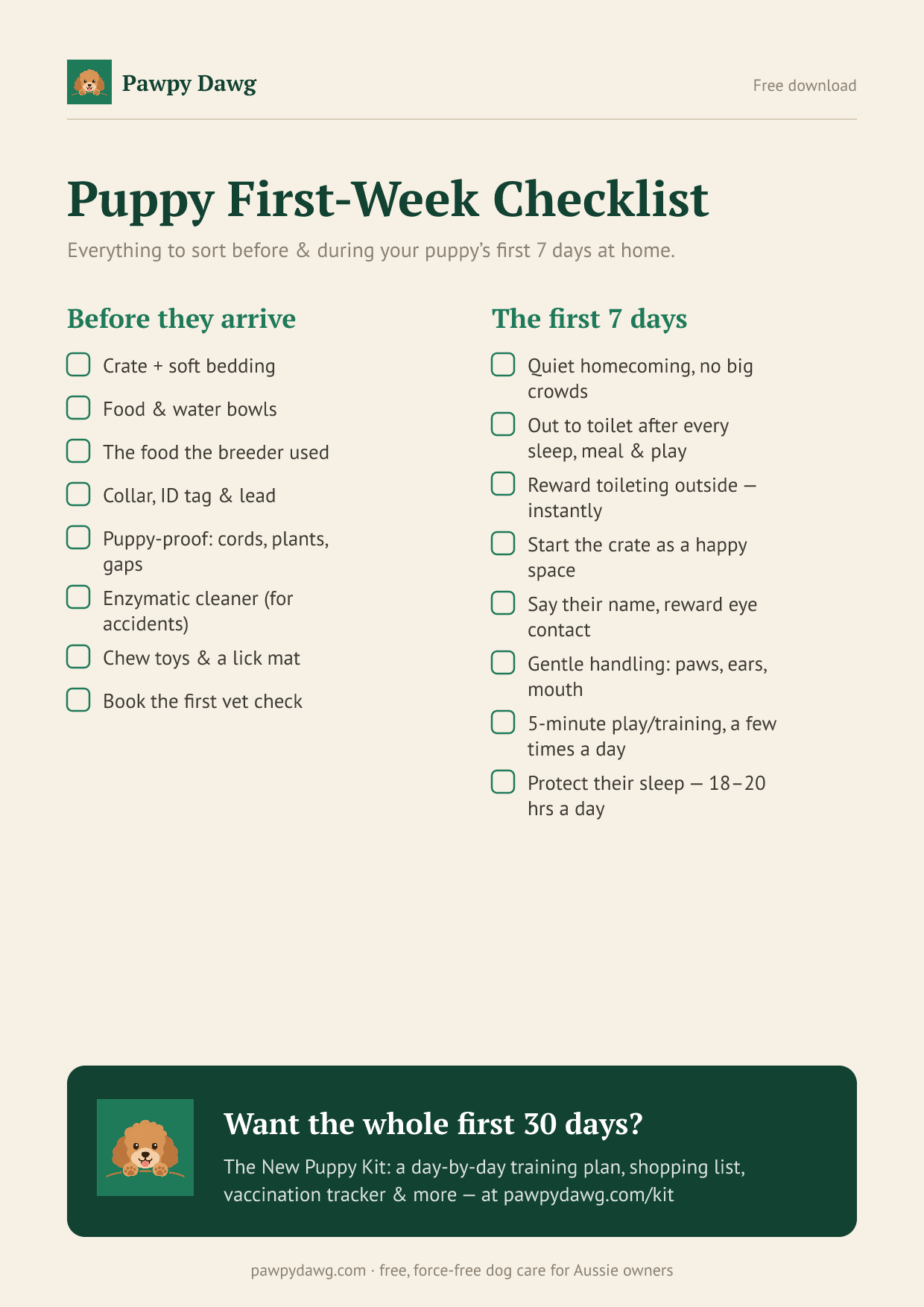
Free printable
Free: the Puppy First-Week Checklist
Everything to sort before and during your puppy's first 7 days home — a printable one-pager. Plus the occasional genuinely useful dog tip. No spam, unsubscribe anytime.
Related guides
How to Stop a Groodle Pulling on the Lead (Step-by-Step)
Groodle pulling on the lead? Get a step-by-step positive-reinforcement plan, realistic timelines, common mistakes, and when to call a pro trainer.
Read the guide →
How to Stop a Groodle Barking at Strangers (Step-by-Step)
Groodle barking at strangers driving you mad? Follow this positive-reinforcement plan with realistic timelines, common mistakes, and when to call a pro.
Read the guide →
Groodle Separation Anxiety: A Step-by-Step Fix
Groodle separation anxiety is stressful — for you and your dog. This step-by-step positive-reinforcement plan gets results in minutes a day.
Read the guide →