
How to Stop a Groodle Digging Up the Yard (Step-by-Step)
Groodle digging in the yard driving you mad? Get a realistic, positive-reinforcement plan with quick wins, common mistakes, and honest timelines. Fix it fast.

Written by Bradley Brown
Founder & editor · Reviewed 2026-07-12
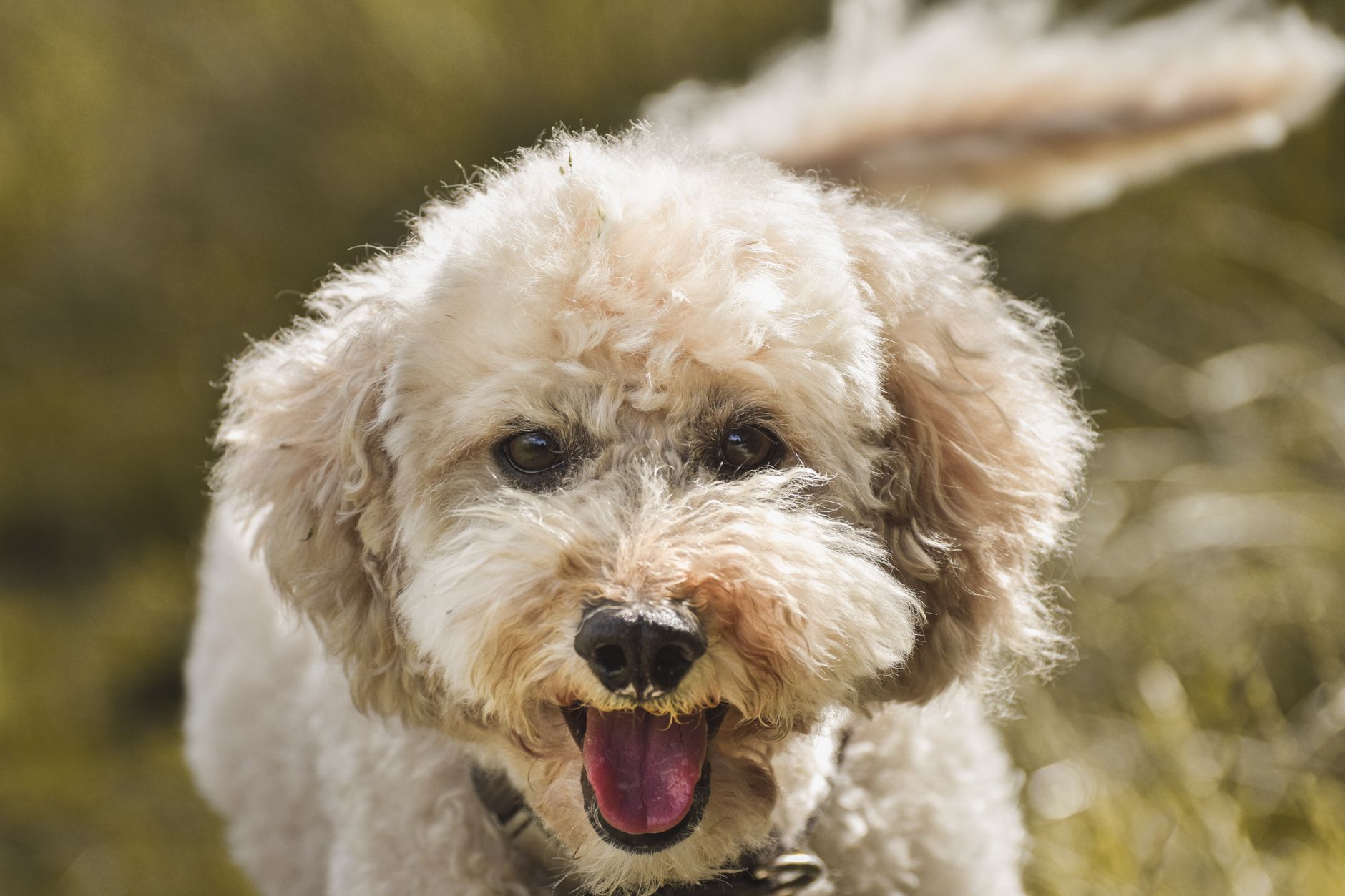
You came home to another excavation site. Or maybe you just watched it happen in real time — your Groodle, nose down, paws flying, completely ignoring you. The garden bed is gone, the lawn looks like a war zone, and you're wondering what you're doing wrong.
Nothing. You're doing nothing wrong. Digging is one of the most natural, hardwired behaviours in dogs, and Groodles — with their Poodle intensity and Golden Retriever enthusiasm — are especially prone to it when their needs aren't quite being met. It is fixable. Quickly, in most cases.
Here's a quick win you can try today: before you read another word, go outside and give your Groodle a 10-minute sniff walk around the block on a loose lead. Sniffing is mentally exhausting for dogs — it's the canine equivalent of scrolling through a million notifications at once. A tired Groodle is far less likely to dig this afternoon. That's not a cure, but it buys you breathing room while you put a proper plan in place.
Why Groodles Dig (and Why It's Not Your Fault)
Understanding the why means you fix the right problem. Most Groodle digging falls into one of these categories:
- Boredom and pent-up energy — Groodles are high-energy, intelligent dogs. When they don't have a job to do, they invent one. Digging is deeply satisfying for them.
- Seeking cool ground — In an Australian summer, a shady patch of dug-up dirt is nature's air conditioning. This is especially common against fences or under shrubs.
- Chasing smells — Grubs, lizards, and the scent of a neighbourhood cat can trigger a digging frenzy that feels completely justified to your dog.
- Anxiety or frustration — Dogs left alone for long stretches often dig near fence lines. It's not escape artistry; it's stress relief.
- Attention-seeking — If digging has ever made you come running (even to tell them off), that response is rewarding. Negative attention still counts as attention.
No single fix works for all of these. You need to match the solution to the cause.
Step-by-Step Plan to Stop the Digging
Step 1: Identify Your Dog's Trigger (5 minutes of observation)
Watch when and where your Groodle digs. Keep a quick note on your phone for three days:
- Same time each day? → Likely boredom or routine frustration
- Only near the fence line? → Anxiety, scent-chasing, or temperature-seeking
- Random spots all over the yard? → Scent-driven, or the yard needs enrichment
- Only when left alone? → Separation-related stress
This single step stops you wasting weeks on the wrong fix.
Step 2: Meet the Need the Digging Is Filling
Once you know the trigger, give your Groodle a better outlet. Keep it to 5–10 minutes, twice a day — small sessions you'll actually do consistently.
| Root Cause | What to Add to the Routine |
|---|---|
| Boredom/excess energy | Sniff walks, fetch, tug games, training sessions |
| Heat | Shade cloth, a paddling pool, frozen Kongs, cool mat |
| Chasing scents | Scatter feeding in the grass, nose work games |
| Anxiety when alone | Departure routine training, stuffed Kongs before you leave |
| Attention-seeking | Ignore the digging; reward calm yard behaviour heavily |
A Kong stuffed with peanut butter (xylitol-free — check the label) and frozen overnight costs almost nothing and buys 20–40 minutes of quiet focus.
Step 3: Manage the Environment Right Now
Management isn't admitting defeat — it's preventing the habit from getting stronger while you train. Every dig reinforces the behaviour, so reducing opportunities matters.
- Supervise or confine. If you can't watch your dog in the yard, use an indoor space or a secure pen with enrichment. A dog that can't practise digging can't get better at it.
- Block existing holes. Fill them with the dog's own droppings (dogs generally avoid digging where they've toileted), or place flat rocks just under the surface — the texture is offputting.
- Citrus peel along garden beds can deter digging in specific spots; most dogs dislike the smell and will move on. Replace it every couple of days.
Step 4: Teach an Incompatible Behaviour
You can't just take something away — you have to give your Groodle something better to do instead. "Place" or "mat" training is perfect here.
- Put a mat or bed in the yard in a shady spot.
- When your dog naturally moves toward it, mark the moment with a calm "yes" and drop a treat onto the mat.
- Over several short sessions, build the habit of your dog choosing the mat to relax.
- Once the behaviour is solid, start rewarding your dog for hanging out on the mat while you're in the yard.
This takes about two weeks of 5-minute sessions to become a default. It replaces "bored → dig" with "bored → mat."
Step 5: Give Them a Legal Dig Spot
This is the most underrated tool in the toolkit. A designated dig pit gives your Groodle an outlet that costs you nothing and saves the rest of your yard.
How to set it up:
- Use a sandpit, a raised garden bed, or simply a roped-off corner (roughly 1m x 1m is enough).
- Bury treats, toys, and chews just below the surface to make it the most exciting spot in the yard.
- When you catch your dog digging anywhere else, calmly redirect them to the pit and immediately reward any sniffing or digging in the right spot.
- Refresh the buried treasures regularly so the spot stays interesting.
Within a few weeks, most Groodles learn to self-direct to the pit. You've given them the win — it's just in a place that works for both of you.
Common Mistakes That Slow Progress
- Punishing after the fact. Dogs live in the present. Scolding a dog beside a hole they dug 10 minutes ago teaches them nothing except that you're unpredictable. It damages trust without changing behaviour.
- Inconsistency. If the dig pit is only sometimes rewarded, or the rules change depending on who's supervising, your dog will keep testing. Everyone in the household needs to be on the same page.
- Expecting overnight results. A habit your Groodle has practised for months won't disappear in two days. Realistic timeline: noticeable improvement in 2–3 weeks with consistent management; most digging resolved in 6–8 weeks.
- Only exercising physically. A Groodle that runs 5km but doesn't get mental stimulation is still a Groodle that digs. Scent work and training sessions engage their brain in a way that physical exercise alone doesn't.
When to Get Professional Help
Most Groodle digging is a training and enrichment problem you can solve yourself. But it's worth calling a positive-reinforcement trainer or your vet if:
- Digging is accompanied by other signs of anxiety (pacing, vocalising, destructive behaviour indoors, not eating when alone)
- Your dog is also escaping or injuring themselves in the attempt
- You've been consistent for 8 weeks and seen no improvement
A certified trainer typically charges $80–$150 AUD per session in Australian metro areas. One session to identify the root cause and get a tailored plan is usually enough.
A Realistic Week-by-Week Timeline
Week 1: Identify the trigger. Begin management (supervision, blocking holes). Add one enrichment activity daily.
Week 2–3: Continue enrichment. Introduce mat training and the dig pit. Start rewarding "good" yard behaviour actively.
Week 4–6: Reduce management as trust builds. Refresh the dig pit regularly. Redirect any slips calmly.
Week 6–8: Most dogs are reliably choosing the pit or the mat. Maintenance mode — keep the enrichment routine going.
You haven't ruined your dog. You've just got a very smart, very energetic animal that needed a better deal. Give them that, and the yard will thank you.
As an Amazon Associate we earn from qualifying purchases.
Frequently asked questions
Why does my Groodle only dig in certain spots in the yard?
Location clues usually point to the cause. Digging along fence lines often signals anxiety, frustration, or chasing a scent from outside the yard. Digging under shrubs or in shaded areas is frequently about finding cool ground. Spots where wildlife or other animals have been are almost always scent-driven. Pinpointing the spot helps you choose the right fix.
Will getting another dog stop my Groodle from digging?
Probably not, and it can make things worse. Two bored dogs often encourage each other's digging rather than solving it. If your Groodle digs due to boredom or anxiety, the root cause needs to be addressed directly through enrichment and training — a companion dog alone won't fix that.
Is it okay to use chicken wire or rocks to stop my Groodle digging?
Flat rocks or pavers buried just under the surface are safe and effective deterrents for specific areas — the texture puts dogs off and causes no harm. Chicken wire or sharp-edged materials are not recommended, as they can cut paws. Always pair any physical deterrent with a positive alternative like a dig pit, otherwise your dog will simply find a new spot.
How much exercise does a Groodle actually need each day?
Most adult Groodles need around 60–90 minutes of activity per day, but quality matters as much as quantity. A mix of physical exercise (walks, fetch) and mental stimulation (nose work, training) is far more effective than pure distance or time. Sniff walks — where the dog sets the pace and explores freely — are especially tiring and easy to fit into a busy schedule.
Can digging be a sign that something is medically wrong with my Groodle?
In rare cases, excessive digging or restlessness can be linked to pain, cognitive changes in older dogs, or a medical condition affecting anxiety levels. If the digging has started suddenly with no clear environmental trigger, or your dog seems generally unsettled, it's worth a vet check to rule out a physical cause before focusing on behaviour training.
How long does it take to stop a Groodle digging with positive reinforcement?
With consistent management and daily enrichment, most owners see a clear reduction in digging within two to three weeks. Fully resolving the habit — where the dog reliably chooses a dig pit or settles calmly in the yard — typically takes six to eight weeks. Dogs that have been digging for years may take a little longer, but improvement is still very achievable.
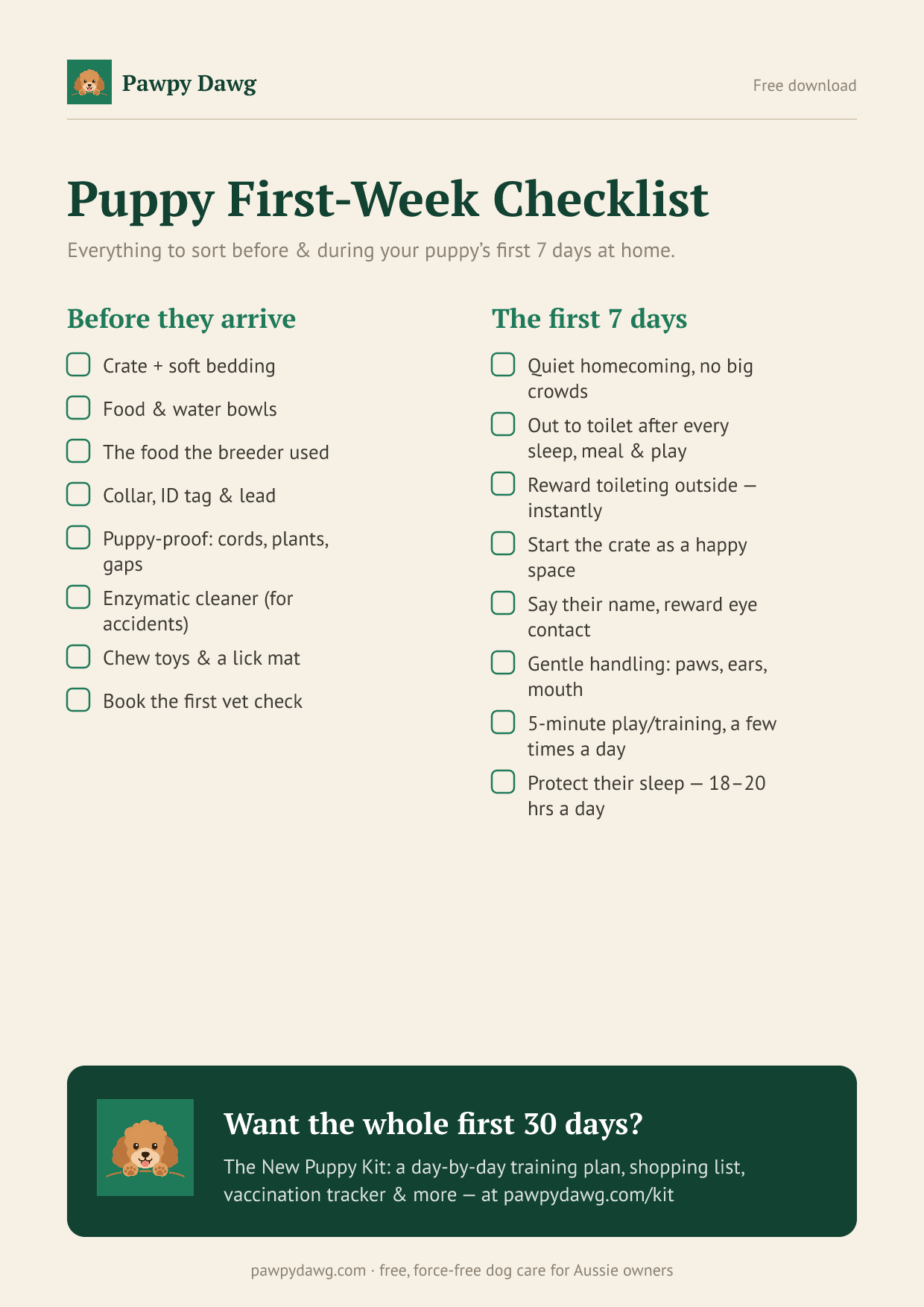
Free printable
Free: the Puppy First-Week Checklist
Everything to sort before and during your puppy's first 7 days home — a printable one-pager. Plus the occasional genuinely useful dog tip. No spam, unsubscribe anytime.
Related guides
How to Stop a Groodle Pulling on the Lead (Step-by-Step)
Groodle pulling on the lead? Get a step-by-step positive-reinforcement plan, realistic timelines, common mistakes, and when to call a pro trainer.
Read the guide →
How to Stop a Groodle Barking at Strangers (Step-by-Step)
Groodle barking at strangers driving you mad? Follow this positive-reinforcement plan with realistic timelines, common mistakes, and when to call a pro.
Read the guide →
Groodle Separation Anxiety: A Step-by-Step Fix
Groodle separation anxiety is stressful — for you and your dog. This step-by-step positive-reinforcement plan gets results in minutes a day.
Read the guide →