
How to Toilet Train a Golden Retriever: A Realistic Plan
Master golden retriever toilet training with this realistic, step-by-step plan. Timelines, common mistakes, and quick wins you can start today.

Written by Bradley Brown
Founder & editor · Reviewed 2026-07-06
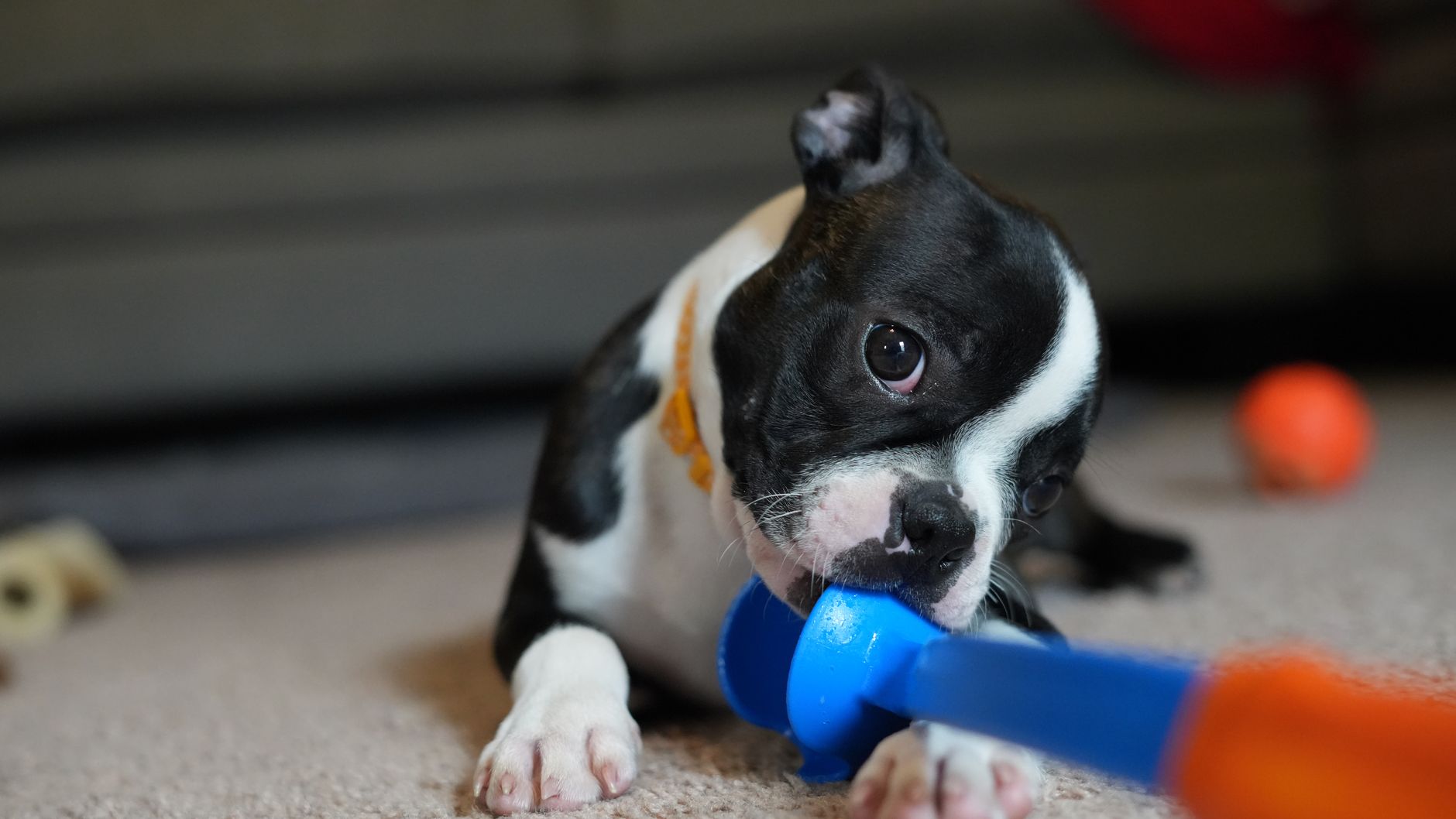
If you've just cleaned up another puddle off the floorboards at 10 pm, take a breath. You haven't ruined your dog. Golden Retrievers are smart, eager-to-please dogs — but bladder control is a physical skill that takes weeks, not days, to develop. Accidents are a normal part of the process, not proof you're failing.
Here's what actually works, without requiring you to restructure your entire life.
Your Quick Win for Today
Before anything else, do this right now: pick one toilet spot outside and commit to it.
Take your dog (or puppy) to that exact spot — same patch of grass, same corner of the yard — every single time. The lingering scent cues them to go. This one change alone will reduce accidents faster than almost anything else. No equipment needed, no schedule overhaul. Just one consistent spot, starting with the very next toilet trip.
Understanding the Timeline (So You Stop Feeling Behind)
Toilet training a Golden Retriever puppy takes 4–8 weeks of consistent practice for reliable daytime control. Full overnight reliability often takes until 4–6 months of age, because puppies physically cannot hold their bladder for long periods before then.
A rough guide to bladder holding time:
| Age | Maximum hold time (awake) |
|---|---|
| 8–10 weeks | ~1 hour |
| 10–12 weeks | ~1.5–2 hours |
| 3–4 months | ~2–3 hours |
| 4–6 months | ~3–4 hours |
| 6+ months | ~4–6 hours |
Adult rescues can sometimes take 2–4 weeks to learn your household's routine, even if they were previously trained — new environments reset habits.
If your dog is older than 6 months and still having frequent accidents, scroll down to the troubleshooting section.
The Core Routine (5–10 Minutes a Day of Active Training)
You don't need hour-long sessions. You need consistency at key moments. These are the times your dog almost always needs to toilet:
- Immediately after waking up (morning and naps)
- Within 15–20 minutes after eating or drinking
- After play or excitement
- Before bed
- Any time you've been out for more than an hour
The process at each of those moments:
- Take them calmly to the designated toilet spot — no play, no detours.
- Wait quietly. Give them up to 3 minutes.
- The moment they finish, mark it ("yes!" or click) and reward with a small treat immediately — within 2 seconds.
- Then let play happen after toileting, not before.
That's it. The reward timing is everything. If you praise while they're still squatting, even better.
Choosing a Cue Word
Pick a word — "toilet," "go wees," "outside" — and say it calmly just as they begin to go. After a few weeks, saying the word will actually prompt them to go on command. This is enormously useful before long car trips or vet visits.
Handling Accidents Without Setbacks
When you catch your dog mid-accident indoors:
- Say a calm, neutral "ah-ah" and immediately take them outside to finish.
- Do not punish after the fact. If you find a puddle you didn't witness, cleaning it up is the only option. Dogs cannot connect a punishment to something that happened more than a few seconds ago — it creates anxiety, not understanding.
For cleaning: Use an enzyme-based cleaner (widely available at pet shops for $12–$25 AUD). Regular cleaners mask the smell to you but not to your dog, and they'll return to the same spot. Enzyme cleaners actually break down the odour compounds.
Common Mistakes That Stall Progress
1. Giving too much unsupervised freedom too soon. A puppy who has free run of the house will find corners you never check. Limit their space using baby gates or a playpen, and expand it gradually as they earn trust — roughly one new room per accident-free week.
2. Inconsistent outdoor time. Letting them out "whenever" instead of on a loose schedule means missed opportunities. They don't generalise well from random outings.
3. Waiting for a "sign." Golden puppies often give very subtle signals (sniffing, circling, suddenly going quiet). By the time it's obvious, it's too late. Proactive trips beat reactive ones.
4. Punishing accidents. This is the big one. Punishment doesn't teach where to go — it teaches them to hide where they go. Dogs that are punished for toileting inside often start going behind furniture or in rooms you rarely visit.
5. Stopping treats too early. Once things seem to be going well, owners often drop the food reward. Keep rewarding for at least 4–6 weeks of reliability before fading treats. Consistency builds the habit; then the habit sustains itself.
Crate Training as a Toilet Training Tool
A crate — used humanely — speeds up toilet training considerably. Dogs naturally avoid soiling their sleeping space. A crate that's the right size (large enough to stand, turn around, and lie down, but not so large they can toilet in one corner and sleep in another) gives them a reason to hold on.
Key rules:
- Never use the crate as punishment.
- Never crate for longer than the age-appropriate hold time (see table above).
- Always take them straight from the crate to the toilet spot — no detours inside.
If your dog is distressed in the crate (barking continuously, not settling after 10–15 minutes of gradual introduction), work on crate introduction separately before using it overnight.
When to Get Professional Help
Most toilet training issues resolve with consistency. But see your vet first if:
- Your dog was reliably trained and has suddenly started having accidents — this can signal a urinary tract infection (UTI), kidney issues, or in older dogs, cognitive decline.
- There's blood in the urine, unusually frequent small amounts, or your dog seems uncomfortable going.
- Accidents happen during sleep (rather than just at night when left too long).
If the behaviour seems anxiety-driven — toileting only when alone, or when visitors arrive — a qualified trainer or veterinary behaviourist is worth the investment. Look for someone using force-free, positive reinforcement methods. The Pet Professional Guild Australia is a good starting point for finding accredited trainers.
A Realistic Week-One Checklist
- Designate one toilet spot outdoors and use it every time
- Set a phone alarm every 1.5–2 hours (for puppies) as a reminder
- Buy enzyme-based cleaner
- Choose your reward (small, soft treats work best — think pea-sized pieces)
- Choose and start using a cue word
- Limit unsupervised indoor access to one or two rooms
- Log accidents for 3 days to spot your dog's natural pattern
Most owners who follow this consistently see a noticeable reduction in accidents within 7–10 days. Not perfection — but real progress. That's worth a lot at 10 pm on a Tuesday.
As an Amazon Associate we earn from qualifying purchases.
Frequently asked questions
How long does it take to toilet train a Golden Retriever puppy?
Most Golden Retriever puppies develop reliable daytime toilet habits within 4–8 weeks of consistent training. Full overnight reliability usually comes around 4–6 months of age, when they have the physical bladder control to hold on through the night. Expect setbacks — they're normal, not signs of failure.
My Golden Retriever keeps toileting in the same spot inside. How do I stop it?
The scent is drawing them back. Clean the area thoroughly with an enzyme-based cleaner (available at pet shops for around $12–$25 AUD) rather than a standard household cleaner, which doesn't break down the odour compounds dogs can detect. You can also try feeding your dog near that spot, as dogs are strongly reluctant to toilet where they eat.
Is it normal for a Golden Retriever to regress after being toilet trained?
Yes, regressions are common after life changes — a move, a new baby, a new pet, or even a change in routine. In adult dogs, sudden regression can also signal a medical issue like a urinary tract infection, so a vet check is worthwhile if it comes out of nowhere. Usually, returning to basics for a week or two resolves it.
Should I use puppy pads to toilet train a Golden Retriever?
Puppy pads can create confusion because they teach the puppy that toileting inside on an absorbent surface is acceptable — which is the opposite of what you want long-term. They're occasionally useful in apartments where immediate outdoor access isn't possible, but if you have a yard, going straight to outdoor training avoids teaching a habit you'll need to undo later.
At what age can a Golden Retriever puppy sleep through the night without a toilet trip?
Most Golden Retriever puppies can sleep through a 6–7 hour night without needing to go out by around 4 months of age, though some manage it a little earlier. Before that, one overnight trip is often necessary. Restricting water intake in the hour or two before bed (while ensuring they've had enough during the day) can help stretch the gap.
How do I toilet train an adult Golden Retriever rescue?
Treat it exactly like puppy training — consistent toilet spot, reward immediately after they go, and limit unsupervised indoor access while they learn your household's routine. Adult dogs often catch on faster than puppies because they have full bladder control; most rescues settle into reliable habits within 2–4 weeks. If accidents persist beyond that, rule out a medical cause with your vet.
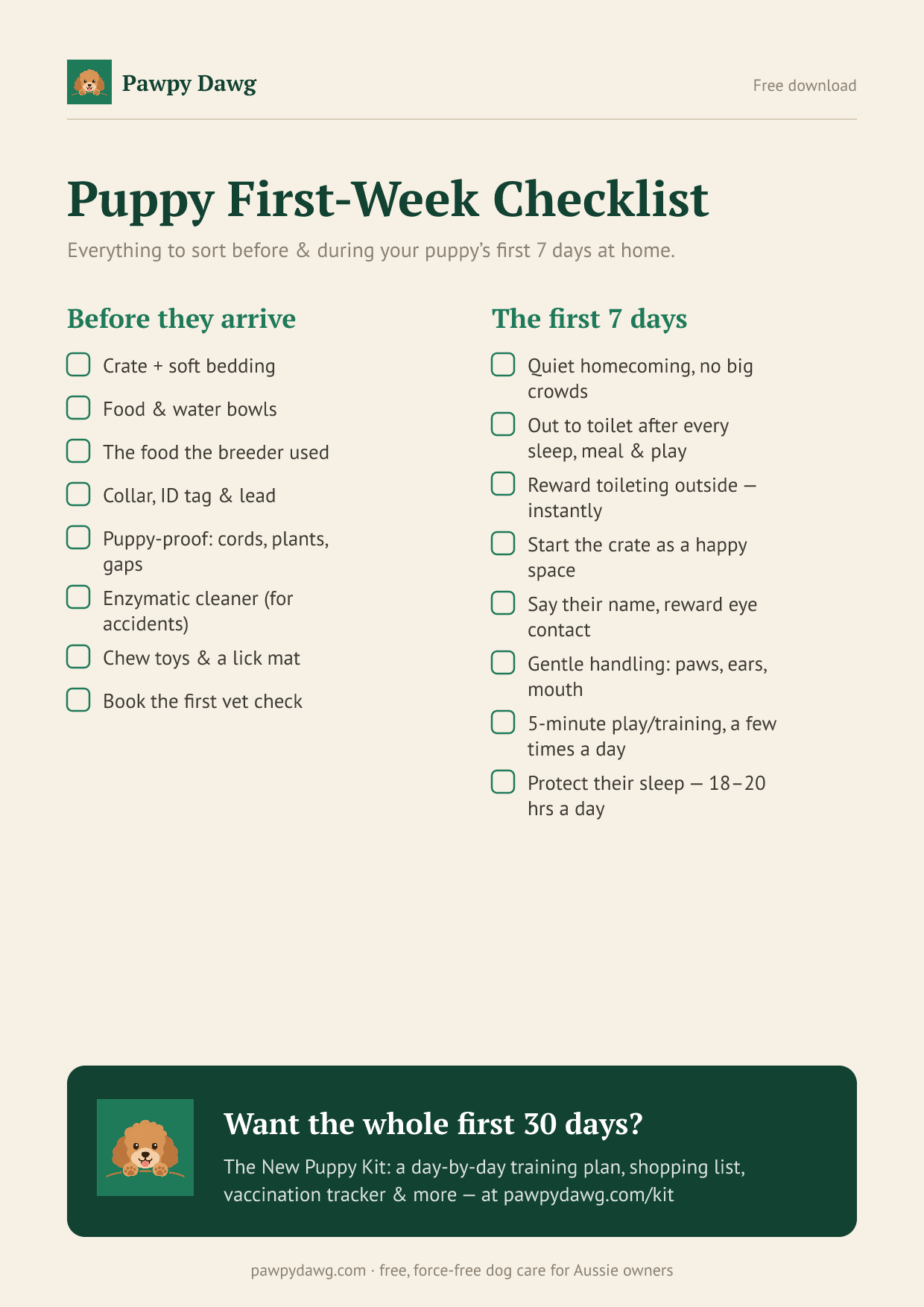
Free printable
Free: the Puppy First-Week Checklist
Everything to sort before and during your puppy's first 7 days home — a printable one-pager. Plus the occasional genuinely useful dog tip. No spam, unsubscribe anytime.
Related guides
How to Stop a Golden Retriever Pulling on the Lead (Step-by-Step)
Tired of being dragged down the street? Here's a practical, positive-reinforcement plan to stop your golden retriever pulling on the lead — starting today.
Read the guide →
How to Stop a Golden Retriever Barking at Strangers (Step-by-Step)
Stop your golden retriever barking at strangers with this positive-reinforcement plan. Step-by-step training, realistic timelines & when to call a pro. 🐾
Read the guide →
Golden Retriever Separation Anxiety: A Step-by-Step Fix
Golden retriever separation anxiety is stressful — for you and your dog. Here's a realistic, step-by-step positive-reinforcement plan that actually works.
Read the guide →