
How to Stop a Golden Retriever Pulling on the Lead (Step-by-Step)
Tired of being dragged down the street? Here's a practical, positive-reinforcement plan to stop your golden retriever pulling on the lead — starting today.

Written by Bradley Brown
Founder & editor · Reviewed 2026-07-04
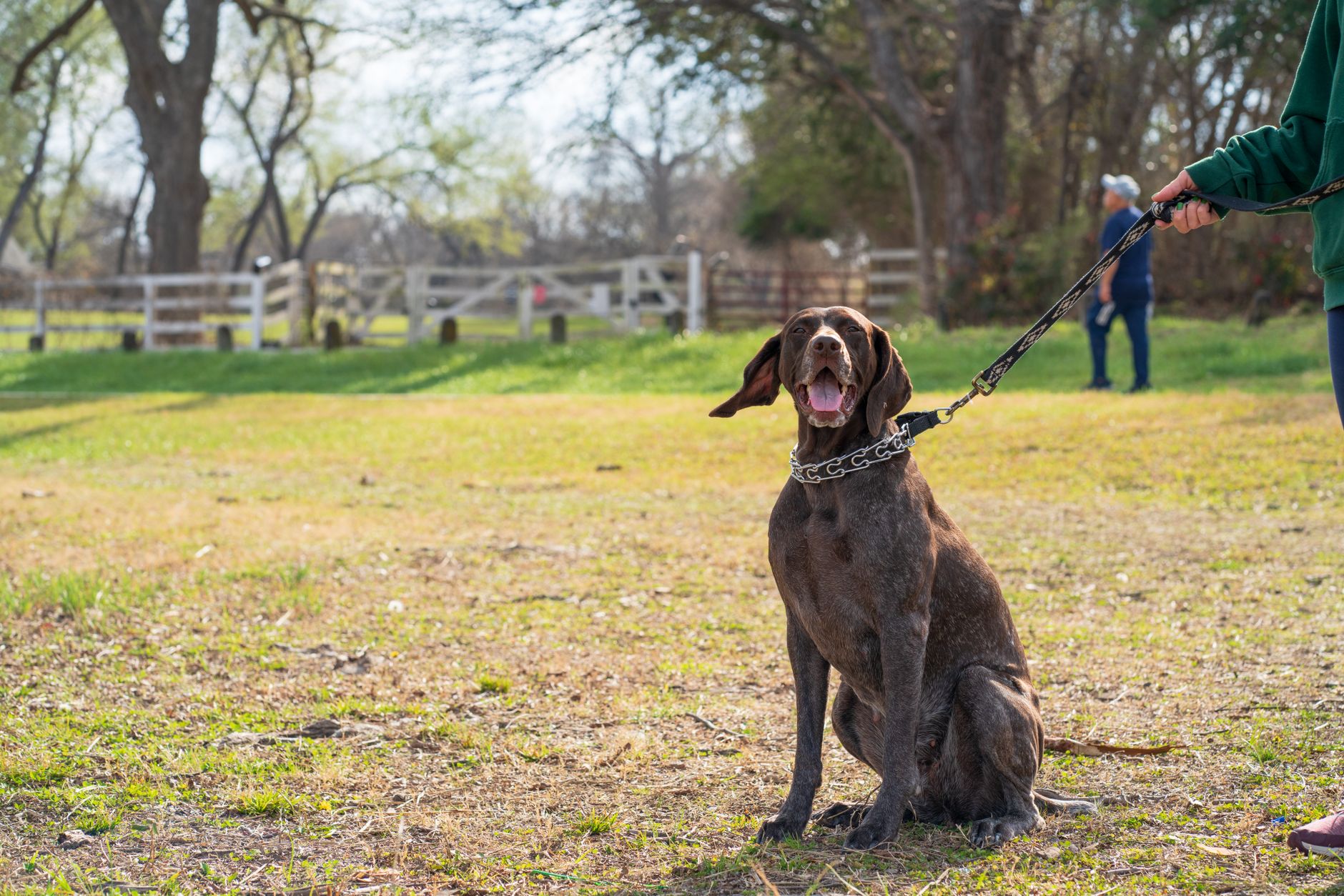
You set out for a nice walk. Ten seconds later you're being towed down the footpath like a water-skier, shoulder aching, neighbours watching. If that's your evening, you're not alone — and you haven't ruined your dog.
Golden retrievers pull because the world is genuinely exciting to them and moving forward has always worked. It's a self-rewarding habit, not defiance. The good news: it's one of the most reliably fixable problems in dog training, and you don't need hours a day to fix it.
Your Quick Win for Tonight
Before anything else, try this on your very next walk:
The statue method. The moment the lead goes tight, stop completely. Don't yank back, don't say anything — just become a bollard. The second your dog turns to check on you and the lead softens, take one calm step forward. Pulling = walk stops. Loose lead = walk continues.
It feels slow and a little ridiculous at first. Stick with it for just five minutes. Most owners feel a noticeable difference within a single session because dogs figure out cause and effect fast.
Why Goldens Pull (It's Not About Dominance)
Forget the old "alpha dog" theory. Goldens pull for one simple reason: it has always gotten them to the thing they want. You walked forward anyway, so pulling was rewarded thousands of times before you decided to change the rules.
Golden retrievers are also bred to work at a trot ahead of a human — flushing birds, retrieving game. Forward momentum is literally in their DNA. Understanding this makes it easier not to take it personally.
The Step-by-Step Plan (5–10 Minutes a Day)
You don't need a marathon training session. Short, consistent reps beat long, exhausting ones every time.
Step 1: Set Up for Success (Days 1–3)
- Choose a quiet street or your backyard for early sessions. A busy park is like trying to learn piano at a rock concert.
- Use high-value treats — small pieces of cooked chicken, cheese, or Fritz. Your dog's dry kibble won't compete with a possum scent.
- Check your equipment. A standard flat collar is fine to start. If your dog is very strong, a front-attach harness (like a PetSafe Easy Walk) redirects pulling without causing pain. Avoid retractable leads — they teach dogs that pulling extends their range.
Step 2: Teach "Let's Go" in Your Backyard (Days 1–5)
Before worrying about the street, install the behaviour somewhere boring:
- Stand still with your dog beside you.
- Say "let's go" in a cheerful voice and take one step forward.
- If the lead stays loose after three steps, deliver a treat at your hip — this teaches your dog that the rewarding position is next to you.
- If the lead tightens, stop (statue method). Wait for slack, then try again.
Aim for two or three 5-minute sessions across the day. End on a win — even a tiny one.
Step 3: Move to the Real World (Week 2)
Once your dog holds a loose lead for 10–15 steps in the yard, graduate to a quiet street:
- Start from your front door. The moment you step outside, ask for attention with your dog's name before moving off.
- Reward frequently in the first minute — roughly every 3–5 steps if they're near you. Fade the treats gradually as the behaviour strengthens.
- Change direction when pulling starts rather than always stopping. Turn 180° and walk the other way. This keeps momentum (rewarding for the dog) while making pulling pointless.
- Keep sessions to 10 minutes maximum. Leash-walking is mentally tiring for a dog learning new rules.
Step 4: Add Distractions Gradually (Weeks 3–4)
- Introduce one new distraction at a time: a busier street, another dog in the distance, a kids' park.
- If your dog falls apart around other dogs, that's a separate issue (reactivity) — don't try to train loose-lead walking and dog-greetings at the same time.
- Celebrate small wins. A golden retriever walking nicely past a food wrapper on the ground deserves a party.
Common Mistakes That Slow Progress
| Mistake | Why It Backfires | What to Do Instead |
|---|---|---|
| Letting them pull "just this once" | Resets the habit — dogs need consistency | Stop every single time, no exceptions |
| Punishing the pulling with leash jerks | Creates anxiety and can increase arousal | Use neutral statue method or direction change |
| Training only on weekends | Too much time between sessions | Even 5 minutes daily beats an hour on Saturday |
| Using a retractable lead | Rewards pulling with extra length | Switch to a fixed 1.8 m lead |
| Moving to busy areas too soon | Overwhelms the dog; sets back progress | Earn success in quiet spots first |
| Expecting perfection in week one | Kills motivation | Realistic timeline: reliable improvement in 3–6 weeks |
Realistic Timelines
- Day 1: Dog notices the rules are different.
- Week 1–2: Pulling reduces noticeably in familiar, low-distraction areas.
- Week 3–4: Loose lead walking becoming the default in most situations.
- 6–8 weeks: Reliable loose lead in most real-world contexts with ongoing practice.
Younger dogs and puppies often progress faster. Dogs with years of pulling habits may take a little longer — that's normal, not a failure.
Equipment Worth Knowing About
- Front-attach harness (e.g., PetSafe Easy Walk, ~$40–$60 AUD): Redirects forward momentum without discomfort. Great while you're still training.
- Head halter (e.g., Halti, Gentle Leader, ~$30–$50 AUD): Gives more control for very strong dogs. Needs a proper introduction period so the dog accepts it calmly.
- Standard flat collar: Perfectly fine for dogs who aren't yanking hard. Avoid for pullers — sustained pressure on the trachea is a real welfare concern.
- Avoid: Choke chains, prong collars, and e-collars. These suppress behaviour through pain or fear and can create new problems including aggression.
When to Get Professional Help
Most golden retrievers respond well to the steps above, but call in a qualified trainer if:
- Your dog is so aroused on lead that they can't take treats at all (even high-value ones).
- Pulling is combined with lunging, barking, or growling at people or dogs.
- You have a physical injury that makes managing the dog unsafe.
- You've been consistent for 6–8 weeks with no improvement.
Look for a trainer who uses positive reinforcement methods and holds a qualification from a recognised body such as the Delta Society Australia (now PPG Australia) or the NDTF. A good trainer will improve your skills, not just the dog's. Expect to pay $80–$180 AUD for a one-on-one session in most Australian cities — worth every cent if you've hit a wall.
Pulling on the lead is frustrating precisely because it happens every single day. But that frequency is actually an advantage: every walk is a training opportunity. Stay consistent, keep sessions short, and trust that your golden — bred to work with people — genuinely wants to figure out what you're asking.
As an Amazon Associate we earn from qualifying purchases.
Frequently asked questions
How long does it take to stop a golden retriever from pulling on the lead?
Most owners see a real improvement within 3–4 weeks of consistent daily practice, with reliable loose-lead walking in most situations by 6–8 weeks. Dogs with years of pulling habits may take a little longer, but the behaviour is very fixable. Short, daily sessions work far better than occasional long ones.
What is the best harness to stop a golden retriever pulling?
A front-attach harness — such as the PetSafe Easy Walk or Ruffwear Front Range — is the most practical tool for pullers. The front clip redirects the dog sideways when they pull forward, which takes force out of the equation without causing discomfort. Prices typically range from $40–$80 AUD. A harness manages pulling in the short term; combine it with training to fix the habit long-term.
Is it ever too late to train a golden retriever to stop pulling?
No. Dogs learn throughout their lives, and older goldens often respond well to training because they're calmer and more focused than puppies. The process may take a bit longer if a pulling habit is deeply ingrained, but 'too old to train' is a myth. Consistency and high-value rewards matter far more than age.
Should I use a head halter or a harness for a golden retriever that pulls?
Both can work, but they suit different situations. A front-attach harness is easier for most owners to introduce and is comfortable from day one. A head halter (like a Halti or Gentle Leader) gives more precise control for very strong or reactive dogs but needs a gradual introduction — put it on and off at mealtime for several days before using it on a walk. Never use a head halter with a sudden jerk, as it can strain the neck.
Why does my golden retriever only pull toward other dogs?
Pulling specifically toward other dogs usually signals over-excitement or frustration at not being able to greet — sometimes called 'frustrated greeter' behaviour. This is different from general lead pulling and benefits from its own training approach, including increasing distance from other dogs and rewarding calm attention. If the pulling is accompanied by barking or lunging, consult a positive-reinforcement trainer, as this edges into leash reactivity territory.
Can I train loose-lead walking using treats without the dog becoming dependent on them?
Yes. Treats are a teaching tool, not a permanent requirement. Once your golden is consistently walking on a loose lead, you fade food rewards gradually — rewarding every other success, then every few, then randomly. Random reinforcement actually strengthens behaviour. The walk itself, sniffing opportunities, and praise become the ongoing reward once the habit is established.
Free printable
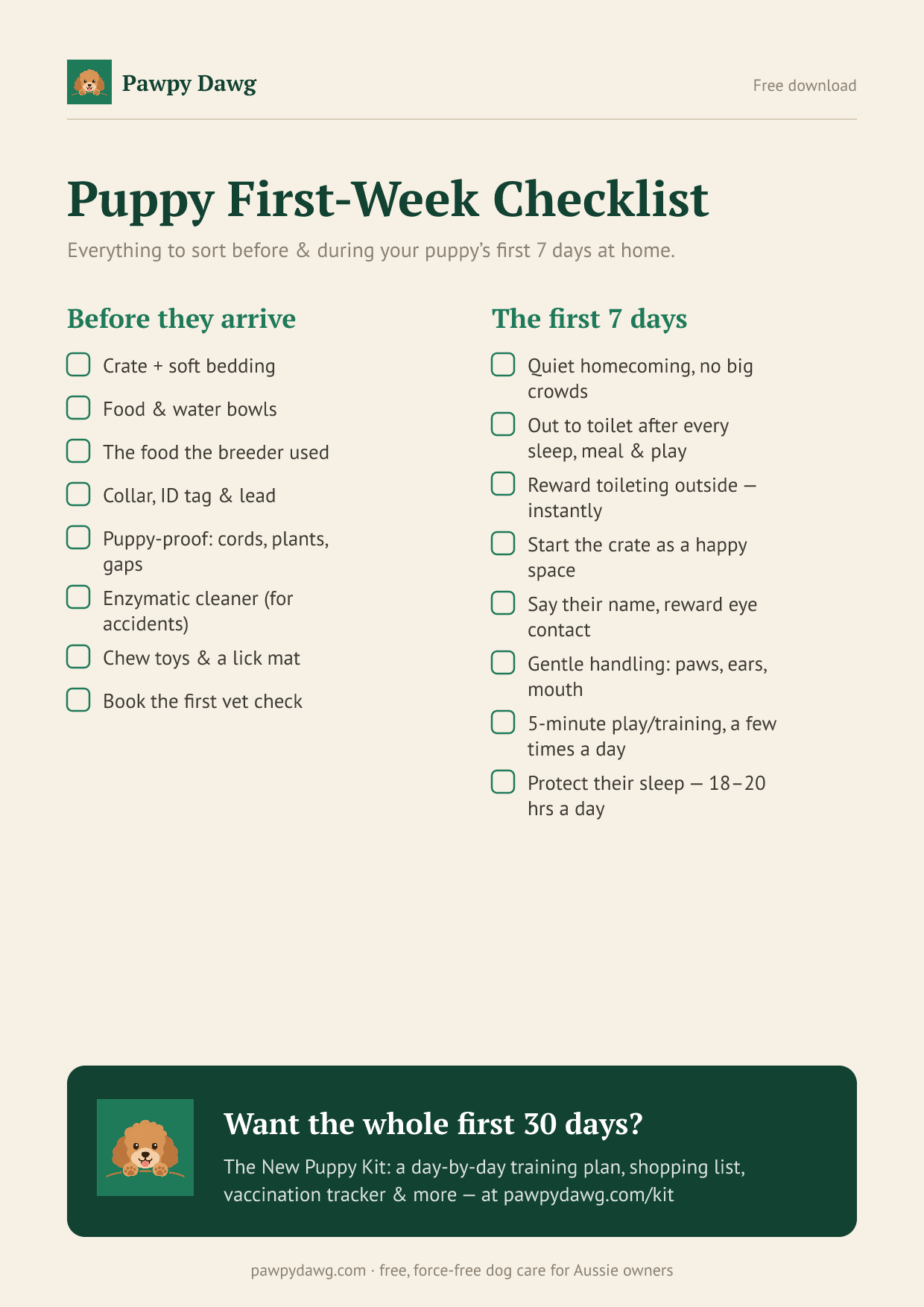
Free: the Puppy First-Week Checklist
Everything to sort before and during your puppy's first 7 days home — a printable one-pager. Plus the occasional genuinely useful dog tip. No spam, unsubscribe anytime.
Related guides
How to Stop a Golden Retriever Barking at Strangers (Step-by-Step)
Stop your golden retriever barking at strangers with this positive-reinforcement plan. Step-by-step training, realistic timelines & when to call a pro. 🐾
Read the guide →
Golden Retriever Separation Anxiety: A Step-by-Step Fix
Golden retriever separation anxiety is stressful — for you and your dog. Here's a realistic, step-by-step positive-reinforcement plan that actually works.
Read the guide →
How to Stop a Golden Retriever Jumping Up on People (Step-by-Step)
Tired of your Golden Retriever jumping up on people? This step-by-step positive-reinforcement plan gets real results in 5–10 min/day. Start today.
Read the guide →