
How to Stop a Golden Retriever Jumping Up on People (Step-by-Step)
Tired of your Golden Retriever jumping up on people? This step-by-step positive-reinforcement plan gets real results in 5–10 min/day. Start today.

Written by Bradley Brown
Founder & editor · Reviewed 2026-07-05
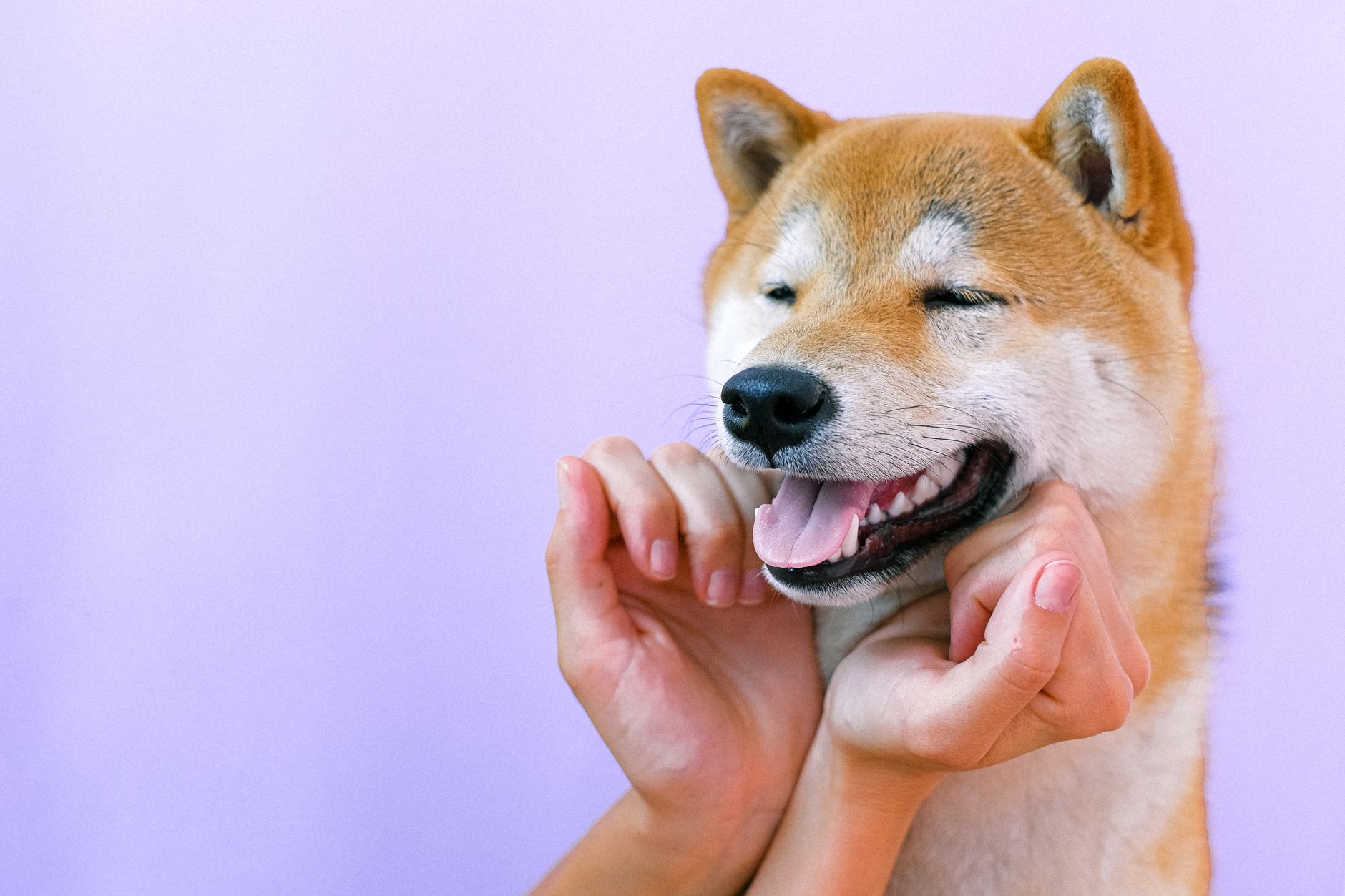
Your Golden just launched itself at your mother-in-law, your neighbour's toddler, or a stranger at the park — and the looks you got made you want to disappear. You're not alone, and you haven't ruined your dog. Jumping is one of the most deeply wired social behaviours in Retrievers specifically; they were bred to be enthusiastic, people-focused, and physically expressive. That same quality that makes them wonderful is exactly what's plastering muddy paw prints on every shirt you own.
The good news: jumping is one of the faster problems to fix with the right approach, and you can start making progress tonight.
Why Golden Retrievers Jump (and Why Telling Them Off Rarely Helps)
Jumping up is almost always about greeting and attention. From a puppy's perspective, it worked: people looked at them, touched them, and made noise — even if that noise was "No! Get down!" Any reaction is rewarding to a dog who just wants connection.
Punishment-based corrections (kneeing, grabbing paws, shouting) can suppress the behaviour temporarily, but they don't teach the dog what to do instead, and they can erode the trust that makes Retrievers so trainable. Positive reinforcement — rewarding the behaviour you want — is faster, kinder, and backed by the bulk of current veterinary and animal behaviour guidance.
Your Quick Win for Tonight: The "Four Paws" Rule
Before you read another word, here's something you can try in the next five minutes.
Every single person in the house agrees: attention only happens when all four paws are on the floor.
- The moment your dog jumps: turn your back, fold your arms, go completely silent. No eye contact, no pushing down, no talking.
- The moment all four paws hit the floor: immediately turn, crouch, and give calm, warm praise or a small treat.
- Repeat every single time, without exception.
Consistency is the whole game here. One family member who "doesn't mind" the jumping will reset your progress significantly. Get everyone on the same page tonight.
Step-by-Step Training Plan (5–10 Minutes a Day)
Step 1: Teach a Solid "Sit" (Days 1–3)
If your dog doesn't have a reliable sit, that's your starting point. A sit is the incompatible behaviour — a dog can't sit and jump at the same time.
- Hold a treat at your dog's nose level.
- Slowly move it back over their head. Their bottom will naturally lower.
- The moment their backside touches the ground, say "yes" (or click if you use a clicker) and reward.
- Practice 10 repetitions, twice a day. Keep sessions under five minutes.
Don't add the word "sit" until they're doing it reliably — say it just before they do it naturally, then reward.
Step 2: Practise Greetings at the Door (Days 3–7)
The front door is usually the highest-intensity jump trigger. Manufacture low-stakes greetings so you can train them.
- Ask a family member or neighbour to knock or ring the doorbell.
- Have treats ready in a pouch or pocket before you answer.
- Ask your dog for a sit before you open the door. If they sit, reward, then open.
- If they break the sit and jump, the visitor turns away and the door closes. Try again.
- Build up slowly: first with the door closed, then ajar, then fully open, then with the visitor stepping inside.
This takes repetition, but most owners see clear improvement within one to two weeks of daily practice.
Step 3: Train "Greet People on Walks" (Week 2 Onwards)
Strangers on walks are harder because you can't control them — many people actively encourage jumping because Goldens are cute.
What to do:
- Before an approaching person reaches you, ask for a sit and pre-load a treat in your hand.
- If they stay sitting during the greeting, reward and praise.
- If they jump, calmly step in front of your dog (body-blocking), ask the person to turn away, and reset.
- It's completely fine to say: "She's in training — could you wait for a sit before you pat her? Thank you!" Most people are happy to help.
A note on kids and elderly visitors: These are your highest-priority situations. Don't wait for jumping to happen — use a short lead or house tab (a short, light lead worn indoors) to give you physical control while you train.
Step 4: Proof It Everywhere
Dogs don't generalise automatically. A dog that sits beautifully in your kitchen may jump like a pogo stick at the park. You need to practise greetings in multiple locations with multiple people.
- At home with family ✅
- At the front door ✅
- In the backyard ✅
- At the park ✅
- At the vet or pet shop ✅
Each new location is essentially a fresh lesson for your dog. That's normal, not a setback.
Common Mistakes That Slow Progress
| Mistake | Why It Backfires | What to Do Instead |
|---|---|---|
| Inconsistent rules ("just this once") | Intermittent reward is highly motivating — it makes jumping more persistent | Non-negotiable: four paws = attention, always |
| Pushing the dog down | Physical contact is rewarding for attention-seeking dogs | Turn away; remove all interaction |
| Repeating "sit, sit, SIT" | Teaches the dog to wait for the third cue | Say it once, then help them (lure) if needed |
| Only training at home | Behaviour won't transfer to parks or visitors | Practise in new places weekly |
| Expecting overnight results | Jumping was reinforced hundreds of times; it takes time to extinguish | Aim for progress over weeks, not days |
Realistic Timeline
- Days 1–3: Your dog starts to notice that jumping makes you boring.
- Week 1–2: Four-paws-on-floor becomes more frequent; jumping reduces at home.
- Week 3–6: Reliable sit-to-greet at the door with known visitors.
- 2–3 months: Consistent behaviour in most real-world situations.
Puppies under 12 months may regress during adolescence (roughly 6–18 months) — this is normal. Keep going; they come out the other side.
When to Get Professional Help
Most Golden Retrievers respond well to the approach above. Consider bringing in a qualified trainer or veterinary behaviourist if:
- Jumping is accompanied by mouthing, nipping, or intense arousal that doesn't settle.
- Your dog has knocked someone over and you're genuinely worried about safety.
- You've been consistent for 6–8 weeks with no improvement at all.
Look for a trainer who uses force-free or positive-reinforcement methods and holds credentials from a recognised body such as the Pet Professional Guild Australia or the NDTF. Expect to pay $80–$180 AUD for a private session — worth every cent if you're stuck.
A Quick Checklist Before Your Next Walk
- Treats in your pocket (small, soft, smelly — think cheese or commercial training treats)
- All household members briefed on the four-paws rule
- House tab or short lead available for high-intensity greeting moments
- One person identified to help you practise door greetings this week
- Realistic expectation: one good rep is a win today
Your dog is not broken, and you're not a bad owner. You have a highly social, enthusiastic breed that learned a behaviour that used to work. You're just changing the rules — and Goldens, once they understand what you're asking, are genuinely eager to get it right.
As an Amazon Associate we earn from qualifying purchases.
Frequently asked questions
How long does it take to stop a Golden Retriever jumping up on people?
Most owners see noticeable improvement at home within one to two weeks of consistent training. Reliable behaviour in real-world situations — parks, visitors, walks — typically takes six to twelve weeks. Adolescent dogs (6–18 months) may have setbacks, but these are temporary.
Should I knee my dog in the chest to stop jumping?
No — this approach is not recommended by mainstream animal behaviour experts. Kneeing can cause physical injury and often backfires because the physical contact itself can be rewarding for attention-seeking dogs. Turning away and withholding all attention is more effective and far kinder.
My Golden only jumps on some people — why?
Dogs are excellent at reading which people will reward jumping with attention and which won't. The people your dog jumps on most are likely the ones who have — even accidentally — given attention (eye contact, talking, touching) when all four paws weren't on the floor. Ask those people to follow your four-paws rule consistently.
Is jumping up a sign my Golden Retriever is dominant?
No. The dominance explanation for jumping has been largely discredited by modern animal behaviour science. Jumping is a normal social greeting behaviour rooted in attention-seeking, not status. Treating it as such — by teaching an incompatible behaviour and rewarding it — gets better results than dominance-based corrections.
My Golden Retriever jumps up on my kids. Is this dangerous?
A large, exuberant Retriever can easily knock over a small child, so this is worth prioritising. Use a short house lead to give you physical control during greetings, and practice sit-to-greet with children in a calm, managed way. Never leave young children and an untrained dog to manage greetings unsupervised until the behaviour is reliable.
Can an older Golden Retriever be trained to stop jumping, or is it too late?
It is absolutely not too late. Dogs of any age can learn new behaviours through positive reinforcement — older dogs often concentrate better than puppies. The training steps are identical; an older dog may simply need a little more patience if the jumping habit is deeply ingrained from years of accidental reward.
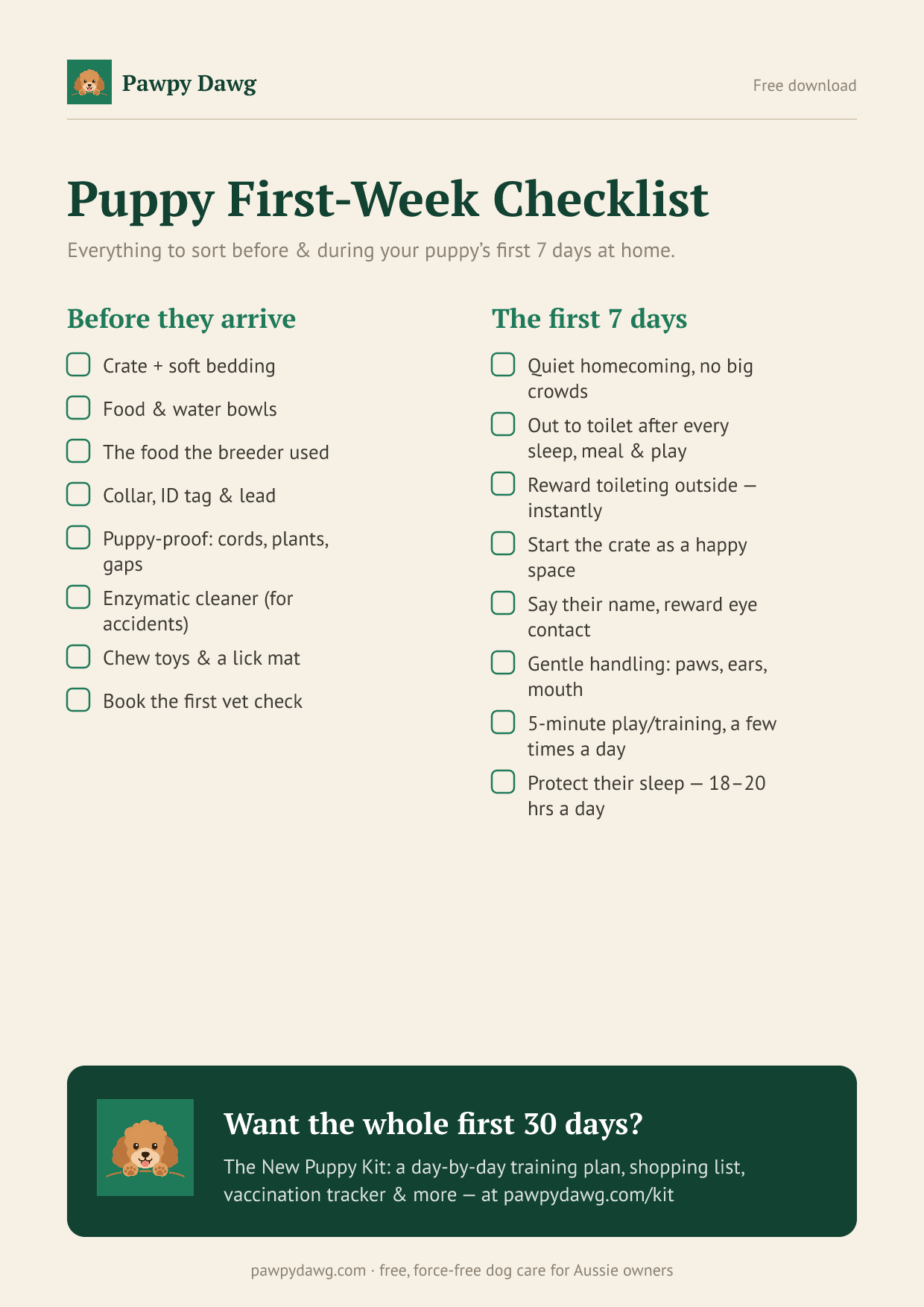
Free printable
Free: the Puppy First-Week Checklist
Everything to sort before and during your puppy's first 7 days home — a printable one-pager. Plus the occasional genuinely useful dog tip. No spam, unsubscribe anytime.
Related guides
How to Stop a Golden Retriever Pulling on the Lead (Step-by-Step)
Tired of being dragged down the street? Here's a practical, positive-reinforcement plan to stop your golden retriever pulling on the lead — starting today.
Read the guide →
How to Stop a Golden Retriever Barking at Strangers (Step-by-Step)
Stop your golden retriever barking at strangers with this positive-reinforcement plan. Step-by-step training, realistic timelines & when to call a pro. 🐾
Read the guide →
Golden Retriever Separation Anxiety: A Step-by-Step Fix
Golden retriever separation anxiety is stressful — for you and your dog. Here's a realistic, step-by-step positive-reinforcement plan that actually works.
Read the guide →