
How to Fix Resource Guarding in Your Golden Retriever
Golden retriever resource guarding is common, fixable, and not your fault. Here's a positive-reinforcement plan with quick wins you can start today.

Written by Bradley Brown
Founder & editor · Reviewed 2026-07-06
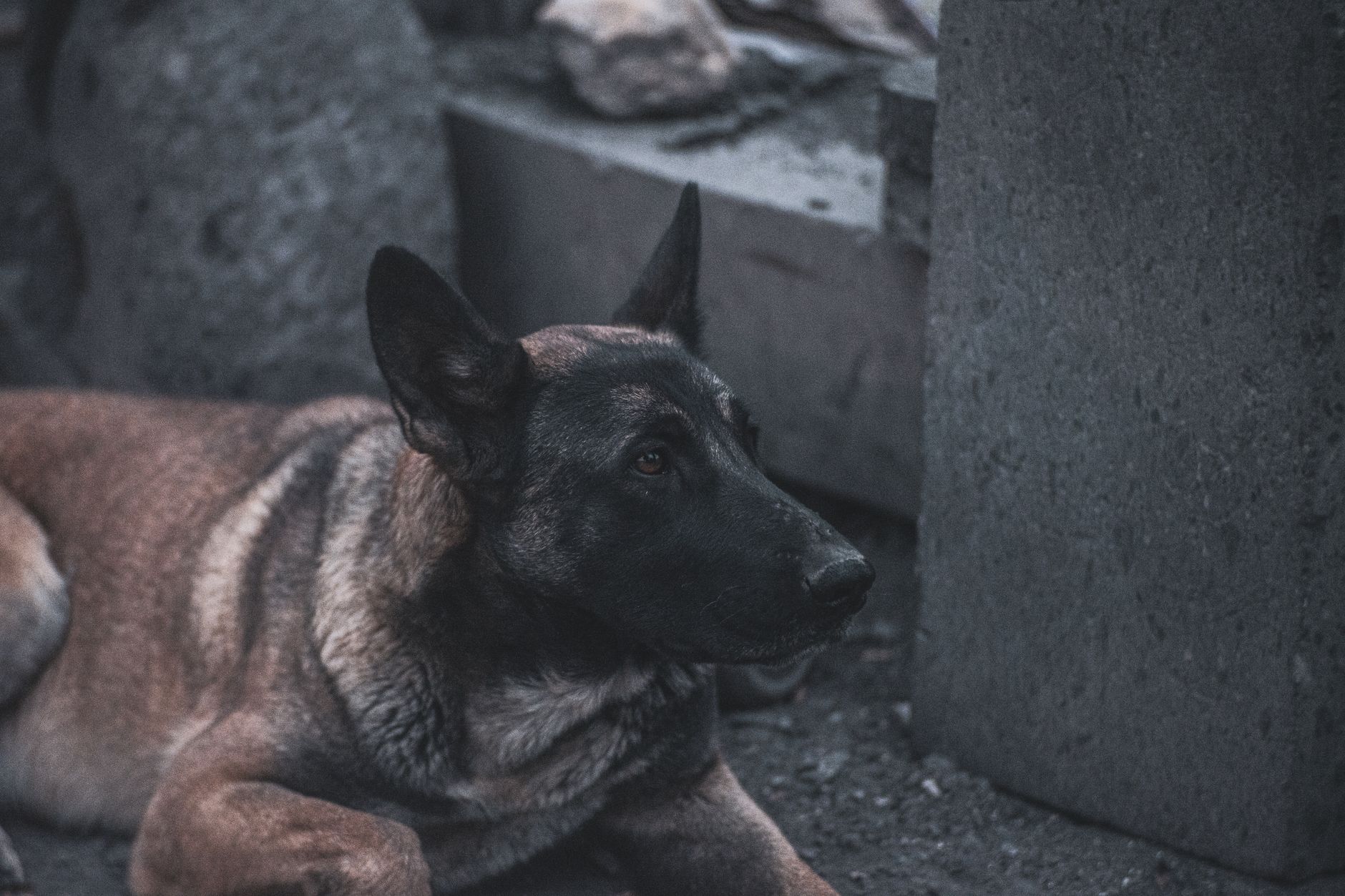
If your Golden just growled over a bone — or snapped when you reached for the food bowl — take a breath. You haven't ruined your dog. You haven't failed as an owner. Resource guarding is one of the most common behaviour complaints vets and trainers hear about, and Goldens are absolutely not immune to it, despite their reputation. The good news: with short, consistent sessions you can genuinely turn this around.
What Resource Guarding Actually Is (and Isn't)
Resource guarding is a dog communicating, "I'm worried you'll take my thing." It's normal canine behaviour rooted in survival instinct — wild dogs who didn't protect food didn't eat. A growl or a hard stare over a chew is not aggression for its own sake; it's a warning signal that something feels threatening to your dog.
What it is not:
- Dominance (that model has been largely debunked by modern animal behaviour science)
- A sign your dog is "bad" or that you've done everything wrong
- Something that requires punishment to fix — in fact, punishing a growl typically makes things worse by removing the warning before a bite
Common guarded items: food bowl, bones, chews, favourite toys, stolen socks, resting spots, and even people.
Your Quick Win for Today: Trade, Don't Take
Before you read another word, try this tonight.
The Trade Game (5 minutes, one session)
- Pick something your dog currently has — a chew or toy they like but aren't intensely fixated on.
- Walk up calmly and offer a high-value treat (small piece of cooked chicken, cheese, or fritz) near their nose.
- As they drop or move away from the item, say "yes!" (or click if you use a clicker), deliver the treat, then give the item straight back.
That last step is the key. Most guarding gets worse because dogs learn that when humans approach, the good thing disappears. When you return the item, your dog starts learning: humans approaching = bonus treat AND I keep my thing. That's a fundamentally different emotional response.
Do 3–5 repetitions, then stop. You're done for the day.
The Core Training Plan (5–10 Minutes a Day)
Stage 1: Approach = Good Things (Week 1–2)
Work at a distance your dog is comfortable with — no stiffening, no hard stare. The goal is to change the emotional association before you change the behaviour.
- Walk past the dog while eating and casually drop a treat near the bowl without reaching in. Keep moving.
- Repeat 8–10 times per meal. That's it.
- Gradually reduce the distance over several days as the dog stays relaxed.
Signs it's working: tail wags or soft body when you approach, dog looks up at you rather than hunching over the resource.
Stage 2: Hand-Feeding Around the Bowl (Week 2–3)
Once your dog is relaxed with you nearby:
- Kneel down and hand-feed a few pieces of kibble beside the bowl before you put it down.
- Add a few high-value pieces to the bowl while they eat.
- The dog learns: you near the bowl = more good food appears.
Stage 3: Practise the Trade on Valued Items (Week 3–4)
Now apply the Trade Game (see above) to progressively higher-value items — from a rubber toy up to a bully stick. Go slowly. If you see any stiffening or freezing, you've moved too fast; go back a stage.
Session checklist:
- Keep sessions to 5–10 minutes maximum
- End on a success — never push to the point of a growl
- Use the highest-value treats your dog will work for
- Practise with every family member, including supervised children
- Log a quick note after each session (even just "day 4 — relaxed at 1 m")
Common Mistakes That Slow Progress
| Mistake | Why It Backfires | What to Do Instead |
|---|---|---|
| Punishing a growl | Removes the warning signal; increases bite risk | Treat the growl as information — you've moved too fast |
| "Testing" by suddenly grabbing the item | Confirms the dog's fear; often triggers escalation | Only approach when you have treats ready and a clear plan |
| Doing big 30-minute sessions | Overwhelms the dog and you | 5–10 min max, once or twice daily |
| Inconsistency between family members | Dog learns guarding works with some people | Run the same protocol with everyone in the household |
| Expecting overnight results | Frustration leads to shortcuts | Realistic timeline: noticeable improvement in 3–6 weeks of daily work |
Managing the Environment While You Train
Training takes time. In the meantime, manage the situation so nobody gets hurt and the dog doesn't keep rehearsing the guarding behaviour:
- Feed your dog in a separate room or behind a baby gate, away from children and other pets.
- Pick up high-value chews when guests are visiting or kids are around.
- Use a drag lead (a lightweight house lead) indoors so you can guide your dog away from a resource without reaching over them.
- Don't corner your dog — always leave them an exit route.
Management is not failure. It's responsible ownership while the training catches up.
Is This Normal for Golden Retrievers?
Yes, genuinely. Goldens have a reputation as the world's most agreeable dogs, which can make a growl over a bone feel shocking and shameful. But genetics don't override instinct entirely. Research published in Applied Animal Behaviour Science consistently shows resource guarding appears across all breeds, including those bred for soft temperaments.
Your dog is not broken. They are a dog.
When to Call in a Professional
Most mild-to-moderate guarding responds well to the plan above. Get a qualified professional involved if:
- Your dog has made contact (even a graze) during a guarding incident
- Guarding is escalating despite consistent training
- There are young children in the home and you feel unsafe managing the situation
- The guarding is generalised — over multiple resources, locations, or people
Look for a trainer or veterinary behaviourist who uses force-free, positive-reinforcement methods (look for PPGA, IAABC, or KPA credentials in Australia). Expect to pay $AUD 150–350 for a one-on-one consult; it's money well spent compared to a preventable bite incident.
A vet check is also worth considering — pain (dental disease, arthritis, a sore gut) can make any dog more likely to guard, and that's a medical issue, not a training one.
Realistic Timeline
| Timeframe | What to Expect |
|---|---|
| Day 1–3 | Dog notices you're not a threat near resources |
| Week 1–2 | Relaxed body language when you approach |
| Week 3–4 | Reliable Trade Game on most items |
| Week 6–8 | Consistent improvement across contexts |
| Ongoing | Maintenance — keep practising periodically |
Behaviour change isn't linear. You'll have good days and setbacks. A setback doesn't erase your progress; it just means your dog needed more time on a particular stage. Go back a step, lower the stakes, and keep going.
You've got this.
Frequently asked questions
Why is my Golden Retriever resource guarding when they used to be so gentle?
Resource guarding can emerge or worsen at any age — it often surfaces around social maturity (12–36 months) or after a change in the household like a new pet, baby, or move. It doesn't mean your dog's personality has changed permanently. With consistent positive-reinforcement training, most dogs improve significantly.
Should I punish my Golden Retriever for growling over food or toys?
No — punishing a growl is one of the most counterproductive things you can do. The growl is your dog's warning signal; suppressing it doesn't remove the underlying anxiety, it just removes the warning before a bite. Instead, treat growling as feedback that you've moved too fast in training and take a step back.
Is resource guarding in Golden Retrievers dangerous around kids?
It can be, and it should be taken seriously. Until the guarding is well under management, feed your dog separately from children and pick up high-value chews when kids are present. If your dog has already snapped or made contact near a child, consult a qualified force-free behaviourist straight away rather than trying to work through it alone.
How long does it take to fix resource guarding in a dog?
Most owners see noticeable improvement within 3–6 weeks of daily 5–10 minute training sessions. Fully reliable behaviour across all contexts can take 2–3 months. The timeline depends on how long the behaviour has been practised, the dog's individual temperament, and how consistent the training is.
Can resource guarding be completely cured?
For most dogs, the guarding instinct doesn't disappear entirely — but it can be managed to a level where it's no longer a practical problem. Think of it like teaching recall: you maintain it with periodic practice rather than doing a one-off course and assuming it's done forever. Ongoing, occasional reinforcement keeps the new associations strong.
What's the difference between resource guarding and food aggression in dogs?
Food aggression is essentially a specific type of resource guarding directed at food-related items like the bowl, bones, or stolen food. Resource guarding is the broader term covering any valued item — toys, resting spots, even people. The underlying mechanism and the training approach are essentially the same for both.
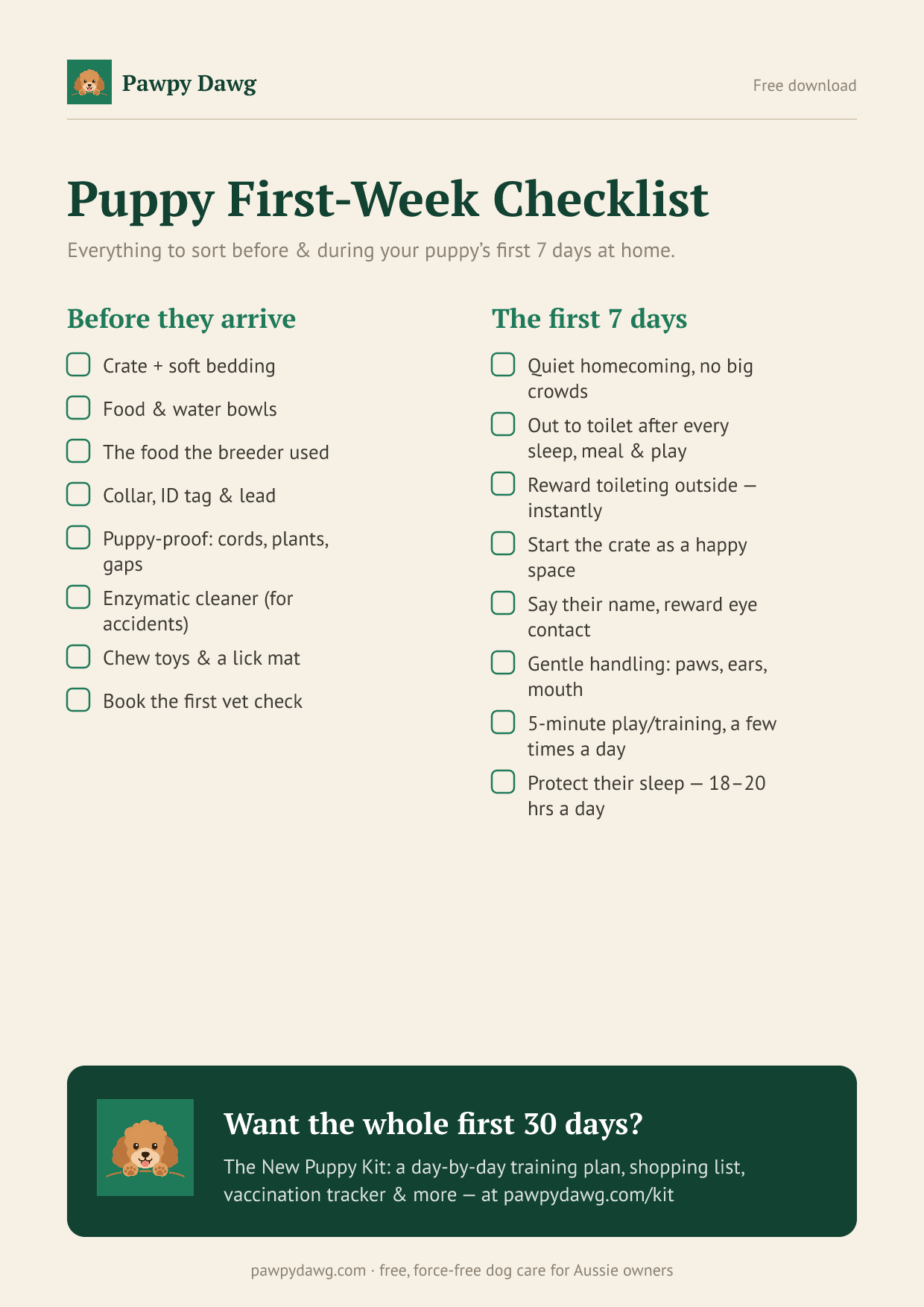
Free printable
Free: the Puppy First-Week Checklist
Everything to sort before and during your puppy's first 7 days home — a printable one-pager. Plus the occasional genuinely useful dog tip. No spam, unsubscribe anytime.
Related guides
How to Stop a Golden Retriever Pulling on the Lead (Step-by-Step)
Tired of being dragged down the street? Here's a practical, positive-reinforcement plan to stop your golden retriever pulling on the lead — starting today.
Read the guide →
How to Stop a Golden Retriever Barking at Strangers (Step-by-Step)
Stop your golden retriever barking at strangers with this positive-reinforcement plan. Step-by-step training, realistic timelines & when to call a pro. 🐾
Read the guide →
Golden Retriever Separation Anxiety: A Step-by-Step Fix
Golden retriever separation anxiety is stressful — for you and your dog. Here's a realistic, step-by-step positive-reinforcement plan that actually works.
Read the guide →