
How to Stop a Golden Retriever Digging Up the Yard (Step-by-Step)
Tired of craters in your backyard? Here's a realistic, positive-reinforcement plan to stop golden retriever digging in the yard — with quick wins you can try today.

Written by Bradley Brown
Founder & editor · Reviewed 2026-07-05
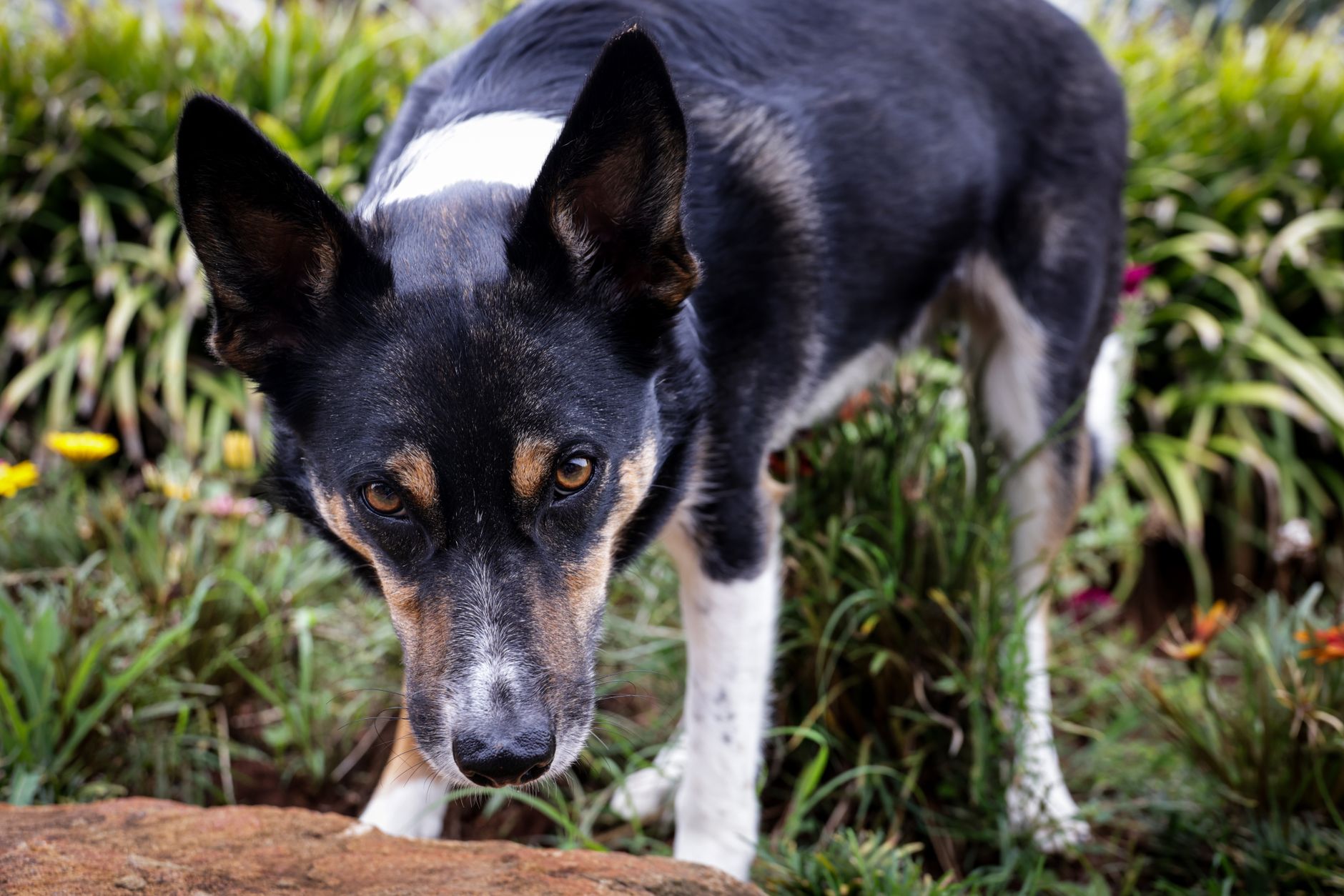
You came home to another excavation site. Or maybe you watched it happen in real time and felt that sinking mix of anger and guilt. Either way — you're not a bad owner, and your Golden isn't a bad dog. Digging is deeply hardwired into retrievers, and a yard full of holes almost always means something specific is going on that can be fixed.
Here's what actually works, without marathon training sessions.
Try This Today (Seriously, Right Now)
Before you read another word, go outside and do this:
Interrupt and redirect. The next time you catch your Golden mid-dig, calmly say "ah-ah" (no yelling — it just amps them up), then immediately invite them to do something else: toss a ball, ask for a sit, offer a chew. When they engage with the alternative, praise warmly and reward with a treat.
That's it. One rep won't fix it, but it plants the seed and gives you something proactive to do tonight. Five minutes is enough to start.
Why Golden Retrievers Dig (It's Not Spite)
Understanding the why saves you weeks of guesswork. Goldens dig for a handful of distinct reasons, and the fix depends on which one you're dealing with.
| Reason | What it looks like | Quick fix direction |
|---|---|---|
| Boredom / excess energy | Digging surges after quiet periods indoors | More exercise + enrichment before yard time |
| Heat regulation | Scraping at shaded spots, lying in the hole | Cool water, shade, limit yard time in heat |
| Prey drive | Focused digging near fence lines or roots | Remove attractants, supervise closely |
| Anxiety / escape attempts | Digging at fence bases, frantic behaviour | Address the anxiety root cause |
| It's just fun | Random holes, happy body language throughout | Redirect to a designated dig zone |
Goldens are most commonly bored or under-stimulated — they were bred to work all day. If your dog gets a 15-minute walk and then parks in the yard for hours, digging is practically inevitable.
The Step-by-Step Plan
Step 1: Burn Energy Before Yard Time (5–10 min/day)
A tired Golden is a well-behaved Golden. You don't need a marathon — you need quality activity:
- Sniff walks: Let them lead and sniff freely for 10 minutes. Mental effort from sniffing tires dogs out faster than physical distance.
- Short training bursts: Five minutes of sit, drop, stay, shake before going outside redirects mental energy.
- Food puzzles: A stuffed KONG or licki mat given 10 minutes before yard access reduces the "gotta do something" urge.
Do this consistently for one week. Most owners notice a meaningful drop in digging.
Step 2: Supervise and Interrupt — Don't Leave Them Alone to Practise
Every unsupervised dig session rehearses the behaviour and makes it stronger. For the next 2–3 weeks:
- Be outside with your dog during yard time, or only allow short, supervised sessions.
- Use a long line (5–10 metres) attached to a harness if they tend to dash to a digging spot — it lets you interrupt before the hole starts.
- Interrupt calmly and redirect every single time. Consistency here is the whole game.
Common mistake: Scolding after the fact. If you didn't see it happen, your dog cannot connect your reaction to the digging. You'll only teach them to be anxious around you in the yard.
Step 3: Build a "Yes" Spot — The Designated Dig Zone
Suppression alone creates frustration. Give them an outlet:
- Choose a corner of the yard and frame it with timber or pavers.
- Fill it with loose soil or sand (60 x 60 cm minimum — Goldens are enthusiastic).
- Bury a favourite toy or treat just below the surface. Let your dog "find" it.
- Use a cue word like "dig!" every time they use it, then praise enthusiastically.
- Keep seeding it with buried rewards for the first 2–3 weeks so it stays compelling.
When they head to a forbidden spot, calmly redirect them to the dig zone. Within a few weeks, most Goldens start choosing it on their own.
Step 4: Make Off-Limits Areas Less Appealing
Pair the "yes" spot with some mild deterrents in problem areas:
- Chicken wire or rocks: Lay flat under a thin layer of mulch — unpleasant to paw at.
- Citrus peel: Many dogs dislike the smell. Scatter near favourite dig spots and refresh every few days.
- Motion-activated sprinklers: Effective, humane, and oddly satisfying to set up. Budget around $40–$80 AUD from hardware stores.
Avoid any product marketed as "punishment" — fear-based deterrents can backfire with sensitive breeds like Goldens.
Step 5: Address Heat and Boredom Separately
If your Golden digs in shaded spots during summer, they're almost certainly trying to cool down. Fixes:
- A clam shell pool ($25–$40 AUD at Kmart or Big W) filled with water is often an instant solution.
- Ensure at least one permanently shaded area with good airflow.
- Limit yard access during the heat of the day (11 am – 3 pm in most Australian states).
Realistic Timeline
| Week | What to expect |
|---|---|
| 1 | Digging frequency stays similar, but you're interrupting before holes form |
| 2–3 | Dog starts offering alternative behaviours (coming to you, going to dig zone) |
| 4–6 | Clear reduction; occasional slips, especially if exercise drops off |
| 8+ | New default established — dig zone used, yard mostly intact |
Slipping back during holidays or busy weeks is completely normal. A few refresher sessions bring it back quickly.
Common Mistakes That Stall Progress
- Inconsistency: Two family members applying different rules resets the learning.
- Too much unsupervised yard time too soon: One bad session can undo a week of progress.
- Stopping enrichment once digging reduces: Keep up the sniff walks and puzzles — they're maintenance, not just fixes.
- Expecting overnight results: Even the most biddable Golden needs 4–8 weeks of consistency.
When to Get Professional Help
Most Golden Retriever digging is a management and enrichment problem — not a deep behavioural issue. But call in a qualified trainer (look for someone accredited through the Pet Professional Guild Australia or Delta Society) if:
- Digging is accompanied by significant anxiety signs (panting, pacing, vocalising, destructive behaviour when alone).
- Your dog is also attempting to escape the yard repeatedly.
- You've applied this plan consistently for 8 weeks with no change.
A single consult with a good positive-reinforcement trainer — often $100–$180 AUD — can identify the specific driver faster than months of solo troubleshooting.
Your yard can recover. More importantly, your dog is not broken, and you haven't ruined anything. You've just got a bored, energetic retriever doing exactly what bored, energetic retrievers do. Give them a job, an outlet, and a little structure — and the holes stop.
As an Amazon Associate we earn from qualifying purchases.
Frequently asked questions
Why does my Golden Retriever dig so much compared to other breeds?
Golden Retrievers were bred for long days of active fieldwork, so they have high mental and physical energy needs. When that energy has nowhere to go, digging is a natural outlet. It's not a personality flaw — it's a breed trait that responds well to enrichment and structured exercise.
Will my Golden Retriever ever stop digging completely?
Most Goldens can be managed to the point where digging becomes rare, but total elimination isn't a realistic goal for most dogs. The aim is to redirect the behaviour to an acceptable outlet — like a designated dig zone — and keep their needs met so they're not driven to dig elsewhere.
Is it okay to use cayenne pepper or other home remedies to stop digging?
Cayenne pepper and similar irritants can cause discomfort to a dog's nose, mouth, and eyes, and aren't recommended by most vets or trainers. Milder deterrents like citrus peel or physical barriers (rocks, wire mesh) are safer and gentler on sensitive breeds like Goldens.
My Golden only digs when I'm not home — what can I do?
Digging in your absence usually signals boredom or mild separation anxiety. Start by reducing unsupervised yard time and providing a food puzzle or long-lasting chew before you leave. If the behaviour is accompanied by other signs of distress, it's worth speaking with a vet or accredited behaviourist about separation anxiety.
How much exercise does a Golden Retriever actually need to reduce problem digging?
Adult Goldens generally need around 60 minutes of exercise per day, but quality matters more than quantity. A 10-minute sniff walk plus a short training session can be more effective than a 45-minute on-leash jog. Mental stimulation — puzzles, training, scent games — is often the missing piece for dogs who dig despite regular walks.
At what age do Golden Retrievers usually grow out of digging?
Many Goldens mellow naturally between 2–3 years of age as they move out of adolescence, but this isn't guaranteed — and waiting it out without intervention just allows the habit to become more established. Training and enrichment at any age produces faster, more reliable results than simply waiting.
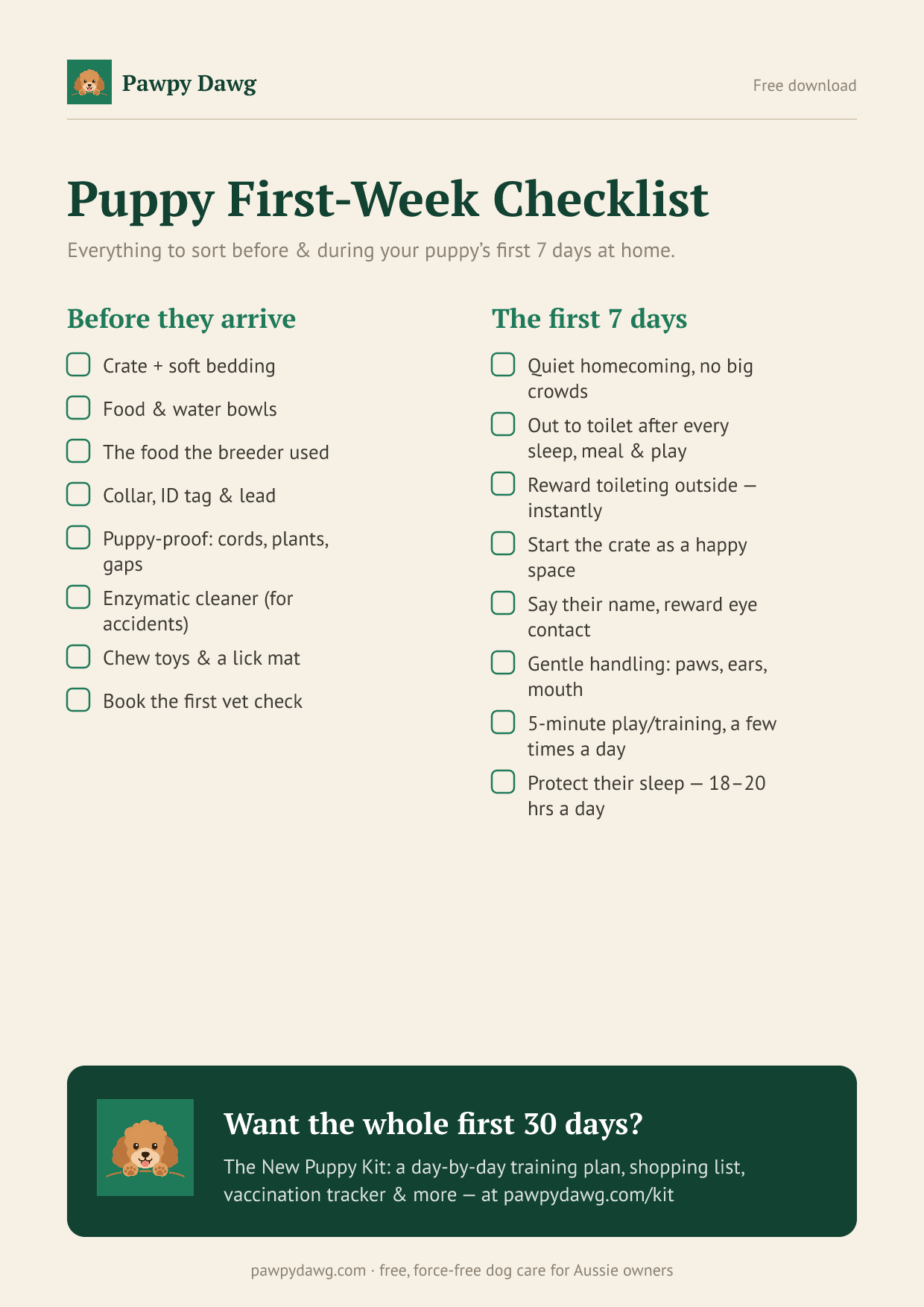
Free printable
Free: the Puppy First-Week Checklist
Everything to sort before and during your puppy's first 7 days home — a printable one-pager. Plus the occasional genuinely useful dog tip. No spam, unsubscribe anytime.
Related guides
How to Stop a Golden Retriever Pulling on the Lead (Step-by-Step)
Tired of being dragged down the street? Here's a practical, positive-reinforcement plan to stop your golden retriever pulling on the lead — starting today.
Read the guide →
How to Stop a Golden Retriever Barking at Strangers (Step-by-Step)
Stop your golden retriever barking at strangers with this positive-reinforcement plan. Step-by-step training, realistic timelines & when to call a pro. 🐾
Read the guide →
Golden Retriever Separation Anxiety: A Step-by-Step Fix
Golden retriever separation anxiety is stressful — for you and your dog. Here's a realistic, step-by-step positive-reinforcement plan that actually works.
Read the guide →