
How to Toilet Train a German Shepherd: A Realistic Plan
Struggling with German Shepherd toilet training? Get a realistic, positive-reinforcement plan with quick wins, honest timelines, and common mistakes to avoid.

Written by Bradley Brown
Founder & editor · Reviewed 2026-07-10
If your German Shepherd has just toileted on the floor — again — and you're Googling this at 11 pm feeling like you've somehow broken your dog, take a breath. You haven't. German Shepherds are one of the most trainable breeds on the planet, but toilet training still takes consistency and time, even for smart dogs. The behaviour you're seeing is completely normal, and it is absolutely fixable.
Here's your quick win for tonight: take your dog outside right now, wait quietly for 2–3 minutes, and if they toilet, mark it with a calm "yes" and give a treat immediately. That's the whole foundation. Everything below is just doing that more systematically.
Why German Shepherds Can Struggle With Toilet Training
Intelligence can actually work against you here. German Shepherds notice patterns fast — including the pattern that toileting near you leads to a reaction. If you've ever scolded or chased your dog after an accident, they may have learned to hide and go elsewhere, not to stop going inside.
Other common reasons toilet training stalls:
- Inconsistent schedules — if outside time is unpredictable, dogs can't build a reliable habit
- Too much freedom too soon — letting a puppy roam a whole house before they're trained is like leaving a toddler unsupervised near a swimming pool
- Punishing accidents — this teaches fear, not location preference
- Missing the signal — GSDs can be subtle; owners miss the cue and the dog toilets before anyone noticed they needed to go
The Core Method: Timed Trips + Positive Marking
This is not complicated. The science is straightforward: dogs develop a preference for toileting in places where good things happen immediately after they go. Your job is to be there, outside, every single time.
Step 1 — Set a Schedule (5 Minutes of Planning)
Take your dog out at these minimum trigger points every day:
- First thing in the morning (before your coffee)
- After every meal
- After every nap or crate rest
- After play sessions
- Last thing at night
For puppies under 12 weeks, add a middle-of-the-night trip. The rule of thumb: puppies can hold their bladder roughly one hour per month of age. A 10-week-old GSD puppy can hold on for about two to three hours — not all night.
Step 2 — Go Outside Together (Every Time)
Don't just open the back door and hope for the best. Go out with your dog. Stand still, be boring, give them 2–3 minutes. If they toilet:
- Mark immediately — say "yes!" or click (if you use a clicker) the moment they finish squatting, not after they've run back to you
- Reward within 3 seconds — a small, high-value treat (small cube of cooked chicken works well)
- Add a cue word — once they're going reliably, say "go toilet" just as they start. Over time they'll go on cue
If nothing happens after 3 minutes, go back inside and supervise closely or pop them in their crate for 10–15 minutes, then try again.
Step 3 — Manage the Environment
Until your GSD is reliably trained, limit their access. Use:
- A crate sized so they can stand, turn around, and lie down comfortably — dogs instinctively avoid toileting where they sleep
- Baby gates to keep them in the same room as you
- A long lead indoors (tethered to you) so you catch pre-toilet signals: sniffing the ground, circling, squatting, suddenly wandering off
The moment you see any of those signals, calmly interrupt and take them straight outside.
Step 4 — Clean Accidents Properly
Dogs return to spots that smell like a toilet. Standard household cleaners don't break down the enzymes in urine — your dog can still smell it even when you can't. Use an enzymatic cleaner (widely available at Australian pet stores for around $10–$20 per bottle). Spray, let it sit for the time listed on the label, then blot dry.
Never punish an accident. If you find a puddle 10 minutes after it happened, your dog has zero ability to connect your frustration to that event. You'll only teach them that you're unpredictable.
Realistic Timelines
| Dog's Age / Situation | Typical Timeline |
|---|---|
| 8–12 week old puppy | 4–8 weeks to solid reliability |
| 3–6 month old puppy | 3–6 weeks with consistent effort |
| Adolescent GSD (6–18 months) | 2–4 weeks, may regress briefly |
| Rehomed or rescue adult | 1–4 weeks (adult bladder control helps) |
| Dog with previous punishment history | 4–8 weeks (rebuilding trust takes longer) |
Adolescent German Shepherds (roughly 6 to 18 months) often have a regression phase. This is hormonal and developmental — it doesn't mean you've failed, and it passes. Just go back to basics for a week or two.
The Most Common Mistakes (And How to Fix Them)
Giving too much freedom too soon. Your GSD can look perfectly trained for two weeks and then toilet inside the moment you let them roam unsupervised. Wait until you've had four consecutive weeks with zero accidents before relaxing management.
Expecting the dog to "ask" to go out. Some GSDs learn to scratch the door or bark — great if it happens. But don't wait for it. You manage the schedule; they shouldn't have to beg.
Inconsistency between household members. If one person allows the dog inside unsupervised while another is strict, the dog learns nothing consistent. Everyone in the house needs to follow the same protocol.
Rushing the trip outside. Standing outside for only 60 seconds isn't enough. Dogs need to sniff, settle, and feel safe. Give them the full 2–3 minutes.
When to Get Professional Help
Most German Shepherds toilet train reliably with the above approach. But speak to your vet or a certified dog trainer if:
- Your dog is over 6 months old and showing no improvement after 4 consistent weeks
- There are sudden regressions in a previously trained adult dog (this can indicate a urinary tract infection, kidney issue, or other medical cause)
- Your dog seems anxious or fearful during toilet training despite a positive approach
- You're seeing submissive urination (wetting when greeted or when scolded) — this is a confidence issue, not a toilet training issue, and needs a different approach
A good positive-reinforcement trainer in Australia will charge roughly $80–$150 per session and can often resolve sticking points in one or two sessions.
A Simple Daily Checklist
Use this during the training period. Five to ten minutes of active effort per day is enough — it's the consistency over days and weeks that does the work.
- First morning trip outside — rewarded immediately if successful
- Post-meal trips (after breakfast, lunch, dinner)
- Post-nap/post-play trips
- Enzymatic cleaner used on any accident spots
- Dog supervised or crated when I can't watch
- Last trip outside before bed
- No scolding for any accidents today
Tick these boxes each day for four weeks and you will have a toilet-trained German Shepherd. It's not magic — it's just repetition done right.
As an Amazon Associate we earn from qualifying purchases.
Frequently asked questions
How long does it take to toilet train a German Shepherd puppy?
Most GSD puppies reach solid reliability within 4–8 weeks of consistent training, though this varies with age and history. Younger puppies (8–12 weeks) have limited bladder control and take longer, while adolescent and adult dogs often train faster. Expect some setbacks — they're normal and don't mean you're starting over.
My German Shepherd keeps toileting inside even though I take them out. What am I doing wrong?
The most common causes are giving the dog too much unsupervised freedom indoors, not going outside with them (so you can't reward immediately), or missing subtle pre-toilet signals. Go back to basics: crate or tether when unsupervised, go outside together, and reward within 3 seconds of them finishing. Also check that you're using an enzymatic cleaner on accident spots — residual scent attracts dogs back to the same location.
Can you toilet train an older or rescue German Shepherd?
Absolutely — adult dogs often train faster than puppies because they have full bladder control. The method is identical: scheduled trips outside, immediate positive reinforcement, and managed access indoors. Rescue dogs may take a little longer if they've had inconsistent handling in the past, but most reach reliability within two to four weeks.
Is it okay to use puppy pads for German Shepherd toilet training?
Puppy pads can work as a temporary bridge for very young puppies or apartment living, but they add an extra step — you'll eventually need to retrain the dog to go outside. For most GSD owners, going straight to outdoor training is simpler and faster. If you do use pads, gradually move them closer to the door and then outside over one to two weeks.
My German Shepherd was toilet trained and has suddenly started having accidents. Why?
A sudden regression in a previously trained dog is often medical — urinary tract infections, kidney issues, diabetes, and hormonal changes can all affect bladder control. See your vet first to rule out a physical cause. If the dog gets a clean bill of health, the cause is likely environmental (a new home, schedule change, or new pet) and a short refresher course of the basic method usually resolves it within a week or two.
Should I punish my German Shepherd for toileting inside?
No — punishment after the fact is ineffective because dogs can't connect your reaction to something that happened even a few minutes ago. Scolding or rubbing their nose in it teaches fear and anxiety, not better toilet habits, and often makes training slower. If you catch them in the act, calmly interrupt with a neutral sound and take them outside immediately, then reward if they finish outside.
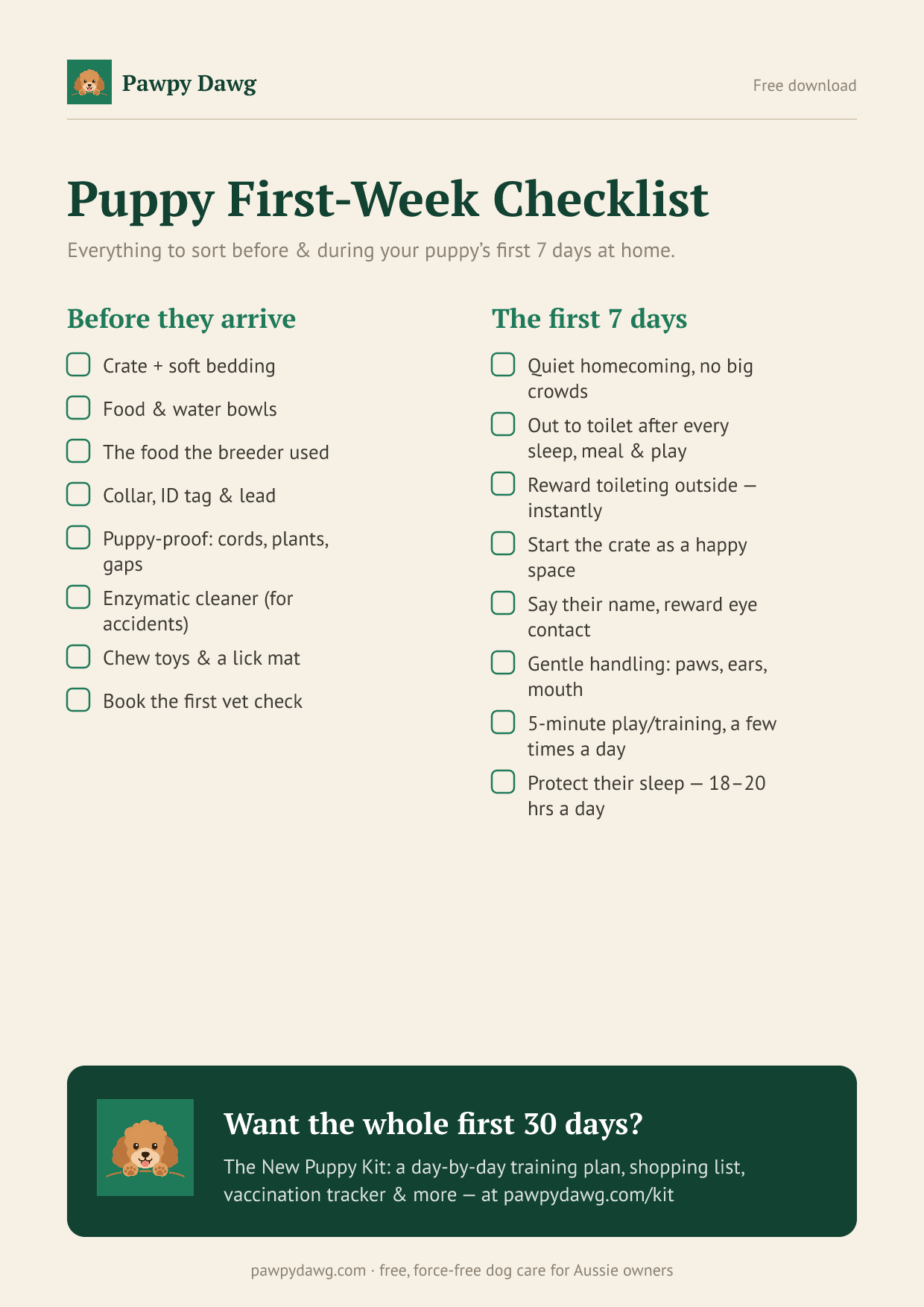
Free printable
Free: the Puppy First-Week Checklist
Everything to sort before and during your puppy's first 7 days home — a printable one-pager. Plus the occasional genuinely useful dog tip. No spam, unsubscribe anytime.
Related guides
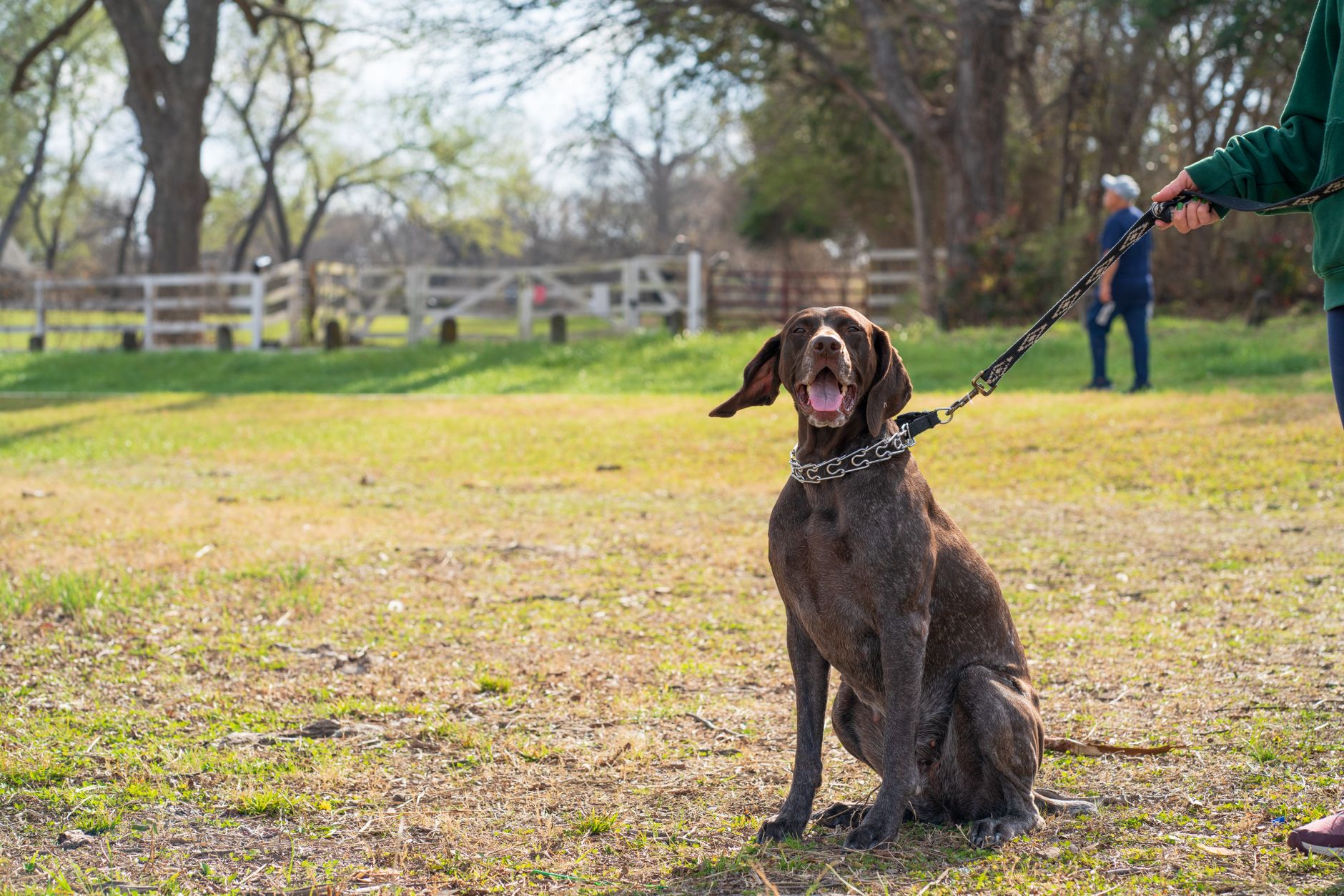
How to Stop a German Shepherd Pulling on the Lead (Step-by-Step)
Tired of being dragged down the street? Here's a realistic, step-by-step positive-reinforcement plan to stop your German Shepherd pulling on the lead — starting today.
Read the guide →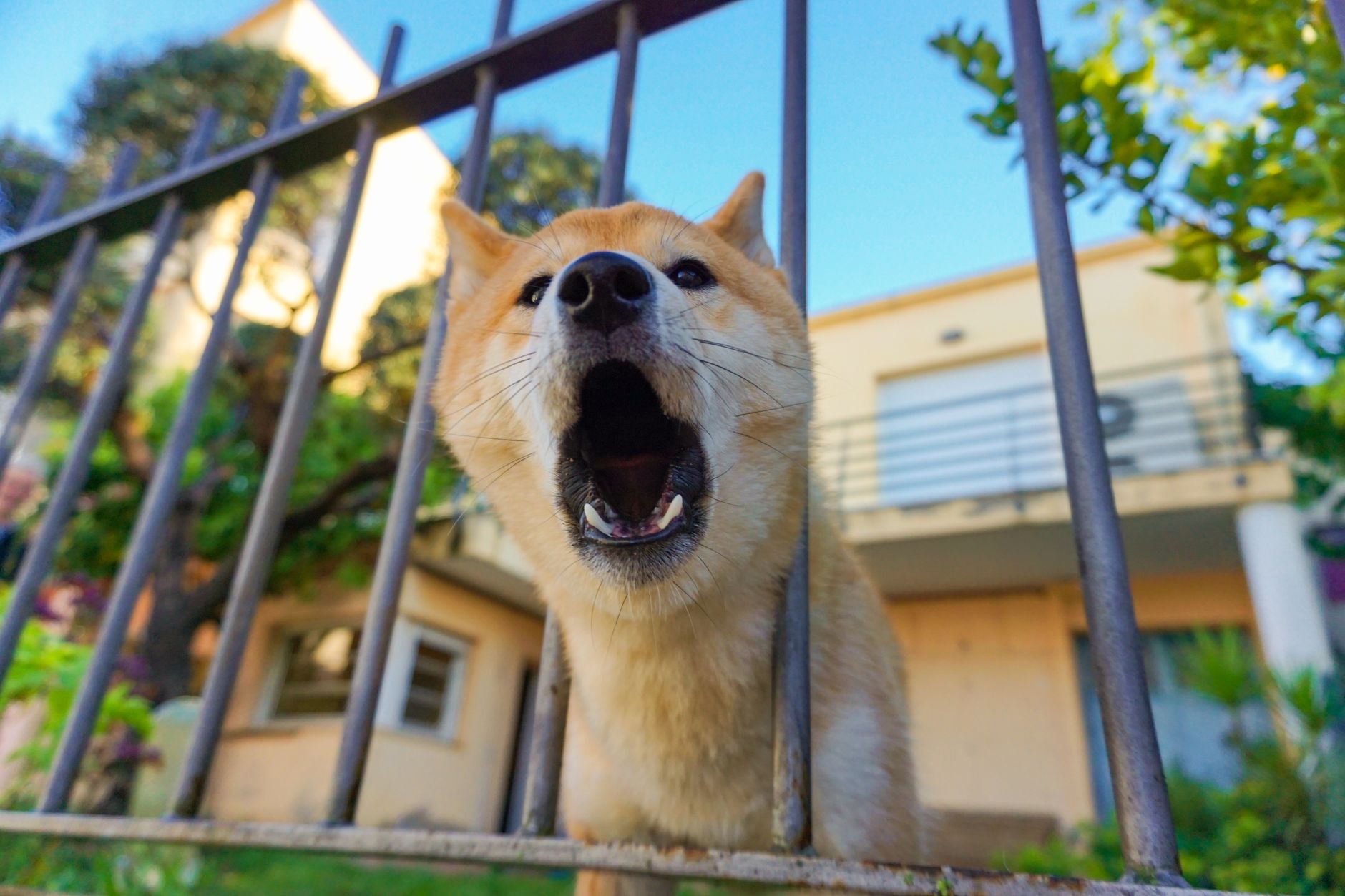
How to Stop a German Shepherd Barking at Strangers (Step-by-Step)
Tired of your German Shepherd barking at strangers? This step-by-step positive-reinforcement plan gives you real fixes, realistic timelines & when to get pro help.
Read the guide →
German Shepherd Separation Anxiety: A Step-by-Step Fix
Struggling with German Shepherd separation anxiety? Get a realistic, step-by-step positive-reinforcement plan, a quick win for today, and honest timelines.
Read the guide →