
How to Stop a German Shepherd Pulling on the Lead (Step-by-Step)
Tired of being dragged down the street? Here's a realistic, step-by-step positive-reinforcement plan to stop your German Shepherd pulling on the lead — starting today.

Written by Bradley Brown
Founder & editor · Reviewed 2026-07-08
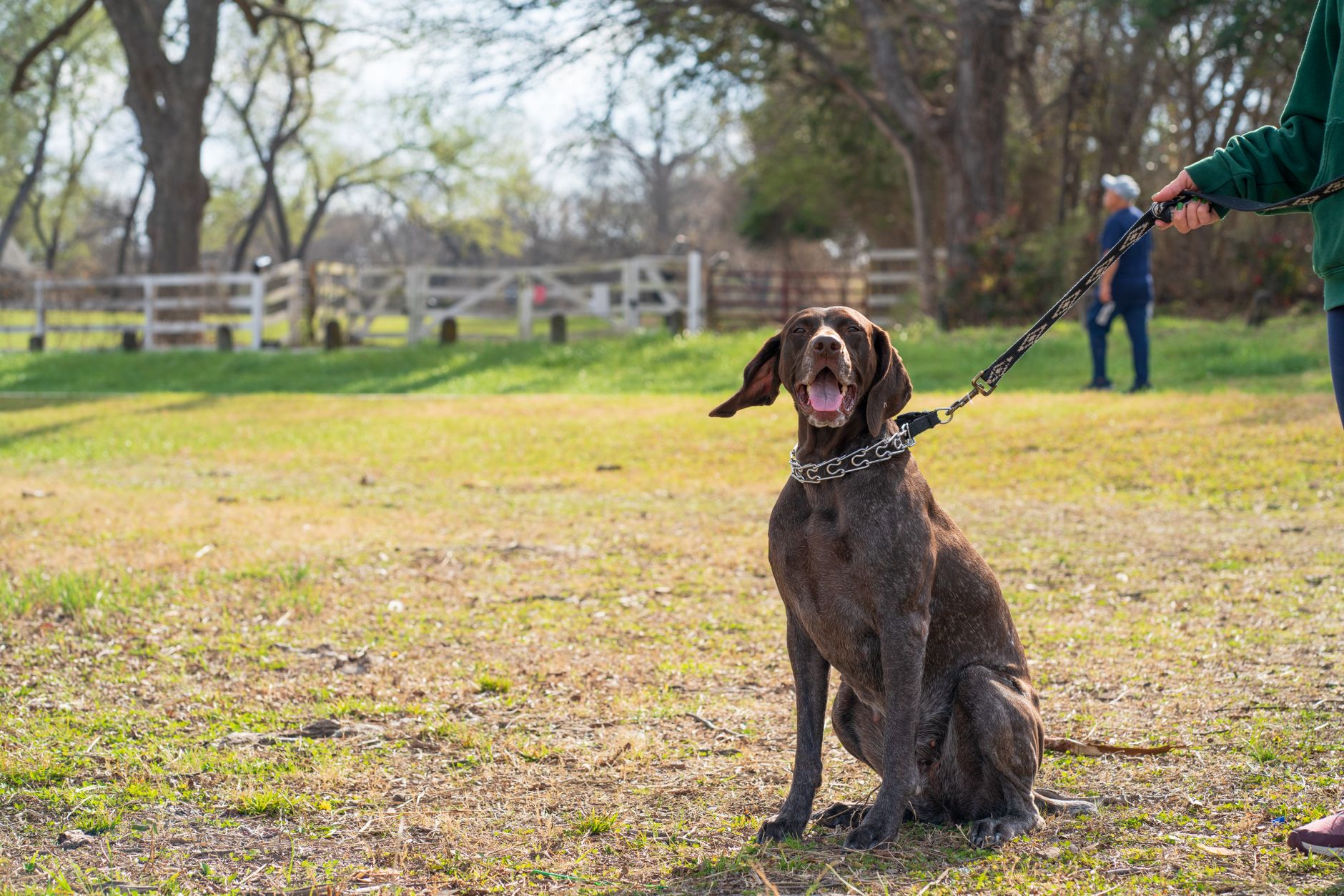
If your German Shepherd has been towing you down the footpath like a sled dog with a deadline, you're not alone — and you haven't ruined your dog. Pulling on the lead is one of the most common complaints from GSD owners, and it makes complete sense from the dog's perspective: the world out there smells incredible, and moving forward has always worked. That's it. No dominance, no disrespect — just a dog doing what has been accidentally rewarded every time you kept walking.
The good news? This is fixable. GSDs are highly trainable, food-motivated, and genuinely want to work with you once you give them a clear system. Five to ten minutes a day is enough to see real change within two to four weeks.
Why German Shepherds Pull So Hard
GSDs were bred to cover ground — herding, patrol work, and search tasks all require drive and forward momentum. That instinct doesn't switch off at the gate. Add adolescence (six months to two years is peak chaos), under-stimulation, or a history of "pulling = walk continues," and you've got a dog that has simply learned the wrong rule.
This is a training gap, not a character flaw. It is not too late to fix it, even if your dog is three, five, or older.
Your Quick Win for Today: The "Be a Tree" Reset
Before anything else, try this on your very next walk:
- The moment the lead goes tight, stop completely. Plant your feet. Don't yank back, don't say anything.
- Wait. Your GSD will eventually turn to check on you or take a step back. The instant there is even a centimetre of slack in the lead, start walking again.
- Repeat every single time the lead tightens.
It feels painfully slow at first — you may only make it to the end of the driveway. That's fine. You are teaching your dog one crystal-clear rule: a tight lead stops all forward progress. Consistency matters far more than duration. Even a ten-minute session with this rule applied every time is genuinely productive.
The Step-by-Step Training Plan
Step 1: Set Up for Success Before You Leave the House
- Choose high-value treats. Dry kibble rarely cuts it outdoors. Use small pieces of cooked chicken, cheese, or fritz — something your dog doesn't get any other time.
- Keep treats accessible. A treat pouch on your hip means no fumbling. Fumbling = missed timing = confused dog.
- Start in a low-distraction area. Your front yard or a quiet side street before 7 am beats a busy park. Build success first, then add difficulty.
Step 2: Mark and Reward the Right Position
"Loose-lead walking" just means your dog walks beside you with slack in the lead — it doesn't have to be a formal heel. Pick a side (left is traditional, but it doesn't matter as long as you're consistent) and:
- With your dog beside you, take one step. If the lead stays loose, mark immediately (say "yes!" or use a clicker) and treat at your hip, not in front of you. Treating at your hip keeps your dog in position.
- Gradually build to two steps, then five, then ten before treating.
- If the lead tightens at any point, stop (see the "Be a Tree" method above) before continuing.
Step 3: Add a Cue
Once your dog is consistently offering loose-lead walking, add a verbal cue like "with me" or "let's go" just as you start moving. Dogs learn cues after they understand the behaviour — not before.
Step 4: Practise Direction Changes
Pulling dogs are often just ahead of the game mentally. Randomly changing direction keeps your dog watching you rather than leading the way.
- Without warning, smoothly turn and walk the other way.
- When your dog catches up and walks beside you, mark and treat.
- This isn't a punishment — you're just making yourself the most interesting thing on the walk.
Step 5: Gradually Increase Difficulty
Use this progression. Only move to the next level once your dog is succeeding roughly 80% of the time at the current one:
| Level | Environment | Target |
|---|---|---|
| 1 | Front yard or quiet hallway | Loose lead for 10 steps |
| 2 | Quiet street, early morning | Loose lead for 30 seconds |
| 3 | Suburban footpath, low foot traffic | Loose lead past 2–3 distractions |
| 4 | Busy street or park entry | Loose lead with dogs/people nearby |
Common Mistakes That Stall Progress
- Inconsistency is the main one. If the lead is tight and you keep walking even once, you've reset the lesson. Everyone who walks the dog needs to follow the same rules.
- Using a retractable lead during training. These teach dogs that pulling extends their range. Switch to a flat lead or long-line for training.
- Punishing the pulling. Jerking the lead, shouting, or leash corrections add stress without teaching the dog what to do instead. GSDs can become reactive if walks become stressful — which creates a bigger problem.
- Expecting overnight results. If your dog has been pulling for two years, two sessions won't undo it. Expect two to six weeks of consistent daily practice.
- Skipping mental stimulation. A dog that hasn't worked its brain will be harder to settle on lead. A short sniff session (let them explore a patch of grass for two minutes) before the structured walk can take the edge off.
Equipment Worth Considering
No piece of equipment teaches loose-lead walking on its own, but the right tool makes training easier while you build the habit:
- Front-clip harness (e.g., PetSafe Easy Walk, Halti Harness): Clips at the chest and steers the dog back toward you when they pull. Good for most GSDs. Available at Petbarn or most independent pet stores for around $30–$60 AUD.
- Head halter (e.g., Gentle Leader, Halti): Controls direction via the head. Very effective but some dogs need time to accept it — introduce it slowly with treats.
- Standard flat collar or back-clip harness: Fine for dogs that already walk well, but offers little mechanical help during training.
Avoid: prong collars, choke chains, and shock collars. These carry real risks of injury and behavioural fallout, and aren't needed — positive methods work reliably for GSDs.
When to Call in a Professional
Most GSD owners can crack loose-lead walking with the steps above. Call a professional trainer or veterinary behaviourist if:
- Your dog lunges aggressively at people, dogs, or traffic (reactivity needs its own specific protocol).
- Pulling is accompanied by anxiety — excessive panting, whale eye, trying to bolt home.
- You've been consistent for six-plus weeks and seen no improvement at all.
Look for trainers accredited through the Pet Professional Guild Australia or Delta Society Australia, who use force-free methods. Expect to pay $80–$180 AUD per session, or $250–$500 AUD for a group course — worthwhile if walks are currently miserable for both of you.
Realistic Timelines
| Training effort | Realistic outcome |
|---|---|
| 5–10 min/day, consistent | Noticeable improvement in 2–4 weeks |
| Occasional sessions | Slow, patchy progress |
| Starting with a puppy (under 16 weeks) | Habits form quickly — 1–2 weeks |
| Adult dog with years of pulling history | 4–8 weeks of consistent work |
Walks won't feel magical from day one — but within a fortnight of daily practice, most owners notice their GSD checking in more, pulling less, and generally being a far more pleasant walking partner. That moment when you realise the lead has been loose for an entire block? Worth every slow, tree-like stop along the way.
As an Amazon Associate we earn from qualifying purchases.
Frequently asked questions
How long does it take to stop a German Shepherd pulling on the lead?
With 5–10 minutes of consistent daily training, most owners see noticeable improvement within two to four weeks. Dogs with a long history of pulling may take six to eight weeks. Consistency matters far more than session length — skipping days or applying the rules only sometimes will significantly slow progress.
What is the best harness or collar to stop a German Shepherd pulling?
A front-clip harness (such as the PetSafe Easy Walk or Halti Harness) is a practical choice for most GSDs — it steers the dog back toward you when they pull and is comfortable for the dog. Head halters like the Gentle Leader are also effective but require a gradual introduction. No piece of equipment replaces training, but the right tool makes the process easier.
Is it too late to train an older German Shepherd to stop pulling?
No. Adult and senior dogs learn new behaviours reliably with positive reinforcement — it may just take a little longer than with a puppy because old habits are well-practised. The same step-by-step method applies regardless of age. Many owners successfully retrain dogs that have pulled for years.
Why does my German Shepherd only pull toward other dogs?
Pulling toward other dogs is usually driven by excitement or, in some cases, frustration from being restrained — both common in high-drive breeds like GSDs. The loose-lead techniques in this article help, but if pulling is accompanied by lunging, barking, or intense fixation, your dog may be showing signs of leash reactivity, which benefits from a specific desensitisation protocol, ideally with a professional trainer.
Should I use a retractable lead while training my German Shepherd?
No — retractable leads are counterproductive during loose-lead training because they teach the dog that pulling extends their range. Use a standard flat lead of 1.2–1.8 metres while you're teaching the behaviour. Once your dog walks reliably on a loose lead, a long-line can be useful in safe open areas for sniff sessions.
Can I train my German Shepherd not to pull without treats?
Treats aren't strictly required, but they are the fastest and clearest way to communicate to your dog that they've done the right thing — especially outdoors where there's plenty of competing information. High-value food rewards are particularly effective for GSDs. Once the behaviour is well-established, you can gradually fade treat frequency and replace with praise, play, or the reward of continuing the walk.
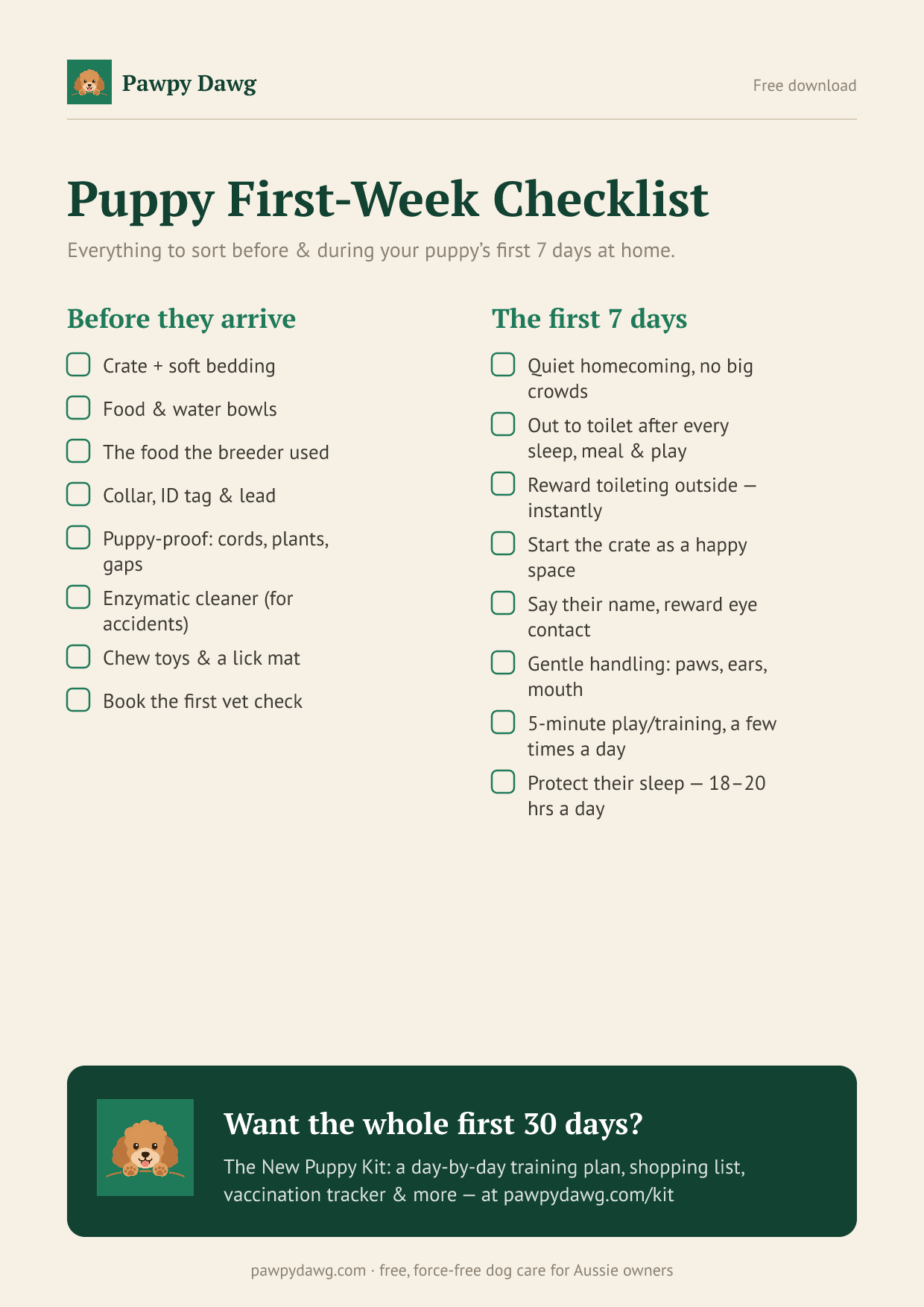
Free printable
Free: the Puppy First-Week Checklist
Everything to sort before and during your puppy's first 7 days home — a printable one-pager. Plus the occasional genuinely useful dog tip. No spam, unsubscribe anytime.
Related guides
How to Stop a German Shepherd Barking at Strangers (Step-by-Step)
Tired of your German Shepherd barking at strangers? This step-by-step positive-reinforcement plan gives you real fixes, realistic timelines & when to get pro help.
Read the guide →
German Shepherd Separation Anxiety: A Step-by-Step Fix
Struggling with German Shepherd separation anxiety? Get a realistic, step-by-step positive-reinforcement plan, a quick win for today, and honest timelines.
Read the guide →
How to Stop a German Shepherd Jumping Up on People (Step-by-Step)
Tired of your German Shepherd jumping up on people? This step-by-step positive-reinforcement plan gets real results in minutes a day — no punishment needed.
Read the guide →