
How to Stop a German Shepherd Barking at Strangers (Step-by-Step)
Tired of your German Shepherd barking at strangers? This step-by-step positive-reinforcement plan gives you real fixes, realistic timelines & when to get pro help.

Written by Bradley Brown
Founder & editor · Reviewed 2026-07-08
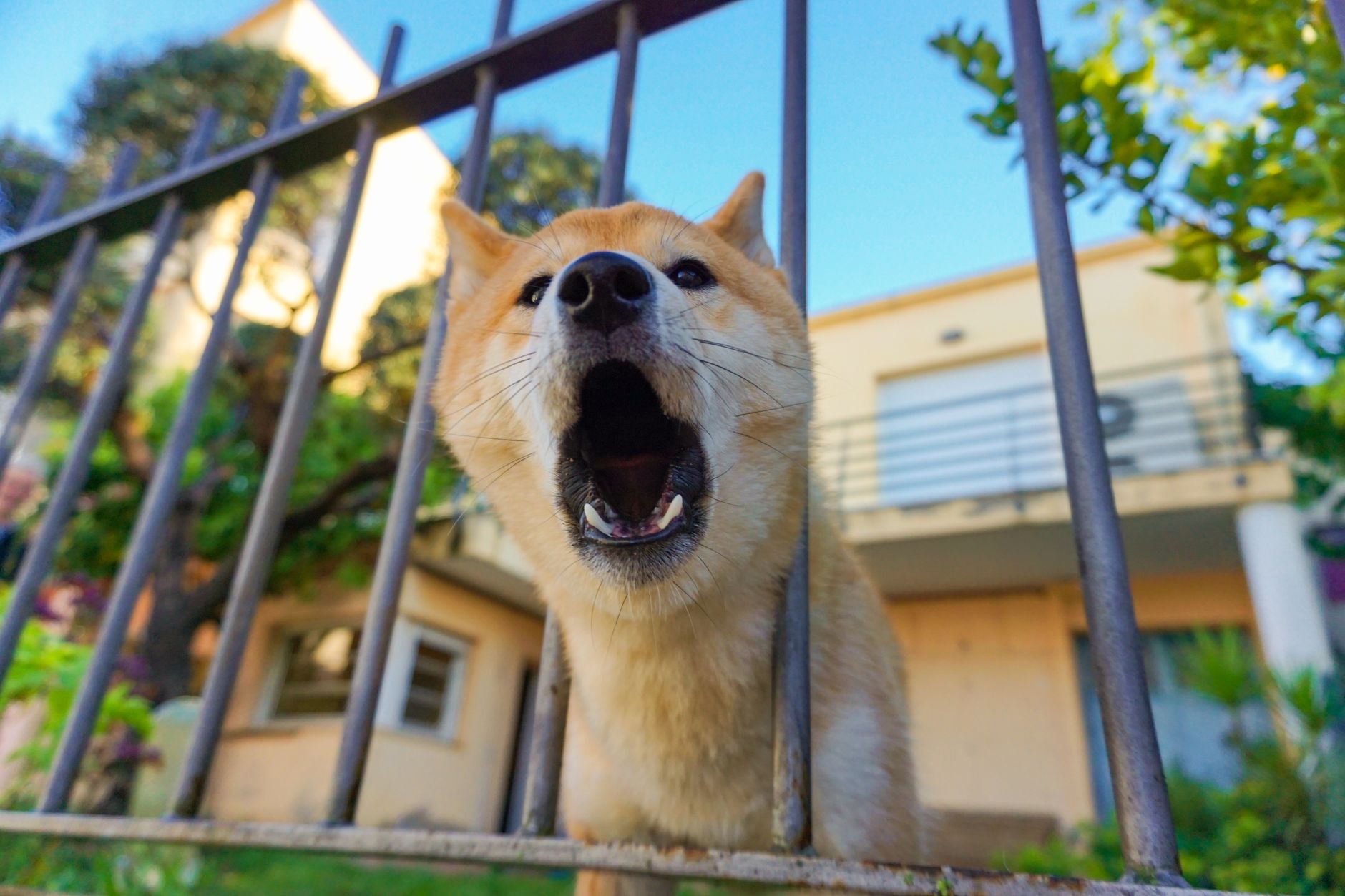
You got home from a walk feeling embarrassed, maybe even a little defeated. Your German Shepherd lunged, barked, and carried on at someone who was just walking their dog or checking their letterbox. You're not alone — and you haven't ruined your dog. This is one of the most common issues GSD owners deal with, and it's rooted in biology, not bad ownership.
Here's what's actually going on and, more importantly, what you can do about it starting tonight.
Why German Shepherds Bark at Strangers
GSDs were bred specifically to be alert, protective, and reactive to environmental changes. Barking at an unfamiliar person isn't a character flaw — it's the breed doing exactly what thousands of years of selective breeding designed them to do. The problem isn't the instinct; it's that the behaviour has no "off switch" yet.
The barking is almost always driven by one of three things:
- Fear — the stranger feels unpredictable or threatening
- Territorial arousal — "that person is too close to my space/person"
- Frustrated excitement — especially in younger dogs who want to greet but can't
Knowing which one is driving your dog matters, because the fix is the same core approach but the context changes slightly. A dog who cowers and barks needs more distance and slower exposure. A dog who strains forward barking needs impulse-control work alongside desensitisation.
Your Quick Win for Tonight
Before any formal training: change the distance.
Most owners make the mistake of pushing through the trigger — marching past the scary stranger hoping the dog "gets used to it." That rehearses the barking. Instead, the moment you see a stranger and before your dog reacts, turn and walk the other way, or cross the street. You're not retreating — you're buying space so your dog can think.
Pair this with a high-value treat (think small pieces of roast chicken, fritz, or cheese — not dry kibble) the second your dog looks at the stranger calmly from that distance. Look at stranger → treat appears. That's the entire foundation of what comes next.
The Step-by-Step Training Plan
This plan uses desensitisation and counter-conditioning (DS/CC) — the approach recommended by veterinary behaviourists and supported by decades of applied animal behaviour research. Sessions are 5–10 minutes maximum. Tired dogs and frustrated owners make zero progress.
Step 1 — Find Your Dog's "Threshold"
Your dog's threshold is the distance at which they notice a stranger but haven't yet reacted. This might be 20 metres, or it might be 50 metres. You need to work below this threshold — close enough that your dog is aware of the stranger, far enough that they can still take a treat and make eye contact with you.
How to find it: Walk toward a stranger (or ask a friend to help) and watch for the earliest signs of arousal — stiffening, ears forward, weight shifting forward, a low rumble. Stop before any barking. That distance is your starting point.
Step 2 — Condition a "Look at That" Response
- Stand at your threshold distance.
- Wait for your dog to glance at the stranger.
- The instant they look, say "yes" (or click if you use a clicker) and deliver a treat.
- Repeat 8–10 times per session.
You're teaching your dog: strangers predict cheese appearing in your mouth. Over days and weeks, you'll notice your dog starting to look at strangers and then look back at you — that's the gold. That "check-in" is your dog saying "hey, stranger — where's my snack?"
Step 3 — Gradually Decrease Distance
Only move closer when your dog is consistently calm and checking in with you at the current distance. A rough rule: if your dog reacts more than once in a session, you've moved too fast. Go back a step.
Decrease distance in small increments — 2–3 metres at a time. This can take days or weeks depending on your dog's history and temperament. Progress is not linear. A bad day doesn't erase good work.
Step 4 — Add Real-World Complexity
Once your dog is calm around stationary strangers, start introducing variables:
- Strangers wearing hats or carrying bags
- Strangers moving quickly (joggers are often a big trigger)
- Multiple strangers
- Strangers at the front door
Each new context starts back at a greater distance and works in the same way. Generalisation takes time — your dog learns "this person is safe" before they learn "all people are safe."
Step 5 — Teach an Incompatible Behaviour
A dog who is sitting and focusing on you cannot simultaneously be lunging and barking. Once your dog has basic impulse control, practise asking for a sit or "watch me" when a stranger appears at threshold distance. Reward heavily. This gives your dog a job to do instead of reacting.
Common Mistakes That Slow Progress
| Mistake | Why It Backfires | What to Do Instead |
|---|---|---|
| Pulling the leash tight when you see a stranger | Signals danger to your dog, increases arousal | Loosen the leash, breathe, increase distance |
| Telling your dog off for barking | Adds stress and confusion, doesn't address the emotion | Redirect before the bark happens |
| Flooding (pushing through triggers) | Rehearses the reaction, can worsen fear | Always work below threshold |
| Inconsistent sessions | Dogs need repetition to form new associations | 5 min daily beats 60 min on weekends |
| Using punishment-based tools (shock/prong collars) | Can suppress behaviour while increasing underlying fear | Positive reinforcement changes the emotional response |
Realistic Timelines
- Week 1–2: Dog begins offering check-ins at threshold distance
- Week 3–6: Noticeable reduction in barking in familiar contexts
- 2–4 months: Reliable calm behaviour in most everyday situations
These are averages. A dog with a long history of rehearsed barking will take longer than a young dog caught early. That's not a failure — it's just maths.
When to Bring in a Professional
Some situations genuinely warrant expert help:
- Your dog has snapped at or bitten a person (this needs a veterinary behaviourist, not a basic trainer)
- The barking is accompanied by extreme fear responses — trembling, drooling, trying to bolt
- You've been consistent for 2–3 months with no improvement
- The behaviour is getting worse, not better
In Australia, look for a trainer accredited through the Pet Professional Guild Australia or a veterinary behaviourist (your vet can refer you). Avoid anyone who uses the phrase "show them who's boss" — dominance theory has been thoroughly debunked by modern animal behaviour science.
A good trainer should run you $80–$180 AUD per session, with group classes typically $150–$300 AUD for a six-week course. It's worth it when you need it.
The One Thing to Remember
Every time you set your dog up to succeed — to notice a stranger and stay calm, even once — you're building a new neural pathway. You're not fighting your dog's nature; you're giving it a new outlet. That's slow work, but it sticks.
Your German Shepherd isn't broken. They're just waiting for someone to teach them a better option.
Frequently asked questions
Why does my German Shepherd only bark at strangers on the lead and not off-lead?
This is called 'lead reactivity' and it's extremely common. On a lead, your dog can't create distance or escape, which increases frustration and anxiety and often triggers barking. Off-lead, they have the option to move away or approach on their own terms, which lowers arousal. The fix is the same desensitisation approach, but it also helps to practise loose-leash walking so the lead itself doesn't become associated with tension.
Is my German Shepherd being aggressive or just reactive?
Reactivity and aggression can look similar but they're not the same thing. Most GSDs barking at strangers are reacting from fear or arousal rather than true predatory or offensive aggression. Signs that warrant more urgent attention include hard staring, low freezing, or a bite history. If you're unsure, a consult with a veterinary behaviourist will give you a clear picture and a safe plan.
Will my German Shepherd grow out of barking at strangers?
Unlikely without intervention — in fact, the behaviour usually becomes more entrenched over time as it gets repeatedly rehearsed. Adolescent GSDs (roughly 6–18 months) often go through a 'fear period' where reactivity spikes, but this is a window to train, not wait out. The good news is that with consistent counter-conditioning, most dogs improve significantly regardless of age.
Can I use a bark collar to stop my German Shepherd barking at strangers?
Bark collars (including spray and static/shock types) suppress the outward behaviour without addressing the underlying emotion — fear or anxiety. Research and mainstream veterinary guidance consistently show this can increase stress and sometimes make reactive behaviour worse over time. Positive reinforcement methods that change how your dog feels about strangers produce more reliable, lasting results.
How long should training sessions be for a reactive German Shepherd?
Keep sessions to 5–10 minutes maximum, ideally once or twice a day. Short, frequent sessions produce faster results than long occasional ones because they keep your dog under threshold and prevent mental fatigue. Ending on a success — even a small one — is far more valuable than pushing through a long session where your dog has already mentally checked out.
Should I socialise my German Shepherd with strangers by letting people pet them?
Only if your dog is genuinely comfortable — watch for loose body language, a soft tail wag, and the dog moving toward the person voluntarily. Never force an interaction or allow strangers to rush in for a pat. Forced contact with a fearful or reactive dog increases anxiety and can set training back significantly. Let your dog set the pace, and reward calm curiosity heavily.
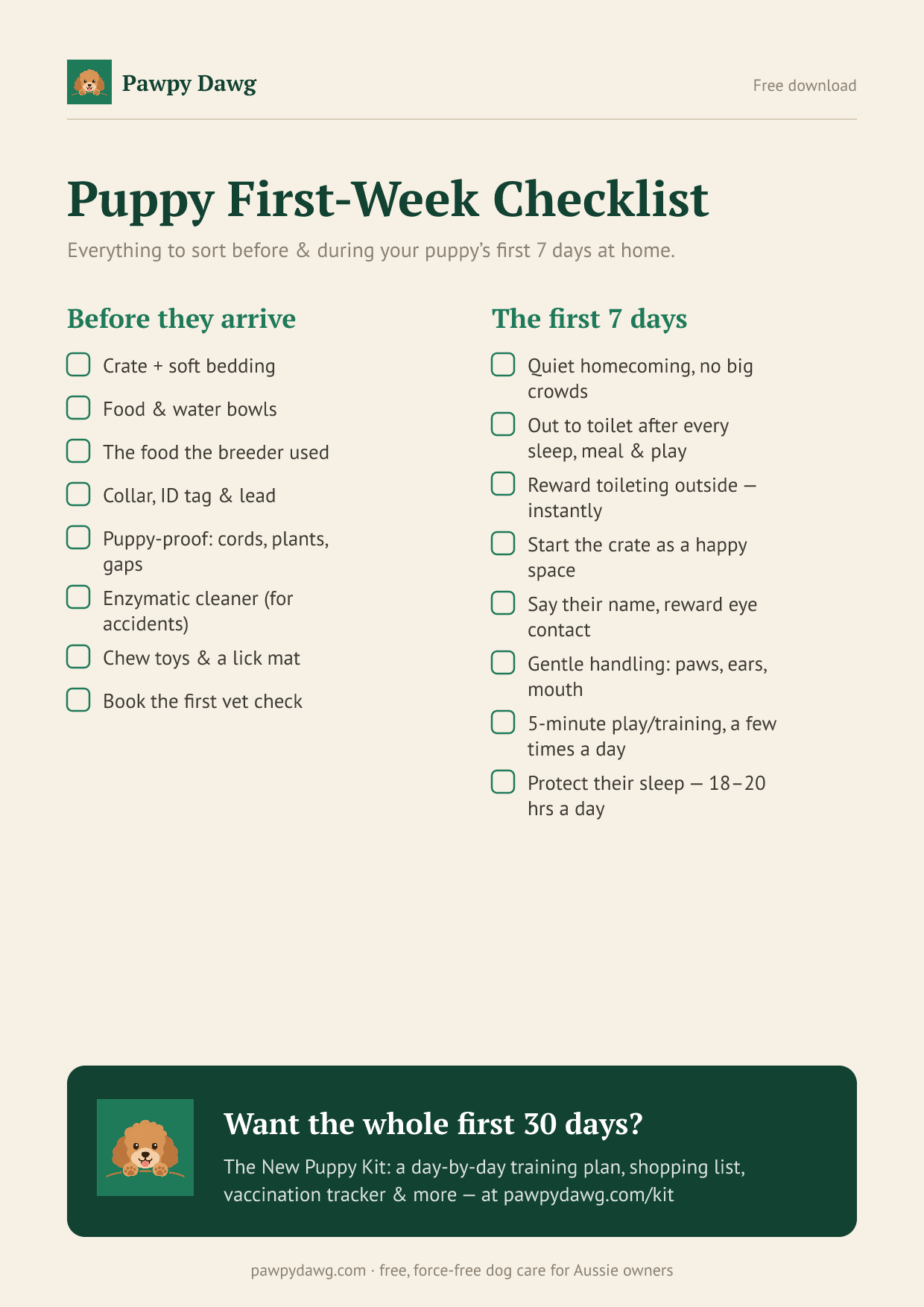
Free printable
Free: the Puppy First-Week Checklist
Everything to sort before and during your puppy's first 7 days home — a printable one-pager. Plus the occasional genuinely useful dog tip. No spam, unsubscribe anytime.
Related guides
How to Stop a German Shepherd Pulling on the Lead (Step-by-Step)
Tired of being dragged down the street? Here's a realistic, step-by-step positive-reinforcement plan to stop your German Shepherd pulling on the lead — starting today.
Read the guide →
German Shepherd Separation Anxiety: A Step-by-Step Fix
Struggling with German Shepherd separation anxiety? Get a realistic, step-by-step positive-reinforcement plan, a quick win for today, and honest timelines.
Read the guide →
How to Stop a German Shepherd Jumping Up on People (Step-by-Step)
Tired of your German Shepherd jumping up on people? This step-by-step positive-reinforcement plan gets real results in minutes a day — no punishment needed.
Read the guide →