
German Shepherd Not Coming When Called? A Step-by-Step Recall Fix
German Shepherd not coming when called? Fix recall fast with this positive-reinforcement plan — quick wins today, realistic timelines, and common mistakes to avoid.

Written by Bradley Brown
Founder & editor · Reviewed 2026-07-09
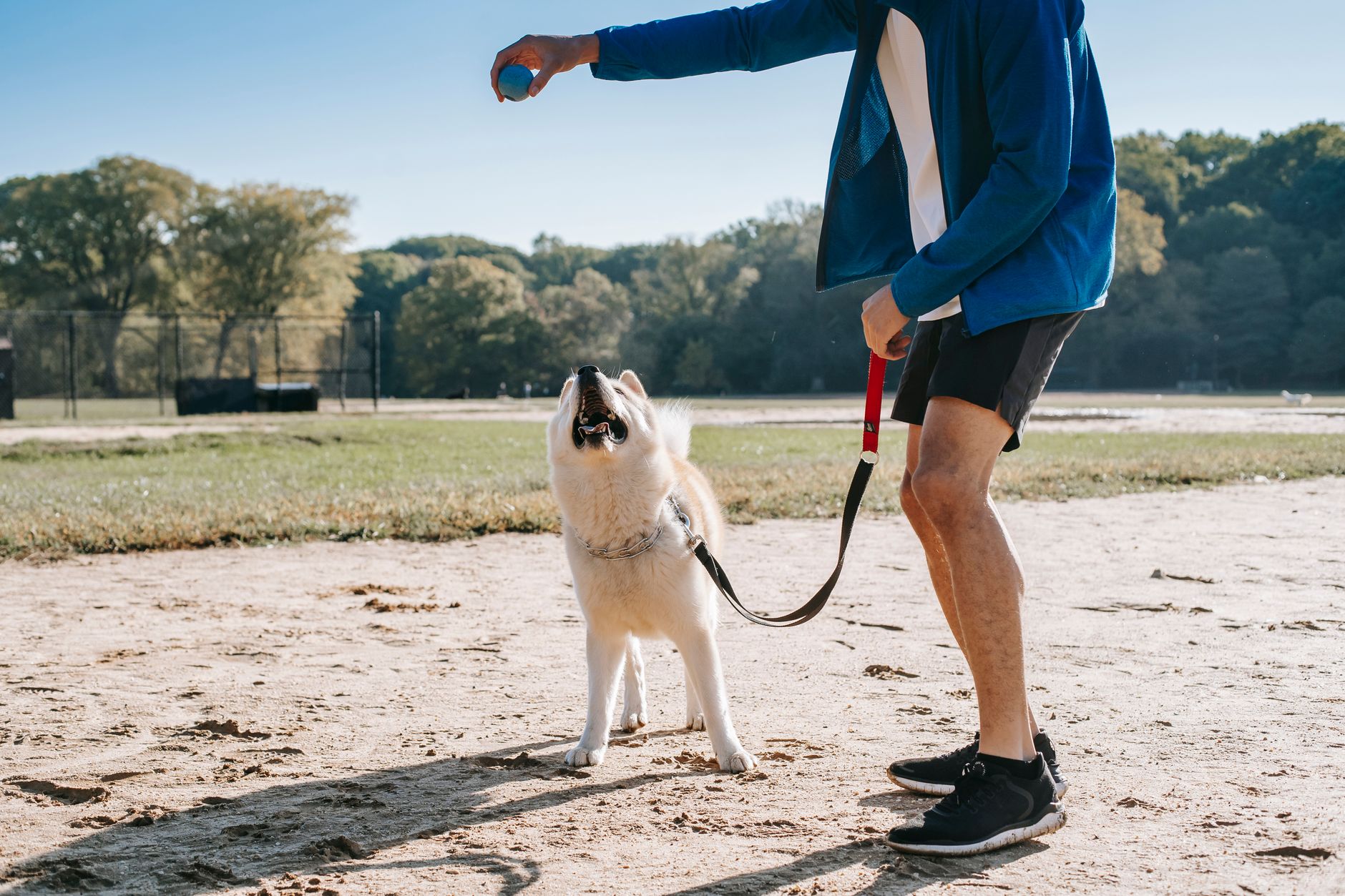
You called your dog's name. They looked at you, turned around, and trotted off in the opposite direction. You're not alone — and you haven't ruined your dog.
German Shepherds are brilliant, driven dogs with a strong independent streak when something more interesting than you is on offer. A broken recall isn't a character flaw or a sign of a failed relationship. It's an untrained behaviour, and untrained behaviours can be fixed. Here's how.
Your Quick Win for Today (Do This Before Anything Else)
Stop using your dog's name and the word "come" for the next 48 hours — except in situations where you are certain they'll respond. Every time you call and they ignore you, you're teaching them that the cue is optional.
Instead, tonight, grab 10 of the smelliest treats you own (cheese, chicken, fritz) and do this inside your house:
- Wait until your dog is a few metres away and not focused on you.
- Say your recall cue once in a cheerful voice — or pick a brand-new cue like "here" to get a clean slate.
- The instant they move toward you, mark it with "yes!" or a clicker.
- When they arrive, reward generously — five treats delivered one at a time, with genuine praise.
- Release them with "free" or "off you go."
That's it. Three to five repetitions, done in under five minutes. You're rebuilding the muscle memory that coming to you = the best thing that happens all day.
Why German Shepherds Ignore the Recall (It's Not Stubbornness)
German Shepherds were bred to make decisions independently — herding, protection, search work all require a dog that thinks for itself. That's the same drive that makes them brilliant working dogs and also the reason they'll weigh up "come here" against "chase that magpie" and sometimes choose the magpie.
The most common reasons recall breaks down:
- The cue has been poisoned. They've learned "come" means the lead goes on, the fun ends, or they get told off.
- The reward doesn't compete. Kibble versus a rabbit scent trail isn't a fair contest.
- They were never proofed in distracting environments. Training in your lounge room doesn't automatically transfer to the dog park.
- Inconsistent reinforcement. Sometimes they came and got a pat; sometimes they came and bath time started.
The Step-by-Step Recall Fix
Phase 1: Rebuild the Foundation (Days 1–7)
Keep sessions to 5 minutes maximum, twice a day. Do all training indoors or in a fully fenced, boring area.
- Choose one cue and stick to it. "Come," "here," or a whistle — pick one.
- Never repeat the cue. Say it once. If they don't move, go to them rather than calling again.
- Reward every single recall, no exceptions. Use your dog's absolute favourite treat — this is not the time for carrot sticks.
- End the session before they get bored. Ten successful reps and you're done.
Avoid: Calling your dog to do anything unpleasant — nail trims, baths, ending play. Go and get them for those things instead.
Phase 2: Add Distance and Mild Distraction (Days 8–21)
Once your dog is flying to you indoors, start introducing small challenges:
- Practice in the backyard at different times of day.
- Use a long line (5–10 metres) clipped to a harness. This lets you prevent failure without a physical correction — if they don't come, you simply walk toward them and guide gently. Never yank.
- Start adding mild distractions: another person in the garden, a toy on the ground nearby.
- Vary your rewards. Sometimes jackpot with five treats, sometimes a game of tug, sometimes one treat and huge praise. Unpredictability actually strengthens the behaviour.
Phase 3: Real-World Proofing (Weeks 3–6)
This is where most owners rush — and where recall falls apart again. Go slowly.
| Environment | Distraction Level | What to Do |
|---|---|---|
| Quiet suburban street (on long line) | Low | Practice 5 recalls per walk |
| Park, low foot traffic | Medium | Recall before greetings with other dogs |
| Off-lead dog park | High | Don't attempt until Phase 2 is solid |
| Beach/bush trail | Very high | Long line until recall is near-perfect |
Practise in at least five different locations before trusting off-lead recall in an unfenced space. Location is its own distraction.
The Mistakes That Keep Recall Broken
1. Punishing a dog that eventually comes back. Even if they took three minutes to return — the moment they arrive, that's the behaviour you're rewarding. Greet them warmly. Every time.
2. Only calling them when it's time to leave. "Come" becomes a reliable predictor of fun ending. Fix this by calling your dog multiple times during an outing, rewarding them, then letting them go again.
3. Repeating the cue. "Buddy. Buddy! BUDDY, COME!" teaches them to wait for the third, louder version. One cue, then go and get them.
4. Fading rewards too fast. German Shepherds are smart enough to know when the treats have stopped. Keep rewarding recalls for life — it's a behaviour that needs ongoing maintenance.
Training Tools Worth Considering
- Long line (5–10 m): Essential for safe proofing. Look for a biothane or nylon version from around $25–$45 AUD at pet stores or online.
- Treat pouch: Keeps high-value rewards accessible so you're not fumbling in your pocket. Around $15–$30 AUD.
- Whistle: A whistle recall can be powerful because the sound is consistent and carries further. Condition it the same way as a verbal cue.
Avoid retractable leads for recall training — they teach dogs that the lead has give, which undermines the boundary you're building.
Realistic Timelines
- Basic indoor recall: 3–7 days with consistent short sessions.
- Reliable in the backyard: 2–3 weeks.
- Proofed in low-distraction outdoor environments: 4–6 weeks.
- Reliable off-lead in high-distraction areas: 3–6 months for most dogs.
If you're not seeing improvement after four weeks of consistent work, that's not a sign you've failed — it's a sign to get a second set of eyes on the problem.
When to Call a Professional
Consider working with an accredited trainer (look for members of the Pet Professional Guild Australia or Delta Society Australia) if:
- Your dog has zero response to food or toys in any context (possible underlying anxiety or health issue worth a vet check).
- Recall has broken down due to a traumatic event — a fright, an accident, or a history of punishment.
- You have a dog with a strong prey drive who is actively chasing wildlife or stock.
- Progress has stalled completely despite consistent, positive training.
A good trainer won't judge you. They'll watch what's actually happening and give you specific fixes. One or two sessions can save months of frustration, and rates typically range from $80–$180 AUD per session depending on your location.
Your dog looked at you and chose not to come — that's a training gap, not a broken relationship. With short, consistent, positive sessions, most German Shepherds develop a solid recall within a few weeks. Start with that five-minute session tonight, and go from there.
As an Amazon Associate we earn from qualifying purchases.
Frequently asked questions
Why does my German Shepherd ignore me when I call them outside but comes fine inside?
This is a proofing problem, not a disobedience problem. Dogs learn behaviours in context — what works in your living room hasn't yet been practised with the competing sights, smells, and sounds of the outdoors. You need to systematically retrain recall in progressively more distracting environments, starting on a long line, before expecting reliable off-lead recall outside.
Is it too late to teach an older German Shepherd to come when called?
No. Adult and senior dogs learn new behaviours readily, and an older dog with no recall history is often easier to work with than one who has learned that the cue is optional. The same positive-reinforcement steps apply regardless of age — you may just need to spend a little longer on each phase. Consistency matters far more than the dog's age.
Should I use an e-collar or prong collar to fix my German Shepherd's recall?
Mainstream veterinary and animal behaviour bodies — including the Australian Veterinary Association — advise against aversive tools like e-collars and prong collars for recall training. Using punishment or discomfort when a dog returns to you risks making them afraid to come back at all, which makes recall worse. Positive reinforcement with high-value rewards is both more effective and safer for the long-term relationship.
How long should I keep my German Shepherd on a lead or long line during recall training?
Keep your dog on a long line in unfenced areas until they have a near-perfect response across at least five different environments at that distraction level. For most dogs this takes four to eight weeks of consistent work. Rushing off-lead freedom is the single biggest reason recall breaks down again — safety and training progress both require patience here.
What are the best treats to use for German Shepherd recall training?
Use the smelliest, most exciting food your dog will work for — cooked chicken, cheese, fritz, or commercial training treats like Zuke's Mini Naturals are popular choices. The treat needs to genuinely compete with whatever distraction you're training around. Save the top-tier rewards specifically for recall so they keep their value, and always reward every recall, even once the behaviour is established.
My German Shepherd used to have great recall and now ignores me — what happened?
Recall regression is common and usually has a clear cause: the cue became associated with something unpleasant (bath time, the lead going on), rewards became inconsistent or stopped, or a big distraction "won" a few times and taught the dog that ignoring the cue is an option. Go back to basics in a low-distraction environment, choose a fresh cue if needed, and rebuild with reliable reinforcement before proofing in harder situations again.
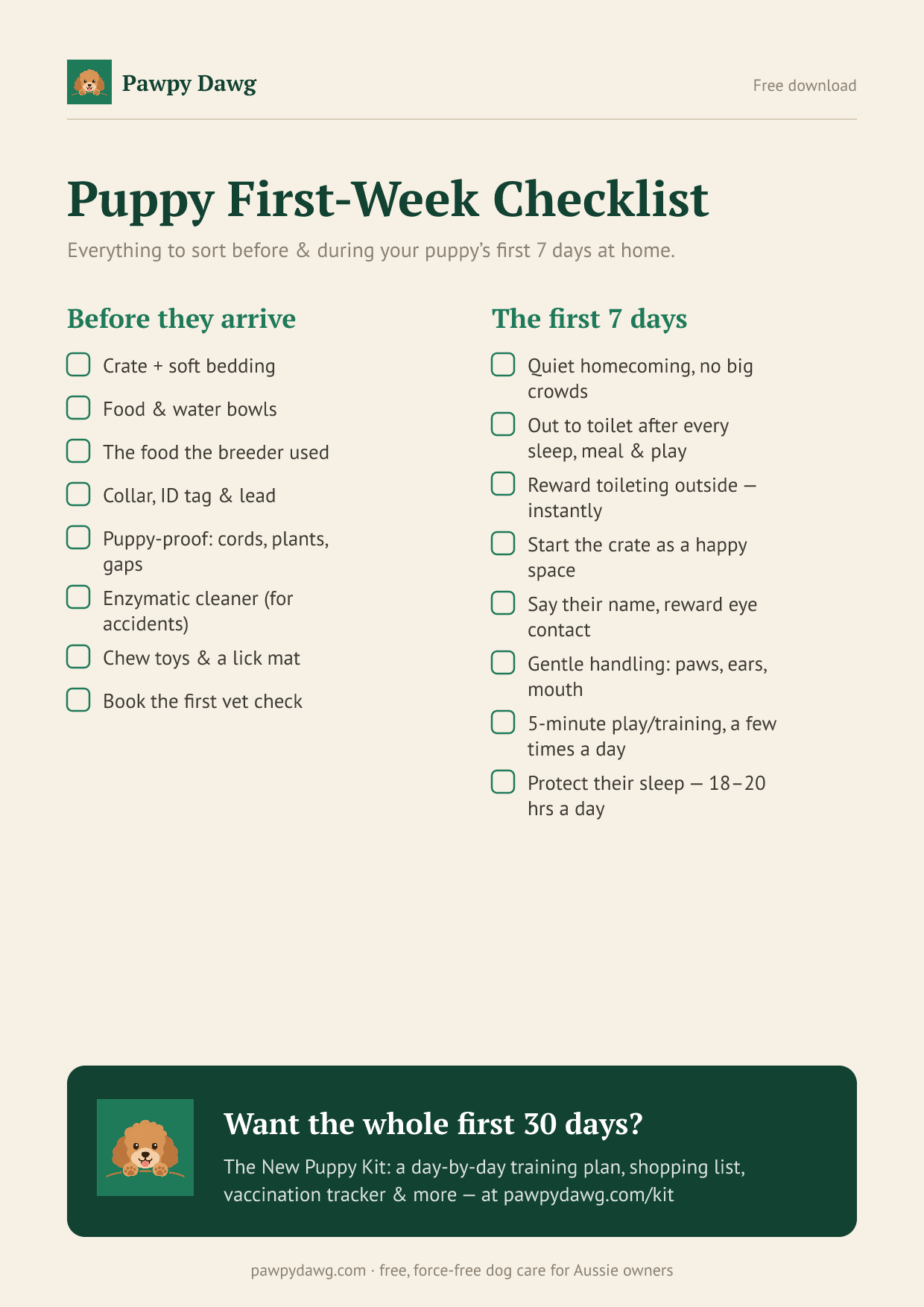
Free printable
Free: the Puppy First-Week Checklist
Everything to sort before and during your puppy's first 7 days home — a printable one-pager. Plus the occasional genuinely useful dog tip. No spam, unsubscribe anytime.
Related guides
How to Stop a German Shepherd Pulling on the Lead (Step-by-Step)
Tired of being dragged down the street? Here's a realistic, step-by-step positive-reinforcement plan to stop your German Shepherd pulling on the lead — starting today.
Read the guide →
How to Stop a German Shepherd Barking at Strangers (Step-by-Step)
Tired of your German Shepherd barking at strangers? This step-by-step positive-reinforcement plan gives you real fixes, realistic timelines & when to get pro help.
Read the guide →
German Shepherd Separation Anxiety: A Step-by-Step Fix
Struggling with German Shepherd separation anxiety? Get a realistic, step-by-step positive-reinforcement plan, a quick win for today, and honest timelines.
Read the guide →