
How to Stop a German Shepherd Jumping Up on People (Step-by-Step)
Tired of your German Shepherd jumping up on people? This step-by-step positive-reinforcement plan gets real results in minutes a day — no punishment needed.

Written by Bradley Brown
Founder & editor · Reviewed 2026-07-09
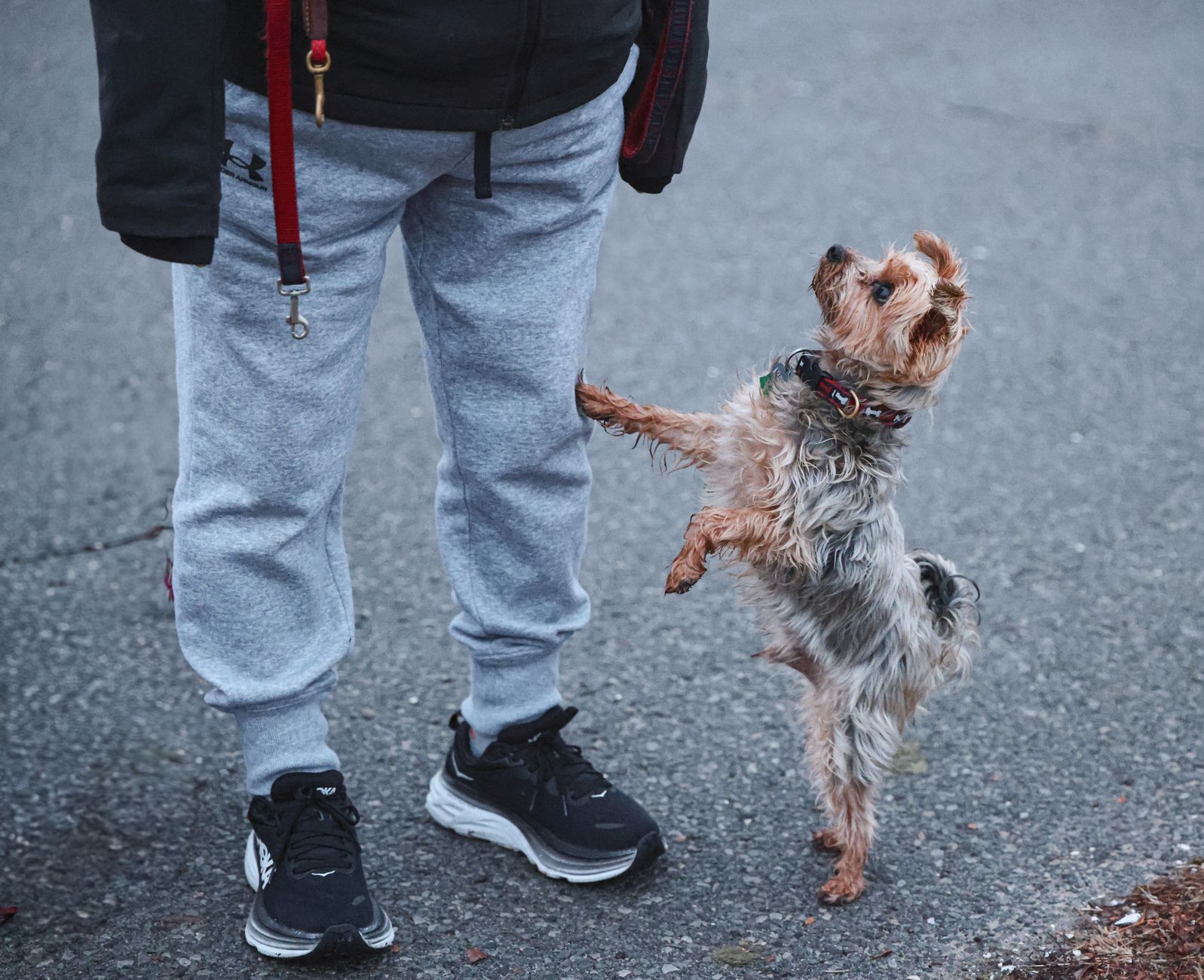
Your German Shepherd has just bowled over a visitor, left muddy paw prints down someone's good shirt, or worse — knocked over a child. You're mortified. They're 35 kilograms of enthusiasm with zero concept of personal space, and you're wondering how on earth it got to this point.
Here's the truth: jumping up is completely normal dog behaviour. German Shepherds are bred to be engaged, alert, and deeply connected to their people. Jumping is how puppies greet their mothers, and your dog is simply doing what came naturally — and what probably got rewarded (even accidentally) early on. This is not a ruined dog. It's a very normal dog who needs a clearer set of rules, taught consistently.
You can start fixing this today, and five minutes is enough to begin.
The One Thing to Try Right Now (Before You Read Any Further)
Next time your Shepherd jumps up, turn your back, cross your arms, and say nothing. No "off," no "no," no knee-to-chest. Zero attention — not even eye contact. The moment all four paws hit the floor, turn around and calmly reward with a treat or quiet praise.
That's it. That's the core of this whole plan. Everything else below is just making that response consistent, fast, and bulletproof in every situation.
Why German Shepherds Jump Up (and Why Punishment Backfires)
German Shepherds are attention-seeking by nature — it's part of what makes them excellent working dogs. Jumping gets a reaction, and any reaction (including a shout or a shove) is still attention, which still reinforces the behaviour.
Studies in companion animal behaviour consistently show that ignoring unwanted behaviour while rewarding the alternative is more effective long-term than punishment-based corrections. Punishment can also increase anxiety in sensitive breeds like German Shepherds, which often makes problem behaviours worse, not better.
Common mistakes that accidentally keep the jumping going:
- Patting or talking to the dog while they're still jumping ("just this once")
- Inconsistency between family members — one person ignores, another greets with enthusiasm
- Using the word "off" without ever teaching what it means
- Pushing the dog down (this becomes a fun pushing game for many Shepherds)
- Only practising during real greetings, not in low-distraction training sessions first
The Step-by-Step Plan
Step 1: Teach a Default "Four on the Floor" at Home (Days 1–3)
Before you tackle the front door or strangers at the park, get the foundation solid in a calm environment.
- Stand in your lounge room with a few small treats in your pocket.
- Let your dog approach you. The moment they jump, turn your back — silent, still, no drama.
- The instant all four paws land on the ground, say "yes" (or click if you use a clicker) and reward with a treat at hip level so they don't have to jump to get it.
- Repeat 10–15 times per session, two sessions a day. That's roughly 5–8 minutes total.
Goal: Your dog learns that paws on the floor = good things happen. Paws in the air = you become boring.
Step 2: Add a Sit (Days 3–7)
Once your dog is consistently keeping four paws down, start asking for a sit as an alternative greeting behaviour.
- As they approach and keep paws down, ask for "sit" before delivering the reward.
- Gradually reward only sits during greetings, not just standing with paws down.
- Practise this with every family member — consistency here is non-negotiable.
A sit is physically incompatible with jumping. It gives your dog something to do instead of just "don't jump," which is much easier for them to learn.
Step 3: Proof it at the Front Door (Week 2)
The front door is the hardest spot — high excitement, new smells, someone your dog hasn't seen all day. Set up practice runs:
- Fake arrivals: Have a family member go outside, ring the bell, then come back in. Practise the four-paws/sit routine with zero real-world pressure.
- Keep your dog on a lead initially so they can't get close enough to jump before they've made a choice.
- Reward the sit generously — jackpot it with three or four treats in a row the first few times it works at the door.
Step 4: Strangers and Public Situations (Weeks 2–4)
This is where most people rush to too early. Only move here once Steps 1–3 are reliable.
- Brief your helpers. Ask friends or neighbours to turn their back if the dog jumps and only greet once four paws are on the ground. Most people are happy to help when you explain.
- Use distance. At the park, approach strangers slowly. If your dog is lunging toward them, you're too close. Reward calm behaviour at a distance first, then inch closer.
- Keep it short. Two to three controlled greetings per outing is enough. Quality over quantity.
Realistic Timeline
| Stage | What to Expect |
|---|---|
| Days 1–3 | Dog is confused, may try jumping harder at first (this is normal — called an "extinction burst") |
| Days 4–7 | Jumping reduces at home with known people |
| Week 2 | Front door behaviour improves noticeably |
| Weeks 3–4 | Reliable with strangers in calm environments |
| 1–3 months | Behaviour is generalised and mostly automatic |
Progress is rarely a straight line. A bad day in week three doesn't mean you've lost ground — it usually means the situation was harder than usual (more excitement, a visitor who didn't follow the rules, your dog being tired or overstimulated).
Keeping the Whole Household Consistent
This is genuinely the hardest part. One person who lets the dog jump "because it's cute when I come home" will undo significant progress. Have a quick family conversation:
- Everyone uses the same rule: turn away, wait for four paws or a sit, then reward.
- Put a note on the fridge or front door for a few weeks if it helps.
- Brief regular visitors — dog walkers, family who pop in, the tradie coming to fix the hot water.
When to Get Professional Help
Most German Shepherds respond well to this plan within a few weeks. Consider calling a qualified trainer (look for a member of the Delta Society Australia or a certified trainer using positive reinforcement methods) if:
- Your dog jumps with such force it poses a genuine injury risk and isn't improving after four weeks of consistent work
- The jumping is accompanied by mouthing, growling, or other anxious behaviours
- You're too overwhelmed to implement the steps consistently on your own
A good trainer will run you a focused session for roughly $100–$180 AUD and can often identify what's going wrong in minutes. It's not a sign of failure — it's using the right tool for the job.
Quick-Reference Checklist
- Everyone in the household knows the rule (turn away, reward four paws/sit)
- Practising in low-distraction environments before the front door
- Rewarding at hip height, not above the dog's head
- Not using "off" unless you've actually taught it
- Briefing visitors before they enter
- Keeping sessions to 5–10 minutes — short and frequent beats long and occasional
- Being patient through the extinction burst in the first few days
Your dog isn't trying to dominate anyone. They're excited to see you, and they haven't yet learned that there's a better way to show it. Teach them the better way, reward it generously, and stay consistent — the jumping will go.
Frequently asked questions
How long does it take to stop a German Shepherd from jumping up on people?
Most owners see clear improvement at home within one to two weeks of consistent training. Reliable behaviour with strangers and in public usually takes three to four weeks, and full generalisation across all situations can take one to three months. Progress depends heavily on how consistent everyone in the household is.
Should I knee my German Shepherd in the chest to stop them jumping?
No — this is an outdated technique and can cause injury to your dog or accidentally reinforce the behaviour by giving them physical attention. It can also increase anxiety in sensitive breeds like German Shepherds. Turning your back and withdrawing all attention is safer and more effective.
My German Shepherd jumps even harder when I ignore them — am I doing something wrong?
No, this is completely normal and is called an extinction burst. When a behaviour that used to work suddenly stops getting a response, dogs often try harder before giving up. Stay consistent, keep turning away, and reward the moment four paws hit the floor. The burst usually passes within a few days.
Why does my German Shepherd only jump on some people and not others?
Dogs quickly learn who rewards jumping with attention and who doesn't. People who have historically greeted your dog with pats or excitement while they're jumping have inadvertently trained that response. Once those people start using the same turn-away technique, the jumping with them will reduce too.
Is a German Shepherd jumping up on people a dominance issue?
No. The dominance theory of dog behaviour has been largely discredited by modern animal behaviour science. Jumping is a greeting and attention-seeking behaviour rooted in how puppies interact with adult dogs. It's about excitement and reward history, not hierarchy.
At what age should I start training my German Shepherd not to jump?
As early as possible — the moment your puppy comes home. It's much easier to prevent the habit from forming than to undo it later. That said, German Shepherds of any age can learn to stop jumping with consistent positive-reinforcement training.
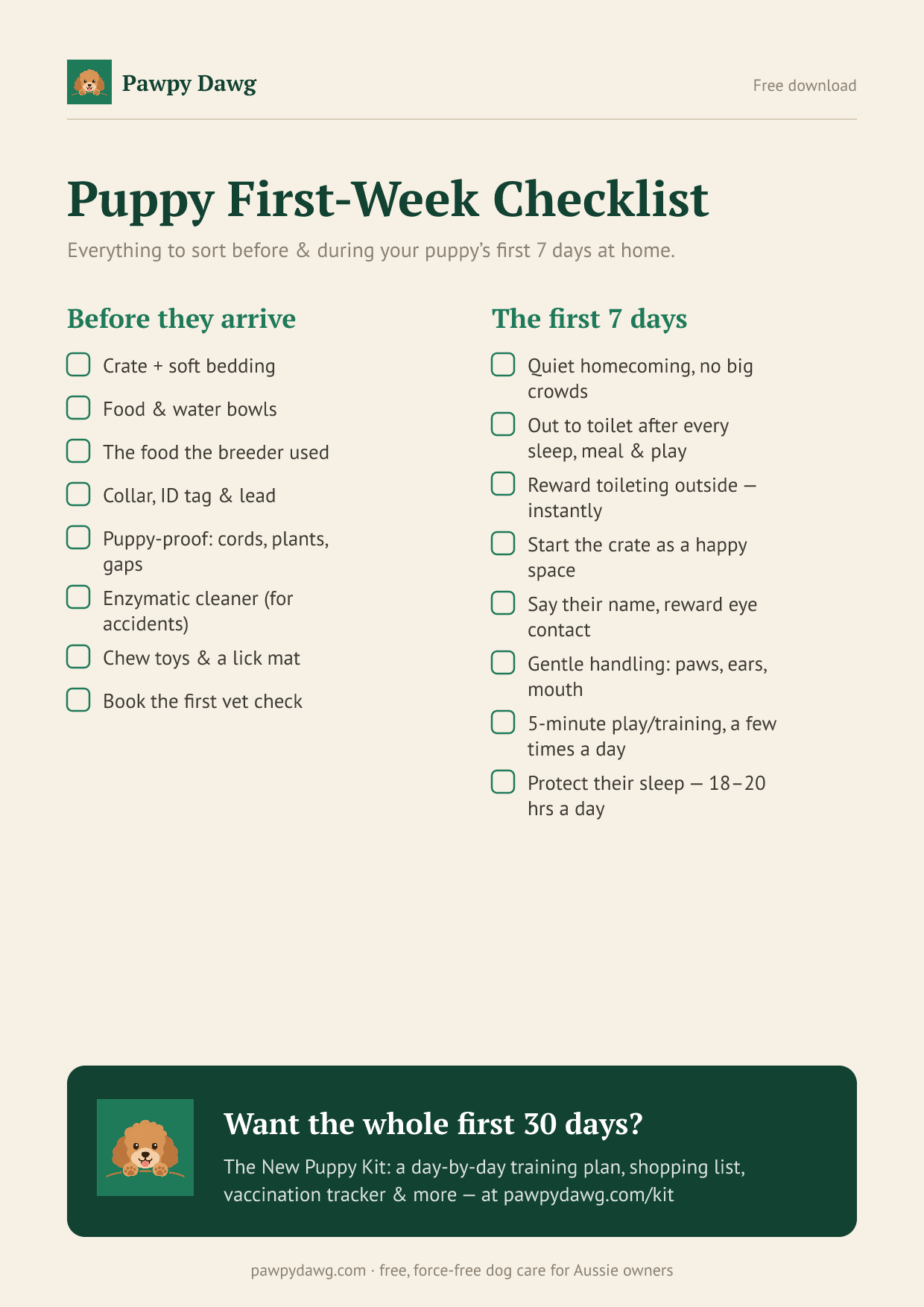
Free printable
Free: the Puppy First-Week Checklist
Everything to sort before and during your puppy's first 7 days home — a printable one-pager. Plus the occasional genuinely useful dog tip. No spam, unsubscribe anytime.
Related guides
How to Stop a German Shepherd Pulling on the Lead (Step-by-Step)
Tired of being dragged down the street? Here's a realistic, step-by-step positive-reinforcement plan to stop your German Shepherd pulling on the lead — starting today.
Read the guide →
How to Stop a German Shepherd Barking at Strangers (Step-by-Step)
Tired of your German Shepherd barking at strangers? This step-by-step positive-reinforcement plan gives you real fixes, realistic timelines & when to get pro help.
Read the guide →
German Shepherd Separation Anxiety: A Step-by-Step Fix
Struggling with German Shepherd separation anxiety? Get a realistic, step-by-step positive-reinforcement plan, a quick win for today, and honest timelines.
Read the guide →