
How to Stop a German Shepherd Chewing Everything (Step-by-Step)
Dealing with german shepherd destructive chewing? Get a realistic, positive-reinforcement plan, quick wins for today, and honest timelines — no guilt, no fluff.

Written by Bradley Brown
Founder & editor · Reviewed 2026-07-09
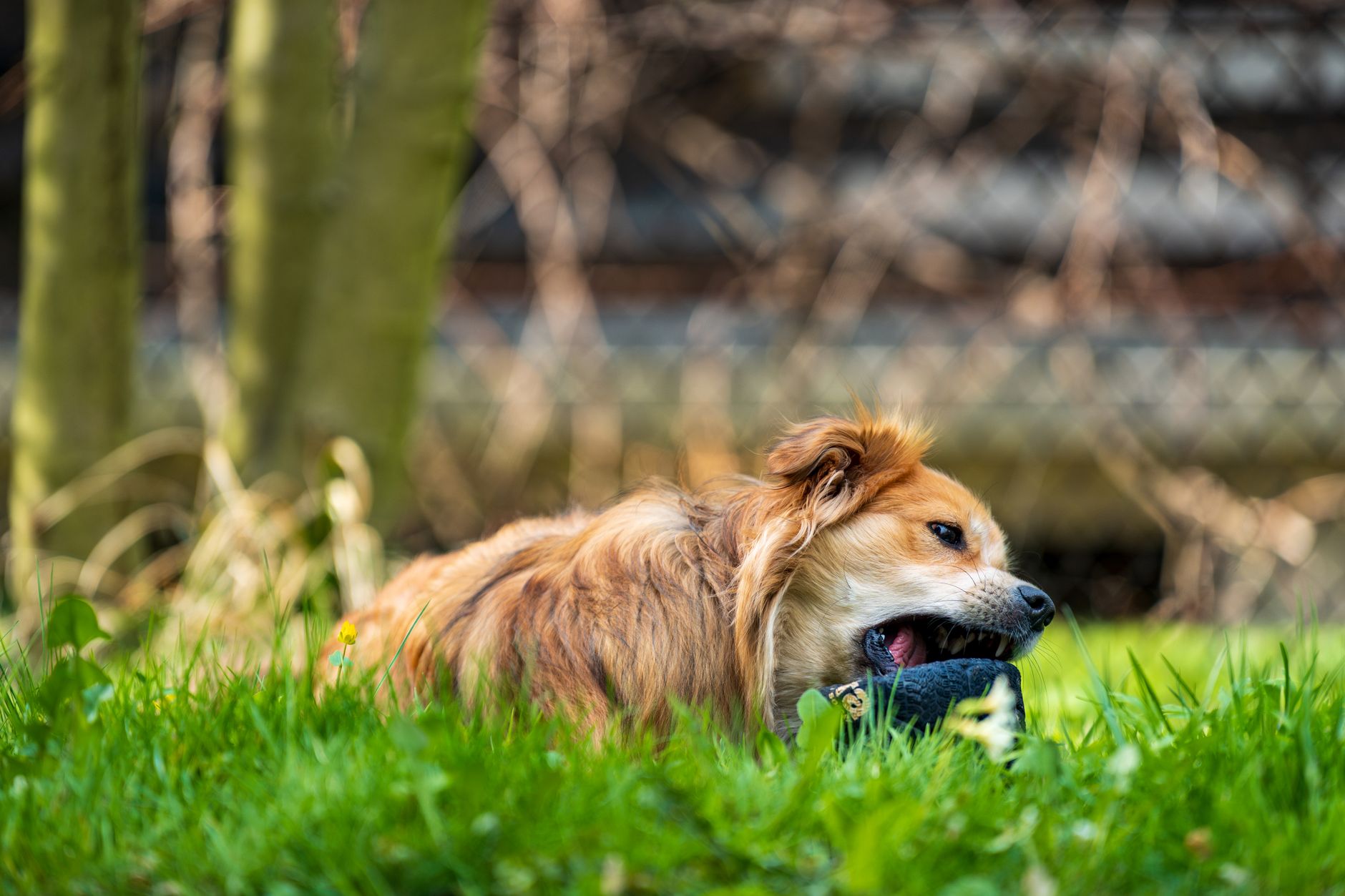
You came home to a shredded cushion, a gnawed chair leg, or — the classic — your favourite shoe reduced to a sculpture. If you're reading this at 10 pm feeling like you've somehow broken your dog, you haven't. German Shepherds are working dogs with powerful jaws, big brains, and a near-constant need for something to do. When that need goes unmet, they find their own solutions. Destructive chewing isn't a personality flaw — it's communication.
Here's what you can do right now, tonight, plus a full step-by-step plan to get on top of it for good.
Your Quick Win for Tonight
Before anything else: swap, don't scold. If you catch your GSD mid-chew on something they shouldn't have, calmly take it away, immediately offer an approved chew (a frozen Kong, a bully stick, a rubber chew toy), and the moment they engage with it, say "yes" or click and give a small treat. That's it. You've just done the core of every evidence-based chewing protocol in about 15 seconds. Repeat that consistently and you're already ahead of most owners.
Why German Shepherds Chew Destructively
Understanding the cause makes the fix faster.
- Boredom and under-stimulation — GSDs were bred to work 8+ hours a day. A 30-minute walk and a bowl of kibble rarely cuts it.
- Anxiety (especially separation anxiety) — Chewing releases endorphins and is genuinely self-soothing. If destruction only happens when you're out, anxiety is likely involved.
- Teething — Puppies between 3 and 7 months chew compulsively to relieve gum pain.
- Excess energy — A tired dog is a good dog. An untired GSD is a demolition crew.
- Attention-seeking — If chewing the remote always gets a reaction (even a negative one), it works.
Step-by-Step Plan to Stop Destructive Chewing
Step 1 — Manage the Environment First (Week 1)
Trying to train your way out of a problem before you've managed access is like bailing a boat with the plug still out.
- Confine to a safe space when unsupervised. A puppy pen, a gated room, or a crate (introduced positively, never as punishment) prevents rehearsal of bad habits. Every time your GSD chews the wrong thing unsupervised, that behaviour gets stronger.
- Remove temptation. Pick up shoes, move power cords, put remote controls out of reach. This isn't admitting defeat — it's smart training.
- Audit what's available. Make sure there are always 2–3 approved chews accessible in their space at all times.
Step 2 — Build a Chew-Toy Rotation (Week 1–2)
Dogs get bored of the same toy fast. Keep a small "library" of 6–8 different textures and rotate them every few days so each one feels novel.
| Chew Type | Best For | Notes |
|---|---|---|
| Frozen stuffed Kong | Boredom, separation anxiety | Fill with kibble + peanut butter (xylitol-free), freeze overnight |
| Bully sticks | Heavy chewers | Supervise; discard when small enough to swallow |
| Rubber chew toys (e.g. West Paw Tux) | Daily use | Durable, dishwasher safe |
| Antlers / horns | Long-lasting chew sessions | Avoid for aggressive chewers — can crack teeth |
| Snuffle mats / lick mats | Mental fatigue | Great paired with meals |
Step 3 — Teach "Leave It" and "Drop It" (Week 2–3)
These two cues are your verbal off-switch. Five minutes a day is enough.
Leave It (in 3 steps):
- Hold a low-value treat in your closed fist. Let your dog sniff and mouth your hand. The moment they back off, even slightly, say "yes" and reward with a different treat from your other hand.
- Progress to the treat on the floor covered by your hand, then uncovered.
- Eventually cue "leave it" before they get to the object.
Drop It:
- Let your dog have a toy, then present a high-value treat near their nose.
- The moment they open their mouth, say "drop it" and reward.
- Give the toy back immediately — this stops them from thinking "drop it" means losing everything fun.
Practice both in 5-minute sessions. GSDs are fast learners; most owners see solid responses within 10–14 days of consistent work.
Step 4 — Increase Mental and Physical Stimulation (Ongoing)
This is the part most owners underestimate. Adding mental exercise is often more tiring than adding physical exercise — a 10-minute training session can exhaust a GSD faster than an extra 20-minute walk.
Low-time-investment options:
- Feed meals from a puzzle feeder or stuffed Kong instead of a bowl (adds 0 extra minutes to your day)
- 5-minute training bursts: practise sits, drops, spins, nose touches — anything that makes them think
- Scatter feeding in the backyard (hide kibble in the grass — engages scent drive)
- One new "sniff walk" per week where your dog sets the pace and follows their nose — mentally exhausting in the best way
Step 5 — Address Anxiety If It's Present (Week 3+)
If your GSD only destroys things when alone, separation anxiety needs its own targeted work. Signs include: chewing only near exits (doors, windows), barking or howling reported by neighbours, toileting inside despite being house-trained, or visible distress when you prep to leave.
A basic protocol:
- Practice micro-absences — leave for 10 seconds, return calmly, build duration slowly over days and weeks.
- Avoid big dramatic departures and arrivals (no long goodbyes or excited hellos — keep it boring).
- A frozen Kong given only when you leave creates a positive association.
For moderate-to-severe separation anxiety, do get professional help early — this is one area where DIY can plateau quickly. A qualified trainer or veterinary behaviourist can make a real difference. Your vet may also discuss short-term medication support in serious cases, which is a legitimate and humane option, not a last resort.
Common Mistakes That Slow Progress
- Punishing after the fact. Dogs live in the present. If you find a chewed shoe 20 minutes later and scold your dog, they genuinely cannot connect the punishment to the earlier behaviour. All you achieve is a confused, anxious dog.
- Inconsistency. If the couch is off-limits except when you're feeling lenient, your GSD can't read your mood — they just learn "sometimes couch is fine."
- Not rotating toys. A Kong that's been sitting in the same corner for a week is furniture, not a toy.
- Too much freedom too soon. Earning house freedom gradually — as your dog proves trustworthy in a smaller space — is far more effective than hoping for the best.
Realistic Timeline
| Timeframe | What to Expect |
|---|---|
| Day 1–7 | Management in place; fewer incidents (because access is reduced) |
| Week 2–3 | "Leave it" and "drop it" becoming reliable in low-distraction settings |
| Week 4–6 | Noticeably more settled behaviour; chewing redirected consistently |
| 2–3 months | Solid new habits, able to extend supervised freedom |
If you're not seeing any improvement after 4–6 weeks of consistent work, or if anxiety-driven behaviour is worsening, that's your cue to bring in a professional — not a sign you've failed.
When to Call in a Professional
Book a session with an accredited trainer or veterinary behaviourist if:
- Chewing is paired with aggression (growling, snapping when you approach)
- You suspect moderate or severe separation anxiety
- The behaviour has been going on for months with no improvement
- Your dog is also showing other concerning behaviours (excessive barking, reactivity, fearfulness)
Look for trainers who use positive reinforcement methods and hold credentials from recognised bodies such as the PPGA (Pet Professional Guild Australia) or NDTF. Avoid any trainer who recommends punishment-based tools like prong collars or shock collars for a chewing issue — they're not necessary and can make anxiety-based chewing significantly worse.
The good news is that most cases of German Shepherd destructive chewing respond well to the steps above. These are dogs that want to engage with you — that's literally what they were bred for. Give that need a legitimate outlet and the couch stands a fighting chance.
As an Amazon Associate we earn from qualifying purchases.
Frequently asked questions
At what age do German Shepherds stop chewing everything?
Teething-related chewing typically peaks between 3 and 7 months and eases once adult teeth are fully in by around 6–7 months. However, boredom and anxiety-driven chewing can continue well into adulthood if the underlying cause isn't addressed. Most GSDs settle significantly between 18 months and 3 years as they mature — but management and training are needed in the meantime.
Is destructive chewing a sign my German Shepherd has separation anxiety?
It can be, but not always. A key clue is *when* the chewing happens — if damage only occurs when your dog is left alone, and is concentrated near exits like doors and windows, separation anxiety is likely involved. If your dog chews equally whether you're home or not, boredom or excess energy is a more probable cause. A video camera or pet monitor can help you see exactly what's happening when you're out.
What are the best chew toys for German Shepherds?
GSDs are powerful chewers, so durability matters. Frozen stuffed Kongs, West Paw rubber toys, and bully sticks are popular, well-regarded options. Avoid cheap plastic toys that can splinter, and be cautious with very hard chews like cooked bones or antlers — these can crack teeth in strong chewers. Rotating between several toys keeps novelty high and boredom low.
Should I use a crate to stop my GSD from chewing when I'm not home?
Crating is a legitimate and effective management tool when introduced correctly — it prevents unsupervised chewing and keeps your dog safe. The key is to build a positive association with the crate gradually (feeding meals inside, using high-value treats) rather than simply locking the dog inside and hoping for the best. Most adult GSDs can comfortably stay in a crate for 3–4 hours; longer than that on a regular basis isn't recommended.
Will telling my dog off stop the chewing?
Scolding after the fact is ineffective — dogs don't connect a punishment to something that happened even a few minutes ago. In the moment, a calm interruption followed by redirecting to an approved chew is far more useful. Repeated punishment can also increase anxiety, which for many GSDs actually makes chewing worse, not better.
How much exercise does a German Shepherd need to stop destructive chewing?
Adult GSDs generally need 1–2 hours of physical activity daily, but the type of exercise matters as much as the duration. Mental stimulation — training sessions, puzzle feeders, scent work — can be more tiring than additional walking and is often easier to fit into a busy schedule. Combining a solid daily walk with 10–15 minutes of training or enrichment activities is a realistic and effective target for most owners.
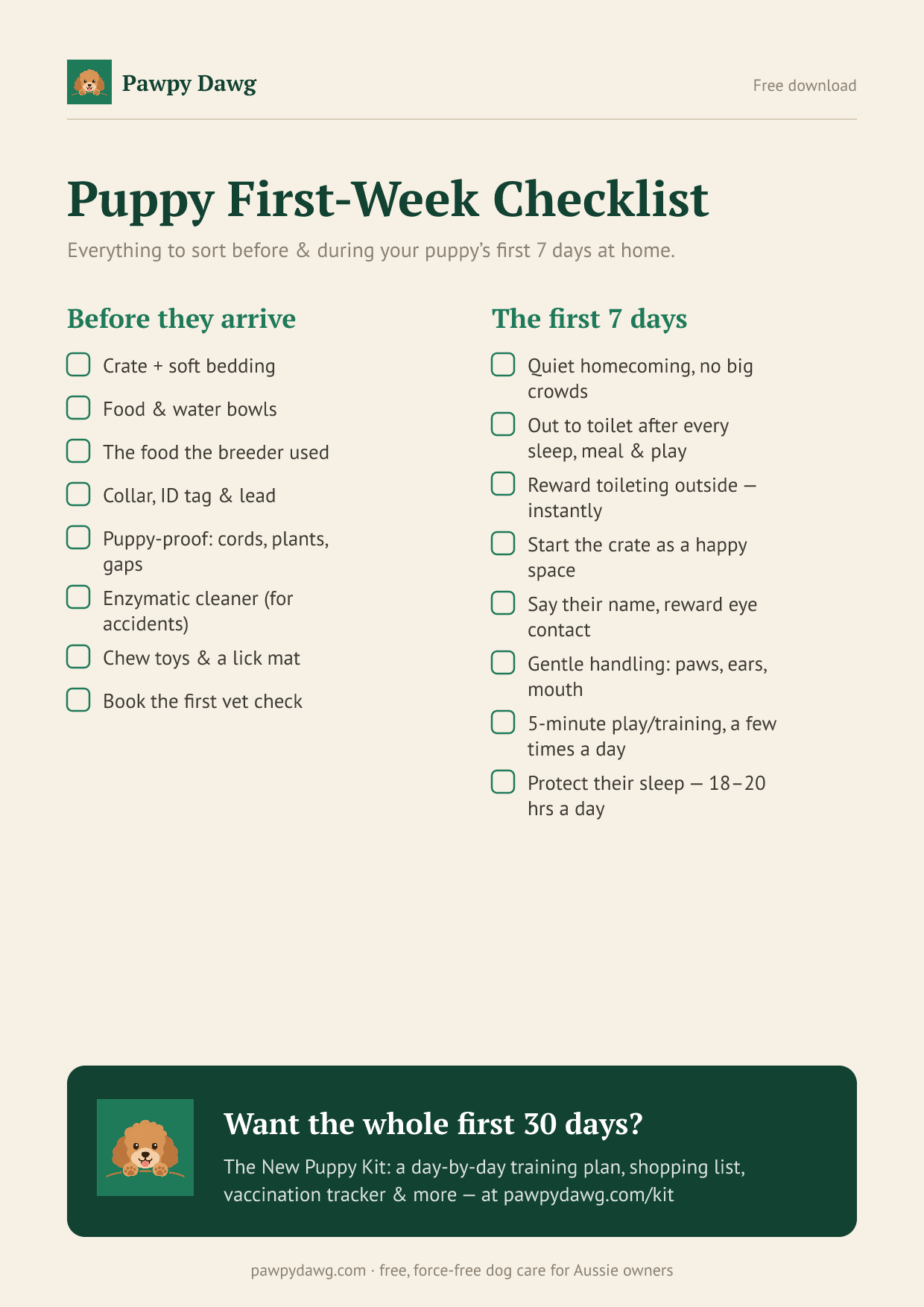
Free printable
Free: the Puppy First-Week Checklist
Everything to sort before and during your puppy's first 7 days home — a printable one-pager. Plus the occasional genuinely useful dog tip. No spam, unsubscribe anytime.
Related guides
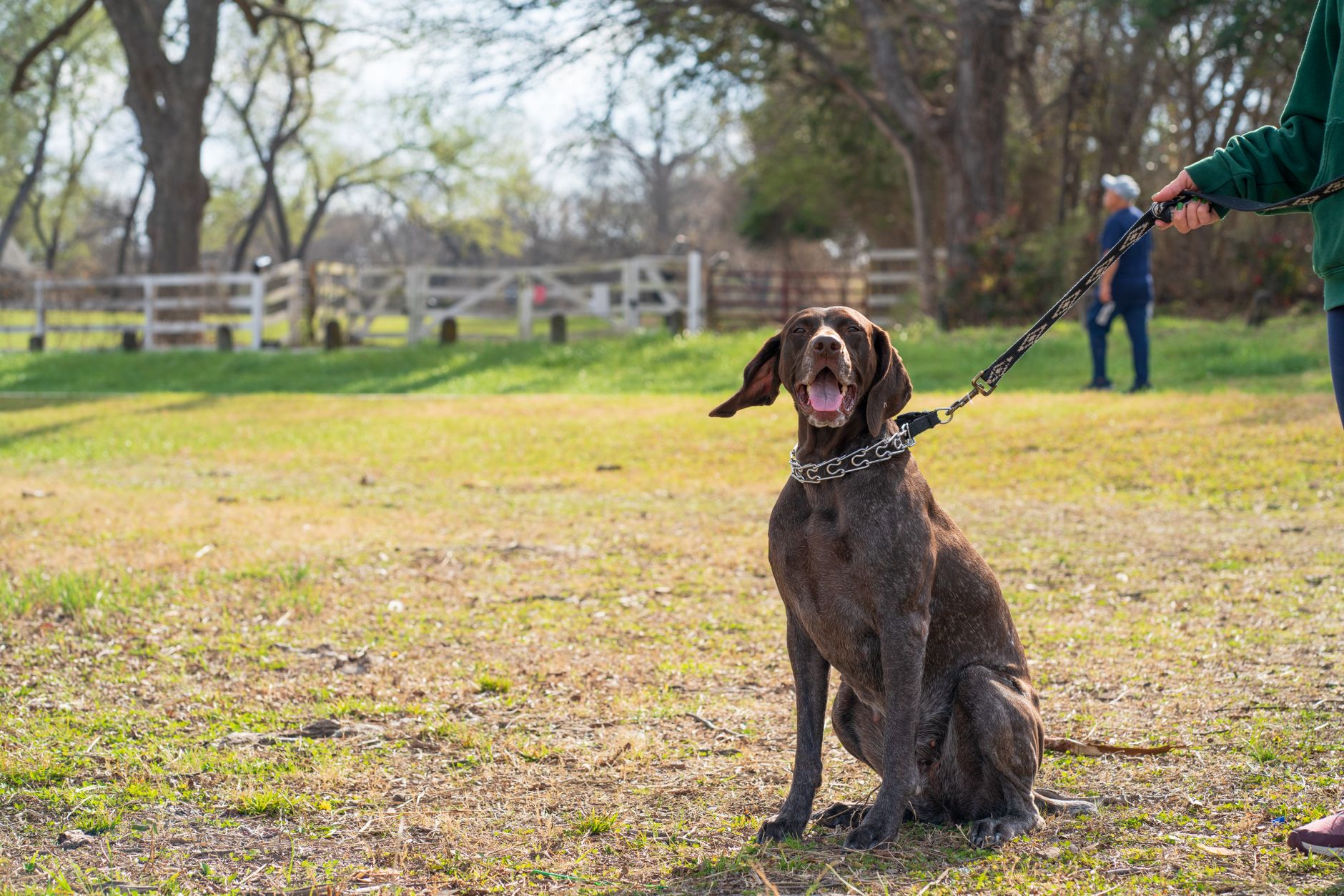
How to Stop a German Shepherd Pulling on the Lead (Step-by-Step)
Tired of being dragged down the street? Here's a realistic, step-by-step positive-reinforcement plan to stop your German Shepherd pulling on the lead — starting today.
Read the guide →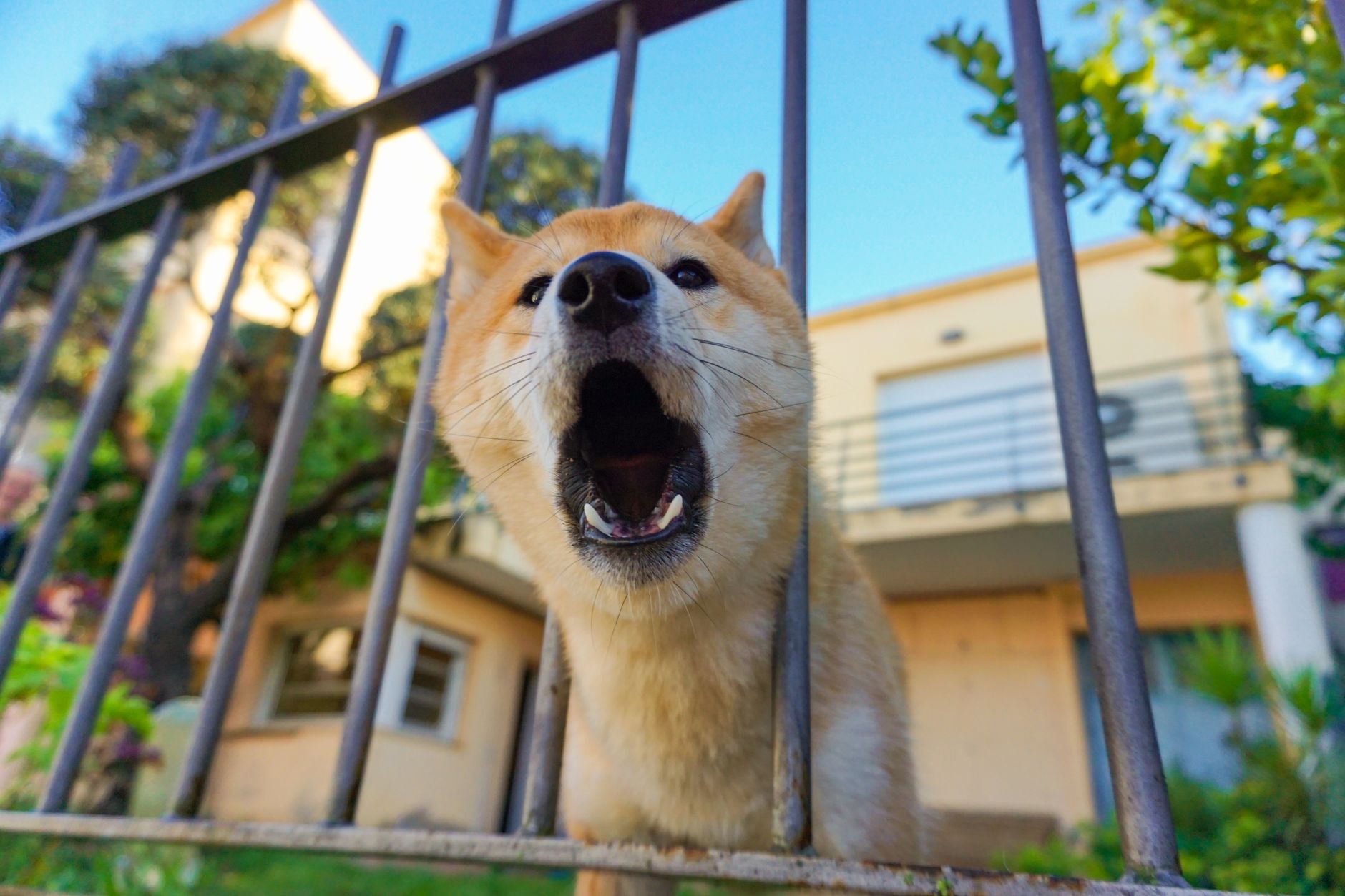
How to Stop a German Shepherd Barking at Strangers (Step-by-Step)
Tired of your German Shepherd barking at strangers? This step-by-step positive-reinforcement plan gives you real fixes, realistic timelines & when to get pro help.
Read the guide →
German Shepherd Separation Anxiety: A Step-by-Step Fix
Struggling with German Shepherd separation anxiety? Get a realistic, step-by-step positive-reinforcement plan, a quick win for today, and honest timelines.
Read the guide →