
How to Toilet Train a French Bulldog: A Realistic Plan
Struggling with french bulldog toilet training? Get a realistic, positive-reinforcement plan with quick wins, honest timelines, and common mistakes to avoid.

Written by Bradley Brown
Founder & editor · Reviewed 2026-07-08

If your French Bulldog has just christened the rug again, and you're sitting there wondering whether you've somehow broken your dog — you haven't. Frenchies are famously stubborn little characters, and toilet training them takes longer than most breeders let on. You're not doing it wrong. You just need a clearer plan.
Here's the good news: this is fixable. And you can start making real progress tonight.
Your Quick Win for Tonight
Before anything else, do this: take your dog outside right now, wait quietly for 2–3 minutes, and the moment they toilet, mark it with a cheerful "yes!" and give them a small, high-value treat immediately — within 3 seconds of the behaviour. Not inside. Not after a pat. Right there, outside, the second they go.
That single habit — instant reward outdoors — is the engine of the whole system. Everything else just makes it more consistent.
Why French Bulldogs Are Harder to Toilet Train
Frenchies aren't being spiteful. Their stubbornness is baked into the breed — they were selectively bred for independence and personality, not compliance. They also have short attention spans and can be easily distracted mid-squat by a smell, a sound, or absolutely nothing at all.
Add to that their flat faces (brachycephalic anatomy), which can make them reluctant to go out in hot or cold weather, and you've got a dog with a legitimate reason to avoid outdoor trips.
The result: accidents aren't defiance. They're usually a combination of an unclear routine, insufficient supervision, and missed rewards.
The Realistic Timeline
| Age / Stage | What to Expect |
|---|---|
| 8–12 weeks | Needs to go every 1–2 hours. Almost no bladder control. |
| 3–4 months | Can hold it for ~3 hours if well-managed. |
| 4–6 months | Starting to get it — but still needs structure and supervision. |
| 6–12 months | Most Frenchies are reliably trained, with occasional accidents. |
| 12+ months | Full reliability — if foundation was consistent. |
If your dog is older and still having accidents, don't panic. You're essentially retraining, which takes 4–8 weeks of consistency, not months.
The 5-Step Daily Routine (10 Minutes a Day)
You don't need an elaborate schedule. You need predictable trigger points and fast rewards.
Step 1: Take them out at the right moments
Always take your Frenchie outside:
- First thing in the morning (before coffee, before anything)
- Within 15 minutes of every meal
- After every nap
- Before bed
- Any time they've been crated or confined
If your dog is under 4 months, add an outing every 2 hours during the day.
Step 2: Pick one toilet spot
Lead them to the same patch of grass or area each time. The scent residue cues them to go. Sniffing around is a good sign — let them work it out.
Step 3: Use a cue word
As they begin to squat, say your chosen phrase quietly — "go toilet," "do your business," whatever you'll use consistently. Over time, this word becomes a prompt you can use before long car trips, vet visits, or bedtime.
Step 4: Reward immediately and generously
Mark the moment with "yes!" or a clicker, then treat within 3 seconds. Use something they genuinely love — small pieces of cooked chicken, cheese, or a commercial training treat. Praise matters too, but food is the faster teacher for Frenchies.
Step 5: Supervise or confine — no middle ground
When you can't watch your dog directly, they go in a crate or a small puppy-proofed pen. A Frenchie left to roam unsupervised will find a corner and use it. This isn't cruel — dogs are den animals and most settle quickly in a correctly sized crate (just big enough to stand, turn, and lie down).
What to Do When Accidents Happen
Accidents will happen. How you respond matters enormously.
Do:
- Clean it up with an enzymatic cleaner (like Nature's Miracle or a similar product available at most Australian pet stores). Regular cleaners leave odour traces your dog can still smell — and will return to.
- Note when it happened. Was it after a meal? After excitement? That tells you where your routine has a gap.
Don't:
- Scold, rub their nose in it, or make a scene. Punishment after the fact achieves nothing — dogs don't connect a consequence to a behaviour that happened more than a few seconds ago. It only teaches them to hide when they need to go.
- Ignore the pattern. Three accidents in the same spot at the same time of day is information, not bad luck.
Common Mistakes That Stall Progress
- Rewarding indoors instead of outside. The treat must happen at the toilet location.
- Letting them back inside too fast. Some owners rush the dog out, nothing happens, and they come back inside — then the dog toilets on the floor 90 seconds later. Give it 3–5 minutes outside minimum.
- Inconsistent supervision. One day of free-roaming can undo a week of progress.
- Using pee pads as a long-term solution. Pads teach dogs it's fine to go indoors. If you're using them as a bridge (e.g., apartment living), create a very clear plan to phase them out.
- Expecting them to "tell you" before they're ready. Most dogs don't signal reliably until they're 5–6 months old and have been trained to associate the door with going outside.
Dealing with Regression
If a previously trained dog starts having accidents again, rule these out first:
- Urinary tract infection (UTI) — sudden, frequent, urgent urination in an adult dog warrants a vet check before retraining.
- A change in routine — new home, new baby, change in feeding time, or a new pet can all disrupt established habits temporarily.
- Seasonal aversion — Frenchies often refuse to go outside in heavy rain or extreme heat. Keep an umbrella near the door. In summer, go out early morning and evening.
Regression usually resolves within 1–2 weeks of returning to the basics.
When to Get Professional Help
Most French Bulldog toilet training issues resolve with a consistent routine. But consider speaking to a vet or accredited trainer if:
- Your dog is over 12 months and has never shown improvement despite consistent effort
- Accidents are accompanied by blood, straining, or unusual frequency (possible medical issue)
- Your dog seems anxious or fearful around outdoor toilet trips
- You've tried consistently for 6–8 weeks with no progress
Look for a trainer who uses positive reinforcement methods — in Australia, the Pet Professional Guild Australia (PPGA) is a good starting point for finding qualified, force-free trainers.
The Short Version
French Bulldog toilet training is a marathon, not a sprint — but 10 focused minutes a day, a predictable routine, and instant rewards will get you there. You're not a bad owner. Your dog isn't broken. You've just got a Frenchie, and this is just what they're like.
Start with tonight's trip outside. That's all you need to do right now.
As an Amazon Associate we earn from qualifying purchases.
Frequently asked questions
How long does it take to toilet train a French Bulldog?
Most French Bulldogs reach reliable toilet training between 6 and 12 months of age, but real improvement is usually visible within 4–8 weeks of a consistent routine. Older dogs being retrained can show progress in as little as 2–4 weeks. Consistency matters far more than the dog's age.
Why does my French Bulldog keep having accidents inside even though they were trained?
Regression in a previously trained dog is often triggered by a routine change, a new environment, or a medical issue like a urinary tract infection. Rule out a UTI with your vet first if the accidents are sudden and frequent. Otherwise, returning to the basics — supervised outings, instant rewards, and no unsupervised indoor time — usually resolves it within 1–2 weeks.
Should I use puppy pads for French Bulldog toilet training?
Puppy pads can be useful as a short-term bridge, particularly in apartments, but they teach dogs that going indoors is acceptable — which creates a longer retraining job later. If you use them, have a clear plan to phase them out by gradually moving the pad closer to the door, then outside.
Is it okay to scold my French Bulldog for toileting inside?
No — punishment after the fact is ineffective and can make training harder. Dogs cannot connect a consequence to a behaviour that happened more than a few seconds ago, so scolding just creates anxiety. Focus on rewarding the right behaviour outdoors, and clean accidents with an enzymatic cleaner so there's no scent trace left to attract them back.
How often should I take my French Bulldog puppy outside to toilet?
A puppy under 12 weeks needs a trip outside every 1–2 hours during the day. From 3–4 months, every 2–3 hours is a reasonable guide. Always take them out first thing in the morning, within 15 minutes of meals, after naps, and before bed. Predictability is the key — the routine teaches their bladder as much as the rewards do.
My French Bulldog refuses to go outside in the rain. What can I do?
Brachycephalic breeds like Frenchies are often more sensitive to weather than other dogs. Try a small dog raincoat to reduce the sensory discomfort, and use a sheltered spot if possible. Go out with them rather than just opening the door — your presence is reassuring. Reward heavily when they do toilet outside in bad weather to build a positive association.
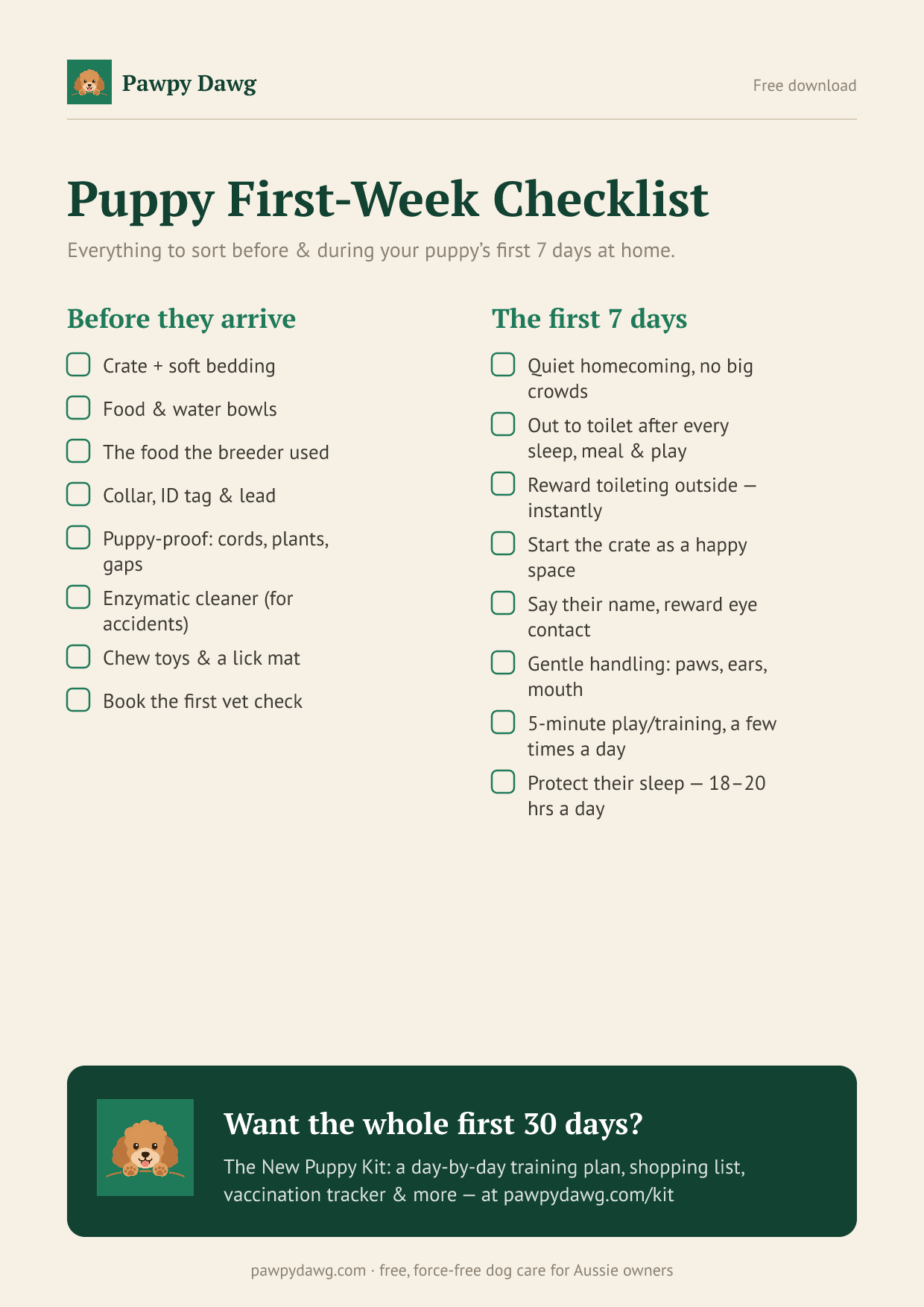
Free printable
Free: the Puppy First-Week Checklist
Everything to sort before and during your puppy's first 7 days home — a printable one-pager. Plus the occasional genuinely useful dog tip. No spam, unsubscribe anytime.
Related guides
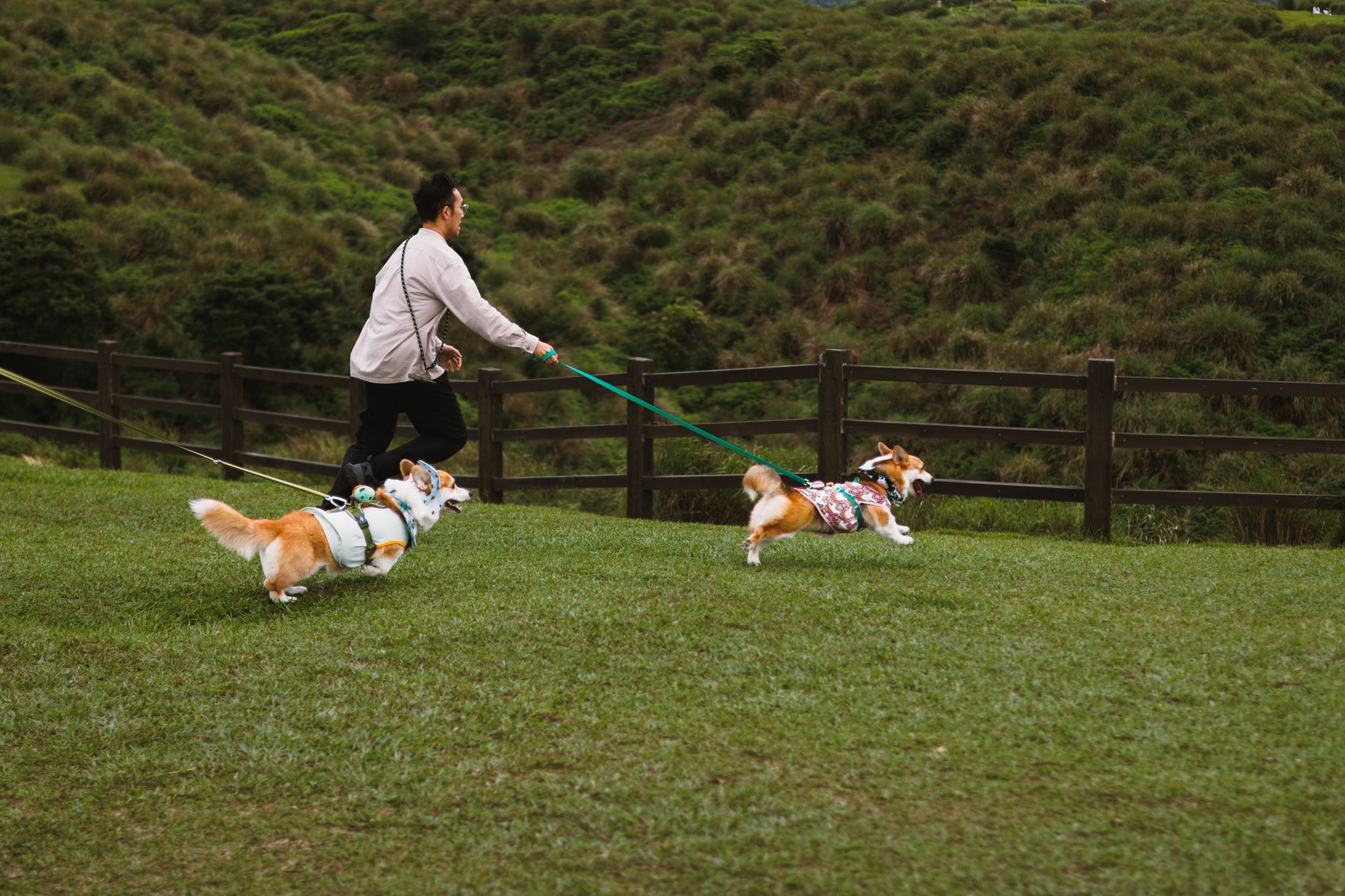
How to Stop a French Bulldog Pulling on the Lead (Step-by-Step)
Tired of your French Bulldog pulling on the lead? This step-by-step positive-reinforcement plan delivers real results in 5–10 min daily training sessions.
Read the guide →
How to Stop a French Bulldog Barking at Strangers (Step-by-Step)
Tired of your French Bulldog barking at strangers? This step-by-step positive-reinforcement plan gives you a quick win today and a realistic timeline to fix it.
Read the guide →
French Bulldog Separation Anxiety: A Step-by-Step Fix
Struggling with French Bulldog separation anxiety? This step-by-step, positive-reinforcement plan gives you real fixes, realistic timelines & when to get pro help.
Read the guide →