
How to Stop a French Bulldog Pulling on the Lead (Step-by-Step)
Tired of your French Bulldog pulling on the lead? This step-by-step positive-reinforcement plan delivers real results in 5–10 min daily training sessions.

Written by Bradley Brown
Founder & editor · Reviewed 2026-07-06
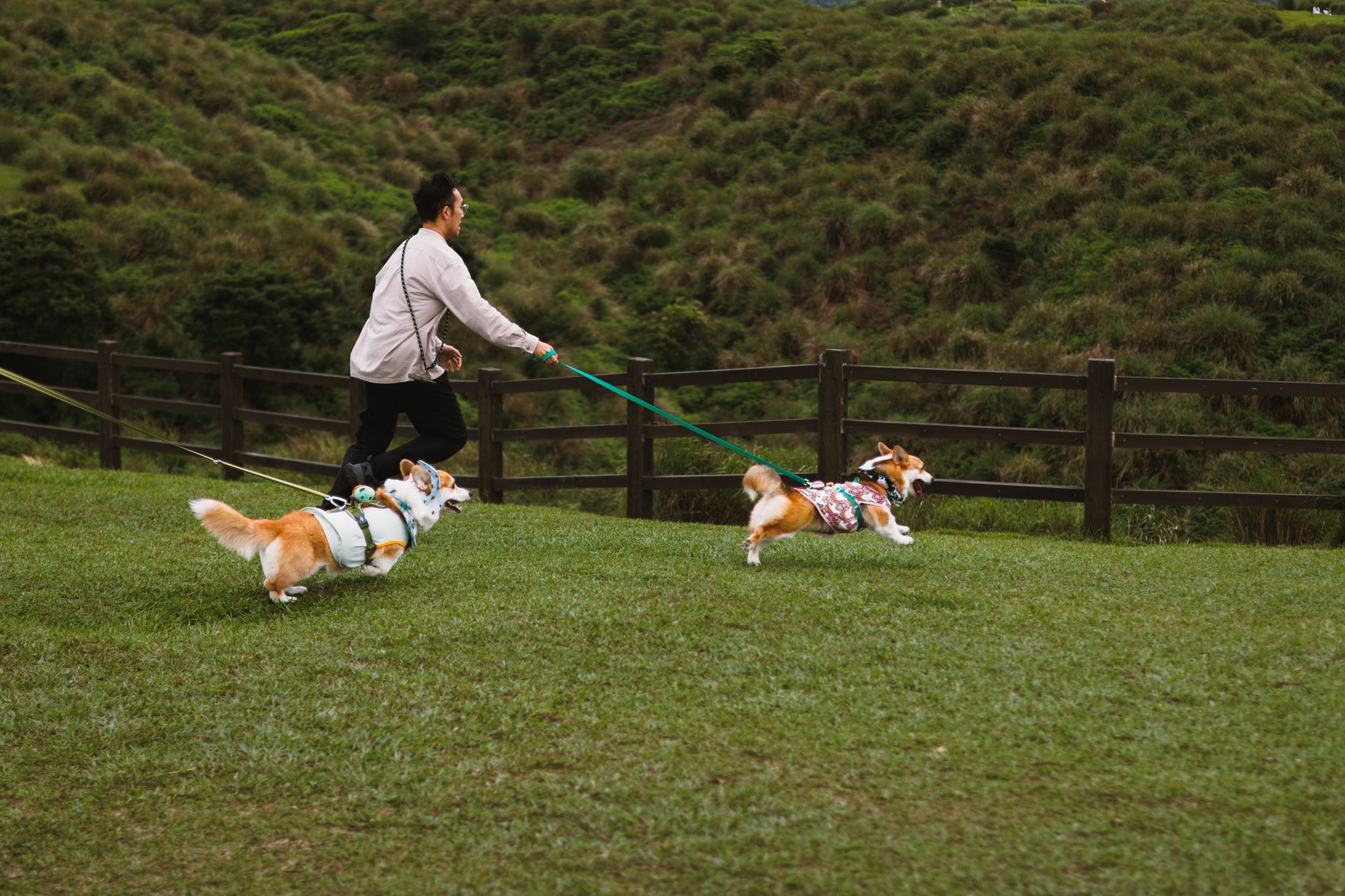
You had plans for a nice walk. Instead, you got dragged down the footpath while your Frenchie choked themselves red in the face and you smiled awkwardly at the neighbours. You're not alone, and you haven't ruined your dog. Pulling on the lead is one of the most common complaints from French Bulldog owners — and it's entirely fixable with the right approach.
Here's the good news: you don't need an hour a day. Ten minutes of focused practice, done consistently, will get you results most owners see within two to four weeks.
Why French Bulldogs Pull (It's Not Stubbornness)
Frenchies pull for the same reason most dogs do: moving forward works. Every time your dog lurches ahead and you follow, they learn that pulling is the fastest route to the interesting smell, the other dog, or the front gate. It's not dominance. It's not defiance. It's basic cause and effect.
French Bulldogs also have a few breed-specific quirks that make loose-lead walking trickier:
- Brachycephalic airways — their flat faces mean they're already working harder to breathe, and a tight collar compresses the trachea further, which can increase arousal and urgency.
- Short attention spans on a walk — every smell is urgent to a Frenchie.
- Stubbornness reputation — they're not mindless pullers like a Labrador; they're selective about what motivates them, so you need to find the right reward.
Your Quick Win — Try This Today
Before your next walk, grab 10 small, high-value treats (think small pieces of cooked chicken, cheese, or a Frenchie-favourite like Zuke's Mini Naturals — around $15–$20 at most pet stores).
The Stop-and-Be-a-Tree method:
- The moment your dog moves ahead and the lead goes taut, stop completely. Plant your feet.
- Say nothing. No "no," no "ah-ah," no reeling them in.
- Wait. Your Frenchie will eventually check back on you — even if it takes 20 seconds.
- The instant they turn toward you or take even one step back, mark it ("yes!" or a click) and deliver a treat right at your hip.
- Start walking again. Repeat every single time tension appears.
This feels slow at first. That's normal. You might only cover 50 metres in your first session. That's a success — because you're teaching a new rule consistently for the first time.
The Full Step-by-Step Plan
Step 1: Sort Your Equipment First
A pulling Frenchie on a flat collar is a health risk — those airways can't handle the pressure. Switch before you start training:
| Equipment | Pros | Cons |
|---|---|---|
| Y-front harness (e.g., Julius-K9, Ruffwear Front Range) | Protects throat, comfortable, durable | No anti-pull effect on its own |
| Front-clip harness | Redirects pulling momentum, easy to use | Some dogs learn to compensate |
| Head halter (e.g., Halti, Gentle Leader) | Strong management tool | Requires introduction period; some dogs resist |
| Flat collar | Fine for ID tags | Not recommended for pulling Frenchies |
For most Frenchies, a Y-front harness paired with consistent training is the safest starting point. Add a front-clip attachment if pulling is severe. Expect to spend $40–$90 AUD for a decent harness.
Step 2: Train in Your Backyard First
Asking your dog to learn a new behaviour in the middle of a stimulating street is like asking someone to learn to drive on the freeway. Start in the backyard or a quiet hallway.
- Walk around your yard, changing direction randomly.
- Every time your dog is beside you with a loose lead, feed a treat at your hip.
- Practise 5 minutes, twice a day for three to five days before hitting the footpath.
Step 3: Build the Loose Lead on the Street
Once your dog understands the game in a low-distraction environment, take it outside — but load up on better treats than usual. The street is harder, so the reward needs to be higher.
The routine (5–10 minutes per session):
- Start from your front door. Before opening the gate, ask for a sit. Reward.
- Walk with your goal being: treat at your hip every 3–5 steps while the lead is loose.
- The moment tension builds — stop. Be a tree.
- When the lead goes slack (even slightly), mark and reward.
- If your dog is completely over-threshold (barking, lunging), turn around and walk back 10 metres. Let them decompress before trying again.
Step 4: Add a Direction Change
Once your dog is checking in regularly, you can add a gentle direction change to keep their attention on you:
- Without warning, turn 90° or 180°.
- If your dog follows, jackpot reward (three treats in quick succession).
- This teaches them to watch where you're going rather than drag you where they want to go.
Step 5: Proof It Gradually
Common mistakes owners make at this stage:
- Skipping to hard environments too fast. If your Frenchie falls apart near other dogs, that's a separate training challenge — don't try to fix everything on one walk.
- Inconsistency between walkers. If you're training loose lead but your partner lets the dog pull, you're undoing your own work. Everyone who walks the dog needs the same rules.
- Fading treats too early. Most owners stop rewarding the moment they see improvement. Keep rewarding, just variably — sometimes every 10 steps, sometimes every 3. Unpredictable rewards are more powerful than constant ones.
Realistic Timeline
| Week | What to Expect |
|---|---|
| 1 | Slow, frustrating walks — this is normal. You're breaking a habit. |
| 2 | Dog starts checking in more. Walks feel slightly less like a tug-of-war. |
| 3–4 | Loose lead becomes the default in low-distraction environments. |
| 6–8 | Consistent loose lead in most situations; high-distraction areas still need management. |
Some Frenchies crack this in two weeks. Some take three months. Age, how long the pulling habit has been reinforced, and how consistent you are all play a role.
When to Get Professional Help
You don't have to white-knuckle this alone. Consider booking with a certified trainer (look for a member of the Pet Professional Guild Australia or someone using force-free methods) if:
- Your Frenchie is lunging or reactive toward other dogs or people, not just pulling.
- You're making no progress after four to six weeks of consistent training.
- Walks have become something you're avoiding entirely.
- You have a puppy and want to build good habits from the start — one or two sessions early on can save months of remedial training.
A single 60-minute private session typically costs $80–$150 AUD and can shortcut your progress significantly.
The One Thing to Remember
Every time you keep walking when the lead is tight, you train your dog to pull. Every time you stop, you train them that pulling doesn't work. That's really what this comes down to — not the fancy equipment, not the perfect treat, just relentless, calm consistency.
Your Frenchie is not broken. Neither are you. The walk you want is closer than you think.
As an Amazon Associate we earn from qualifying purchases.
Frequently asked questions
How long does it take to stop a French Bulldog pulling on the lead?
Most owners see noticeable improvement within two to four weeks of consistent daily training. Full, reliable loose-lead walking in varied environments can take six to eight weeks or longer, depending on how long the pulling habit has been reinforced and how consistent everyone in the household is with the training.
What is the best harness for a French Bulldog that pulls?
A Y-front harness (such as the Julius-K9 or Ruffwear Front Range) is generally the safest choice for Frenchies, as it avoids pressure on the throat and trachea. If pulling is severe, a front-clip harness adds extra management by redirecting the dog's momentum. Avoid flat collars as your primary walking tool while your Frenchie is still pulling, due to the breed's brachycephalic airway.
Should I use a correction or choke collar to stop my Frenchie pulling?
Correction-based collars (choke chains, prong collars, or e-collars) are not recommended for French Bulldogs. Their compressed airways make any tracheal pressure a genuine health risk. Positive-reinforcement methods — stopping when the lead tightens and rewarding a loose lead — are both safer and more effective for the breed long-term.
My French Bulldog only pulls toward other dogs. What should I do?
Pulling toward other dogs is often a reactivity or over-excitement issue rather than simple loose-lead pulling, and it needs a slightly different approach. Start by increasing your distance from other dogs so your Frenchie can notice them without going over threshold, and reward calm behaviour heavily. If the behaviour is intense or involves lunging and barking, a force-free trainer can help you work through a structured desensitisation programme.
Can I train an older French Bulldog to stop pulling, or is it too late?
It's never too late. Older dogs can absolutely learn new behaviours — they may simply have a more deeply ingrained habit to unlearn, which means training can take a little longer. The same positive-reinforcement steps apply regardless of age. Patience and consistency matter far more than the dog's age.
How many minutes a day do I need to train loose-lead walking?
Two five-to-ten minute sessions per day is enough for most Frenchies — short sessions maintain focus and prevent the dog (and owner) from becoming frustrated. Quality and consistency matter more than duration. Incorporating the training into your regular daily walks, rather than treating it as a separate exercise, makes it much easier to sustain.
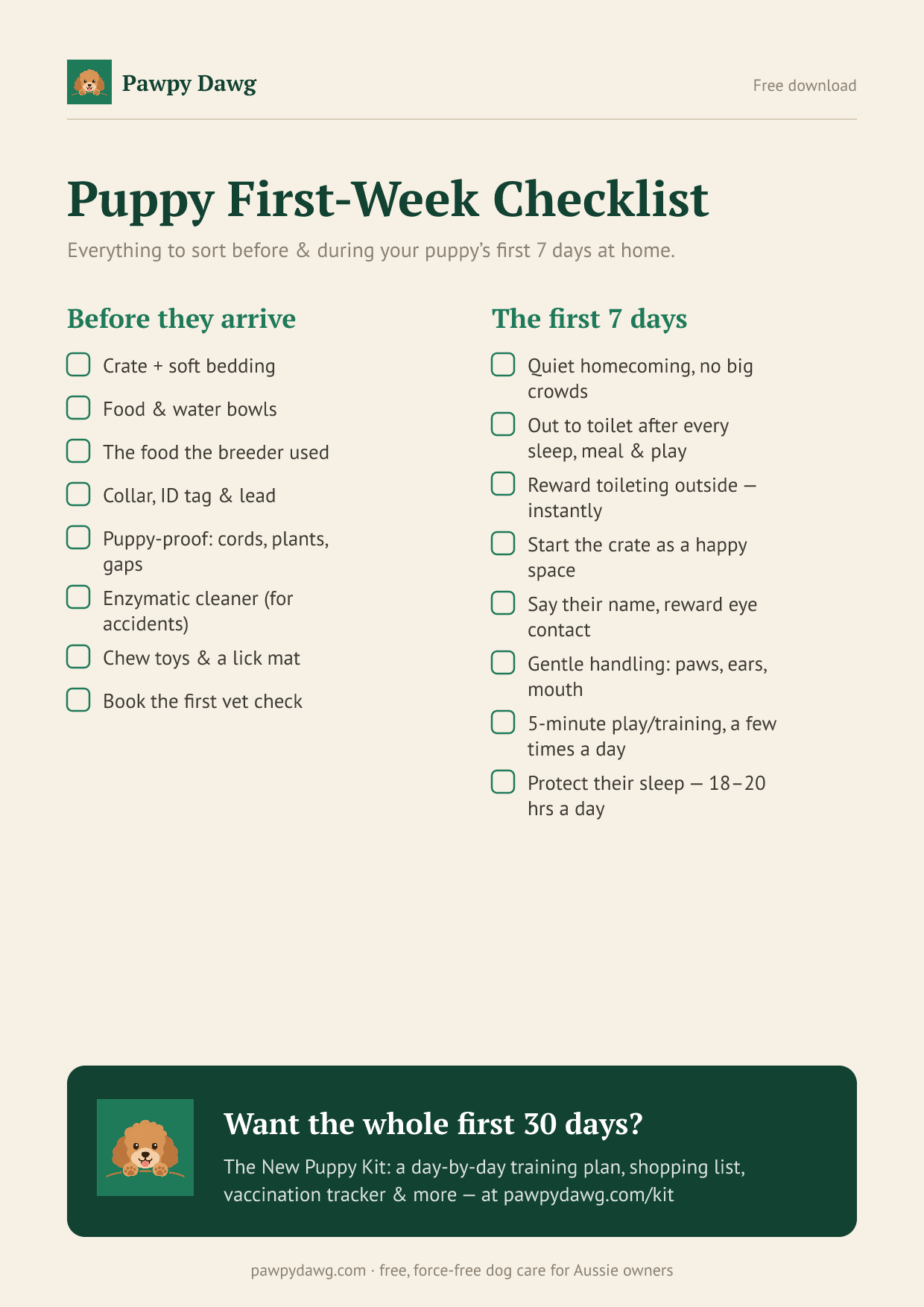
Free printable
Free: the Puppy First-Week Checklist
Everything to sort before and during your puppy's first 7 days home — a printable one-pager. Plus the occasional genuinely useful dog tip. No spam, unsubscribe anytime.
Related guides
How to Stop a French Bulldog Barking at Strangers (Step-by-Step)
Tired of your French Bulldog barking at strangers? This step-by-step positive-reinforcement plan gives you a quick win today and a realistic timeline to fix it.
Read the guide →
French Bulldog Separation Anxiety: A Step-by-Step Fix
Struggling with French Bulldog separation anxiety? This step-by-step, positive-reinforcement plan gives you real fixes, realistic timelines & when to get pro help.
Read the guide →
How to Stop a French Bulldog Jumping Up on People (Step-by-Step)
Tired of your French Bulldog jumping up on people? This step-by-step positive-reinforcement plan gets real results in 5–10 min/day. Realistic timelines included.
Read the guide →