
How to Stop a French Bulldog Jumping Up on People (Step-by-Step)
Tired of your French Bulldog jumping up on people? This step-by-step positive-reinforcement plan gets real results in 5–10 min/day. Realistic timelines included.

Written by Bradley Brown
Founder & editor · Reviewed 2026-07-07
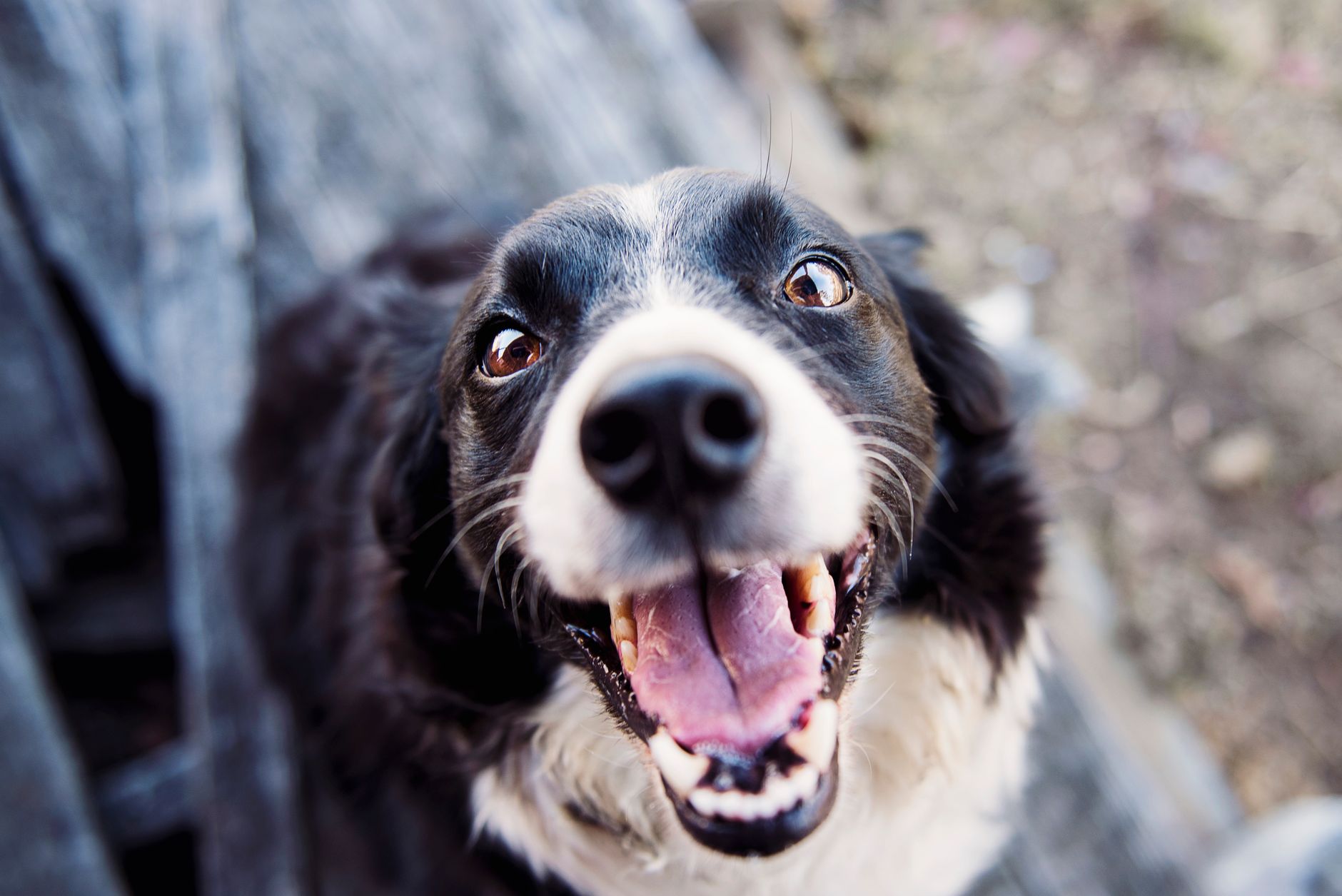
You've just come back from a walk where your Frenchie launched himself at a stranger like a small, snorting missile. The stranger laughed it off, but you wanted to disappear. Or maybe a visitor just got muddy paw prints down their white shirt — again. You're not a bad owner. French Bulldogs are enthusiastic, social, and built low to the ground with a lot to prove. Jumping up is completely normal greeting behaviour for the breed. The good news? It's also one of the more straightforward problems to fix.
Here's what actually works.
Why French Bulldogs Jump Up (And Why It's Not Your Fault)
Jumping up is self-rewarding attention-seeking behaviour. When your Frenchie was a puppy, jumping up got them eye contact, a laugh, hands reaching down — jackpot. They learned it works. That's not a character flaw; that's a smart dog doing what paid off.
French Bulldogs are particularly prone to this because they're bred to be companion dogs. Human attention is their primary motivator, which is exactly why positive reinforcement training works so well with them — and why punishment-based methods backfire badly (more on that below).
Your Quick Win for Today: The "Four Paws on the Floor" Rule
Before you read another word, try this today:
The moment your Frenchie's front paws hit you — turn your back. Completely. No eye contact, no "no", no pushing them down. Zero reaction.
The instant all four paws hit the floor, turn around and calmly reward with a treat or brief praise.
That's it. You've just started counter-conditioning. Do this every single time for the next 48 hours and you will see a change begin. Consistency is the whole game here.
The Step-by-Step Training Plan (5–10 Minutes a Day)
Step 1: Get Everyone in the House Aligned (Day 1)
The single biggest reason this training fails is inconsistency. If you turn away but your partner lets the jumping continue "just this once," your Frenchie learns jumping sometimes works — which actually makes the behaviour more persistent (this is called intermittent reinforcement).
Action: Have a five-minute household conversation. Agree on the rule: no one rewards four paws off the floor. Stick a note on the fridge if you need to.
Step 2: Teach an Incompatible Behaviour (Days 2–5)
You can't just remove a behaviour — you need to replace it with something your Frenchie can do instead. The easiest option: sit.
Most Frenchies already know "sit." If yours doesn't, spend two days on it with treats before moving forward.
How to practise:
- Approach your dog calmly (as if you've just walked in the door).
- If they jump — turn away. Wait for four paws on the floor.
- The moment they're down, ask for "sit."
- Mark the sit with a "yes!" or a clicker and reward with a small treat.
- Repeat 5–8 times per session, once or twice a day.
Keep sessions to five minutes. Frenchies are brachycephalic (short-nosed) and can tire and overheat quickly — short and positive beats long and exhausting every time.
Step 3: Practise with Controlled "Visitors" (Days 5–14)
Real-world greetings are harder than home practice. Your dog needs reps with other people before the behaviour generalises.
How to set it up:
- Ask a friend or family member to help. Brief them first — they must follow the same rules.
- Have your Frenchie on lead initially so you can manage the situation.
- Visitor approaches. If the dog jumps, visitor turns away.
- When four paws land, visitor waits for your "sit" cue, then rewards.
- Gradually fade the lead over multiple sessions.
Pro tip: Keep a small treat pouch at the front door. Hand a couple of treats to every visitor as they walk in so they can reward the sit themselves. It takes 20 seconds and speeds up generalisation dramatically.
Step 4: Add a "Place" Cue for High-Excitement Moments (Week 2–3)
For arrivals at the front door — the highest-energy moment — a "go to your mat" or "place" cue is a game-changer. You send your dog to a specific spot (a mat or bed) before excitement peaks.
Basic steps:
- Lure your dog onto a mat with a treat.
- Say "place" as they step on.
- Reward lavishly while they stay.
- Practise before the door even opens — gradually build up to asking for "place" when you hear a knock.
This takes a couple of weeks of short daily practice but gives your dog a job during greetings, which Frenchies respond to extremely well.
Common Mistakes That Stall Progress
| Mistake | Why It Backfires | What to Do Instead |
|---|---|---|
| Saying "no" or "down" while the dog is jumping | Any verbal reaction is still attention | Silence and turn away |
| Pushing the dog off with your hands | Physical touch is a reward for many dogs | No touch until four paws are down |
| Kneeing the dog in the chest | Can cause injury; damages trust | Never use this method |
| Only practising at home | Behaviour won't generalise | Practise with real visitors ASAP |
| Giving up after a bad day | Extinction bursts are normal (it gets worse before it gets better) | Expect a temporary spike; stay consistent |
Realistic Timeline: What to Expect
- 48–72 hours: You'll notice the jumping starting to lose steam with you specifically.
- 1–2 weeks: Consistent four-paws-on-floor with household members.
- 3–4 weeks: Reliable sit for familiar visitors with prompting.
- 6–8 weeks: Most dogs are greeting reliably without jumping in most contexts.
Puppies under 12 months may take longer — their impulse control is still developing. Dogs who've been jumping for years may take a full 8–12 weeks. Neither scenario means your dog is a lost cause; it just means the habit is deeply grooved.
When to Call in a Professional
Most Frenchies respond well to the plan above. Consider calling a qualified trainer (look for a member of the Pet Professional Guild Australia or a certified applied animal behaviourist) if:
- Your dog is also mouthing or nipping during greetings.
- The jumping is accompanied by frantic, uncontrollable arousal that doesn't settle.
- You've been consistent for 8+ weeks with zero improvement.
- The dog is knocking over children or elderly people, creating a safety risk.
A one-on-one session with a good trainer typically costs $80–$180 AUD and can shortcut weeks of trial and error. It's money well spent if you're stuck.
The Short Version
Turn away from jumping. Reward four paws on the floor. Ask for a sit. Get everyone in your house doing the same thing. Practise with real people. Be boringly consistent for six to eight weeks.
Your Frenchie isn't broken. They just learned the wrong thing — and they can absolutely learn the right thing instead.
As an Amazon Associate we earn from qualifying purchases.
Frequently asked questions
How long does it take to stop a French Bulldog from jumping up on people?
Most owners see noticeable improvement within 1–2 weeks of consistent training. A reliable greeting behaviour with most people usually takes 6–8 weeks. Dogs who have been jumping for years or puppies with low impulse control may need up to 12 weeks. Consistency from everyone in the household is the biggest factor in how quickly it happens.
Should I knee my French Bulldog in the chest to stop them jumping?
No — kneeing a dog in the chest is not recommended by modern trainers or veterinary behaviourists. It can cause physical injury, especially in a brachycephalic breed like a Frenchie, and it damages the trust between you and your dog. The most effective approach is simply turning away and withdrawing all attention the instant jumping starts.
My French Bulldog only jumps on visitors, not me. Why?
Visitors are far more exciting than familiar household members — they're a novel source of attention and interaction. Your dog has probably learned that you don't reward jumping, but visitors often do (even accidentally, by laughing or reaching down). The fix is the same: brief visitors before they enter, hand them treats, and ask them to follow the four-paws-on-floor rule.
Is jumping up a sign of dominance in French Bulldogs?
No. The idea that jumping up is dominance-related has been largely discredited by modern animal behaviour science. It's an attention-seeking behaviour driven by the fact that it has been rewarded — usually unintentionally — in the past. Treating it as a social greeting issue rather than a dominance issue leads to much better training outcomes.
My French Bulldog gets so excited they won't take treats when guests arrive. What do I do?
This is very common — high arousal suppresses a dog's ability to focus. Try using higher-value treats (small pieces of cooked chicken or cheese), practising the greeting routine when your dog is slightly calmer, or working on a 'place' cue so you can redirect your dog before they hit peak excitement. If arousal is consistently extreme, a consultation with a trainer or veterinary behaviourist is worthwhile.
Can a French Bulldog puppy learn not to jump up from the start?
Yes, and it's much easier to build the right habit early than to undo a well-practised one later. Apply the same rules from day one: turn away from jumping, reward four paws on the floor, and ask everyone who interacts with the puppy to do the same. Keep training sessions to just a few minutes given a puppy's short attention span.
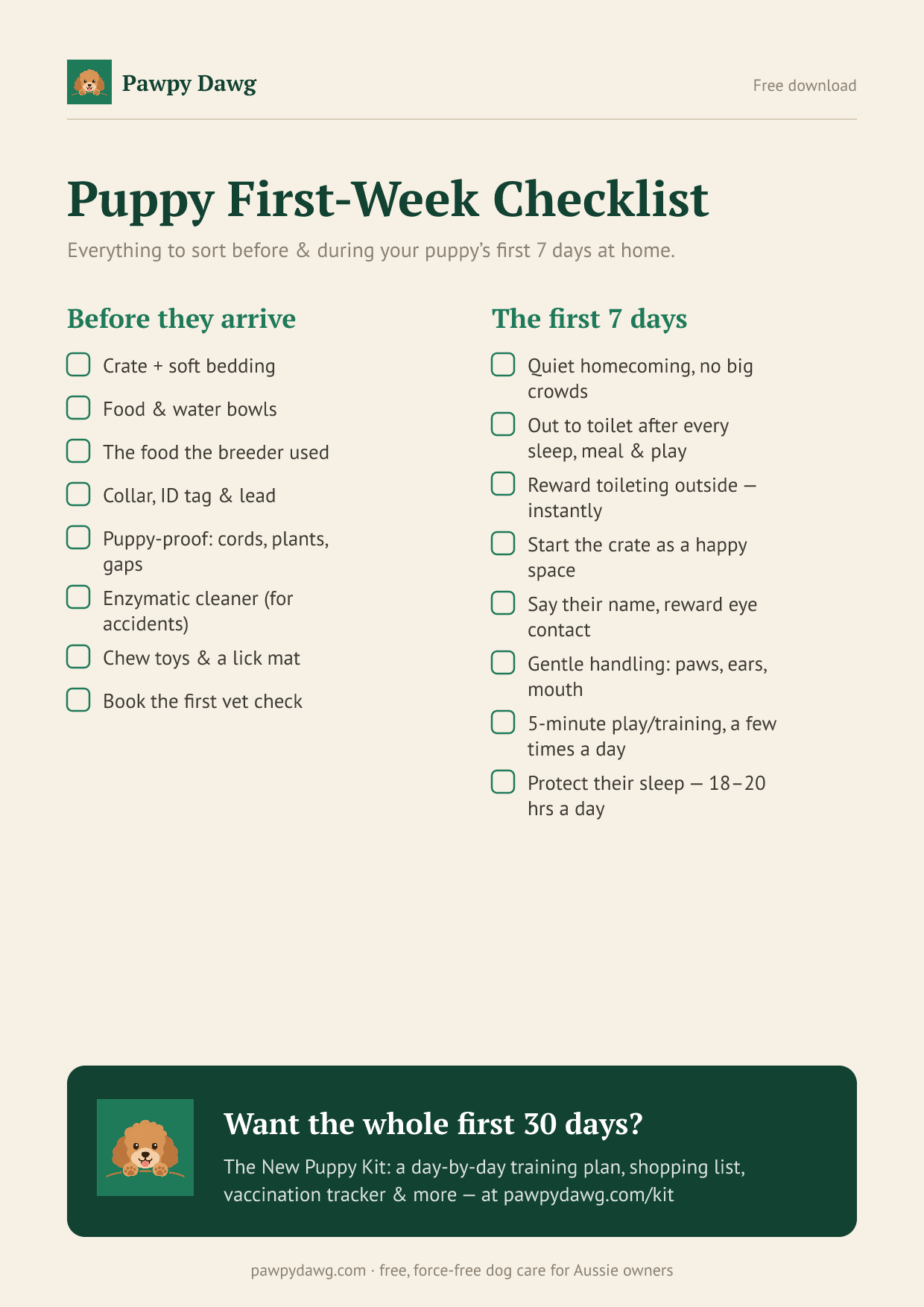
Free printable
Free: the Puppy First-Week Checklist
Everything to sort before and during your puppy's first 7 days home — a printable one-pager. Plus the occasional genuinely useful dog tip. No spam, unsubscribe anytime.
Related guides
How to Stop a French Bulldog Pulling on the Lead (Step-by-Step)
Tired of your French Bulldog pulling on the lead? This step-by-step positive-reinforcement plan delivers real results in 5–10 min daily training sessions.
Read the guide →
How to Stop a French Bulldog Barking at Strangers (Step-by-Step)
Tired of your French Bulldog barking at strangers? This step-by-step positive-reinforcement plan gives you a quick win today and a realistic timeline to fix it.
Read the guide →
French Bulldog Separation Anxiety: A Step-by-Step Fix
Struggling with French Bulldog separation anxiety? This step-by-step, positive-reinforcement plan gives you real fixes, realistic timelines & when to get pro help.
Read the guide →