
French Bulldog Separation Anxiety: A Step-by-Step Fix
Struggling with French Bulldog separation anxiety? This step-by-step, positive-reinforcement plan gives you real fixes, realistic timelines & when to get pro help.

Written by Bradley Brown
Founder & editor · Reviewed 2026-07-06

You came home to shredded cushions, a neighbour complaint, or a video of your Frenchie howling the second you closed the front door. That's an awful feeling — and if you're reading this at 11 pm after a rough day, know this: your dog is not broken, you haven't ruined them, and what you're dealing with is one of the most common issues in the breed. French Bulldogs were literally bred to be companion dogs. Of course they struggle when left alone.
Here's what actually helps — no hour-long protocols, no expensive gadgets required to start.
Why French Bulldogs Are Prone to Separation Anxiety
Frenchies are Velcro dogs by design. Their entire breeding history is about human companionship, which means the anxiety you're seeing isn't a training failure — it's a very normal response in a dog whose emotional wiring is tuned for constant company.
Common triggers include:
- Abrupt schedule changes (returning to the office after working from home)
- Rehoming or adoption — even into a loving home
- Lack of gradual alone-time training as a puppy
- Brachycephalic stress — their flat faces make them more prone to anxiety-related breathing issues, which can escalate distress
Separation anxiety sits on a spectrum. Mild cases (whining for a few minutes, then settling) are very different from severe cases (self-injury, non-stop vocalising, refusing to eat). This guide targets mild-to-moderate anxiety. Severe cases need a vet or veterinary behaviourist — more on that below.
Your Quick Win: Try This Today
Before you overhaul anything, try the departure cue reset.
Most Frenchies start spiralling before you even leave — the moment you pick up keys, put on shoes, or grab your bag. They've learned to dread those signals.
Do this today:
- Pick up your keys, then sit back down and watch TV for 10 minutes. Do nothing.
- Put on your shoes, make a coffee, take them off.
- Repeat 5–6 times across the day — no actual departures needed.
This breaks the "keys = panic" association. It costs you about 20 minutes and you'll often see a calmer dog within 2–3 days.
The Step-by-Step Fix (5–10 Minutes a Day)
Step 1: Build a Safe Space First
Your Frenchie needs somewhere that feels genuinely safe — not a punishment zone. A crate with the door open, a playpen in a low-traffic area, or a dedicated mat all work.
- Make it cosy: familiar-smelling blanket, a worn T-shirt of yours
- Feed meals near or inside the space
- Never use it as a timeout spot
Give it a week before you ask them to spend time there alone.
Step 2: Practise Micro-Separations Inside the House
You don't need to leave to train for alone time. Start with seconds, not minutes.
- Ask your dog to stay on their mat, step behind a door, reappear in 5 seconds. Reward calmly.
- Gradually extend: 10 seconds, 30 seconds, 2 minutes — only progress when they're relaxed at the current level
- Keep sessions to 5 minutes, twice a day
- Use a food-stuffed Kong or lick mat during the separation — this creates a positive emotional state, not just distraction
Step 3: Systematic Desensitisation to Real Departures
Once your dog is comfortable with a few minutes indoors, move to actual departures.
| Stage | Duration | What to Do |
|---|---|---|
| 1 | 30 seconds | Step outside front door, come straight back in |
| 2 | 2 minutes | Walk to letterbox and back |
| 3 | 5 minutes | Sit in your car, return |
| 4 | 15 minutes | Short errand nearby |
| 5 | 30–60 minutes | Gradual extension from here |
The golden rule: return before your dog reaches distress. If they're already barking or panting when you get back, you moved too fast. Drop back a stage.
Progress through the table over 2–4 weeks, not days. Rushing is the single most common mistake.
Step 4: Make Departures and Returns Boring
This one feels counterintuitive but it works.
- No long, emotional goodbyes. A calm "see you soon" is fine, then leave.
- No big reunions. When you return, ignore your dog for 2–3 minutes until they're calm, then greet them quietly.
High-energy hellos and tearful goodbyes teach your dog that departures are a big deal — because you're treating them like one.
Step 5: Add Independent Activities During the Day
A mentally tired Frenchie settles more easily. Work these into your daily routine:
- Sniff walks (let them sniff freely for 10 minutes) — sniffing is cognitively exhausting in the best way
- Scatter feeding (throw a handful of kibble in the grass)
- Puzzle feeders — start simple, as Frenchies can frustrate easily
- A midday dog walker or neighbour check-in if you work full-time
Common Mistakes That Slow Progress
- Punishing anxiety behaviours (barking, destruction) — punishment increases stress and worsens the problem
- Using a camera to watch and intervene — constantly rushing home when you see distress prevents your dog learning to settle
- Adopting another dog to "fix" the anxiety — separation anxiety is about human absence, not canine company; a second dog rarely solves it
- Skipping steps when progress feels good — a week of calm doesn't mean you can jump to 8-hour absences
- Inconsistency — everyone in the household needs to follow the same routine
Realistic Timelines
| Anxiety Level | Expected Progress |
|---|---|
| Mild (settles within 10 min) | 2–4 weeks of daily practice |
| Moderate (distressed for 30+ min) | 6–12 weeks, possibly with vet support |
| Severe (non-stop, self-injury) | Months; requires professional help |
Most owners see meaningful improvement within 3–4 weeks if they're consistent with short daily sessions. Perfection isn't the goal — progress is.
When to Get Professional Help
See your vet first if:
- Your dog is injuring themselves trying to escape
- Anxiety is causing significant breathing distress (a real risk in brachycephalic breeds)
- There's been no improvement after 4–6 weeks of consistent work
- The anxiety appeared suddenly in an adult dog (rule out pain or illness)
Your vet may recommend a referral to a veterinary behaviourist or suggest short-term anti-anxiety medication to make training possible — medication isn't a crutch, it's sometimes the thing that lets the training actually stick. In Australia, a consultation with a vet behaviourist typically runs $300–$600 AUD for an initial session, but many offer payment plans.
If you want a trainer, look for someone who uses force-free, positive reinforcement methods and holds a certification from a reputable body such as the PPGA (Pet Professional Guild Australia). Avoid anyone who recommends punishment, dominance-based techniques, or shock collars for anxiety — these make the problem worse.
A Note on You
You noticed the problem, you searched for answers, and you're doing something about it. That already puts you ahead. Separation anxiety responds really well to consistent, calm training — and the Frenchie on the other side of this process is a dog who can genuinely relax. That's worth the five minutes a day.
As an Amazon Associate we earn from qualifying purchases.
Frequently asked questions
How long does it take to fix separation anxiety in a French Bulldog?
Mild cases often improve noticeably within 2–4 weeks of consistent daily practice. Moderate anxiety can take 6–12 weeks. Severe cases require professional support and may take several months. Progress depends on how consistently you practise and whether you avoid rushing through the desensitisation stages.
Can I use a crate to help my French Bulldog with separation anxiety?
A crate can help if your dog already sees it as a safe, comfortable space — but it won't fix anxiety on its own, and confining a highly anxious dog can make things worse. Introduce the crate gradually and positively before using it during absences. If your Frenchie panics in the crate, a playpen or a puppy-proofed room may be a better option.
Should I get a second dog to keep my French Bulldog company?
This rarely solves separation anxiety. The condition is triggered by the absence of their human attachment figure, not by being alone in general. A second dog can provide some comfort in mild cases, but it's not a reliable fix and adds significant cost and responsibility to your household.
Are calming supplements or medication useful for French Bulldog separation anxiety?
For mild anxiety, some dogs respond to over-the-counter calming supplements (such as those containing L-theanine or casein), though evidence varies. For moderate-to-severe cases, a vet may prescribe short-term anti-anxiety medication — this is a legitimate and often very effective tool that makes behaviour training more achievable, not a substitute for it. Always consult your vet before starting any supplement or medication.
Why does my French Bulldog only destroy things when I leave?
Destruction during absences is a classic sign of separation anxiety rather than boredom or spite. Your dog is in a genuine state of distress and the chewing or digging is a stress-relief behaviour. Punishing it after the fact won't help — your dog cannot connect the punishment to something that happened earlier, and the underlying anxiety remains.
At what age can I start training my French Bulldog puppy to be alone?
You can and should start from the day you bring them home. Short, positive alone-time sessions of just a few minutes help puppies learn that being alone is safe and temporary. Waiting until a problem develops makes the training much harder. Aim for several brief separations daily rather than one long absence.
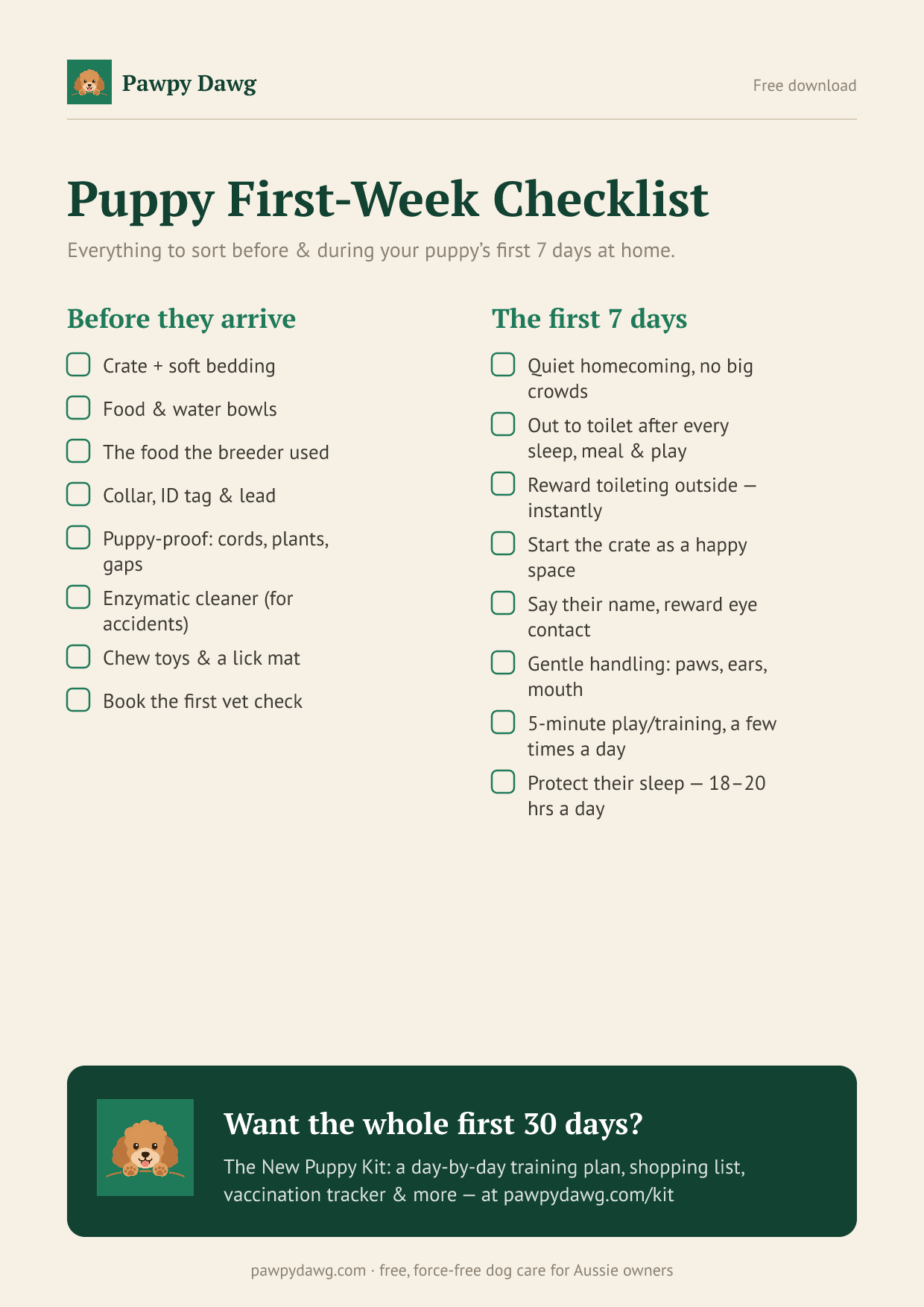
Free printable
Free: the Puppy First-Week Checklist
Everything to sort before and during your puppy's first 7 days home — a printable one-pager. Plus the occasional genuinely useful dog tip. No spam, unsubscribe anytime.
Related guides
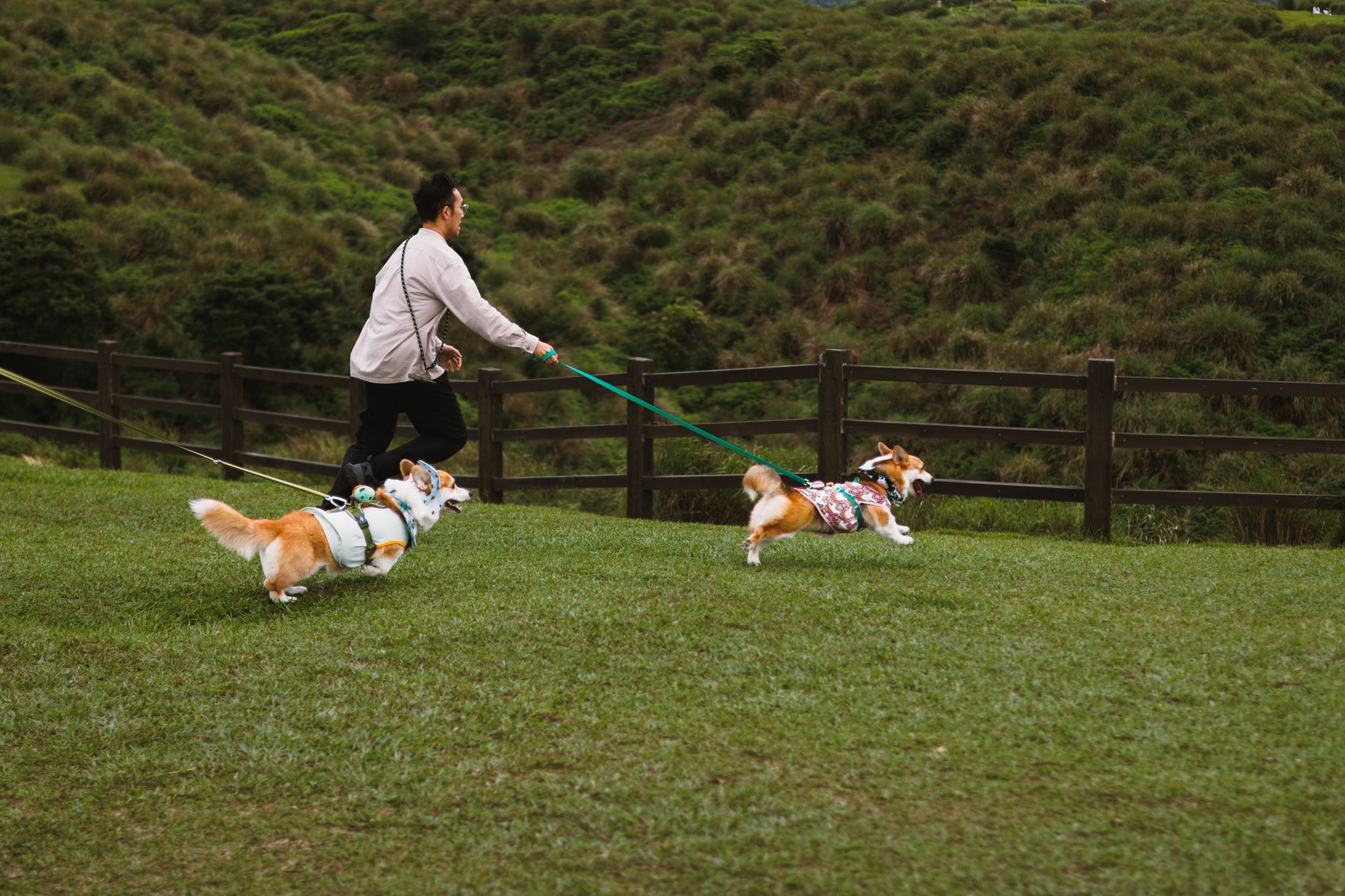
How to Stop a French Bulldog Pulling on the Lead (Step-by-Step)
Tired of your French Bulldog pulling on the lead? This step-by-step positive-reinforcement plan delivers real results in 5–10 min daily training sessions.
Read the guide →
How to Stop a French Bulldog Barking at Strangers (Step-by-Step)
Tired of your French Bulldog barking at strangers? This step-by-step positive-reinforcement plan gives you a quick win today and a realistic timeline to fix it.
Read the guide →
How to Stop a French Bulldog Jumping Up on People (Step-by-Step)
Tired of your French Bulldog jumping up on people? This step-by-step positive-reinforcement plan gets real results in 5–10 min/day. Realistic timelines included.
Read the guide →