
How to Fix Resource Guarding in Your French Bulldog
French Bulldog resource guarding is stressful but fixable. Learn a positive-reinforcement plan, common mistakes to avoid, and when to call a pro. Start today.

Written by Bradley Brown
Founder & editor · Reviewed 2026-07-08
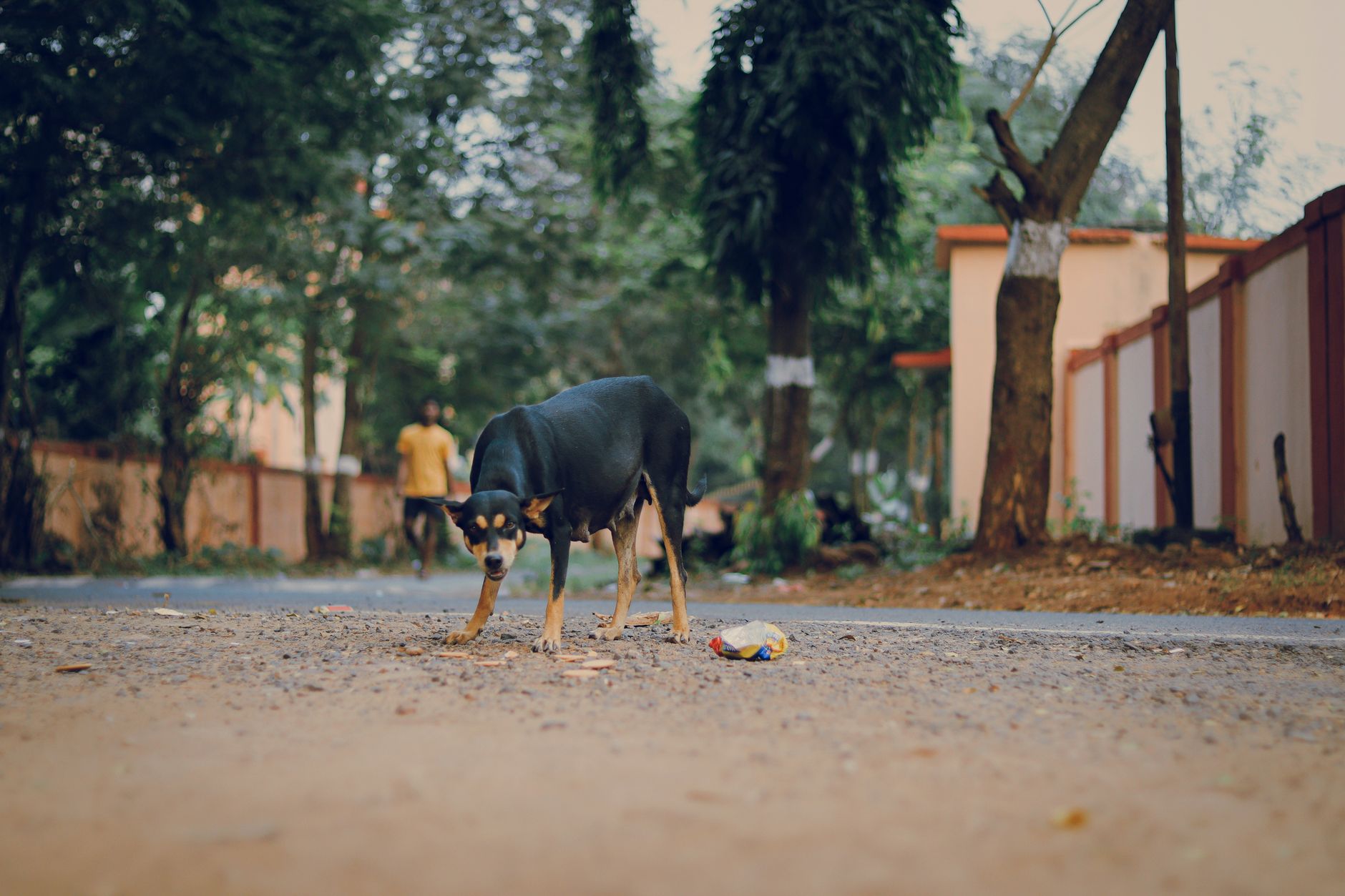
If your Frenchie has growled over a bowl, snapped near a chew, or turned into a tiny furious statue the moment you walk past their bed — you're not alone, and you haven't ruined your dog. Resource guarding is one of the most commonly mishandled behaviours in small breeds, and the frustration you're feeling right now is completely valid. The good news: it's also one of the most reliably treatable, with the right approach and about five minutes a day.
What Resource Guarding Actually Is (and Isn't)
Resource guarding is your dog communicating, "I'm worried you'll take this." It's a normal, evolutionarily hardwired behaviour — even well-loved, well-raised dogs do it. It is not dominance, spite, or a sign your dog is "broken." French Bulldogs in particular can be prone to it because of their stubborn, tenacious temperament and the fact that small dogs are often inadvertently taught that humans are unpredictable around their stuff.
Guarding can range from mild (freezing, side-eye, eating faster) to serious (growling, snapping, biting). Never punish a growl — a growl is information. Punish it away and you'll get a dog who bites without warning.
Your Quick Win for Tonight
Before anything else, try the Trade Game once today:
- Let your dog settle with a low-value item — a toy they like but don't love.
- Walk up calmly, offer a small, high-value treat (a tiny piece of cheese or cooked chicken) right at their nose.
- The moment they drop the item to take the treat, say "yes!" and give the treat.
- Hand the item straight back to them.
That last step is the magic. You're teaching your dog that you approaching means good things happen and they get their stuff back. Do this two or three times tonight, keep it under three minutes, and stop before your dog looks bored or tense. That's it. You've started.
Understanding the Guarding Spectrum
Use this checklist to gauge where your Frenchie sits right now:
| Behaviour | Severity |
|---|---|
| Eating faster when you approach the bowl | Mild |
| Freezing or stiffening over a resource | Mild–Moderate |
| Growling or low rumbling | Moderate |
| Air snapping (snap without contact) | Moderate–Severe |
| Biting that makes contact | Severe — seek professional help immediately |
If your dog is at the moderate–severe end, keep working on management (below) while you arrange a consult with a qualified behaviourist. Don't wait it out hoping it resolves.
The 5-Minute Daily Training Plan
Week 1–2: Build a Positive Association at Distance
Don't hover over your dog while they eat or chew. Instead, approach from a few metres away, toss a treat toward their bowl or mat, and keep walking. You're not stopping, not looming, not taking anything. Repeat this four or five times per meal. Your dog learns: person approaching = bonus treat, no threat.
Week 3–4: Introduce the Trade Game with Higher-Value Items
Once your dog is relaxed with your approach, start practising the Trade Game (described above) with progressively more valued items — their favourite chew, a stuffed Kong, their food bowl. Always return the item immediately. The goal is a dog who lifts their head and wags when you approach, not one who tolerates you.
Week 5+: Add the "Drop It" Cue
Once trading is fluent and cheerful:
- Offer the trade as before.
- Just before they drop, say "drop it" in a neutral, calm tone.
- Treat and return the item as always.
Over many repetitions, the verbal cue becomes meaningful. Never use it in a real situation until it's rock-solid in low-stakes practice.
Common Mistakes That Make It Worse
- Taking and not returning. Every time you take something and walk away, you confirm the dog's fear. Always trade and return during training.
- Punishing the growl. Removing the warning signal doesn't remove the feeling behind it — it just removes your advance notice.
- Training in high-stakes moments. Don't practise "drop it" when they have the TV remote or something genuinely dangerous. Manage the environment, then train separately.
- Inconsistent rules. If one family member takes food away as punishment and another runs the trade game, progress stalls. Everyone in the household needs to be on the same page.
- Moving too fast. If your dog stiffens at any point, you've pushed too far, too soon. Drop back a step.
Management While You Train
Training takes weeks. Management prevents incidents right now:
- Feed in a quiet, low-traffic area so your Frenchie isn't eating on edge.
- Pick up high-value chews before guests arrive or before children enter the room.
- Use a baby gate or exercise pen to give your dog a safe space with their resources — not as punishment, but as pressure relief.
- Don't reach into your dog's space uninvited. If you need something back urgently, toss a treat first, then retrieve it.
Realistic Timelines
Mild guarding with consistent daily work: noticeable improvement in 2–4 weeks.
Moderate guarding: 6–12 weeks of structured training before it feels truly reliable.
Severe or long-established guarding: months of work, almost always best done with a professional.
Progress isn't linear. You'll have good days and setbacks. A bad day doesn't erase the good work — it just means your dog had a bad day.
When to Call a Professional
Get help sooner rather than later if:
- Your dog has made contact (bitten) even once
- Guarding is directed at children or other pets in the household
- You feel anxious or unsafe around your own dog
- There's been no improvement after four to six weeks of consistent training
Look for a trainer or veterinary behaviourist who uses force-free, positive-reinforcement methods and holds credentials such as IAABC (International Association of Animal Behavior Consultants) or is a registered veterinary specialist in behaviour. Expect to pay $150–$350 AUD for an initial consult — it's genuinely worth it, and many offer telehealth sessions now.
You haven't failed your dog by needing help. Resource guarding at the moderate-to-severe end is genuinely complex, and getting professional eyes on it is the smartest thing you can do.
The Bottom Line
French Bulldog resource guarding is common, normal, and very treatable. Your dog isn't trying to dominate you — they're scared of losing something they value. Your job is to become the person who predicts good things, not the person who takes stuff away. Start with the Trade Game tonight, keep sessions short, and be patient with the timeline. Most dogs come around faster than their owners expect.
As an Amazon Associate we earn from qualifying purchases.
Frequently asked questions
Is resource guarding normal in French Bulldogs?
Yes, resource guarding is a normal, instinctive behaviour seen across all breeds, including French Bulldogs. It doesn't mean your dog is aggressive or badly raised — it means they've learned to worry about losing something they value. With consistent positive-reinforcement training, the vast majority of cases improve significantly.
Why does my French Bulldog guard food but not toys, or vice versa?
Dogs guard specific resources based on what they perceive as high-value in that moment. Food, long-lasting chews, favourite resting spots, and even people can all be guarded independently. You may need to work on each guarded item separately, as improvement with one doesn't automatically transfer to another.
Should I punish my French Bulldog for growling over food?
No — punishing a growl is counterproductive and can make biting more likely. A growl is your dog's way of saying they're uncomfortable; suppressing it removes your warning signal without addressing the underlying anxiety. Instead, work on building a positive association with your approach using treats and the Trade Game.
How long does it take to stop resource guarding in a French Bulldog?
Mild cases often show clear improvement within two to four weeks of daily five-minute training sessions. Moderate guarding typically takes six to twelve weeks of consistent work. Severe or long-standing cases can take several months and usually benefit from guidance from a qualified force-free trainer or veterinary behaviourist.
My French Bulldog guards their bed or spot on the couch — is that the same thing?
Yes, location or 'space' guarding is a form of resource guarding. The same trade-and-reward principles apply — never forcibly remove your dog from a spot; instead, teach a reliable 'off' cue using high-value treats so that moving away becomes something your dog chooses willingly. Management (blocking access temporarily) helps while you train.
When should I see a vet about my French Bulldog's resource guarding?
See a vet or veterinary behaviourist if your dog has bitten and broken skin, if guarding has appeared suddenly in a previously relaxed dog (pain or illness can trigger it), or if the behaviour is directed at children. A vet can rule out underlying medical causes and refer you to a qualified behaviourist for a structured treatment plan.
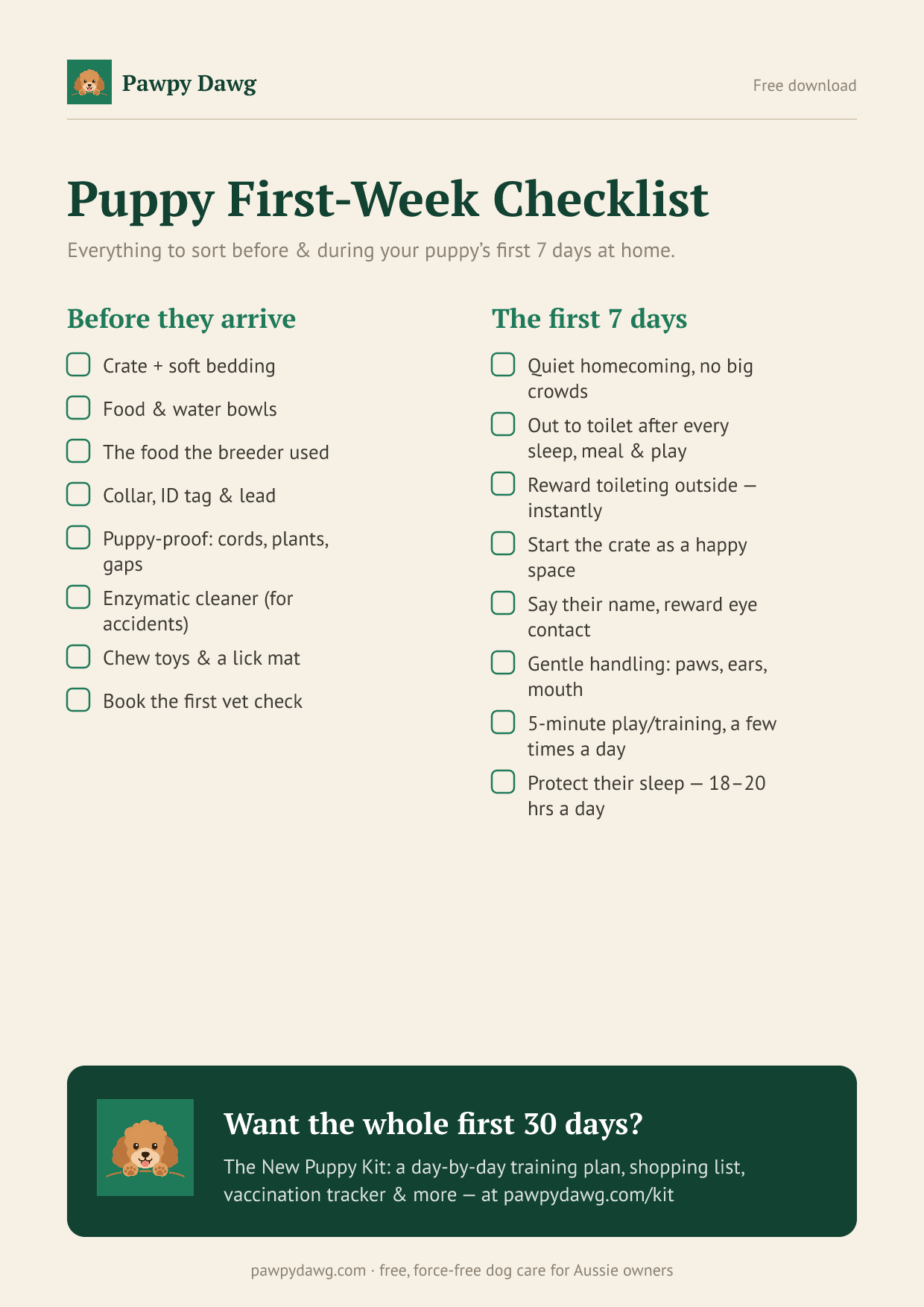
Free printable
Free: the Puppy First-Week Checklist
Everything to sort before and during your puppy's first 7 days home — a printable one-pager. Plus the occasional genuinely useful dog tip. No spam, unsubscribe anytime.
Related guides
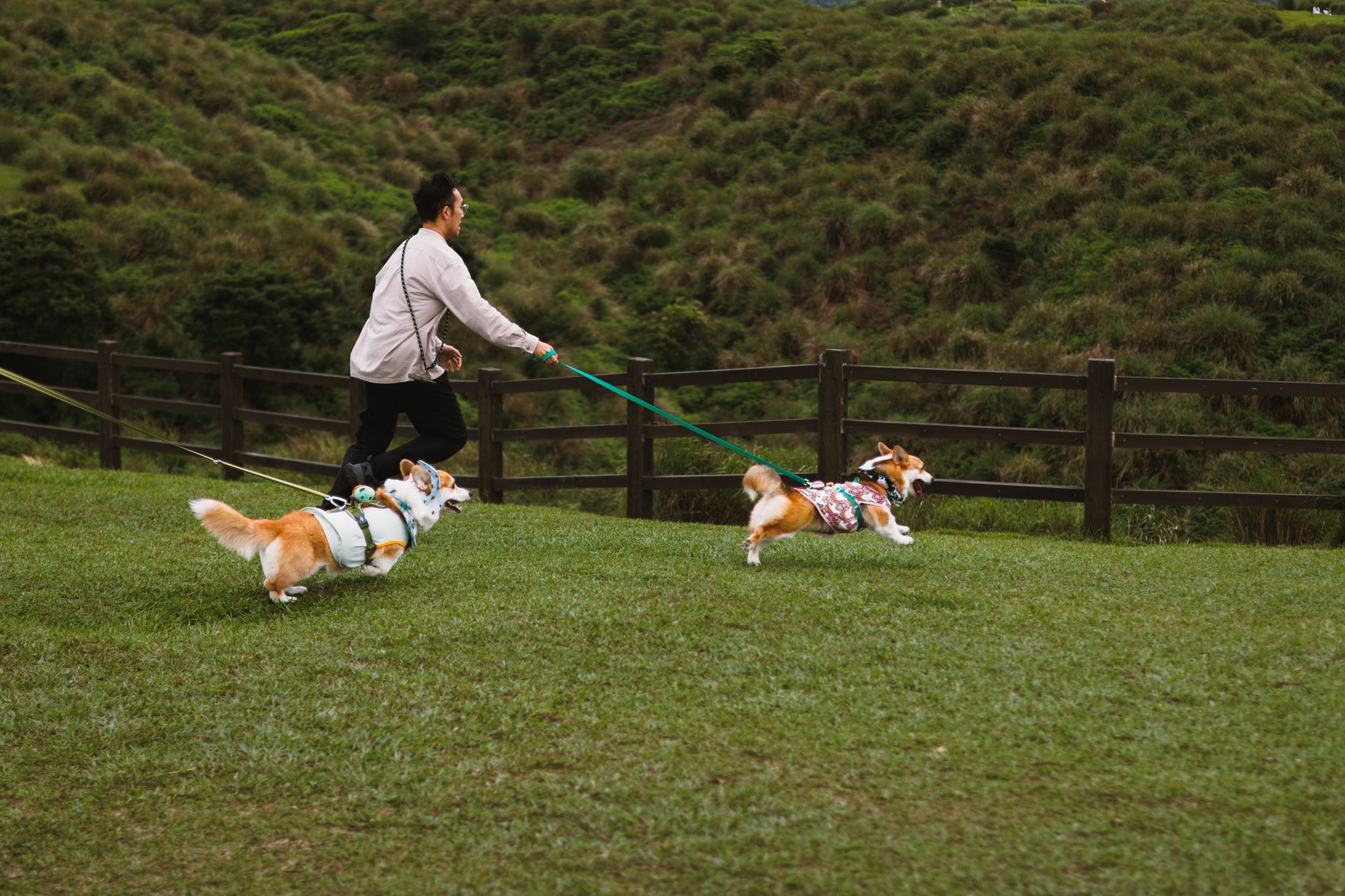
How to Stop a French Bulldog Pulling on the Lead (Step-by-Step)
Tired of your French Bulldog pulling on the lead? This step-by-step positive-reinforcement plan delivers real results in 5–10 min daily training sessions.
Read the guide →
How to Stop a French Bulldog Barking at Strangers (Step-by-Step)
Tired of your French Bulldog barking at strangers? This step-by-step positive-reinforcement plan gives you a quick win today and a realistic timeline to fix it.
Read the guide →
French Bulldog Separation Anxiety: A Step-by-Step Fix
Struggling with French Bulldog separation anxiety? This step-by-step, positive-reinforcement plan gives you real fixes, realistic timelines & when to get pro help.
Read the guide →