
How to Stop a French Bulldog Digging Up the Yard (Step-by-Step)
Tired of craters in your backyard? Here's a step-by-step positive-reinforcement plan to stop French Bulldog digging in the yard — with quick wins you can try today.

Written by Bradley Brown
Founder & editor · Reviewed 2026-07-07
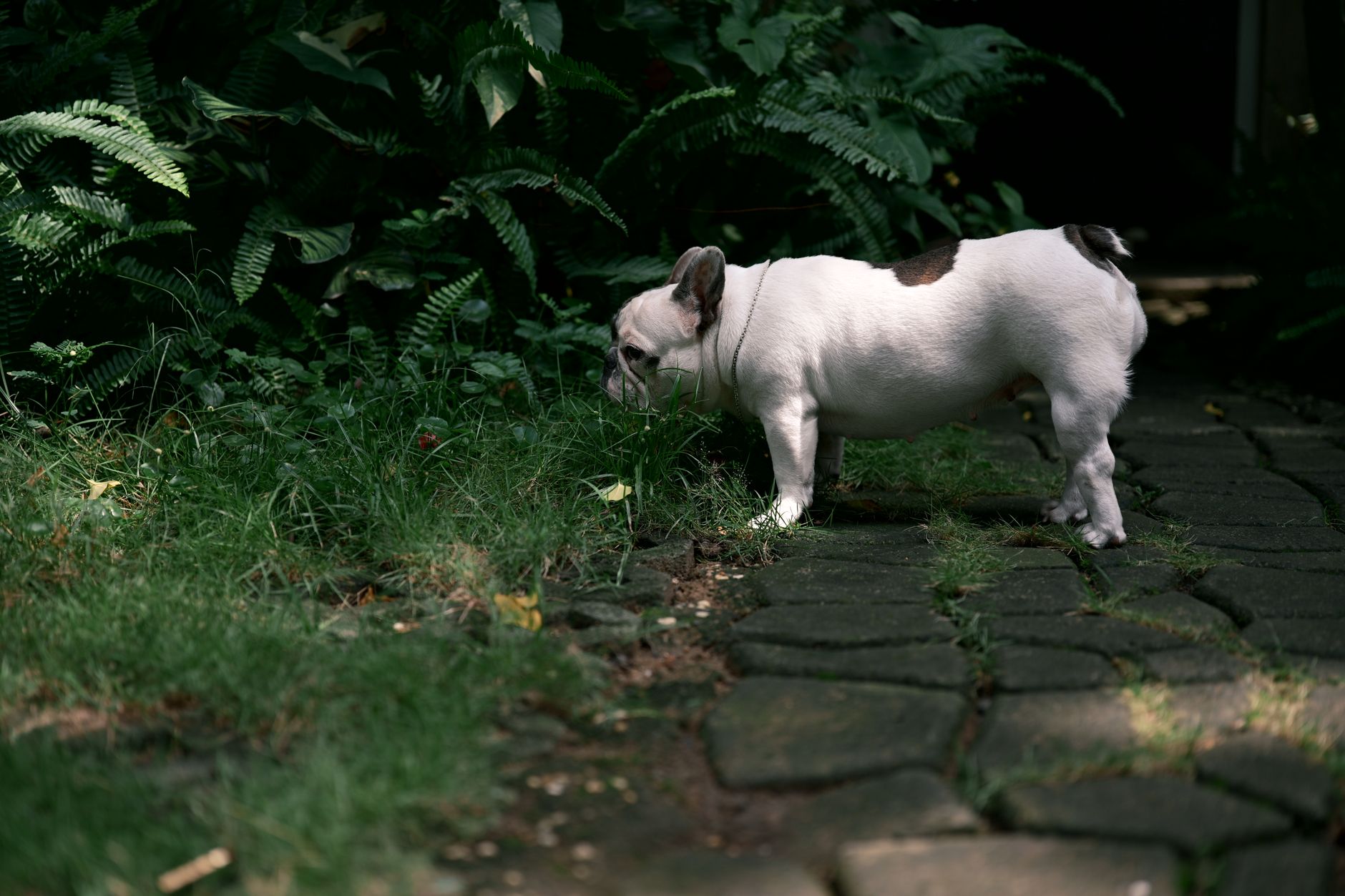
You walked outside, saw another freshly excavated hole, and now you're googling at 10 pm. Fair enough. Digging is one of those behaviours that feels personal — like your French Bulldog has decided your garden is the enemy — but it isn't. It's a completely normal dog behaviour driven by instinct, boredom, temperature regulation, or anxiety. You haven't ruined your dog. This is fixable.
Here's exactly what to do about it.
Why French Bulldogs Dig (It's Not Spite)
Before you can stop the digging, you need to know why it's happening. Frenchies are a brachycephalic breed that overheats easily, so digging into cool soil is a genuine self-regulation strategy — not mischief. Other common triggers include:
- Boredom or under-stimulation — a Frenchie left alone without mental engagement will find their own entertainment
- Excess energy — yes, even a short-legged couch potato can have pent-up energy
- Anxiety or stress — including separation anxiety
- Hunting instinct — responding to smells from insects, grubs, or small animals underground
- Attention-seeking — if digging has ever earned a big reaction from you, it may be self-reinforcing
Identifying the trigger is the single most important step. Watch when your dog digs: right after you leave? During the hottest part of the day? When they're left alone with no toys? The answer shapes your approach.
Your Quick Win: Try This Today
Before you overhaul anything, do this right now.
Remove the reward. Most digging behaviour is self-reinforcing — the act of digging itself feels good. Your job is to interrupt the reward cycle. Walk outside before your Frenchie has a chance to dig, redirect them to a toy or a short sniff game, then bring them back inside or stay present with them. No drama, no big reaction — that just adds excitement.
Do this consistently for three days and you'll very likely notice a reduction. It's not the whole solution, but it's a meaningful start you can implement tonight.
The Step-by-Step Plan
Step 1: Audit the Environment (5 minutes)
Walk your yard and ask yourself:
- Is there shade and cool water accessible at all times?
- Are there toys outside, or is the yard completely bare?
- How long is your Frenchie left outside alone each day?
- Is there a specific dig zone, or is it random?
French Bulldogs should not be left outdoors unsupervised for long periods in Australian summers — heat stress is a real risk for this breed. If your dog is digging to stay cool, the solution is shade, fresh water, and limiting outdoor time during peak heat, not behavioural training alone.
Step 2: Increase Mental Stimulation (5–10 minutes/day)
A mentally tired Frenchie digs less. The good news: you don't need hours — you need quality engagement.
- Scatter feeding: throw a portion of their kibble in the grass and let them sniff it out. This is a legitimate enrichment activity that exhausts their brain.
- Kong or licki mat: filled with wet food, Greek yoghurt, or peanut butter (xylitol-free) and frozen overnight. Give it outside.
- 5-minute training sessions: sit, drop, spin, "find it" — short bursts of learning are mentally tiring and build your bond.
Aim for one enrichment activity before you leave the house in the morning. A stimulated dog is a calmer dog.
Step 3: Manage the Space
Until the digging habit breaks, management is your friend.
- Block known dig spots: place flat rocks, chicken wire just under the soil surface, or large pots over favourite digging areas. Frenchies generally give up quickly when the ground resists them.
- Supervise outdoor time: keep sessions short and engaged rather than letting your dog loose in the yard unsupervised for 40 minutes.
- Create a designated dig zone (optional): some owners find success giving the dog one approved spot — a sandpit or a loose-soil patch — loaded with buried toys and treats. You redirect digging there and reward heavily. This takes 2–3 weeks to establish but works well for dogs with strong digging instincts.
Step 4: Reinforce Calm Outdoor Behaviour
This is where positive reinforcement does the heavy lifting.
When your Frenchie is outside and not digging — lounging, sniffing appropriately, chewing a toy — mark and reward it. A calm "yes" and a small treat the moment you catch them being calm will, over time, make calm outdoor behaviour the habit. Most owners only interact with their dog when something goes wrong. Flip that ratio.
| Behaviour | Your response |
|---|---|
| Dog starts digging | Quietly redirect to toy or inside — no fuss |
| Dog digs and looks at you | Ignore completely, then redirect when calm |
| Dog is lying calmly outside | Mark with "yes" + treat |
| Dog plays with a toy outside | Praise warmly |
| Dog uses the designated dig zone | Jackpot reward — high-value treat + big praise |
Step 5: Rule Out Anxiety
If your Frenchie only digs when you're not home, digs near fence lines or gates, or combines digging with barking, whining, or destructive behaviour indoors, anxiety may be the root cause. Digging is a common anxiety outlet.
In this case:
- Set up a camera (a cheap pet cam works fine) to confirm what's happening while you're out
- Consider a structured separation anxiety protocol — Dr Malena DeMartini's approach is well-regarded and evidence-based
- Speak to your vet; anxiety is a medical issue, not a training failure, and medication is sometimes appropriate and effective
Common Mistakes to Avoid
- Punishing after the fact: dogs don't connect retrospective punishment with a behaviour. Coming home to a hole and scolding your dog teaches them nothing except that your arrival is scary.
- One giant training session: 30 minutes on a Saturday won't work. Five minutes daily, consistently, will.
- Inconsistency: if digging sometimes earns attention (even negative attention), the behaviour persists. Everyone in the household needs to respond the same way.
- Assuming it's a phase: without intervention, digging typically becomes more entrenched over time, not less.
Realistic Timeline
| Week | What to expect |
|---|---|
| Week 1 | Reduced digging with consistent supervision and redirection |
| Weeks 2–3 | Dog begins choosing enrichment over digging when given the option |
| Week 4+ | Digging becomes occasional rather than habitual |
| 6–8 weeks | Habit largely broken in mild-to-moderate cases |
Severe cases or anxiety-driven digging may take longer and benefit from professional help.
When to Call a Pro
Contact a qualified, positive-reinforcement trainer or your vet if:
- The digging is paired with other signs of distress (vocalising, self-harm, extreme clinginess)
- There's been no improvement after four weeks of consistent effort
- You're unsure whether anxiety is a factor
In Australia, look for trainers accredited through the Pet Professional Guild Australia or Delta Society Australia. A single 60-minute consult (typically $120–$200 AUD) can save months of frustration.
Your Frenchie isn't broken, badly behaved, or out to get you. They're a smart, sensory-driven little dog doing what dogs do. A few targeted changes — consistently applied — will get your garden back.
As an Amazon Associate we earn from qualifying purchases.
Frequently asked questions
Why does my French Bulldog keep digging even though they get plenty of walks?
Walking addresses physical exercise but not always mental stimulation or instinct-driven needs. French Bulldogs may dig due to boredom, heat, anxiety, or in response to underground smells — none of which a walk fully resolves. Adding enrichment activities like scatter feeding, frozen Kongs, and short training games often makes a bigger difference than increasing walk duration.
Is digging a sign that my French Bulldog is unhappy?
Not necessarily. Digging is a normal dog behaviour, and many happy, well-cared-for dogs dig simply because it feels good or because they're following their nose. That said, if digging is paired with other signs like excessive barking, destructive behaviour, or clinginess, it's worth considering whether anxiety or under-stimulation is playing a role.
Will getting another dog stop my French Bulldog from digging?
Sometimes a companion helps with boredom-driven digging, but it's not a reliable fix — and in some cases two dogs dig together. Address the root cause first. If boredom is clearly the trigger, increased enrichment is a lower-risk and lower-cost first step than adding a second dog.
Are there any safe deterrents I can put in the soil to stop digging?
Physical deterrents like flat rocks, pavers, or chicken wire laid just beneath the soil surface at known dig spots are effective and safe. Some owners use citrus peel around garden beds, which many dogs dislike. Avoid chilli powder, pepper sprays, or any chemical deterrent — these can irritate your dog's nose, eyes, and respiratory system, especially in a brachycephalic breed like a Frenchie.
How long does it take to stop a French Bulldog from digging?
With consistent daily effort — around 5–10 minutes of enrichment and redirection — most mild to moderate digging habits improve noticeably within two to three weeks, and are largely resolved within six to eight weeks. Anxiety-driven digging or deeply ingrained habits may take longer and benefit from professional guidance.
Should I punish my French Bulldog for digging?
No. Punishment after the fact — coming home to a hole and scolding your dog — is ineffective because dogs cannot connect the punishment to a behaviour that happened minutes or hours earlier. Even in-the-moment punishment tends to suppress behaviour temporarily without teaching an alternative. Redirection and reinforcing calm or appropriate behaviour consistently produces far better long-term results.
Free printable
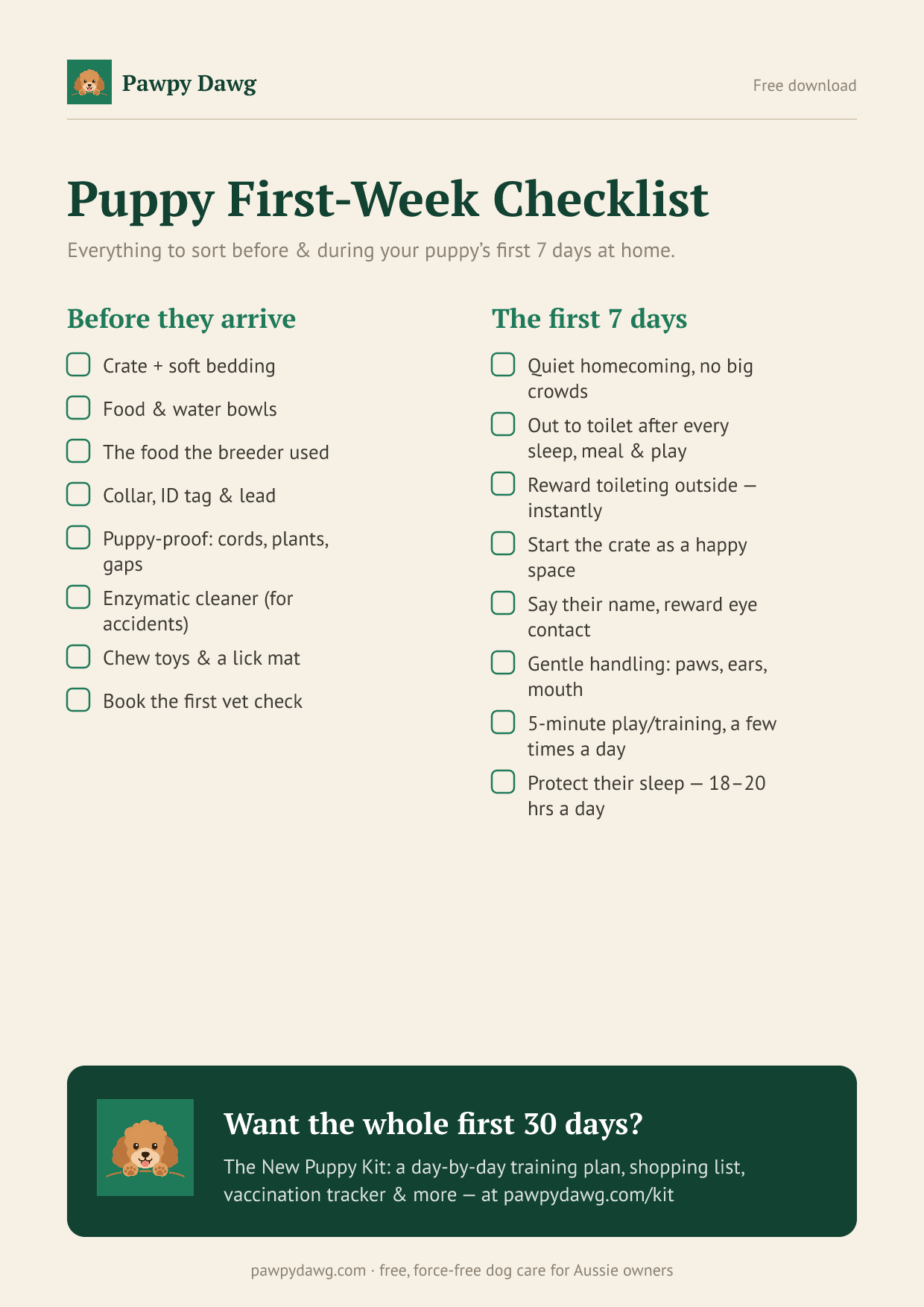
Free: the Puppy First-Week Checklist
Everything to sort before and during your puppy's first 7 days home — a printable one-pager. Plus the occasional genuinely useful dog tip. No spam, unsubscribe anytime.
Related guides
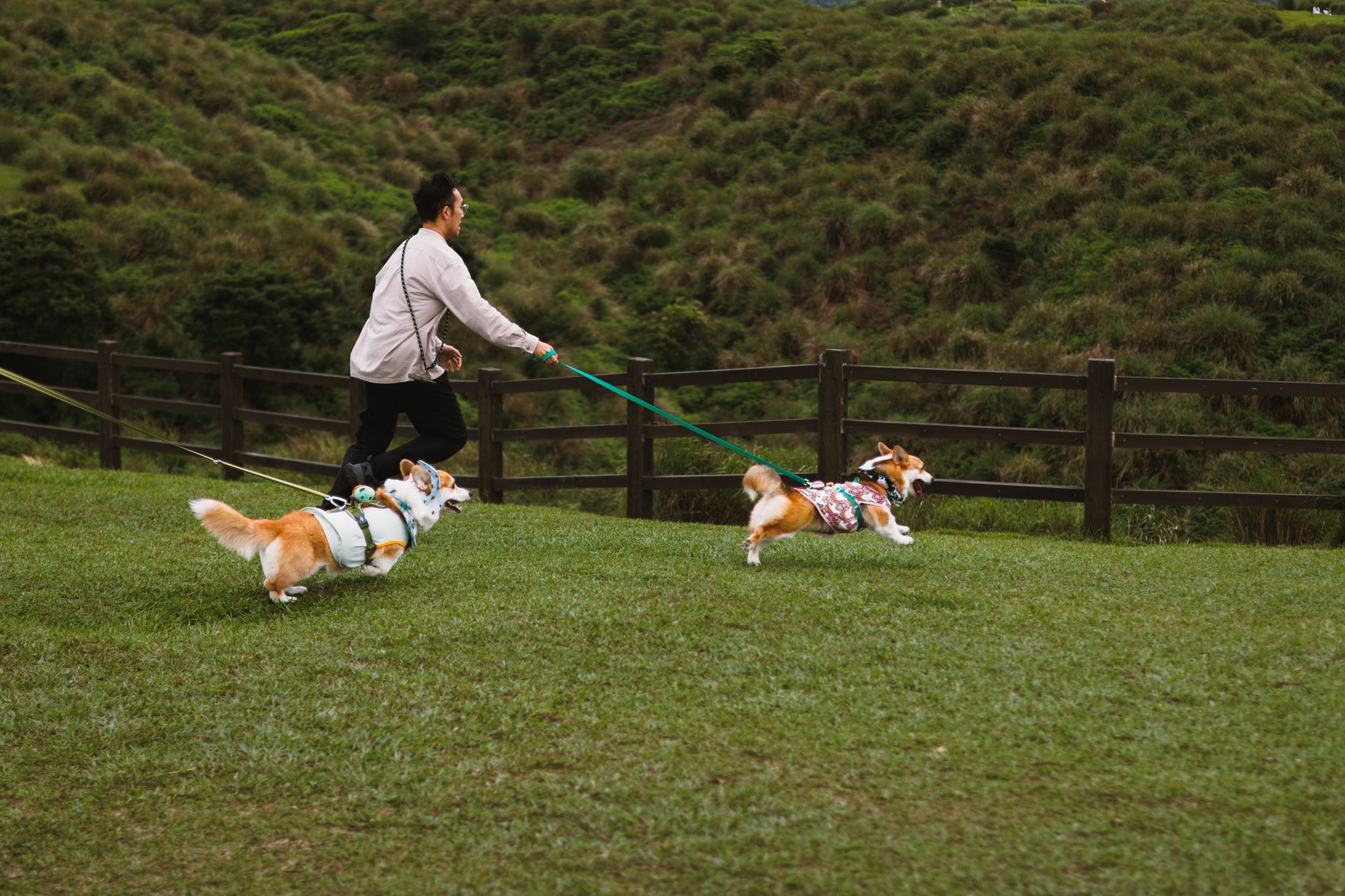
How to Stop a French Bulldog Pulling on the Lead (Step-by-Step)
Tired of your French Bulldog pulling on the lead? This step-by-step positive-reinforcement plan delivers real results in 5–10 min daily training sessions.
Read the guide →
How to Stop a French Bulldog Barking at Strangers (Step-by-Step)
Tired of your French Bulldog barking at strangers? This step-by-step positive-reinforcement plan gives you a quick win today and a realistic timeline to fix it.
Read the guide →
French Bulldog Separation Anxiety: A Step-by-Step Fix
Struggling with French Bulldog separation anxiety? This step-by-step, positive-reinforcement plan gives you real fixes, realistic timelines & when to get pro help.
Read the guide →