
How to Stop a French Bulldog Chewing Everything (Step-by-Step)
Tired of destroyed shoes and chewed furniture? Here's a realistic, step-by-step plan to stop French Bulldog destructive chewing — with results in days, not months.

Written by Bradley Brown
Founder & editor · Reviewed 2026-07-07

You came home to a shredded cushion — again. Or maybe tonight's walk ended with your Frenchie lunging at every stick, shoe, and chair leg in sight. Whatever brought you here, take a breath: your dog isn't broken, you haven't ruined them, and this behaviour is completely normal for the breed. French Bulldogs are mouthy, bored easily, and physically built to chew hard. The good news? French Bulldog destructive chewing is one of the most fixable behaviour problems there is — if you know what's actually driving it.
Why French Bulldogs Chew So Much
Before you can stop it, it helps to know why it's happening. Most destructive chewing in Frenchies falls into one of three buckets:
- Teething (under 6 months): Puppy gums ache. Chewing brings relief. This peaks at 3–5 months and usually eases once the adult teeth are fully in by around 7 months.
- Boredom and under-stimulation: Frenchies are companion dogs. Left alone with nothing to do, they will redecorate.
- Anxiety (especially separation anxiety): Chewing releases calming endorphins. If the destruction only happens when you're gone, anxiety is likely involved.
Knowing which one you're dealing with shapes everything — the fix for a teething pup looks different from the fix for an anxious adult.
Your Quick Win for Today
Before reading another word, do this right now:
Take one high-value chew — a frozen Kong stuffed with peanut butter (xylitol-free), a raw carrot, or a bully stick — and give it to your dog in their usual resting spot. Say nothing, just hand it over and walk away.
That's it. You've just redirected chewing energy onto something appropriate and started building a positive association with "chew this, not that." Do it again before you go to bed tonight.
Step-by-Step Plan to Stop Destructive Chewing
Step 1 — Manage the Environment First (Week 1)
Punishment after the fact does nothing. Dogs don't connect a scolding to something they chewed 20 minutes ago. Instead, remove the opportunity:
- Pick up shoes, TV remotes, kids' toys, and anything else chewable.
- Use a playpen or crate when you can't supervise — not as punishment, but as a safe zone.
- Apply a pet-safe bitter spray (available at Petbarn or PETstock, roughly $10–$20 AUD) to furniture legs and cables you can't move.
This isn't a forever solution — it's just buying you time to teach the right behaviour.
Step 2 — Build a "Yes" Chew Rotation (Week 1–2)
Dogs chew. That's non-negotiable. Your job is to give them something legal to chew. The trick is rotation — the same toy every day gets boring fast.
Keep 4–6 approved chews and rotate them:
| Chew Type | Best For | Notes |
|---|---|---|
| Frozen stuffed Kong | All ages | Stuff with kibble, banana, or peanut butter; freeze overnight |
| Bully stick | Adults/heavy chewers | Supervise — discard when small enough to swallow whole |
| Raw carrot | Teething puppies | Free, easy, vet-approved |
| Nylabone (chicken flavour) | Moderate chewers | Check sizing for Frenchies — they have strong jaws |
| Snuffle mat with treats | Bored dogs | Mental work, not just physical |
| Rubber chew toy (KONG Extreme) | Anxious dogs | Durable enough for a Frenchie's brachycephalic bite |
Introduce only one new chew at a time so you know what your dog actually likes.
Step 3 — Catch Them Being Good (Daily, 5 Minutes)
Every time your Frenchie chews their approved toy, mark it with a calm "good dog" and drop a small treat nearby (not from your hand — you want them to stay with the chew). This is low-effort classical conditioning. You're building the habit: chewing my toy = good things happen.
Don't make a big fuss. A quiet, warm acknowledgement is more effective than excitable praise, which can interrupt the chewing behaviour you're trying to reinforce.
Step 4 — Interrupt and Redirect (Not Punish)
If you catch them chewing something off-limits:
- No shouting. A sharp "ah-ah" or clap is enough to interrupt.
- Immediately offer the approved chew.
- When they take it, praise calmly.
The sequence is: interrupt → redirect → reward. Repeat this consistently and within 1–2 weeks most dogs start self-selecting the appropriate chew. The key word is consistently — one person in the household letting it slide undoes the work of everyone else.
Step 5 — Tackle the Root Cause
If management and redirection alone aren't working within 2 weeks, you need to address what's underneath:
For boredom chewers:
- Add one 10-minute enrichment activity daily — scatter feeding in the garden, a snuffle mat, or a training session.
- Frenchies don't need long walks (they overheat), but they do need mental exercise.
For separation anxiety chewers:
- Practise short, low-drama departures: grab your keys, walk out, come back in 30 seconds. Build up gradually.
- Leave a frozen Kong only when you leave — it becomes a "departure cue" that predicts something good.
- If your dog is distressed (barking continuously, destroying doors or windows, self-harming), this is beyond DIY territory — see the section below on getting professional help.
Common Mistakes That Make It Worse
- Giving old shoes or socks as chews. Your dog cannot tell the difference between an "allowed" old sneaker and your new ones.
- Inconsistent rules. If chewing the couch is funny at 8 weeks but punished at 8 months, you've created confusion, not a rule.
- Too much correction, not enough redirection. Saying "no" 50 times a day without offering an alternative teaches nothing.
- Expecting overnight results. Two to four weeks of consistent work is a realistic timeline for most Frenchies.
Realistic Timeline
| Week | What to Expect |
|---|---|
| Week 1 | Less opportunity to chew wrong things (management working) |
| Week 2 | Dog starts engaging with approved chews more reliably |
| Week 3–4 | Redirects start working faster; fewer incidents |
| Month 2+ | Approved chewing becomes the default habit |
Puppies under 6 months will need patience until teething is done — no amount of training fully overrides a sore mouth.
When to Get Professional Help
Most French Bulldog destructive chewing resolves with the steps above. Seek help from a vet or a force-free certified trainer (look for PPGA or IAABC credentials in Australia) if:
- Chewing is accompanied by constant pacing, whining, or toileting inside when left alone (likely separation anxiety)
- Your dog is injuring themselves (chewing paws, tail, or obsessively chewing one area)
- There's been no improvement after 4–6 weeks of consistent effort
A single consult with a qualified trainer typically costs $80–$150 AUD and can shortcut months of frustration.
The most important thing to remember: this is a management and training problem, not a personality flaw. Frenchies are clever, social, and highly trainable — they just need to know what the rules are, and to have something genuinely satisfying to chew instead.
As an Amazon Associate we earn from qualifying purchases.
Frequently asked questions
At what age do French Bulldogs stop chewing everything?
Most Frenchies chew most destructively between 3 and 7 months, when they're teething. However, boredom and anxiety-driven chewing can continue into adulthood if not addressed. Consistent redirection and enrichment are the key — the behaviour rarely disappears on its own without some training.
Is destructive chewing a sign my French Bulldog has separation anxiety?
It can be, but not always. A key indicator is whether the chewing only happens when you're away and is accompanied by other signs like barking, pacing, or toileting inside. If destruction is scattered throughout the day regardless of your presence, boredom is more likely the culprit. A vet or force-free trainer can help you tell the difference.
What are the best chew toys for French Bulldogs?
Frenchies have strong jaws relative to their size, so durability matters. KONG Extreme rubber toys, bully sticks (supervised), and frozen stuffed Kongs work well for most Frenchies. Avoid toys small enough to become a choking hazard and always supervise with any natural chew until you know how your dog handles it.
Should I punish my French Bulldog for chewing furniture?
No — punishment after the fact is ineffective because dogs can't connect the correction to something they did minutes earlier. Even catching them in the act and shouting can create anxiety without teaching an alternative. A calm interruption followed by an immediate redirect to an approved chew is far more effective.
Can I use bitter apple spray to stop my Frenchie chewing furniture?
Bitter sprays can be a useful short-term deterrent on furniture legs, cables, and skirting boards, and most are safe for use around pets. They work best as part of a broader plan — some dogs are deterred by the taste, others completely ignore it. Reapply every few days and combine it with redirecting to appropriate chews.
How long does it take to stop a French Bulldog from destructive chewing?
With consistent management and redirection, most owners see a clear improvement within 2–4 weeks. Building a reliable chewing habit (reaching for the approved toy automatically) typically takes 6–8 weeks. Teething puppies will need extra patience until their adult teeth are fully settled at around 7 months.
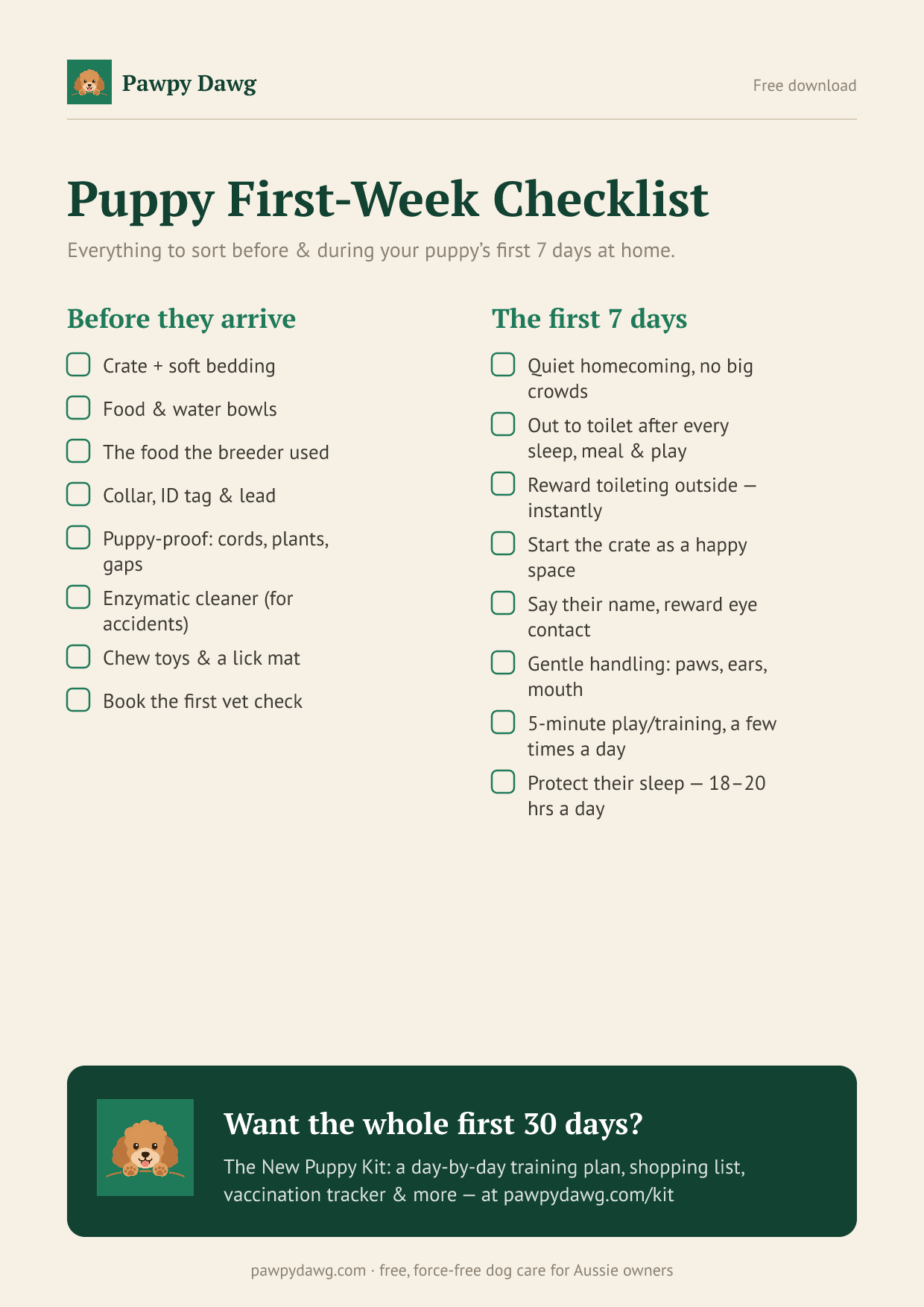
Free printable
Free: the Puppy First-Week Checklist
Everything to sort before and during your puppy's first 7 days home — a printable one-pager. Plus the occasional genuinely useful dog tip. No spam, unsubscribe anytime.
Related guides
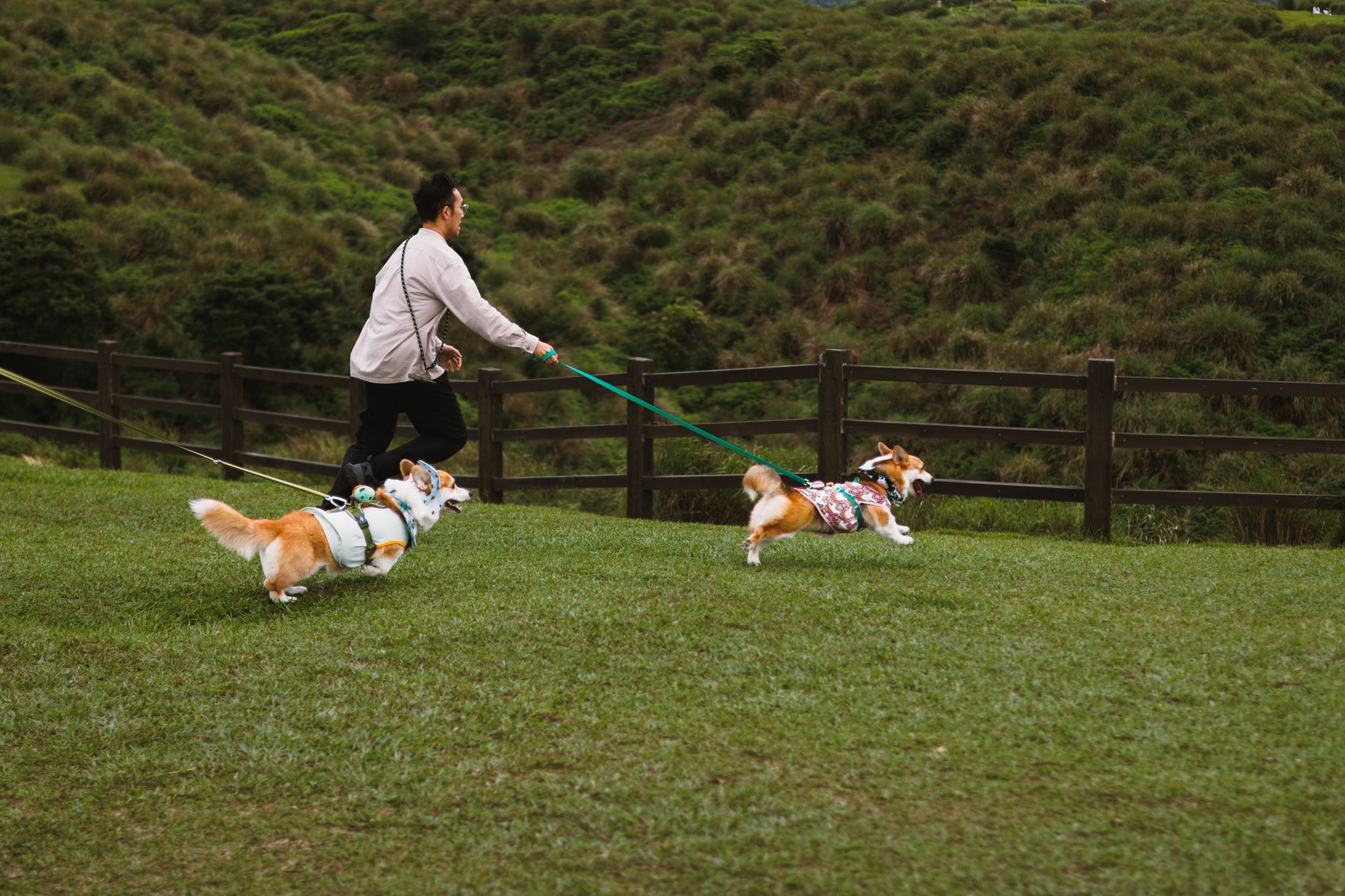
How to Stop a French Bulldog Pulling on the Lead (Step-by-Step)
Tired of your French Bulldog pulling on the lead? This step-by-step positive-reinforcement plan delivers real results in 5–10 min daily training sessions.
Read the guide →
How to Stop a French Bulldog Barking at Strangers (Step-by-Step)
Tired of your French Bulldog barking at strangers? This step-by-step positive-reinforcement plan gives you a quick win today and a realistic timeline to fix it.
Read the guide →
French Bulldog Separation Anxiety: A Step-by-Step Fix
Struggling with French Bulldog separation anxiety? This step-by-step, positive-reinforcement plan gives you real fixes, realistic timelines & when to get pro help.
Read the guide →