
How to Fix Resource Guarding in Your Cavoodle
Cavoodle resource guarding? This step-by-step positive-reinforcement plan helps you stop growling & snapping safely, with realistic timelines and pro advice.

Written by Bradley Brown
Founder & editor · Reviewed 2026-06-30
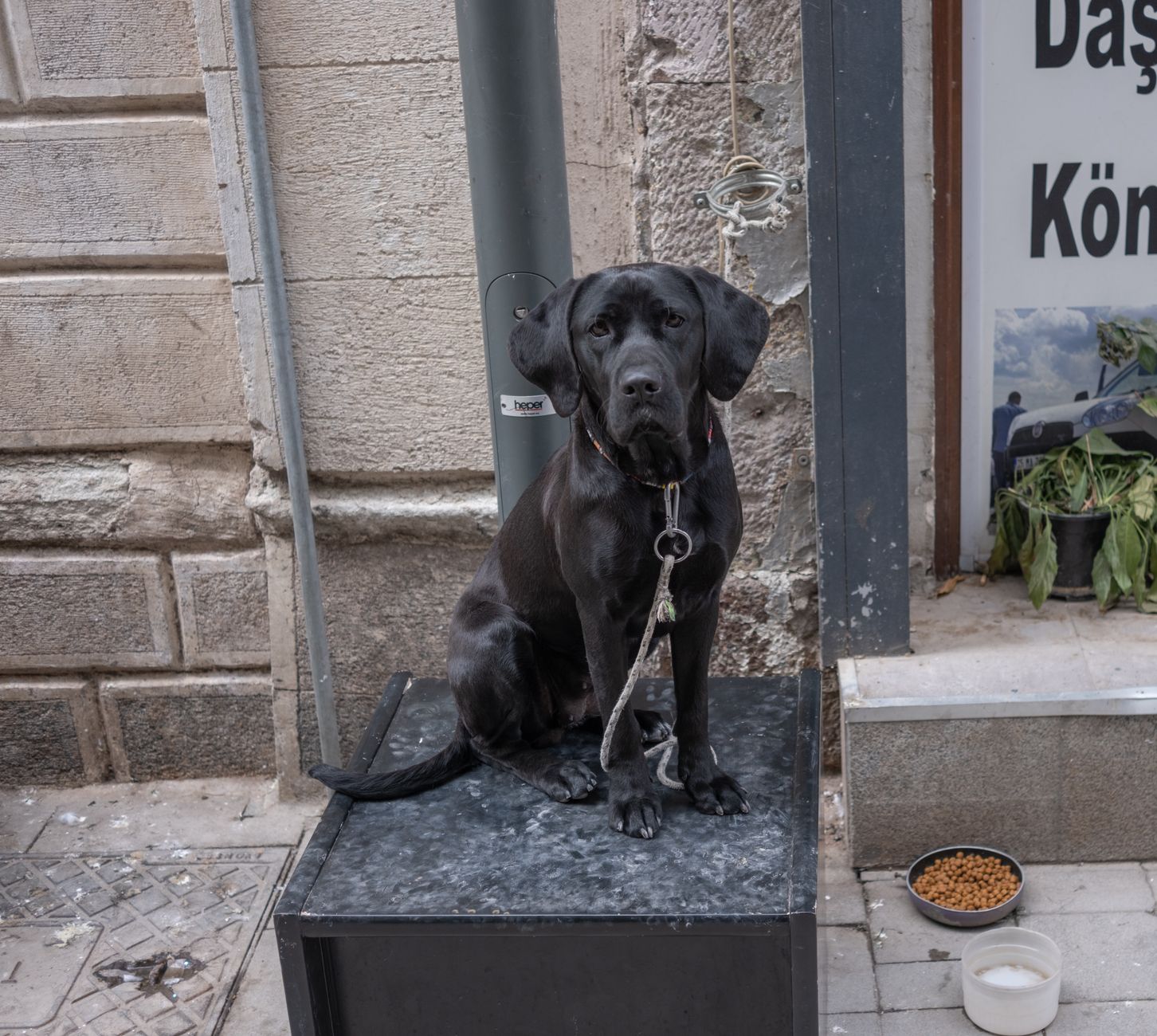
Resource guarding — growling, snapping, or stiffening when someone approaches food, toys, or a favourite spot — is one of the most misunderstood behaviours in small dogs. Cavoodles are sociable, eager-to-please dogs, but their Cavalier King Charles Spaniel and Poodle heritage doesn't make them immune. If your Cavoodle is guarding, the good news is that most mild-to-moderate cases respond well to a consistent, force-free approach. Here's exactly how to do it.
Why Cavoodles Resource Guard
Resource guarding is a normal, hardwired survival behaviour — not spite, dominance, or a sign your dog is "broken." Dogs guard things they perceive as high-value because, evolutionarily, losing a resource could mean going hungry.
Cavoodles may guard more intensely if they:
- Were in a large litter with competition for food
- Came from a rescue or pound background with irregular feeding
- Were accidentally punished for guarding in the past (which almost always makes it worse)
- Have learned that approaching humans equals "resource disappears"
Understanding the why matters, because the fix must address the dog's emotional state, not just suppress the warning signals.
Before You Start: Safety First
Never reach into a guarding dog's space to "show them who's boss." This suppresses the growl — your early-warning system — without changing the underlying emotion, and can escalate to a bite.
If your Cavoodle has already snapped or bitten, skip to the When to Get Professional Help section before attempting any protocol at home.
Step-by-Step: The Trade & Approach Protocol
This protocol uses two well-established techniques: counter-conditioning (changing the emotional response to your approach) and desensitisation (working gradually below the dog's threshold).
Step 1 — Identify the Triggers and Threshold
Spend 48 hours observing and noting:
- What is guarded: food bowl, bones, chews, toys, a couch spot, your lap?
- Who triggers guarding: adults, children, other pets?
- Distance at which guarding starts (e.g., stiffens at 2 metres, growls at 1 metre)
Write this down. You'll work just outside the threshold distance.
Step 2 — Build a "Drop It" and "Trade" Cue
Before approaching the guarded item, teach a reliable trade on non-guarded objects.
- Let your Cavoodle hold a low-value toy.
- Produce a high-value treat (small piece of cooked chicken works well).
- Say "trade" in a calm, upbeat tone and offer the treat near their nose.
- When they drop the toy to eat the treat, pick up the toy, praise, then immediately return it.
The key: always give the item back at first. You're teaching "giving things up leads to good things AND I get my stuff back." Repeat 10–15 times daily for one week across different items before moving to guarded objects.
Step 3 — Counter-Condition Approach to the Food Bowl
This is the core exercise for food-bowl guarding, which is the most common form.
- Fill the bowl and place it down.
- Walk past at your established safe distance and toss a high-value treat into the bowl without stopping. Keep moving.
- Repeat every meal for one week.
- Gradually (one small step per session) decrease the distance as your dog remains relaxed.
- Once comfortable at close range, pause beside the bowl, drop the treat in, and walk away.
- Eventually work up to briefly picking up the bowl, adding something better (a spoonful of wet food, a piece of cheese), and returning it immediately.
Progression rule: if your dog stiffens, stares hard, or growls, you've moved too fast. Go back two steps.
Step 4 — Manage the Environment While You Train
Training takes time. In the meantime, reduce guarding incidents through management:
| Situation | Management Strategy |
|---|---|
| Food bowl guarding | Feed in a separate, low-traffic area |
| Bone/chew guarding | Give chews only in a crate or pen; remove when done |
| Toy guarding from other pets | Rotate toys; separate during high-value chew time |
| Couch/bed guarding | Temporarily remove access (baby gate, furniture cover) |
| Lap guarding from other dogs | Reward calm behaviour; interrupt early with a scatter of treats on the floor |
Management is not a fix — it's a safety net that prevents rehearsal of the behaviour while you work on the underlying emotion.
Step 5 — Teach a Solid "Leave It"
"Leave it" gives you a verbal interrupt before guarding escalates.
- Hold a treat in a closed fist. Let the dog sniff and paw.
- The moment they pull back or look at you, mark with "yes!" and reward with the other hand.
- Gradually introduce the cue word "leave it" as the dog gets consistent.
- Proof with real-world items on the floor before applying near guarded objects.
Common Mistakes That Make Guarding Worse
- Punishing growling. Remove the warning, and you may get a bite with no warning.
- Randomly taking items away without trading or returning them. This confirms the dog's fear.
- Flooding — forcing the dog to "get used to" your presence at close range while they're distressed.
- Inconsistency between household members. Everyone must use the same protocol.
- Expecting fast results with bones or high-value chews. These are the hardest items; start with boring toys.
Realistic Timelines
| Severity | Typical Progress |
|---|---|
| Mild (stiffens, eats faster) | 2–4 weeks of daily work |
| Moderate (growls, hard stare) | 6–12 weeks; consistent daily sessions |
| Severe (snaps, lunges, bites) | Professional help required; not a DIY case |
Progress isn't always linear. Stress, illness, or a change in routine can cause temporary setbacks — that's normal.
When to Get Professional Help
Seek a qualified trainer or veterinary behaviourist if:
- Your Cavoodle has made contact in a bite
- Guarding is escalating despite 4+ weeks of consistent training
- Children or vulnerable adults are in the household
- Guarding is directed at multiple family members across many contexts
In Australia, look for a trainer accredited through the Pet Professional Guild Australia or a Registered Veterinary Specialist in Behaviour (through the Australian and New Zealand College of Veterinary Scientists). A good behaviourist will assess severity and may recommend a behaviour modification plan alongside your vet, sometimes including temporary medication to reduce anxiety and make training more effective.
A professional consultation typically costs $150–$350 AUD for an initial assessment — well worth it when safety is at stake.
The Bottom Line
Cavoodle resource guarding is fixable in most cases, but it requires patience, consistency, and a commitment to working with your dog's emotional state rather than against it. Trade generously, approach gradually, manage the environment, and loop in a professional the moment things feel unsafe. The dogs who come out the other side of a solid behaviour modification plan are genuinely more relaxed — not just compliant.
Frequently asked questions
Is resource guarding normal in Cavoodles?
Yes, resource guarding is a normal canine behaviour rooted in survival instinct — it's not unique to Cavoodles or a sign of a bad temperament. Any dog can guard food, toys, or resting spots. The important thing is to address it early before it becomes ingrained.
Should I punish my Cavoodle for growling at me over food?
No. Punishing a growl suppresses your dog's warning signal without addressing the underlying anxiety, which can lead to a bite with no prior warning. Instead, use counter-conditioning to change how your dog feels about your approach, making it a reliable predictor of something good.
How long does it take to stop resource guarding in a Cavoodle?
Mild cases often improve noticeably within 2–4 weeks of daily training. Moderate guarding (growling, hard staring) can take 6–12 weeks of consistent work. Severe cases involving snapping or biting require professional help and have no reliable DIY timeline.
Can resource guarding in Cavoodles get worse over time?
Yes, if left unaddressed or inadvertently reinforced — for example, by punishing growls or repeatedly taking items away without trading — guarding tends to escalate. Early, positive intervention gives you the best chance of resolving it before it becomes a serious safety concern.
My Cavoodle only guards from other dogs, not people — do I still need to train this?
Inter-dog guarding still warrants attention, especially in a multi-pet household, as it can cause dog fights and injury. The same counter-conditioning principles apply, but you'll also need to manage feeding times and high-value resources carefully. A trainer can help you run sessions safely.
At what age should I start addressing resource guarding in a Cavoodle puppy?
As early as possible — ideally the moment you notice any early signs like eating faster when you approach or stiffening over a toy. Puppies respond quickly to trade games and positive approaches. Early work is far easier than retraining an established adult behaviour.
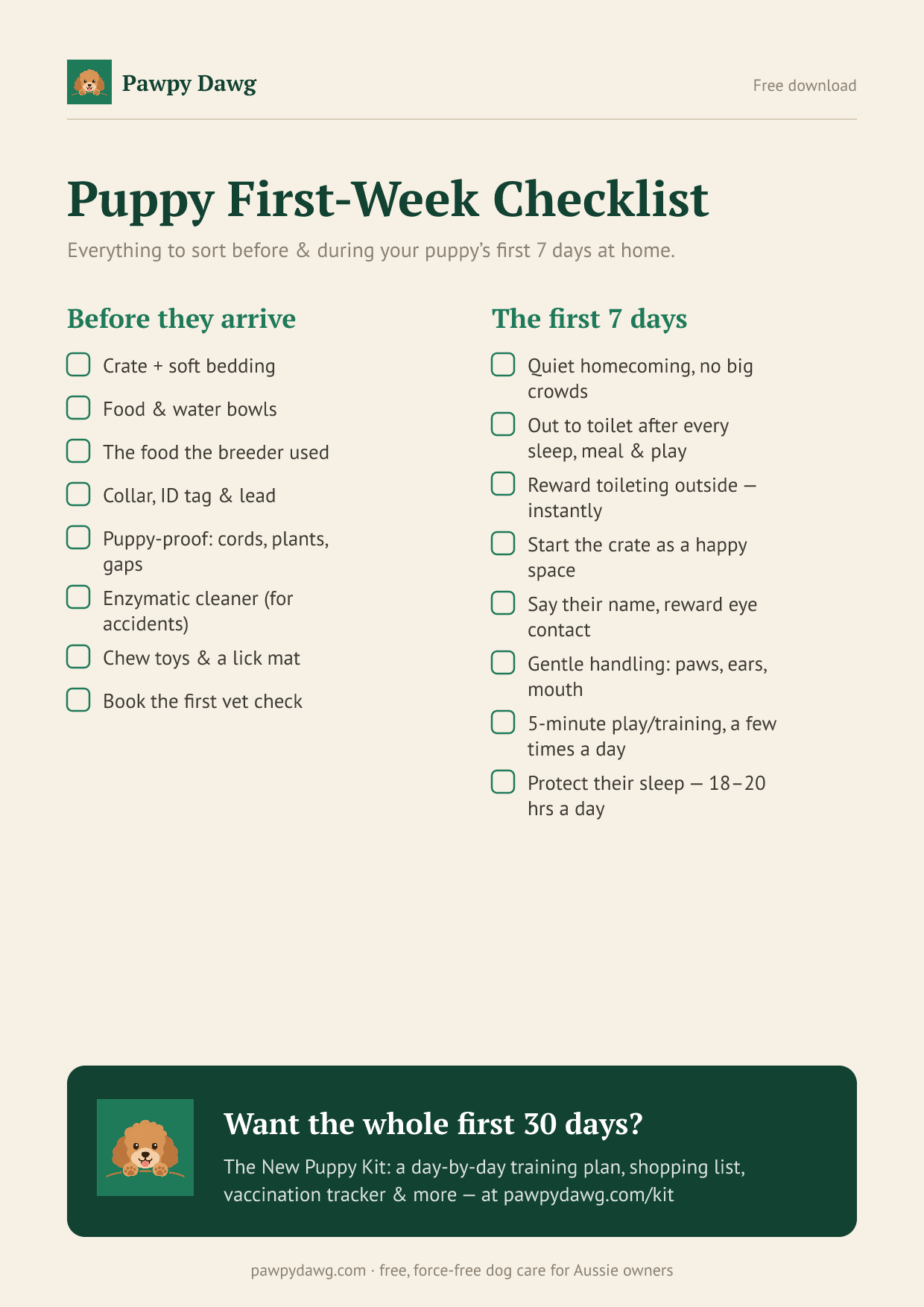
Free printable
Free: the Puppy First-Week Checklist
Everything to sort before and during your puppy's first 7 days home — a printable one-pager. Plus the occasional genuinely useful dog tip. No spam, unsubscribe anytime.
Related guides
How to Stop a Cavoodle Pulling on the Lead (Step-by-Step)
Is your Cavoodle pulling on the lead? Follow this step-by-step positive reinforcement plan with realistic timelines, common mistakes, and pro tips.
Read the guide →
How to Stop a Cavoodle Barking at Strangers (Step-by-Step)
Cavoodle barking at strangers? This step-by-step positive-reinforcement plan covers desensitisation, threshold training, common mistakes, and realistic timelines.
Read the guide →
Cavoodle Separation Anxiety: A Step-by-Step Fix
Cavoodle separation anxiety is common but fixable. Follow this step-by-step positive reinforcement plan with realistic timelines and expert advice.
Read the guide →