
How to Stop a Cavoodle Barking at Strangers (Step-by-Step)
Cavoodle barking at strangers? This step-by-step positive-reinforcement plan covers desensitisation, threshold training, common mistakes, and realistic timelines.

Written by Bradley Brown
Founder & editor · Reviewed 2026-06-30
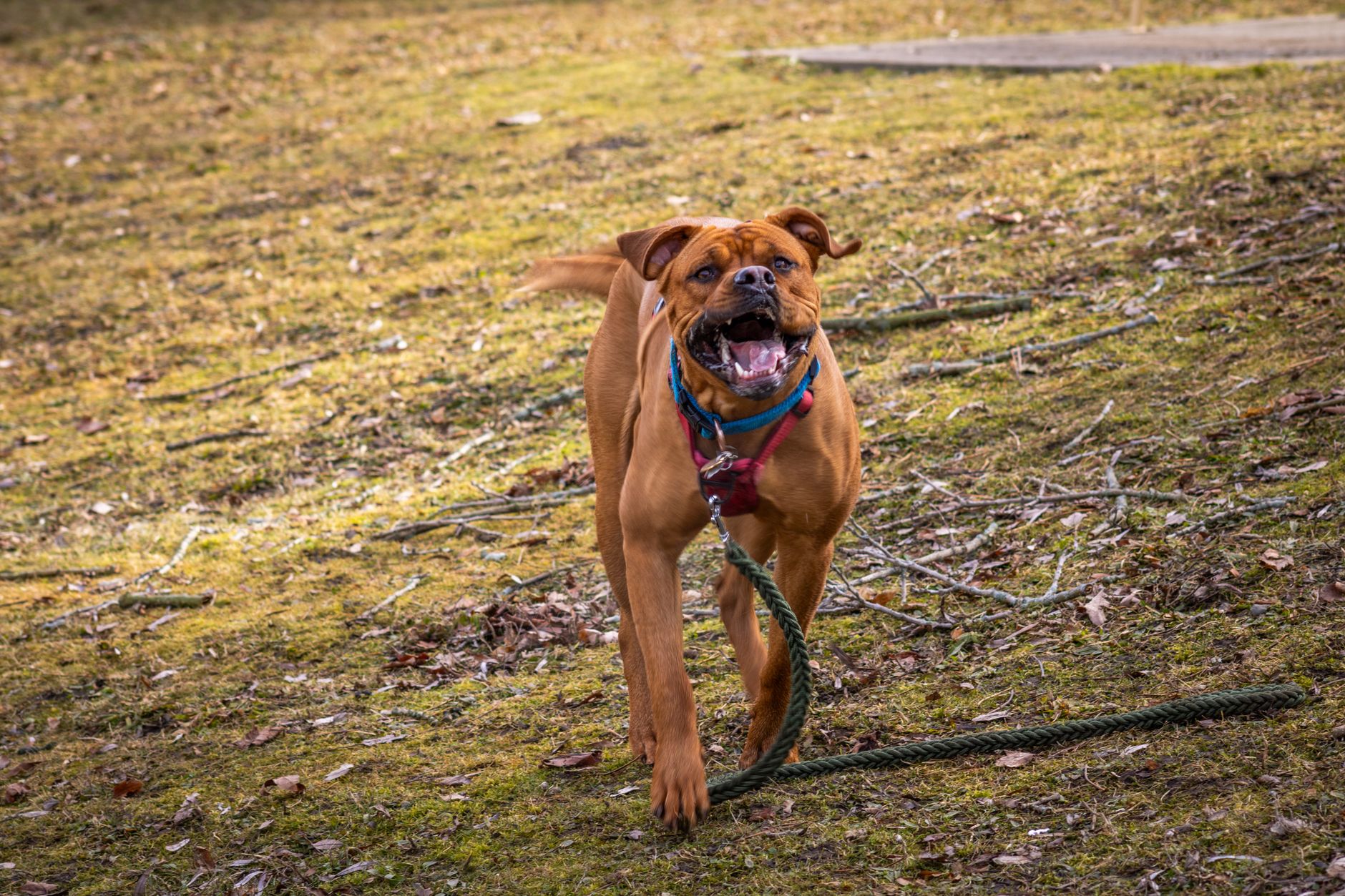
Cavoodles are social, sensitive dogs — a blend of Cavalier King Charles Spaniel and Poodle — and most are genuinely friendly. But that same sensitivity means some individuals become reactive, sounding the alarm at every delivery driver, neighbour, or unfamiliar face on a walk. The good news: cavoodle barking at strangers is a highly trainable problem when you address the emotional root cause rather than just suppressing the noise.
Why Cavoodles Bark at Strangers
Before you can fix the behaviour, you need to understand it. Most stranger-directed barking falls into one of three categories:
- Fear or uncertainty — the dog perceives strangers as a threat and barks to increase distance
- Excitement or frustration — the dog desperately wants to greet but can't, so vocalises instead
- Territorial/alert behaviour — the dog is signalling that an outsider has entered their space
Cavoodles are rarely aggressive, but fear-based barking is common in the breed, particularly in dogs that missed critical socialisation between 3–12 weeks of age. Knowing your dog's motivation shapes how you train.
Quick test: Does your dog's body look loose and wiggly when they bark, or stiff and low? Loose = likely excitement. Stiff, hackles up, or retreating = likely fear.
What You'll Need Before You Start
- High-value treats (small, soft — think cooked chicken, cheese, or commercial training treats cut to pea-size)
- A standard flat collar or well-fitted harness — no choke chains or prong collars
- A 1.8 m lead for walks; a long line (5–10 m) for open spaces
- A consistent marker: a clicker, or the word "yes" delivered the instant the correct behaviour happens
- Patience — realistic improvement takes 4–12 weeks of consistent work
Step-by-Step Training Plan
Step 1: Find Your Dog's Threshold
The threshold is the distance at which your dog notices a stranger but hasn't yet erupted into barking. Training only works below threshold — once a dog is barking, they're too aroused to learn.
On your next walk, watch for the first moment your dog stiffens, stares, or ears prick toward a stranger. That distance (could be 20 m, could be 5 m) is your starting point. You'll be doing all early training at or just inside that distance.
Step 2: Counter-Conditioning (Change the Emotional Response)
This is the core of the plan. The goal is to make "stranger appears" predict something great, so the dog's gut reaction shifts from alarm to anticipation.
How to run a session:
- Position yourself at your dog's threshold distance from a low-traffic area where strangers pass naturally (a park path, quiet street).
- The moment your dog notices a stranger — before any barking — say "yes" and deliver a high-value treat.
- Keep feeding small treats continuously while the stranger is in view.
- The instant the stranger moves out of sight, treats stop.
- Repeat for 5–10 minutes, then end the session.
The sequence must always be: stranger appears → treats flow. Stranger gone → treats stop. Never the reverse.
Step 3: Add a Cue ("Watch" or "Look at Me")
Once your dog is consistently orienting toward you when a stranger appears (usually after 1–3 weeks of counter-conditioning), introduce a focus cue.
- As a stranger enters view, say "watch" in a calm, upbeat tone.
- When your dog makes eye contact with you, mark and reward immediately.
- Gradually ask for longer eye contact before rewarding.
This gives your dog an alternative behaviour — checking in with you rather than fixating on the stranger.
Step 4: Systematic Desensitisation (Reduce the Distance Gradually)
Once your dog is reliably calm at their starting threshold, decrease the distance in small increments — no more than 1–2 metres at a time. Only move closer when your dog is consistently relaxed at the current distance across multiple sessions.
If your dog barks at any point, you've moved too fast. Increase the distance, let them settle, and restart.
Progress milestones (approximate):
| Weeks | Realistic Goal |
|---|---|
| 1–2 | Dog notices strangers without barking at threshold distance |
| 3–4 | Dog orients to owner when stranger appears |
| 5–8 | Dog remains calm at half the original threshold distance |
| 8–12 | Dog can pass strangers at normal footpath distance without barking |
Step 5: Practise Controlled Greetings (for Excitement Barkers)
If your dog barks out of frustration rather than fear, the fix involves teaching a calm sit before any greeting is permitted.
- Ask a friend or family member to approach slowly.
- If your dog barks or jumps, the person immediately turns and walks away.
- When the dog is quiet with four paws on the ground, the person can approach and greet.
- Any renewed barking = person turns away again.
Strangers approaching a barking dog (even to calm them) inadvertently rewards the behaviour. Consistency from everyone in the household is non-negotiable.
Common Mistakes That Slow Progress
- Flooding — forcing your dog to "face their fear" by walking directly up to strangers. This worsens fear-based barking.
- Saying "it's okay" repeatedly — it's a meaningless phrase to dogs and can actually become a cue that something worrying is happening.
- Punishing the bark — yelling, spray bottles, or shock collars suppress the warning signal without addressing the underlying emotion. Fearful dogs often escalate to biting when barking is punished.
- Inconsistent threshold management — letting your dog rehearse barking on some walks undermines all your other training sessions. Every repetition of the unwanted behaviour strengthens it.
- Rushing the distance — most owners move closer too quickly. The rule: if in doubt, stay at the current distance for another week.
Managing the Environment While You Train
Training sessions are deliberate and controlled. The rest of life still happens, so manage your dog's environment to prevent rehearsal of barking:
- At home: Use frosted window film or position furniture away from windows where strangers are visible from the street.
- On walks: Cross the road early, before your dog reaches threshold — not after they've already spotted the trigger.
- At the door: Tether your dog in another room or use a baby gate so they can't rush the front door. Reward calm behaviour after the stranger leaves.
When to Get Professional Help
Some dogs need more than a DIY plan. Seek help from an accredited trainer (look for membership with the Pet Professional Guild Australia or Delta Society Australia) or a veterinary behaviourist if:
- Barking is accompanied by lunging, snapping, or growling
- Your dog is showing signs of generalised anxiety (destruction, toileting inside, panting, or clinginess between trigger events)
- There's been no measurable improvement after 8 weeks of consistent training
- The behaviour started suddenly in an adult dog with no previous history (rule out pain or illness first with your vet)
In some cases, a veterinarian may recommend short-term anti-anxiety medication to bring the dog's arousal baseline down enough for training to take effect. This isn't a shortcut — it's a tool that makes the training work faster and more humanely for dogs with significant fear responses. Expect a behavioural consultation to cost between $250–$500 AUD depending on your location and the professional's qualifications.
As an Amazon Associate we earn from qualifying purchases.
Frequently asked questions
How long does it take to stop a Cavoodle from barking at strangers?
Most owners see clear improvement within 4–8 weeks of consistent daily training sessions. Full reliability around strangers — meaning calm behaviour in most real-world situations — typically takes 8–12 weeks. Dogs with deep-rooted fear responses or limited early socialisation may take longer and often benefit from professional guidance.
Should I use a bark collar to stop my Cavoodle barking?
Bark collars — whether spray, vibration, or shock — are not recommended for Cavoodles or any fear-based barking. They suppress the behaviour without changing how the dog feels about strangers, and punishment-based methods frequently increase anxiety and can escalate reactivity to aggression. Positive reinforcement and desensitisation address the root cause and produce lasting results.
My Cavoodle only barks at strangers when on lead — why?
This is called lead reactivity or 'lead frustration.' On lead, your dog can't move away from something that worries them (or can't rush toward something exciting), which amplifies the emotional response and the barking. The same counter-conditioning approach applies, but you may also find that loose-lead work and teaching your dog that a tight lead predicts a change of direction helps reduce overall tension on walks.
Is barking at strangers a sign my Cavoodle wasn't properly socialised?
It can be, but not always. Socialisation gaps during the 3–12 week critical period are a common contributor, but genetics, a frightening experience with a stranger, or a period of isolation (such as during illness or lockdown) can also produce stranger-directed barking in previously confident dogs. Your approach to training is the same regardless of the cause.
Can I teach my Cavoodle to stop barking at the front door when strangers knock?
Yes — the same counter-conditioning principles apply. Teach a default behaviour like going to a mat or bed when the doorbell sounds, and reward heavily for that calm response. Enlist friends to run repetitions: knock or ring, dog goes to mat, dog gets rewarded, guest enters calmly. It takes more management and practice than outdoor situations because the door environment is highly arousing, but most Cavoodles respond well.
My Cavoodle barks at strangers but is fine once introduced — is this still a problem worth addressing?
It depends on frequency and intensity, but it's worth working on. Even if the barking resolves after introduction, repeated stress responses take a toll on your dog's welfare and can become more entrenched over time. Additionally, strangers — particularly children or people who are already nervous around dogs — may find the barking distressing even if your dog is harmless. Early intervention is always easier than waiting for the behaviour to escalate.
Free printable
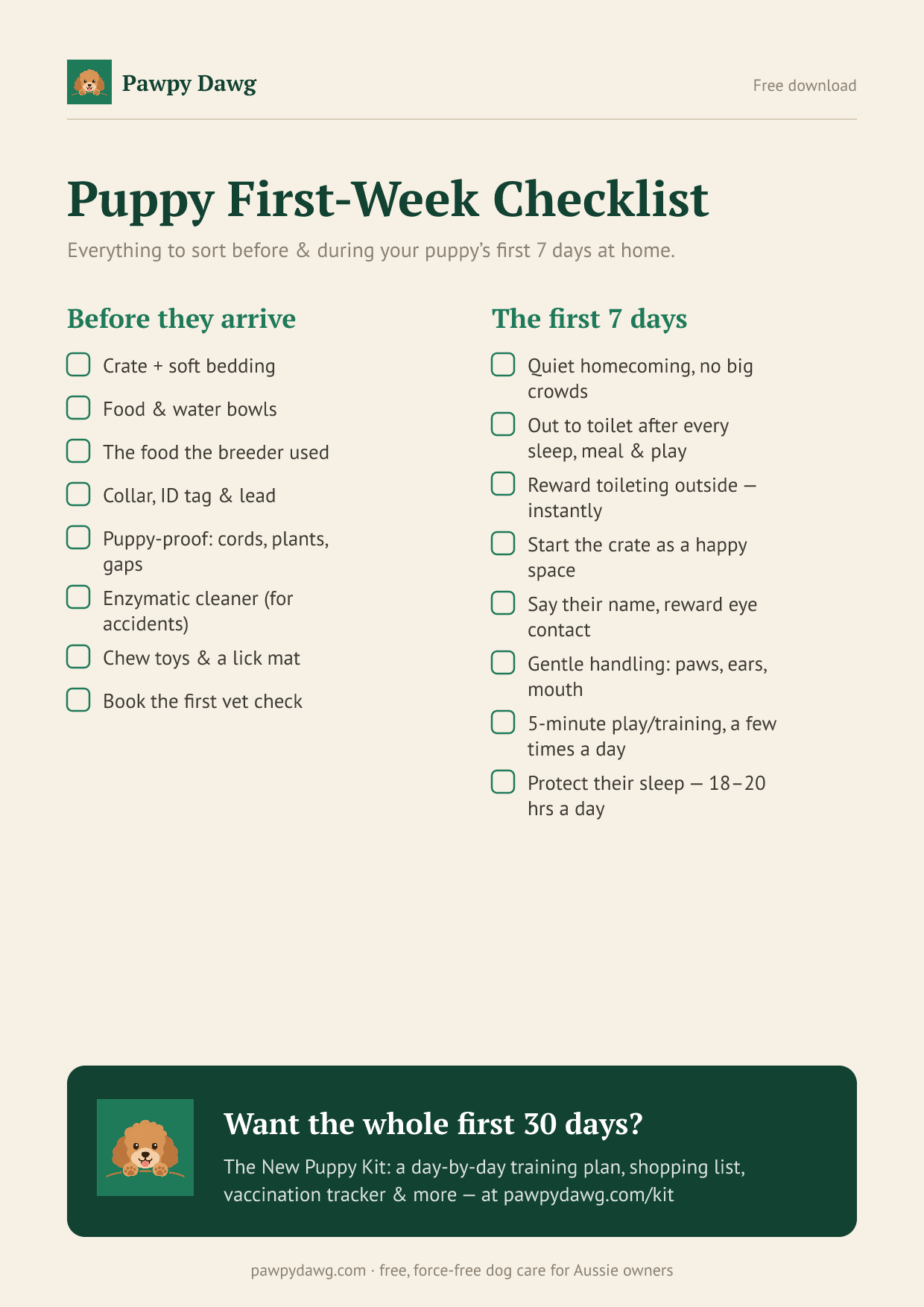
Free: the Puppy First-Week Checklist
Everything to sort before and during your puppy's first 7 days home — a printable one-pager. Plus the occasional genuinely useful dog tip. No spam, unsubscribe anytime.
Related guides
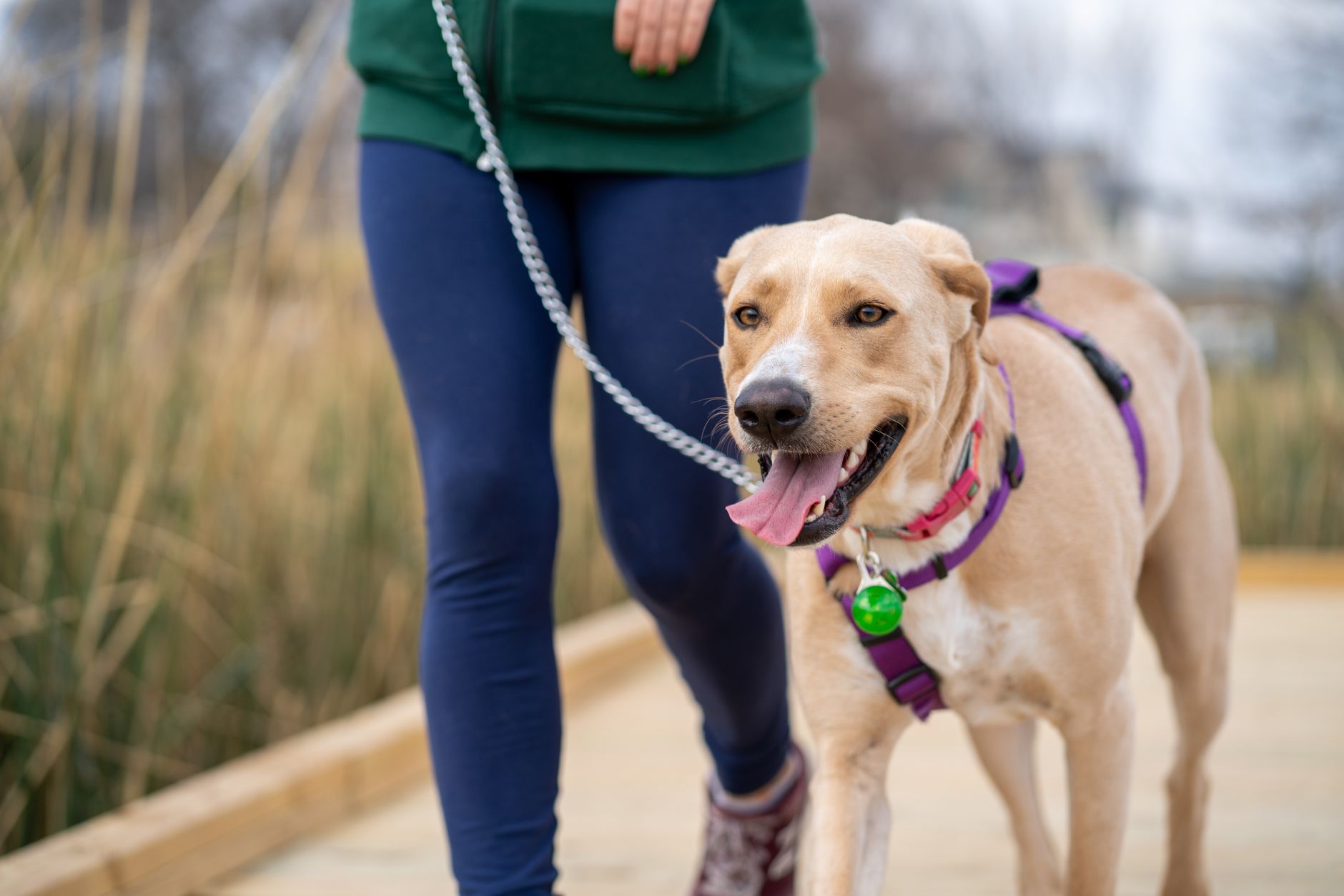
How to Stop a Cavoodle Pulling on the Lead (Step-by-Step)
Is your Cavoodle pulling on the lead? Follow this step-by-step positive reinforcement plan with realistic timelines, common mistakes, and pro tips.
Read the guide →
Cavoodle Separation Anxiety: A Step-by-Step Fix
Cavoodle separation anxiety is common but fixable. Follow this step-by-step positive reinforcement plan with realistic timelines and expert advice.
Read the guide →
How to Stop a Cavoodle Jumping Up on People (Step-by-Step)
Stop your Cavoodle jumping up on people with this step-by-step positive-reinforcement plan. Realistic timelines, common mistakes, and when to call a pro.
Read the guide →